Learning how to spot fake headphones matters because the best counterfeits no longer look cheap. Good clones copy the case shape, the pairing popup and even the box printing, so a quick glance settles nothing. What still catches them is a stack of small checks: a serial number that agrees in three places, the maker’s own app, and sound and controls that behave the way the real model behaves. Run the checks in this order, before you pay when you can, and again the moment a parcel arrives.
Start with the seller, not the headphones
Most fakes are exposed before the box opens. A flagship model offered by a brand new marketplace account, with stock photos and no returns, is a risk no inspection fully removes. Buy from the brand’s own store, an authorised retailer, or a marketplace seller with a long history and a returns policy you can actually use. Keep the order confirmation and pay by a method with buyer protection, because a card payment you can dispute is worth more than a small discount paid in cash. If a private seller refuses to let you run the checks below before money changes hands, that refusal is itself the answer. Screenshots prove nothing either, because a seller can photograph a genuine pair and ship a different one.
Step 1: check the serial number in three places
Step 1: gather every serial number. On earbuds it is printed inside the charging case lid or on the case, on over-ears it usually sits inside the headband or under an earcup, and the same number should appear on the box label. Step 2: compare them. Box, case and product must agree exactly. A mismatch anywhere ends the inspection. Step 3: run the number through the maker’s checker. Apple owners can enter an AirPods serial at Apple’s coverage page, and Sony owners can use Sony’s registration and warranty pages. KnockoffRadar’s counterfeit monitoring makes the key point plainly: a serial that passes is a filter, not a proof, because counterfeiters copy one genuine serial onto hundreds of fakes. A serial that fails is decisive. A serial that passes just earns the pair the next check.
Step 2: make the maker’s app the referee
This is the strongest single test, because a counterfeit can copy plastic but not the maker’s software relationship. Pair the headphones, then open the official app: Sony Sound Connect for Sony models, the Bose app for Bose, and Settings on an iPhone for AirPods. A genuine pair is recognised, shows its real model name, offers firmware updates and exposes model specific controls such as EQ and noise cancelling levels. Gumtree’s guide to fake Sony WH-1000XM4 and XM5 units puts it bluntly: counterfeits use generic Bluetooth chips and simply do not appear properly in Sony’s app. For AirPods, KnockoffRadar points to Find My as the check clones have not cracked: a genuine pair shows up in Find My, and a pair that pairs for music but never appears there is a red flag. Our guide to how to tell if AirPods are fake walks through the Apple specific version of these steps.
Step 3: inspect the packaging and the build
Packaging tells are supporting evidence, never the verdict on their own, because print quality on good clones is close. Still look: misspelled words, blurry images, a box that feels thin, and accessories that differ from the maker’s product page all count against a pair. On the product, check the seams, the hinge action on a case, the print quality of logos and regulatory marks, and the weight in your hand against the published figure. Buttons should click with a clean, even action. Charging contacts should sit straight and flush. Smells matter too: a strong chemical odour from ear pads or a case is common on counterfeits and rare on genuine stock. One flaw proves little. Three small flaws together prove plenty.
Step 4: listen for what fakes get wrong
Sound is the last check because it needs a reference. Play a track you know well and listen for the basics: bass that stays controlled instead of booming over vocals, treble that does not turn harsh at modest volume, and channels that balance evenly. Then test the features the model is sold on. Noise cancelling on a genuine flagship drops steady noise such as a fan or a bus engine by a clear, obvious margin. Transparency mode should sound natural, not like a cheap microphone. Touch and button controls should do exactly what the manual says, every time. Fakes often play music acceptably and then fail here, with cancelling that barely changes anything, controls that skip or double trigger, and call microphones that leave your voice thin and distant.
Three genuine pairs, and the check each one passes
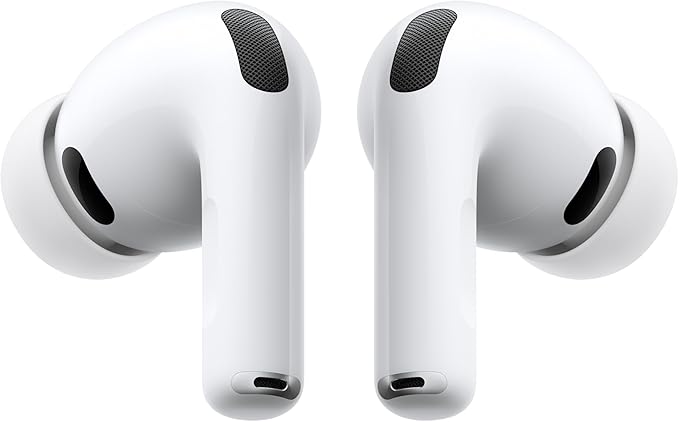
If you are buying one of the models below, these are the exact tests to run at the door or the kitchen table. Each genuine pair passes its maker’s app or system check, which is the ground a counterfeit cannot hold. Our AirPods Pro 3 review, Sony WF-1000XM5 review and Bose QuietComfort Ultra Headphones (2nd Gen) review describe how the real units behave, feature by feature.


If a check fails after you have paid
Stop using the pair and document everything while the return window is open. Photograph the serial numbers in each location, screenshot the app failing to recognise the product, and keep the packaging, because marketplaces and card disputes both run on evidence. Return through the platform rather than negotiating privately with the seller, and report the listing so the next buyer gets a warning. Then buy the replacement from a channel you do not have to inspect, even if it costs a little more. The saving on a suspicious listing is small next to a pair you cannot return, cannot update and cannot resell honestly. Readers comparing genuine Sony options can start with our best Sony headphones roundup, where every pick links to a verified listing.
Frequently asked questions
Can a fake have a valid serial number?
Yes. Counterfeiters copy one genuine serial number onto many fakes, so a number that passes the maker’s coverage check proves only that the number exists. Treat a pass as permission to keep checking: the serial must also match across the box, the case and the product itself, and the pair still has to pass the app test before you trust it.
What is the single most reliable check?
The maker’s own app or system integration. A genuine Sony pair registers in Sony Sound Connect, a genuine Bose pair is recognised by the Bose app, and genuine AirPods appear in Find My and show a matching serial in iPhone Settings. Counterfeits can copy packaging and shells, but they cannot reproduce that software relationship.
Do fakes sound obviously bad?
Not always. Better clones play music passably, which is why sound is the last check rather than the first. Where fakes usually fail is the feature set around the sound: noise cancelling that barely changes steady noise, controls that skip or double trigger, weak call microphones and no firmware updates. Test the features, not just a favourite song.
Should I buy if the seller will not let me test first?
No. A seller who refuses a two minute app and serial check before payment is telling you what the checks would find. Buy from a retailer or a platform seller with returns instead, keep your payment protected, and run the same checks the moment the parcel arrives so you are inside the return window if anything fails.
Is a very low price proof of a fake?
Not proof, but it is evidence. Flagship headphones hold their value, and a current model offered far below every authorised retailer, by a new account with stock photos, deserves the full check stack before you pay. Price plus a failed serial or app check is conclusive. Price alone just means check harder.

I am the founder of Sound Mavericks, where I provide the polite truth about audio equipment. I started this site because consumer electronics reviews are often too technical. Instead of using a silent lab, I test headphones, earbuds, and Bluetooth speakers in the real world – like on a noisy subway or in a busy coffee shop.
To stay independent, I buy my own review units (mostly from the United States) rather than accepting free gifts from brands. Once I finish testing a product, I sell it locally to our community. My goal is to help you understand sound quality, active noise cancellation (ANC), and battery life without the marketing hype.