
Metal is the genre that exposes lazy headphones. A double-kick run at high tempo, two down-tuned guitars playing different parts, a bass guitar fighting for the same space: a slow, boomy closed-back turns that into soup. The best closed-back headphones for metal do the opposite. They start and stop fast, keep the low end on a short leash, and hold each instrument in its own space when the mix gets dense. This list ranks seven models on exactly that, from the FiiO FT1, the value pick that forum shortlists keep landing on, to the Beyerdynamic DT 1770 Pro MKII at the flagship end.
Two of the seven come straight from working studio lines rather than consumer ranges, because tracking headphones are built for isolation and honesty under pressure. Two carry provisional SoundMavericks score sets, marked on their cards, because they are newer than our scored database. One pick is openly an exception: the FiiO FT1 Pro is an open-back planar in a closed-back list, included for home listeners who asked for its staging and flagged as such wherever it appears. If your listening leans to live rooms and wide stages instead, our best open-back headphones roundup covers that side.
The shortlist
FiiO FT1: Best overall value: sound 8.8, value 9.0, and a V-shaped tuning with real kick weight. Check Price on Amazon
Beyerdynamic DT 700 Pro X: Best for detail and tracking: comfort 8.8 and a truthful bottom octave. Check Price on Amazon
Sennheiser HD 480 Pro: Best new studio option: light at 272 g with an honest, uncoloured response. Provisional score set. Check Price on Amazon
Beyerdynamic DT 1770 Pro MKII: Best flagship: TESLA.45 driver, 30-ohm drive, two pad sets in the box. Provisional score set. Check Price on Amazon
Meze 99 Classics: Best for doom and long sessions: comfort 9.0 and a warm, full low end. Check Price on Amazon
How metal tests a headphone
Three passages decide most of this list. The first is a fast double-kick section: if the driver cannot clear one hit before the next lands, the pattern smears and the whole rhythm section loses definition. The second is a layered guitar passage, rhythm parts low and lead lines on top, where weak separation folds everything into a single midrange block. The third is a quiet-to-loud dynamic swing, the post-metal and doom staple, where a headphone that only sounds good loud fails the quiet half. Bass control matters more than bass quantity in all three. A sealed cup gives metal its physical pressure, but the tuning has to stop the low end from sitting on the guitars.
Sub-genre changes the weighting. Technical death metal and thrash reward speed and treble clarity above everything. Black metal rewards presence in the upper mids, where tremolo picking lives, and forgives a leaner low end. Doom and sludge reward sustain and weight, and punish brightness over long, loud sessions. Rock and blues, the other half of the listening that prompted this list, reward midrange body: a headphone that hollows out the mids for the sake of sparkle will make a guitar trio sound thin. The per-pick notes below call out which end of that map each model sits on.
The picks, one by one
FiiO FT1
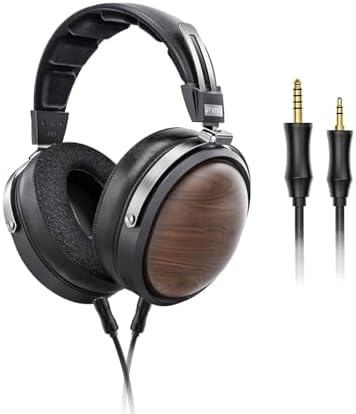
FiiO FT1 6.2/10
Why you: home and office listening with closed-back privacy. Sound scores 8.8 and value 9.0: the V-shaped tuning puts weight behind kick drums and keeps cymbals present.
Trade-off: It weighs 340 g, the pads feel firm at first, and the tuning is V-shaped rather than neutral, so purists tracking a mix should look at the studio picks below.
Over-ear · Closed-back · Wired · 340 g
The FT1 leads this list because it answers the metal brief at the friendliest cost in the group. The low end has genuine push, so palm-muted riffs land with physical weight, but it stops cleanly enough that fast kick patterns stay readable instead of blooming into one long note. That balance is rare in budget closed-backs, which usually pick one side: either tight and thin, or huge and slow. Our FiiO FT1 review covers the tuning in full.
For sub-genres, it is the safe all-rounder. Thrash and groove metal get the kick weight they need, classic rock gets present guitars and vocals, and doom gets enough mass to feel right at home volumes. The firm pads and 340 g build are the honest costs, and the V-shape flatters rather than measures. If you want one closed-back for a mixed metal library and nothing else on this page fits the budget, this is the one.
Beyerdynamic DT 700 Pro X

Beyerdynamic DT 700 Pro X 6.2/10
Why you: closed-back truth about the bottom octave. Comfort scores 8.8, the best fit in this list alongside the Meze, and the tuning tells you exactly what a dense mix is doing.
Trade-off: Wired only, with no microphone, and the honest tuning shows up poor recordings for what they are.
Over-ear · Closed-back · Wired · Studio line
The DT 700 Pro X is the pick for listeners who hear metal as parts. Its low end is measured rather than boosted, so a bass guitar keeps its own line under the guitars instead of merging with them, and the top end carries pick attack and cymbal detail without turning brittle. Technical death metal, progressive metal and math rock all benefit: odd-time kick patterns stay legible, and layered guitar parts separate instead of stacking into a wall.
It is also the most comfortable studio pick here, with comfort at 8.8, which matters on long album sessions. The trade is honesty. A raw black metal recording sounds raw, and a clipped modern master sounds clipped. Listeners who want the headphone to soften those edges should read the Meze entry below. Everyone else gets a tracking-grade tool that doubles as a demanding, rewarding listen.
Sennheiser HD 480 Pro
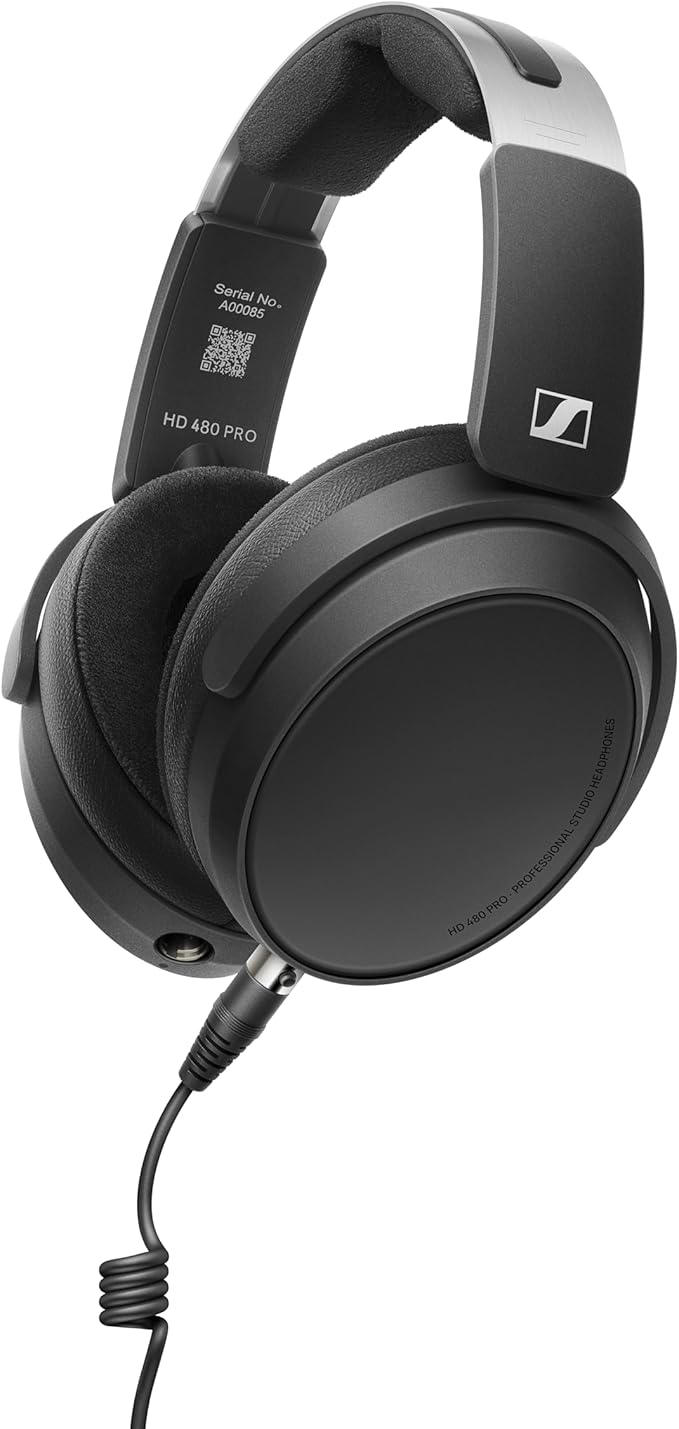
Sennheiser HD 480 Pro 6.1/10
Why you: a closed-back built to match the open HD 490 Pro tuning, so metal gets an uncoloured read: natural mids, full bass that reaches deep without bloat, and a light 272 g frame for long sessions.
Trade-off: Its 130-ohm listing impedance wants a small amp or a strong dongle behind it, and as a new model it carries a provisional score set here rather than a database score.
Note: Score set is provisional, set in line with comparable studio closed-backs in our database, pending a full scored review.
Over-ear · Closed-back · Wired · 272 g · 38 mm drivers
The HD 480 Pro is the newest name on this page, a closed studio model from Sennheiser Pro built for tracking and monitoring, with user-replaceable pads, headband and cables. Sennheiser rates it at 272 g, light for a full-size closed-back, and positions its tuning close to the open HD 490 Pro: honest rather than hyped. For metal, that honesty pays off in the midrange, where rhythm guitars and vocals keep their natural weight instead of being scooped out.
Treat it as the long-session studio pick. Doom and progressive passages that run an album side at a time suit its low clamp and even response, and rock and blues get the midrange body those genres live on. The 130-ohm impedance is the one practical catch: a phone alone will play it, but a small amplifier or a capable dongle gives it the headroom dense passages need. Its score set on this page is provisional, marked on the card, until it joins the scored database.
Beyerdynamic DT 1770 Pro MKII

Beyerdynamic DT 1770 Pro MKII 6.1/10
Why you: the flagship closed-back in the Beyerdynamic studio line: a TESLA.45 driver with fast impulse behaviour, strong isolation, and two pad sets, leatherette and velour, that let you tune the low end by swapping pads.
Trade-off: Flagship money, a provisional score set on this page, and a bright top end that shows up harsh masters plainly.
Note: Score set is provisional, set in line with the DT 1770 Pro record in our database, pending a full scored review of the MKII.
Over-ear · Closed-back · Wired · 30 ohms · TESLA.45 driver
The DT 1770 slot on the original forum shortlist named the MKII, and the MKII is what this page recommends: Beyerdynamic lists it as a current model, sold on Amazon, with the newer TESLA.45 driver and impedance cut to 30 ohms against the older Pro at 250 ohms. That change matters in practice. The older flagship needed a serious amplifier; the MKII runs properly from an interface, a laptop or a good dongle, which puts flagship closed-back detail within reach of a normal desk setup.
On metal, the impulse behaviour is the point. Fast, dense material, blast beats under tremolo guitars, prog passages with constant kick work, stays separated and placed instead of smearing. The two pad sets are a real tuning tool: leatherette seals harder and lifts the low end for doom and groove, velour opens the top for detail work. Our coverage of the earlier model sits in the DT 1770 Pro review; the MKII card above carries a provisional score set, flagged, until the newer model is scored in full.
FiiO FT1 Pro
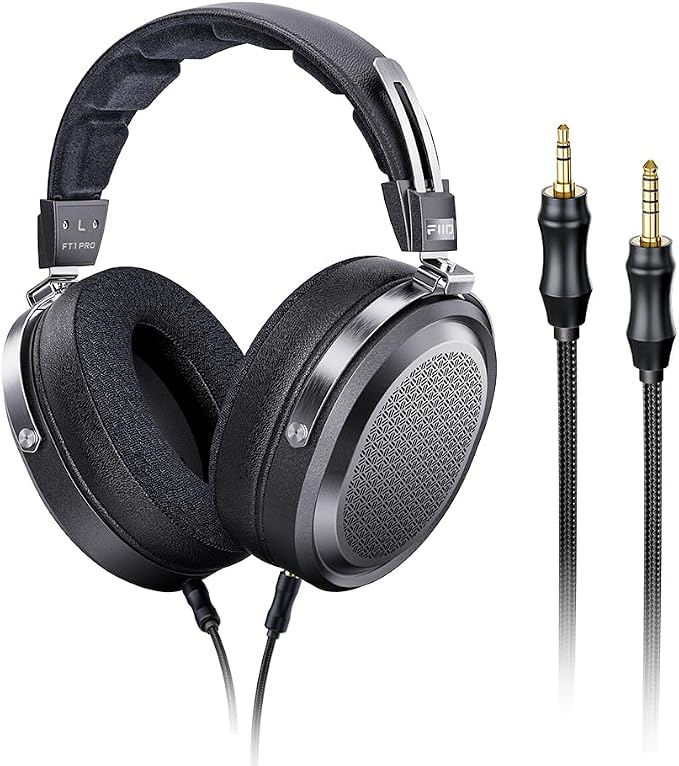
FiiO FT1 Pro 6.1/10
Why you: planar detail at a friendly cost, with value at 9.1. The open-back stage spreads layered guitars and drum kits wider than any sealed cup here, and planar speed keeps fast passages clean.
Trade-off: It leaks sound in both directions by design, there is no microphone on either cable, and the top octave is polite, so this is a home pick only.
Over-ear · Open-back planar · Wired · 374 g
Honesty first: the FT1 Pro is not a closed-back headphone. It earns its place as the exception for readers who asked, in the same breath as the closed-back shortlist, what planar speed and an open stage do for metal at home. The answer is plenty. Progressive and post-metal records with wide mixes open up, drum kits gain real width, and the planar driver keeps double-kick work articulate at volume. Our FiiO FT1 Pro review goes deeper.
Buy it only if the listening chair is at home and the room is yours. It leaks your music out and lets the room in, which disqualifies it for offices, travel and shared spaces, the jobs the other six picks exist for. Within that limit, it is the most spacious listen on this page and the natural second headphone for a closed-back owner who wants a home alternative.
Audio-Technica ATH-M50x

Audio-Technica ATH-M50x 6.2/10
Why you: studio-trusted bass with definition. The M50x has been the default closed-back recommendation for years because its low end pushes without losing the guitar band, and its fold-up build travels well.
Trade-off: Wired only, and the bass is accurate rather than impactful next to the FT1. The fit runs snug on larger heads.
Over-ear · Closed-back · Wired · Detachable cables
The M50x is the known quantity. Its tuning gives metal a firm low-end foundation and enough presence up top for guitars to cut, which is why it keeps appearing in metal roundups from every direction, including the ranking pages we checked before writing this one. It handles the middle of the metal map best: heavy metal, hard rock, metalcore and groove, where the mix is dense but not extreme.
Against the FT1, it trades a little low-end fun for a longer track record and a tougher travel build. Against the studio Beyerdynamics, it is the easier listen and the less revealing one. As a first serious closed-back for metal, it remains hard to argue with, and its value score of 8.7 reflects how much of the flagship behaviour it keeps.
Meze 99 Classics

Meze 99 Classics 6.3/10
Why you: a warm closed-back sound that stays full at low volume, with comfort at 9.0, the highest fit score here. Long doom and blues sessions are its home ground.
Trade-off: Wired only, no microphone, and the warmth that flatters doom can soften the attack that thrash and technical metal live on.
Over-ear · Closed-back · Wired · Walnut cups
The 99 Classics closes the list at the warm end of the map. Its low end is full and its top end is civilised, so sustained, detuned riffs carry real body and long sessions do not fatigue. Doom, sludge, stoner rock and blues all sit in its sweet spot, and its comfort score of 9.0 is the best here, helped by a light, self-adjusting fit that disappears over an album side.
The same warmth is the limit. Kick drums in fast technical passages lose some edge, and black metal loses some bite. Read it as the comfort-and-weight pick: the headphone for the listener whose metal runs slow and heavy, and whose rock and blues collection gets as much time as the metal does.
Compared: the seven picks side by side
| Pick | Overall | Sound | Comfort | Best for | |
|---|---|---|---|---|---|
| FiiO FT1 | 6.2 | 8.8 | 7.8 | Best overall value | Check Price on Amazon |
| Beyerdynamic DT 700 Pro X | 6.2 | 8.8 | 8.8 | Detail and tracking | Check Price on Amazon |
| Sennheiser HD 480 Pro | 6.1 | 8.8 | 8.6 | New studio pick, provisional score | Check Price on Amazon |
| Beyerdynamic DT 1770 Pro MKII | 6.1 | 9.2 | 8.0 | Flagship, provisional score | Check Price on Amazon |
| FiiO FT1 Pro | 6.1 | 8.8 | 8.5 | Open-back exception, home only | Check Price on Amazon |
| Audio-Technica ATH-M50x | 6.2 | 8.8 | 8.1 | Studio standard | Check Price on Amazon |
| Meze 99 Classics | 6.3 | 8.8 | 9 | Doom, comfort, warmth | Check Price on Amazon |
Also consider
Focal Azurys: a premium closed-back with sound at 9.0 and comfort at 8.6 in our database, worth a look if the flagship tier appeals but the Beyerdynamic brightness does not. Sennheiser HD 620S sits in our best studio headphones coverage as another sealed studio option. And if isolation matters less than stage width at home, the open-back field in our closed-back roundup alternatives is worth comparing before you spend.
Buying notes for metal listeners
Match the pick to your dominant sub-genre first and your room second. Speed-first listeners, thrash, technical death, progressive metal, should shortlist the DT 700 Pro X and the DT 1770 Pro MKII. Weight-first listeners, doom, sludge, stoner, should start with the Meze 99 Classics and the FT1. Everyone between those poles is served by the FT1, the M50x or the HD 480 Pro, with the FT1 Pro waiting as the home-only staging option.
Check the drive requirements before you buy. The HD 480 Pro at 130 ohms is the only pick here that genuinely asks for amplification beyond a phone. The rest run from ordinary sources, the MKII included, which is a real change from its predecessor. Finally, pad choice is a tuning choice on the Beyerdynamics: the MKII ships both pad sets for a reason, and swapping them is the cheapest EQ you will ever apply to a metal record.
Frequently asked questions
What makes a closed-back headphone good for metal?
Speed and control. Dense metal mixes punish slow bass and smeared transients: double-kick patterns turn to mush, and down-tuned guitars blur into one mass. A good metal closed-back starts and stops notes cleanly, keeps the low end tight rather than boomy, and holds guitar and vocal detail apart at volume. Every pick here was chosen on those three traits before anything else.
Closed-back or open-back for metal?
Closed-back, for most listeners. The sealed cup adds low-end pressure, blocks outside noise, and keeps your listening private at the volumes metal invites. Open-back models stage wider and can sound airier on progressive and post-metal, which is why one open-back planar, the FiiO FT1 Pro, sits in this list as a home-only exception. For shared rooms, offices and travel, stay closed.
Do I need an amplifier for these headphones?
For most of them, no. The FiiO FT1, ATH-M50x and Meze 99 Classics run happily from a phone or laptop, and the DT 1770 Pro MKII dropped to 30 ohms, so an interface or dongle drives it properly. The Sennheiser HD 480 Pro sits at 130 ohms on its listing and benefits from a small amp or a strong dongle, and the DT 700 Pro X is happiest from an interface or a decent dongle DAC.
Which pick suits black metal and lo-fi recordings?
The Beyerdynamic DT 700 Pro X and the DT 1770 Pro MKII. Beyerdynamic treble presence keeps tremolo-picked guitars intelligible inside raw, thin recordings instead of letting them collapse into hiss, and the controlled low end stops blast beats from overwhelming the mix. The Meze 99 Classics is the kinder choice if those recordings fatigue you, since its warmth takes the edge off harsh masters.
Which is best for doom and sludge?
The Meze 99 Classics for warmth and weight at sensible volumes, and the FiiO FT1 where you want more low-end push. Doom lives on sustained, detuned riffs, and both keep that mass controlled instead of flabby. The FT1 Pro stages those riffs wider at home, at the cost of leaking sound to the room.

I am the founder of Sound Mavericks, where I provide the polite truth about audio equipment. I started this site because consumer electronics reviews are often too technical. Instead of using a silent lab, I test headphones, earbuds, and Bluetooth speakers in the real world – like on a noisy subway or in a busy coffee shop.
To stay independent, I buy my own review units (mostly from the United States) rather than accepting free gifts from brands. Once I finish testing a product, I sell it locally to our community. My goal is to help you understand sound quality, active noise cancellation (ANC), and battery life without the marketing hype.