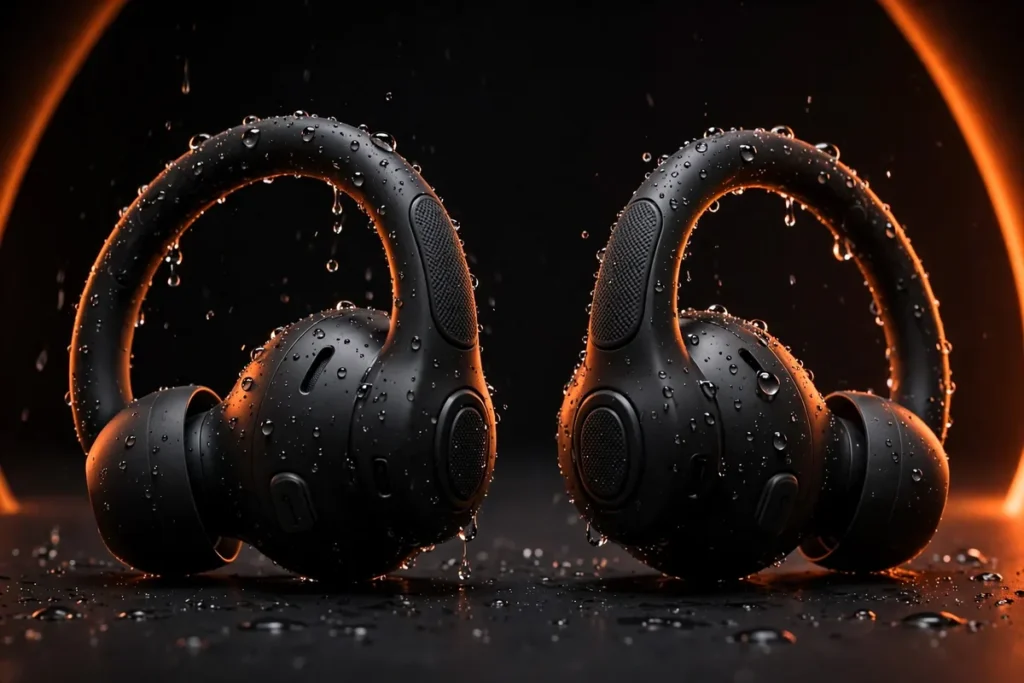
Metal asks more of an in-ear monitor than almost any other genre. The best IEMs for metal keep fast kick patterns separate instead of smeared, hold two or three guitar parts apart in the same frequency band, and keep the low end tight enough that a bass guitar stays a line, not a fog. This list ranks seven wired sets on those traits. It starts with metal, then gives rock and electronic music their own sections, because the three listening habits that prompted this page overlap but do not want identical tuning.
All seven are wired in-ear models from our scored database, copied with their published score sets. Wired overalls sit in a narrow band here, roughly 6.0 to 6.5, because the scoring convention gives wired sets neutral placeholder marks for battery and calls. Read the sound bar instead: it runs 8.6 to 9.4 across this list. For the broader wired field, see our best IEMs roundup; this page stays on heavy and fast music.
The shortlist
7Hz Timeless: Best for metal speed: planar driver, sound 8.8, value 8.8. Check Price on Amazon
Sennheiser IE 200: Highest sound score here at 9.4, with comfort at 8.8 for long sessions. Check Price on Amazon
Truthear Hexa: Best value at 9.2: a neutral, measurement-friendly tuning that keeps dense mixes honest. Check Price on Amazon
CrinEar Daybreak: Best for electronic separation: a tribrid array with treble detail a single driver cannot reach. Check Price on Amazon
Moondrop Aria 2: Best for rock: a smooth single dynamic driver with comfort at 8.7. Check Price on Amazon
Metal first: what the genre demands
Start with the kick drum. In thrash, death metal and metalcore, the kick is a rhythm instrument playing patterns as fast as any guitar part. A driver with slow decay turns those patterns into a continuous rumble, and the whole band seems to lose time. Planar and multi-driver sets earn their place here because they clear each hit before the next arrives. Next, the guitars. Down-tuned rhythm parts live low, lead lines live in the presence band, and a tuning that scoops the mids or floods the low end folds them together. Finally, the treble. Black metal and raw recordings carry a lot of energy up top; a set that is merely bright will fatigue, while a set with controlled, extended treble keeps tremolo picking intelligible for a full album.
The seven picks divide by how they meet that brief. The Timeless answers with planar speed. The IE 200 answers with a single dynamic driver tuned for detail, and it posts the highest sound score on this page. The Hexa answers with neutrality at a budget cost. The multi-driver sets, Daybreak and KE4 II, answer with separation, which is also why they lead the electronic section below. The Aria 2 answers with smoothness, the rock pick. The PRS6 answers with imaging, the analytical option for listeners who hear mixes as arrangements.
The picks, one by one
7Hz Timeless

7Hz Timeless 6.1/10
Why you: planar speed and resolution in an in-ear without flagship money. The Timeless resolves fine detail and punches harder than its size suggests, which is exactly the combination fast metal needs.
Trade-off: The coin-shaped shells fit some ears badly, and there is no microphone for calls. Judge it on the sound bar, not the wired overall.
In-ear · Wired · Planar driver
The Timeless leads because metal is a speed test and a planar driver is a speed answer. Kick patterns stay individual hits at tempos where dynamic drivers start to blur, cymbal work keeps its edges, and fast alternate picking reads as separate strokes. Technical death metal, thrash and progressive metal all gain from that clarity, and the set still carries enough low-end weight that groove and doom passages do not feel starved.
Fit is the gate. The round shells are unlike most IEM shapes, and ears that reject them will never hear what the driver does. Tip choice matters more than usual here; our best budget IEMs coverage discusses fit across the wired field. If the shells suit you, this is the metal specialist of the list, and value at 8.8 keeps it honest against sets costing far more.
Sennheiser IE 200

Sennheiser IE 200 6.5/10
Why you: daily carry and a first serious wired IEM, with sound at 9.4, the top mark on this page, and comfort at 8.8. Small shells, an easy fit, and detail that flatters well-recorded metal.
Trade-off: The sound shifts with tip fit more than most IEMs, the stock cable is thin and passes handling noise, and there is no microphone for calls.
In-ear · Wired · Dynamic driver
The IE 200 posts a 9.4 sound score, the highest here, and it earns it on balance rather than tricks. Guitars carry body and edge in the right proportions, vocals sit forward without shouting, and the low end is controlled enough for fast passages to stay clean. It is the set on this page we would hand to a listener who plays metal, rock and everything else in one playlist and wants one tuning to cover it.
Two handling notes from our Sennheiser IE 200 review: the sound depends on tip seal more than most, so spend the first session swapping tips, and the thin stock cable transmits handling noise when you move. Neither stops it being the comfort-and-detail pick, with comfort at 8.8 matching the best fits here. For black metal listeners, its treble stays composed on raw recordings that turn harsher sets into a chore.
Truthear Hexa

Truthear Hexa 6.2/10
Why you: a neutral, measurement-friendly tuning at a budget cost. Sound scores 9.0 and value 9.2: the Hexa became the reference its price band is judged against, and dense metal mixes stay honest on it.
Trade-off: The tuning is honest rather than exciting. Bass quantity is modest, the nozzle is on the larger side for small ears, and there is no microphone.
In-ear · Wired · Hybrid drivers
The Hexa is the thinking listener pick. Its neutral balance refuses to flatter a mix, so a well-produced metal record sounds wide and exact, and a poor one sounds poor. That honesty is why producers and measurement-led listeners keep it around, and for metal it pays off in separation: rhythm and lead guitars keep their places, and the bass guitar stays a melodic line under fast kick work.
The cost of honesty is excitement. Listeners who want the low end to push back, doom and groove fans especially, will find the Hexa lean, and its larger nozzle rules out some small ears. Read it as the reference tool of the list: the set that tells you what your records actually contain, at a value score of 9.2 that nothing else here matches.
Moondrop Aria 2

Moondrop Aria 2 6.4/10
Why you: a smooth single-dynamic-driver listen with comfort at 8.7. The Aria 2 keeps rock and classic metal easy on the ear over long sessions, with enough detail to stay interesting.
Trade-off: Mid-bass emphasis can sound thick on some tracks, and the stock tips are average, so budget for tips if the fit fights you.
In-ear · Wired · Dynamic driver
The Aria 2 opens the rock case. A single dynamic driver gives guitars and drums a coherent, physical presentation, the tuning is smooth where rock records are often bright, and comfort at 8.7 supports album-length sessions. Classic metal, hard rock and blues-rock all sit in its ground: midrange body is present, solos sing without glare, and live recordings keep their room.
It still works for metal proper, with sound at 8.9, but the mid-bass warmth that flatters rock can thicken very dense modern productions. Swap the average stock tips early; a firmer seal tightens the low end noticeably. Our Moondrop Aria 2 review covers the tuning against its predecessor. As the one-set answer for a rock-first library with metal in rotation, it is the easiest recommendation here.
Rock: body over bite
Rock changes the weighting. The kick patterns slow down, the guitar parts thin out, and the midrange becomes the whole story: a set that scoops the mids for metal sparkle will hollow out a power trio. The Aria 2 leads this section on tuning, and the IE 200 runs it close on detail with a lighter low end. The Hexa serves rock listeners who mix and want the record unvarnished. What rock does not need is the last word in transient speed, which is why the planar Timeless, superb as it is, is not the first name in this section.
Electronic: separation at tempo
High-tempo electronic music, drum and bass, J-rock and fast hybrid styles make the same demand as metal from the other direction: many fast events, deep sub-bass, and no patience for smear. The two multi-driver sets below were picked for that section of the brief, one tribrid and one hybrid, and both also serve metal listeners who prioritise separation over warmth.
CrinEar Daybreak

CrinEar Daybreak 6.1/10
Why you: the benchmark balance: a tribrid array with sound at 8.6 and the treble detail a single driver cannot reach. Fast breaks, layered synths and sub-bass lines each keep their own space.
Trade-off: Early production batches drew real build complaints, and the larger shell will not suit small ears. You pay tribrid money for the detail.
In-ear · Wired · Tribrid drivers
The Daybreak is the separation specialist. Three driver types divide the range between them, so a drum and bass break can run at full tempo over a sub line while a synth lead stays placed on top, with none of the three stepping on the others. The same division serves dense metal: layered guitars separate, and cymbal detail survives under them. Sound at 8.6 is the lowest bar in this list, which says more about balance than ability; nothing here resolves small detail like it.
Two cautions stand. The shells are large, so small ears should treat fit as an open question, and early batches drew build complaints that buyers should weigh. For electronic-first listeners and metal fans who hear in layers, it is still the most capable tool here, and its value score of 8.2 is fair for a tribrid at this level.
Kiwi Ears KE4 II

Kiwi Ears KE4 II 6.3/10
Why you: critical listening across all genres, with sound at 8.8 and comfort at 8.4. The hybrid array keeps electronic low end tidy and metal guitars separated, without pushing either too far.
Trade-off: Our launch-window coverage was scored from manufacturer materials, with no independent measurements yet, and the stock cable has no microphone.
In-ear · Wired · Hybrid drivers
The KE4 II is the all-rounder of the electronic pair: a hybrid set tuned for balance, equally at home on a drum and bass playlist, a rap record with fast, dense production, or a metal library. Its low end is present but disciplined, so sub-heavy electronic tracks keep their punch without swallowing the parts above them, and its comfort at 8.4 suits the long mixed sessions this kind of listening becomes.
One flag, stated plainly: our coverage of this set is launch-window work scored from manufacturer materials, so treat its 6.3 overall as a well-researched early read rather than a settled verdict. The tuning brief it follows, balanced with separated parts, is exactly the electronic brief, which is why it holds this slot while that verdict settles.
DUNU PRS6

DUNU PRS6 6/10
Why you: imaging and separation first, with sound at 8.6. Listeners who play competitively or listen analytically get precise placement of every part in a dense mix.
Trade-off: The bass shelf is low and the treble divides opinion. Listeners who want weight and warmth will hear this tuning as thin.
In-ear · Wired · Multi-driver
The PRS6 closes the list as the analyst pick. Its imaging is the sharpest here: in a dense progressive or technical mix, each part has an address, and following one guitar line through a passage is easy. That precision is also why it suits analytical listeners across genres, from prog metal to complex electronic arrangements.
The trade is weight. A low bass shelf and a treble tuning that divides opinion make it the wrong set for doom, sludge and warmth-first rock. Buy it to hear how a record is built, not to be carried by it. Within that brief, nothing else on this page places parts as exactly.
Compared: the seven picks side by side
| Pick | Overall | Sound | Comfort | Value | Best for | |
|---|---|---|---|---|---|---|
| 7Hz Timeless | 6.1 | 8.8 | 7.8 | 8.8 | Metal speed, planar | Check Price on Amazon |
| Sennheiser IE 200 | 6.5 | 9.4 | 8.8 | 8.9 | Top sound score, comfort | Check Price on Amazon |
| Truthear Hexa | 6.2 | 9.0 | 8.4 | 9.2 | Neutral reference, value | Check Price on Amazon |
| Moondrop Aria 2 | 6.4 | 8.9 | 8.7 | 8.5 | Rock, smooth dynamic | Check Price on Amazon |
| CrinEar Daybreak | 6.1 | 8.6 | 7.4 | 8.2 | Electronic, tribrid separation | Check Price on Amazon |
| Kiwi Ears KE4 II | 6.3 | 8.8 | 8.4 | 8.6 | All-rounder, hybrid | Check Price on Amazon |
| DUNU PRS6 | 6.0 | 8.6 | 8.2 | 7.8 | Imaging, analytical | Check Price on Amazon |
Also consider
Sennheiser IE 600: the flagship single-dynamic step up from the IE 200, also scoring 9.4 for sound in our database, for listeners who want the same house tuning with more resolution. Etymotic ER4XR: deep-fit isolation and a forward, accurate midrange; our Etymotic ER4XR review covers who its fit suits. Moondrop Chu II: the budget door into this list, with sound at 8.8 and value at 9.8, for a first wired set before spending more.
Buying notes
Buy for your dominant genre, then check fit. Metal-first listeners should start with the Timeless and the IE 200. Rock-first listeners should start with the Aria 2. Electronic-first listeners should start with the Daybreak and the KE4 II. Listeners who mix, produce or simply listen analytically should hold the Hexa and the PRS6 up against each other: one neutral, one precise.
Whatever you choose, spend the first session on tips. Every set here changes with its seal, the IE 200 most of all, and a set that seems bass-light out of the box is often a set that is not sealed. A modest dongle DAC covers the driving needs of the whole list and adds EQ if you want to trim treble for raw recordings or lift the low end for the leaner sets.
Frequently asked questions
What makes an IEM good for metal?
Speed, separation and controlled bass. Fast kick work and layered guitars blur on slow drivers, and a boosted, loose low end buries the guitar band. The wired sets here keep bass on a short leash and resolve dense passages part by part. Fit matters as much as tuning: a broken seal thins the low end and pushes listeners to raise the volume, so tip fit is part of the sound.
Are planar IEMs better for metal?
For speed, often yes. The 7Hz Timeless uses a planar driver that starts and stops quickly, which keeps double-kick patterns and tremolo picking articulate. The trade is fit and tuning taste: its coin-shaped shells suit some ears badly, and listeners who want a warmer, heavier low end usually prefer a dynamic or hybrid set such as the Moondrop Aria 2 or the Kiwi Ears KE4 II.
Do wired IEM overalls look low next to wireless earbuds?
They do, and the gap is structural. Our wired scores carry neutral placeholder marks for battery and calls, since a wired set has no battery and usually no microphone, which pulls the overall down. Judge wired IEMs on the sound, comfort and value bars. On sound alone, this list runs from 8.6 to 9.4, level with or ahead of most wireless flagships.
Which of these suits electronic music and drum and bass?
The CrinEar Daybreak and the Kiwi Ears KE4 II. Both are multi-driver sets with the separation high-tempo electronic music needs, and both keep sub-bass tidy instead of letting it smear across fast breaks. The Daybreak is the more exact tool; the KE4 II is the easier all-day listen across mixed playlists.
What source do these IEMs need?
A phone with a decent dongle DAC covers the whole list. None of these sets is hard to drive, and a dongle with EQ, covered in our dongle DAC coverage, lets you trim treble or lift bass per genre. Balanced cables and desktop power add headroom some listeners value on the planar Timeless, but they are optional, not required.

I am the founder of Sound Mavericks, where I provide the polite truth about audio equipment. I started this site because consumer electronics reviews are often too technical. Instead of using a silent lab, I test headphones, earbuds, and Bluetooth speakers in the real world – like on a noisy subway or in a busy coffee shop.
To stay independent, I buy my own review units (mostly from the United States) rather than accepting free gifts from brands. Once I finish testing a product, I sell it locally to our community. My goal is to help you understand sound quality, active noise cancellation (ANC), and battery life without the marketing hype.