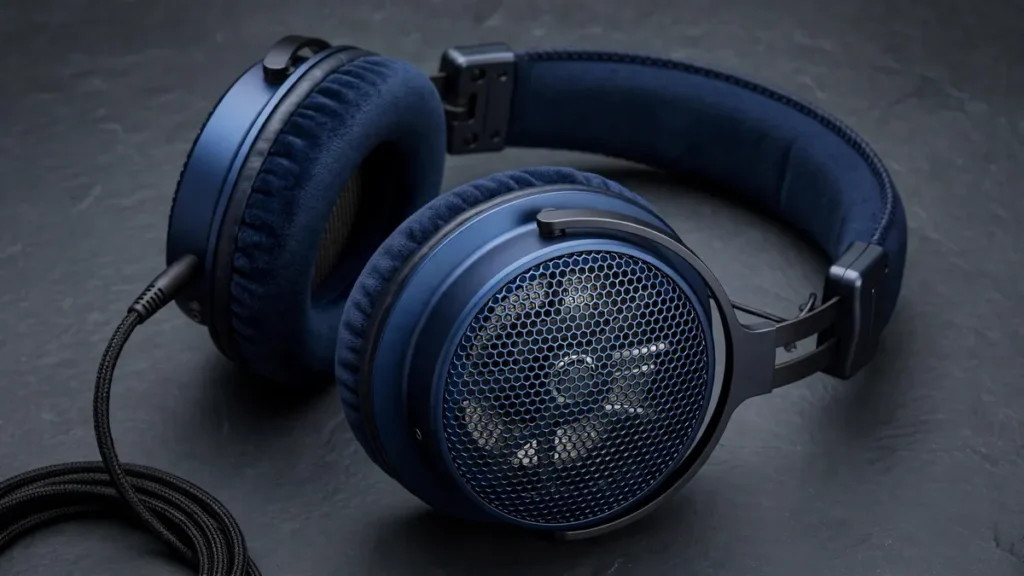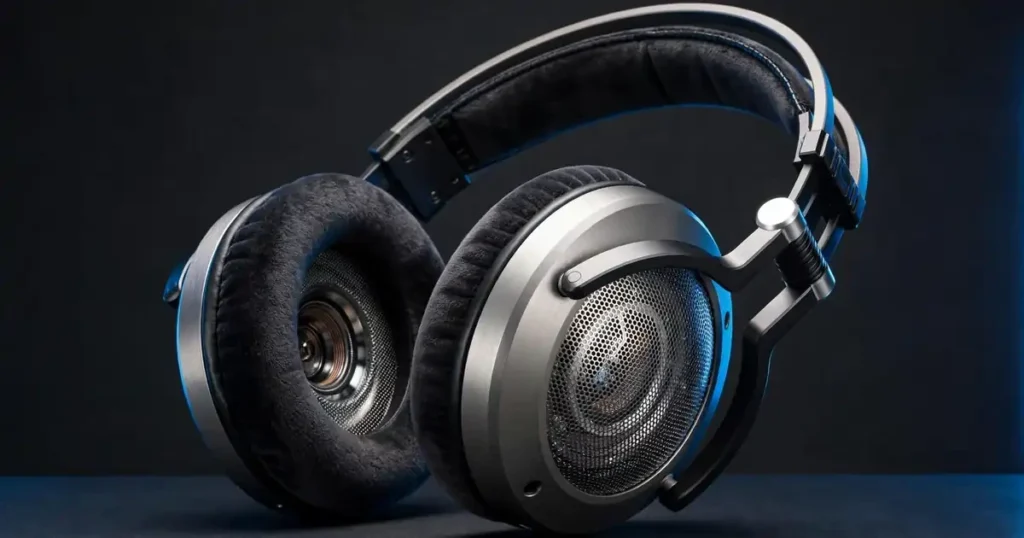
The Sennheiser HD 700 is discontinued — and has been for years. You won’t find it on retail shelves, and Sennheiser’s lineup moved on long ago. What you will find is a used-market classic: a 2012-era open-back that still trades daily among audiophiles who call it the missing link between the HD 650 and the HD 800. Our research-based analysis — specs, reviews, measurements, and years of owner reports — finds a warm, hyper-detailed, supremely comfortable headphone with one famous flaw to know before you buy. SoundMavericks score: 8.4/10.
Availability note: The HD 700 is out of production. Expect used, renewed, or third-party marketplace listings only — never new retail. Our used-buying checklist below covers what to inspect.
Research-based review: factory specs, published measurements, and long-term owner reports. No hands-on testing claimed.
Sennheiser HD 700 Specifications
The factory specs Sennheiser published at launch still matter — they tell you exactly what you’re getting on the used market and what source gear it needs.
| Design | Open-back, over-ear (circumaural) |
| Driver | 40 mm dynamic (Duofol) with ventilated magnet system |
| Frequency response | 10 Hz – 42 kHz (8 Hz – 44 kHz at −10 dB) |
| Impedance | 150 ohms — easier to drive than the 300-ohm HD 800 |
| Sensitivity | 105 dB SPL (1 kHz, 1 V) |
| Distortion (THD) | Under 0.03% (1 kHz, 105 dB) |
| Cable | 3 m detachable, silver-plated oxygen-free copper |
| Connector | 6.3 mm (1/4 in) stereo plug; detachable earcup connectors |
| Weight | Approx. 270 g without cable — light for a flagship |
| Status | Launched 2012 — discontinued; used market only |
A spec-sheet warning: some databases list the HD 700 at 300 ohms. That’s wrong. Sennheiser’s technical data consistently says 150 ohms, and that’s the figure our analysis uses.
SoundMavericks Verdict: Why the HD 700 Still Matters
Our take, from the full record of reviews and a decade of owner impressions: the HD 700 is the most interesting “what if” in Sennheiser’s history. It borrows the HD 650’s warmth and the HD 800’s resolving power and staging ambition without fully committing to either — It sits tonally between them, melding the 650’s dark-leaning tone with more refined detailing.
What keeps it relevant: nothing current at used-market pricing does exactly this. Detail retrieval and imaging punch far above its era, comfort is still reference-grade, and the warm-but-resolving signature spans classical, jazz, rock, and soul. Its one controversy — an upper-treble peak some find hot — is well documented and manageable. Shopping used for an open-back that sounds special rather than just correct? The HD 700 deserves a shortlist spot. Want a safe, neutral, buy-new headphone? Buy something current.
Sound Quality: Warm, Detailed — and One Famous Treble Peak
Bass. Accurate rather than emphatic. Owners consistently describe clean, well-controlled low end with genuine warmth — kick drums have real thump, but this is no basshead headphone. Pair it with a warm source and it’s satisfying; pair it with a cold analytical chain and the bass can feel polite.
Mids. The HD 700’s comfort zone. Vocals come through with striking presence — long-term owners single out vocal reproduction as the standout trait. Natural and unforced rather than pushed forward, which is why the HD 700 gets recommended so often for classical, jazz, and acoustic music.
Treble. The honest part: a documented peak in the upper treble (around 5–6 kHz on most measurements). Some hear added air and sparkle; others call it hot or spiky, with fatigue on long sessions or bright recordings. Both camps are real — sensitivity here varies person to person. Even treble critics agree on everything else it does well — which says a lot about the fundamentals. Treble-sensitive? Audition first, or plan on gentle EQ, which tames the peak easily.
Soundstage and imaging. Outstanding for its era and still impressive. The angled acoustic baffle — drivers tilted to mimic reference loudspeakers — produces a wide, three-dimensional stage with precise imaging. That’s the HD 800 family DNA showing through, and it’s why the HD 700 remains a favorite for orchestral music and live recordings. For background on the design, see our open-back vs closed-back explainer.
Bottom line on sound: warm, balanced, and highly resolving, with class-leading comfort and staging — held back for some listeners by that treble peak. We score Sound at 8.5.
Design, Build, and Legendary Comfort
The HD 700 looks like nothing else Sennheiser made: an industrial, concept-car design with exposed stainless-steel mesh molded to the acoustic chamber and a titanium-and-black finish. Polarizing in photos, better in person — build quality is genuinely high even though the materials are mostly high-grade plastic rather than metal.
Comfort is where it goes from very good to legendary. Roughly 270 grams, plush velour pads, a silicone-treated headband that barely presses the skull, and a dual-material yoke for stability — multiple professional reviewers called it the most comfortable headphone they’d worn, including over far pricier flagships. Glasses wearers report no pressure issues. The light clamping force is deliberate: Sennheiser’s multilayer headband design also suppresses bass-level dips. For multi-hour sessions, this alone justifies hunting one down. Comfort: 9.5.
Used-market caution: headband padding softens and wears with age — replacements exist but cost extra, so check our buying checklist below.
Does the HD 700 Need an Amp?
At 150 ohms and 105 dB, a phone or laptop will get the HD 700 loud — but “loud” isn’t “right.” It scales clearly with better amplification: tighter bass, a more settled treble, a blacker background. Owner consensus strongly favors a desktop amp, and many report the HD 700 pairs especially well with warmer amplification — tube amps in particular smooth the treble peak that neutral solid-state chains can emphasize.
Budget for an amp if you don’t own one. Browse our best headphone amps guide, and if you’re unsure how impedance and sensitivity interact, our amp explainer covers it. Considering tubes? See tube vs solid-state and preamp vs amp before you spend.
HD 700 vs the Sennheiser Family
vs HD 650 / HD 6XX. Different flavors, not different leagues. The HD 650 (and its twin, the HD 6XX) is smoother, darker, more forgiving — the ultimate long-session headphone. The HD 700 is cleaner, faster, more detailed, and more comfortable, with a bigger stage — but its treble demands care. Own a 6XX and crave more air and resolution? A used HD 700 is a legitimate upgrade. Want zero fuss? The 6XX remains the safer buy.
vs HD 660S2. The HD 660S2 is the modern successor in this slot: smoother treble, punchier bass, available new with a warranty. On pure tuning it’s the more balanced, less controversial headphone. The HD 700 counters with a wider soundstage, lighter weight, and typically a lower used price. New-with-warranty versus used-classic is the real decision.
vs HD 800. The HD 800 is more resolving and more neutral — and was priced like it. The HD 700 is the warmer, more musical, more forgiving sibling. Several reviewers who found the HD 800 too analytical preferred the HD 700 for pure enjoyment. Think of it as the HD 800’s fun-loving younger brother, not its replacement.
Buying Used: What to Check Before You Pay
Every HD 700 purchase is a used purchase. Our checklist, drawn from common owner reports:
- Headband padding. The silicone-treated pad softens and flakes with age. Minor wear is cosmetic; heavy wear means budgeting for a replacement.
- Ear pads. Velour pads compress over years, changing the sound (less bass, more treble edge). Factor replacements into your offer if they’re flattened.
- Drivers and channel balance. Play a mono test tone and sweep the balance — listen for rattling, buzzing, or one side louder than the other.
- Cable and connectors. Check both earcup connectors seat firmly and the 6.3 mm plug isn’t intermittent. Aftermarket cables exist; a missing original isn’t a dealbreaker.
- Grilles and mesh. The exposed steel mesh dents if dropped. Small marks are cosmetic; check nothing is pushed in far enough to touch the driver.
- Return policy. Buy from sellers or platforms with returns. Treble sensitivity is personal — keep the option to send it back if the peak bothers you.
A well-kept HD 700 with fresh pads is sonically nearly identical to a new one — these are durable headphones. Just don’t pay new-headphone money for a tired pair.
Who Should Buy It — and Who Should Skip It
Buy it if: you shop the used market confidently; you want HD 800-adjacent staging and detail without flagship cost; you listen to classical, jazz, acoustic, or vocal music; you wear headphones for hours and comfort is king; you own (or plan to buy) a decent amp, ideally a warm one.
Skip it if: you’re highly treble-sensitive and don’t want to EQ; you need a warranty and new-unit peace of mind — look at the HD 660S2 or HD 550 instead; bass impact is your top priority; you need isolation or portability — it’s open-back and stays home.
Frequently Asked Questions
Is the Sennheiser HD 700 discontinued?
Yes. Launched in 2012, it’s been out of production for years. You can only buy it used, renewed, or through third-party marketplace sellers — never as new retail stock.
Is the HD 700 worth buying in 2026?
For used-market shoppers, yes — with eyes open. Its detail, soundstage, and comfort still compete with modern mid-range open-backs, provided you verify condition and know about the treble peak first.
Does the HD 700 need an amplifier?
It benefits strongly from one. At 150 ohms and 105 dB, phones and laptops reach reasonable volume, but a dedicated amp tightens bass and settles treble. Warmer and tube amps pair particularly well.
Is the HD 700 better than the HD 650?
Different, not strictly better. The HD 700 is more detailed, faster, more comfortable, and stages wider; the HD 650 (and HD 6XX) is smoother, darker, and more forgiving for long sessions.
Why is the HD 700 controversial?
A measured peak in the upper treble (around 5–6 kHz) sounds hot or fatiguing to some listeners, airy and sparkling to others. It’s the most debated aspect of the headphone — and the main reason to audition first or buy with a return option.
Is the HD 700 good for classical music?
Excellent — one of its strongest genres. The wide, precise soundstage, natural mids, and refined presentation suit orchestral and chamber music particularly well.
The Final Word
History has been kinder to the HD 700 than its launch reception suggested. Dismissed as an awkward middle child, it matured into a cult classic: warm where the HD 800 is cold, exciting where the HD 650 is sleepy, and comfortable beyond anything near its used price. The treble peak is real — but it’s the only meaningful asterisk on an otherwise superb headphone.
If the used market is your hunting ground and you value staging, detail, and all-day comfort, the HD 700 is one of the smartest buys in second-hand audio. Check the pads, check the headband, buy with returns, and budget for a warm amp. Do that, and you’ll understand why owners keep returning to this strange, wonderful headphone years after it left the shelves.
The HD 700 is discontinued, so Amazon results show used, renewed, and third-party listings. Compare condition and seller ratings carefully — see our checklist above.

I am the founder of Sound Mavericks, where I provide the polite truth about audio equipment. I started this site because consumer electronics reviews are often too technical. Instead of using a silent lab, I test headphones, earbuds, and Bluetooth speakers in the real world – like on a noisy subway or in a busy coffee shop.
To stay independent, I buy my own review units (mostly from the United States) rather than accepting free gifts from brands. Once I finish testing a product, I sell it locally to our community. My goal is to help you understand sound quality, active noise cancellation (ANC), and battery life without the marketing hype.