If you have been shopping for a desktop headphone setup, you have probably seen two little metal boxes that look almost identical and both promise better sound: the preamp and the headphone amp. They are not the same thing, and confusing them is one of the most common beginner mistakes in personal audio.
The short version before the details: a preamp controls and conditions the signal (source switching, volume, gain to line level), while a headphone amp powers your headphones. Most wired setups need an amp; only some need a preamp too. Wireless ANC listeners need neither.
Need a preamp? Only if you have multiple sources to switch between, a turntable, or powered speakers you want to feed. Need a headphone amp? Yes, if your headphones are hard to drive (high impedance or power-hungry planars) and you want them at their best. Most desktop DAC/amp combos cover the amp job on their own.
What a Preamp Actually Does in a Headphone Setup
A preamp (short for preamplifier) is the control center of an audio chain. It does not drive headphones — it prepares the signal so the next device in the chain can do its job properly. In a headphone-focused setup, a preamp handles some or all of the following:
- Source switching — flip between your DAC, a CD player, and a turntable without replugging cables.
- Volume and gain control — a master volume knob for the whole system.
- Bringing weak signals up to line level — most sources do not need this anymore, but a turntable cartridge does (via a phono preamp with the required RIAA equalization).
- Tone control and balance — shaping the sound before it reaches the amp.
- Buffering — keeping the source and the amp electrically happy together so impedance mismatches do not dull the sound.
In a typical desktop chain, the preamp sits between the DAC and the headphone amp. Some headphone amps also include a basic preamp stage — preamp outputs on the back that feed powered monitors — but that does not make them preamps in the full sense.
What a Headphone Amp Actually Does
A headphone amp takes the line-level signal from your DAC or preamp and adds the current your headphones’ drivers need to move. Headphones typically present a load between 16 and 600 ohms — far higher than the 4 or 8 ohm load a speaker amp expects — and a dedicated headphone amp is built specifically for that job.
This matters most with high-impedance or low-sensitivity headphones. Plugged straight into a phone or laptop, they sound quiet, thin, and lifeless. Give them proper amplification and they wake up: better dynamics, tighter bass, cleaner detail.
A few things a headphone amp is not:
- Not a speaker power amp. A speaker amp delivers tens or hundreds of watts into 4–8 ohms. Connect headphones to speaker terminals and you can fry the drivers with just a few watts.
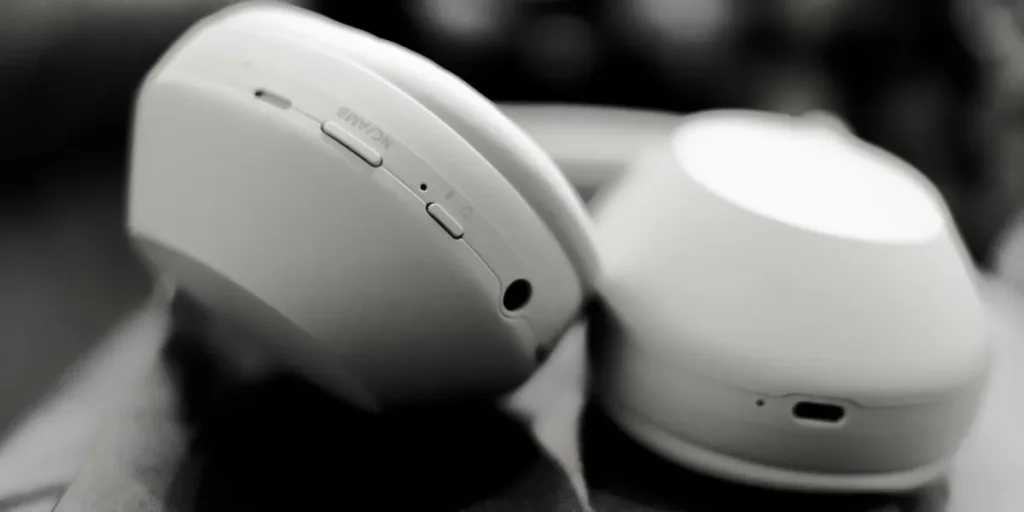
- Not magic. If your headphones are easy to drive — like most modern wireless noise cancelling headphones (Sony WH-1000XM4C, for example) — a big desktop amp adds nothing audible. Those headphones have amplification built in and tuned for their own drivers.
Preamp vs Amp: Side-by-Side Comparison
| Feature | Preamp | Headphone Amp |
|---|---|---|
| Main job | Control the signal: source switching, volume, gain to line level | Power the drivers: deliver voltage and current to headphones |
| Drives headphones directly? | No — preamp outputs are meant to feed an amp, not headphones | Yes — that is its entire purpose |
| Typical inputs | Multiple: DAC, CD player, phono, streamer | One line-level input (from DAC or preamp) |
| Typical outputs | Line-level RCA to an amp or powered speakers | Headphone jacks (6.35 mm, 4.4 mm balanced); sometimes preamp-outs |
| Volume control | Master system volume | Headphone volume (sometimes with gain settings for sensitive vs. demanding headphones) |
| Who needs it? | Multi-source desktops, turntable users, powered-monitor setups | Anyone with hard-to-drive wired headphones |
| Can be skipped? | Yes — most DACs feed a headphone amp directly just fine | Yes — if your headphones are easy to drive or have built-in amplification |
How They Connect: The Desktop Chain, in Order
The classic wired headphone chain runs in one direction. Get the order right and everything behaves:
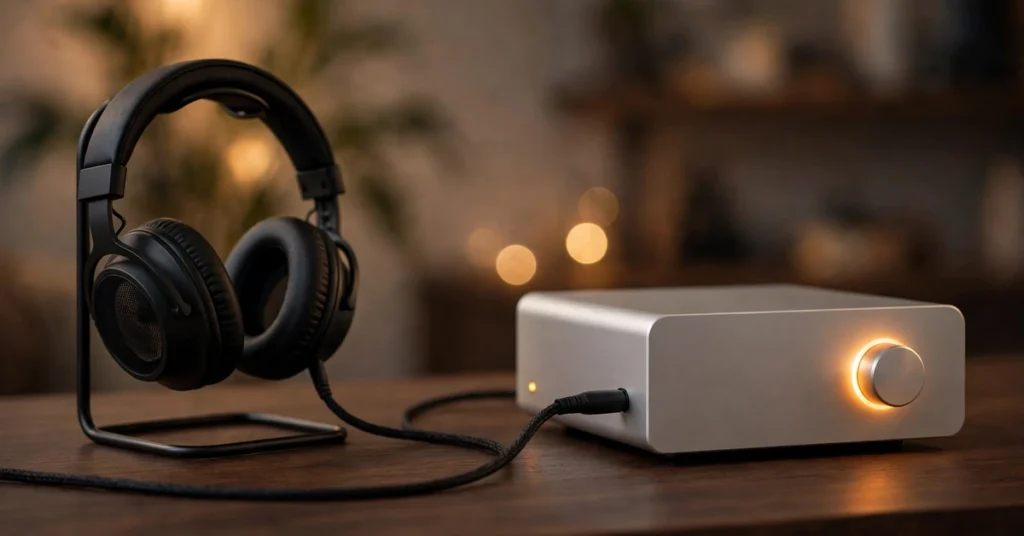
Source → DAC → Preamp (optional) → Headphone Amp → Headphones
Concretely: your computer sends audio over USB to a DAC, which converts it to an analog line-level signal. That goes into the preamp (if you have one) for source switching and volume control, then into the headphone amp, which drives your headphones. The preamp is the only optional stage — a DAC feeds a headphone amp directly in most setups with zero downside. Many desktop boxes merge stages anyway: a DAC/amp combo like the FiiO K11 handles both conversion and amplification in one chassis.
Note that this entire chain only applies to wired listening. Wireless headphones skip it completely — the DAC, amp, and tuning all happen inside the earcup, and the signal arrives over Bluetooth (see how Bluetooth codecs affect quality).
Do You Need a Preamp, an Amp, or Both?
Wireless noise cancelling headphones: neither
If your daily driver is a modern pair of wireless ANC headphones — any of our best noise cancelling headphones — you need neither box. These headphones have a built-in DAC and amplifier tuned specifically for their drivers, and they handle noise cancelling, EQ, and volume internally. Adding external amplification does nothing except complicate the chain. Even the budget picks on our under-100 ANC roundup are self-sufficient.
Wired headphones from a laptop or phone: probably an amp
If your wired headphones sound quiet or thin out of your device, an amp is the fix: the tiny amp inside that device is simply outclassed by a dedicated desktop unit. A preamp adds nothing here.
Multiple sources on one desk: preamp + amp
This is where a preamp earns its place. If you want to run a PC, a CD player, and a turntable into one headphone amp — or share one volume knob between headphones and powered desktop speakers — a preamp’s source switching and volume control is exactly what you need.
Turntable + headphones: phono preamp + headphone amp
Vinyl needs a special kind of preamp first. A turntable cartridge produces a tiny signal that also needs RIAA equalization, so you need a phono preamp before anything else — many modern turntables have one built in. After that, it is the normal chain: phono preamp → headphone amp → headphones.
Common Mistakes to Avoid
- Plugging headphones into a preamp output. The number-one beginner error. A preamp output is line-level, meant to feed an amp — it cannot drive headphone drivers, and the result is weak, distorted sound.
- Plugging headphones into speaker amp terminals. The dangerous one. A speaker power amp delivers far more current than headphone drivers can survive.
- Buying a preamp to get more volume. If your headphones are too quiet, you need an amp, not a preamp. A preamp adds no driving power.
- Assuming wireless headphones join this chain. They do not. Bluetooth and Auracast receivers handle conversion and amplification internally, so a DAC, preamp, or amp has no place between them.
Example Gear: What Each Role Looks Like
Here is one example of each role in the chain — all verified on their Amazon listings.
FiiO K11 — The Amp Side (with a DAC Built In)

The FiiO K11 is the classic first desktop upgrade: a DAC plus a headphone amp in one compact box, with both single-ended and balanced headphone outputs. It takes the digital signal from your PC and does the amp’s job — delivering real power to wired headphones that your phone or laptop struggles with.
Schiit Sys — The Preamp Side

The Schiit Sys shows what a pure preamp is in its simplest form: a two-input switch and a volume knob, no power, no amplification. Put it between your sources and your headphone amp to flip between them and control system volume — but never plug headphones into it directly.
Schiit Magni Heretic — An Amp That Doubles as a Preamp

The Schiit Magni Heretic illustrates where the two roles blur: it is a dedicated headphone amp that also provides preamp outputs, so it can drive your headphones and feed powered desktop speakers at the same time. For many single-source desks, it removes the need for a separate preamp entirely.
The Verdict
For headphone listeners, the question has a simple hierarchy. The headphone amp is the essential power stage — if your wired headphones are hard to drive, it is the single box that changes the sound. The preamp is the control stage — source switching, master volume, vinyl duties — and most listeners never need a standalone one, because their DAC feeds the amp directly.
So diagnose your actual bottleneck: headphones too quiet and lifeless → you need an amp (or a DAC/amp combo). Juggling multiple sources or powered speakers → add a preamp. Listening on wireless ANC headphones → put the wallet away; your earcups already contain everything this article describes.
Frequently Asked Questions
Can I use a preamp as a headphone amp?
No. A preamp’s outputs are line-level signals designed to feed an amplifier, not headphone drivers. Plugging headphones directly into a preamp gives you weak, distorted sound at best. You need a headphone amp to actually drive them.
Do I need a headphone amp for my noise cancelling headphones?
Generally no. Most modern wireless noise cancelling headphones have a built-in amplifier tuned for their own drivers, and wireless models bypass external gear entirely. A desktop amp only helps if your headphones are wired and hard to drive.
Can I connect my DAC directly to a headphone amp?
Yes — that is the standard setup, and a standalone preamp is optional in between. A DAC’s line-level output is exactly what a headphone amp expects. Add a preamp only if you need source switching, master volume control, or a phono stage for vinyl.
What order do a DAC, preamp, amp, and headphones connect in?
Source → DAC → preamp → headphone amp → headphones. The signal flows in one direction: the DAC converts digital to analog, the preamp controls the signal, the amp powers the drivers, and the headphones turn it into sound. Skip the preamp stage if you only have one source.
Do I need both a preamp and an amp for vinyl and headphones?
You need a phono preamp (to bring the cartridge signal to line level with RIAA equalization) plus a headphone amp. Many modern turntables include a built-in phono preamp, in which case you only need the headphone amp.

I am the founder of Sound Mavericks, where I provide the polite truth about audio equipment. I started this site because consumer electronics reviews are often too technical. Instead of using a silent lab, I test headphones, earbuds, and Bluetooth speakers in the real world – like on a noisy subway or in a busy coffee shop.
To stay independent, I buy my own review units (mostly from the United States) rather than accepting free gifts from brands. Once I finish testing a product, I sell it locally to our community. My goal is to help you understand sound quality, active noise cancellation (ANC), and battery life without the marketing hype.