

The best budget soundbars promise one thing: television you can actually follow, without spending flagship money. The budget tier is crowded with near-identical black boxes, so this guide sorts it by job rather than by badge. Seven picks cover a 2.1 system with a wireless subwoofer, two compact bars for small rooms, the cheapest sensible route to Dolby Atmos, a step-up single bar, and a genuine 5.1 surround system at a tier where rivals only simulate it.
This is a research-based roundup. The verdicts come from manufacturer specifications, channel layouts, what ships in the box and published test coverage, not from hands-on listening in our room. No prices appear anywhere in this guide; budget is a tier, not a number, and each pick states what it includes and what it leaves out, which is where budget bars differ most.
Best overall budget pick: Samsung HW-B550F: Samsung’s current entry 2.1 system with a wireless subwoofer and DTS Virtual:X, the combination most budget buyers need. Check Price on Amazon
Best for dialogue: Bose TV Speaker: a dedicated dialogue mode and wide-dispersion drivers aimed at the thing budget TV audio fails at: clear speech. Check Price on Amazon
Best for small rooms and desks: Yamaha SR-C20A: under 24 inches wide with a built-in subwoofer, sized for monitors and small TVs where a separate sub box has no home. Check Price on Amazon
Best budget Atmos: TCL S45H: real Dolby Atmos and DTS:X decoding plus automatic room calibration at this level, without needing a subwoofer box. Check Price on Amazon
Best step-up single bar: JBL Bar 300 MK2: a 5.0-channel Atmos presentation from one bar using MultiBeam, for buyers who want the effect with nothing else to place. Check Price on Amazon
Best true surround on a budget: Sony HT-S40R: a genuine 5.1 system, bar, subwoofer and two real rear speakers, at a tier where most rivals only simulate surround. Check Price on Amazon
Best single-bar bass: Yamaha SR-B20A: dual built-in subwoofers give it more low-end authority than most one-box bars, with DTS Virtual:X for width. Check Price on Amazon
What the budget tier can and cannot do
Set the expectation correctly and this tier delivers. Every pick here will beat a television’s built-in speakers by a wide margin, because TV speakers are small, often rear-firing, and share one cramped enclosure. A dedicated centre-focused bar gives dialogue its own space, and even a modest subwoofer adds the weight that makes films feel finished. Dialogue clarity, not spectacle, is the honest headline win at this level.
The limits are just as consistent. Surround is usually virtual, height effects are positional hints rather than sounds overhead, and Wi-Fi streaming mostly disappears. When those features matter, the step up is our best soundbars guide, where the flagship single bars and full systems live. Within the budget tier, the smart money goes on the bar whose shape fits the room and the box contents fit the job.
The best budget soundbars, pick by pick

Why you: Samsung’s current entry 2.1 system includes a wireless subwoofer and DTS Virtual:X surround expansion, the combination most budget buyers actually need.
Trade-off: The surround effect is virtual, and there is no Wi-Fi streaming built in.
The B550F is the sensible default. The bar handles dialogue and the front stage while a wireless subwoofer, free to sit wherever the room allows, covers bass that a slim bar cannot produce. DTS Virtual:X widens the sound beyond the bar’s width, Voice Enhance pushes speech forward for late-night viewing, and a Bass Boost mode exists for the films that want it. Setup is one HDMI cable and a power socket for the sub.
Nothing here pretends to be more than it is. The surround is a convincing widening, not sound from behind, and music streaming runs over Bluetooth only. As the first upgrade from TV speakers for a mixed diet of sport, drama and films, it covers the brief with the fewest compromises in the tier.
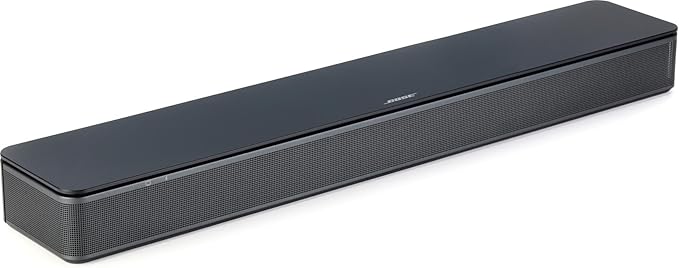
Why you: Its dialogue mode and wide-dispersion drivers target exactly what budget TV audio usually fails at: hearing speech clearly.
Trade-off: There is no subwoofer, so action films lack low-end weight unless you add the optional Bose bass module.
Bose built this small bar around a single complaint: viewers who cannot hear what anyone is saying. Two full-range drivers angle outward for a wider stage than the cabinet suggests, and the dialogue mode lifts the vocal range so speech stays forward even under music and effects. It connects over HDMI-ARC or optical, sets up in minutes, and plays music over Bluetooth when the TV is off.
The compact cabinet sets the ceiling. Bass is present but light, and big action scenes will not trouble the furniture. Bose sells a bass module that connects to it later, which gives the bar a growth path most budget rivals lack. For dialogue-first viewing in a small or medium room, it is the most focused tool in this tier.

Why you: At under 24 inches wide with a built-in subwoofer, it fits under monitors and small TVs where a separate subwoofer box has no home.
Trade-off: The compact cabinet limits maximum volume and bass depth for larger rooms.
Some rooms cannot take a subwoofer box at all: a desk, a bedroom dresser, a small flat where the TV sits on a narrow stand. The SR-C20A is built for exactly those spots. Inside a cabinet under two feet wide, Yamaha fits stereo drivers and a built-in subwoofer, plus a Clear Voice mode and virtual surround processing. It doubles happily as a monitor speaker, which is a role the bigger bars here cannot play.
Compactness caps the output. It will fill a small room and satisfy a desk, but a large living room will find its limits on film night. Within its intended territory, the balance of size, clarity and features is the strongest in the tier.

Why you: It is one of the few bars at this level with real Dolby Atmos and DTS:X decoding plus automatic room calibration, without needing a subwoofer box.
Trade-off: As a 2.0 bar its bass is limited, and the Atmos effect is positional rather than room-filling.
Atmos decoding usually starts a tier above this one, which makes the S45H the interesting outlier. It decodes Dolby Atmos and DTS:X rather than merely accepting the signal, runs automatic room calibration to tune itself to the space, and does it all from a single 2.0 bar with no separate boxes. For a streaming-first household that wants height effects on a budget, this is the cheapest honest way in.
Honesty cuts both ways. With no subwoofer and no up-firing array, the Atmos effect reads as a taller, wider stage rather than sounds placed overhead, and bass stays modest. Judge it as a very capable 2.0 bar with real format support, and it delivers; judge it against full systems and it will feel like a trailer for the format.

Why you: The MK2 builds a 5.0-channel Atmos presentation from one bar using MultiBeam, for buyers who want the effect with no subwoofer or rears to place.
Trade-off: It sits at the top of the budget tier, and bass cannot match systems with a separate subwoofer.
The Bar 300 MK2 is the bridge between this tier and the flagships. JBL’s MultiBeam processing uses the room’s walls to place surround effects from a single bar, and five channels of real drivers give those effects something solid to work with. HDMI eARC keeps the connection current, and the all-in-one format means the whole upgrade is one box and one cable.
It costs the most here, and the absence of a subwoofer still shows in the lowest octave, where the Samsung system in this guide digs deeper. What the money buys is simplicity without giving up Atmos or a genuine multi-channel layout. For a tidy living room that vetoes extra boxes, it is the natural end of the budget search.

Why you: This is a genuine 5.1 system, bar, subwoofer and two real rear speakers fed by a wireless amplifier, at a price tier where most rivals simulate surround.
Trade-off: The rear speakers are wired to their amplifier, and there is no Dolby Atmos decoding.
Every other bar here fakes surround with processing. The HT-S40R simply includes it: a bar for the front, a subwoofer for the low end, and two compact rear speakers that connect to a wireless amplifier behind the sofa, so effects genuinely arrive from behind. Six hundred watts of total system output is a maker figure, but the headroom is real enough at living-room volumes, and film nights feel categorically different with physical rears.
The compromises are format and tidiness. Decoding stops at Dolby Digital, there is no Atmos, and the rear speakers trail cables to their amplifier even though the amplifier itself is wireless. Buyers who watch films and sport in a settled room, and who value real surround over height effects, get the most complete system in this tier.

Why you: Dual built-in subwoofers give it more low-end authority than most one-box bars, with DTS Virtual:X for a wider stage.
Trade-off: It is wider than the SR-C20A and still cannot equal a separate subwoofer for depth.
The SR-B20A is the SR-C20A’s bigger sibling, stretched wider and fitted with two built-in subwoofers instead of one. The result is the fullest low end available from a single bar in this guide, enough to give films and music real body without a separate box on the floor. DTS Virtual:X widens the stage, and Yamaha’s Clear Voice mode keeps dialogue in front of it.
It shares the family limits: wider than the compact model, so check the stand, and the built-in subs, good as they are, cannot move air like the Samsung’s separate subwoofer. As a one-box answer for a medium room that wants warmth as well as clarity, it is the strongest single-bar bass in the tier.
All seven picks compared
| Model | Channels | Subwoofer | Formats | Best for | |
|---|---|---|---|---|---|
| Samsung HW-B550F | 2.1 | Wireless, included | DTS Virtual:X | Best overall budget pick | Check Price |
| Bose TV Speaker | Single bar | Optional Bose module | Dialogue mode | Best for dialogue | Check Price |
| Yamaha SR-C20A | Single bar | Built in | Virtual surround, Clear Voice | Small rooms and desks | Check Price |
| TCL S45H | 2.0 | None | Dolby Atmos, DTS:X | Best budget Atmos | Check Price |
| JBL Bar 300 MK2 | 5.0 | None | Dolby Atmos, MultiBeam | Step-up single bar | Check Price |
| Sony HT-S40R | 5.1 | Included, with rear speakers | Dolby Digital | True surround on a budget | Check Price |
| Yamaha SR-B20A | Single bar | Dual built in | DTS Virtual:X | Single-bar bass | Check Price |
How to choose a budget soundbar
Decide the subwoofer question first, because it splits the list in half. A separate subwoofer, as with the Samsung or the Sony system, gives films their foundation and needs floor space and a socket. Built-in subs in the two Yamahas keep the setup to one box at some cost in depth. No sub at all, as with the Bose or the TCL, suits dialogue-led viewing and small rooms.
Then match the format to the watching. Sport and drama reward dialogue modes and clarity, which the Bose and both Yamahas prioritise. Film fans who want sounds behind them have one true-surround option here, the Sony, and buyers curious about Atmos have two honest entry points, the TCL for decoding on a budget and the JBL as the step-up. When the budget can stretch past this tier, our Bose Smart Ultra Soundbar review shows what the flagship end of the market adds.
Last, check the connection and the width. HDMI ARC is the right default where the TV offers it, with optical as the fallback every bar here also carries. Measure the stand before ordering: the compact Yamaha exists because standard bars overhang small furniture, and a bar wider than the TV looks and sounds wrong in the room.
Frequently asked questions
Are budget soundbars worth it over TV speakers?
Yes, and the gap is not subtle. TV speakers are small, often fire backwards or downwards, and squeeze every channel into one enclosure. Even the simplest bar here gives dialogue a clear path and adds controlled bass, which turns straining to follow a programme into just watching it. It is the highest-value upgrade most televisions ever get.
Is a subwoofer worth having at this level?
For films and sport, yes. A subwoofer handles the low frequencies that slim bars cannot reproduce, and the effect is weight rather than loudness: doors thud, scores swell, engines feel present. For news, drama and small rooms, a good single bar with a dialogue mode often serves better and takes no floor space.
Can a budget soundbar do Dolby Atmos?
Two picks here decode it. The TCL S45H accepts and decodes Atmos and DTS:X, presenting height as a taller stage from its 2.0 layout. The JBL Bar 300 MK2 adds MultiBeam processing for a wider, more placed effect. Both are honest introductions to the format; the full overhead experience still belongs to systems with up-firing drivers or ceiling speakers.
HDMI ARC or optical: which should I use?
HDMI ARC where the TV offers it. ARC lets the television control the bar’s volume and power with the TV remote, and passes the widest range of formats the budget tier uses. Optical sounds the same for standard Dolby Digital and stereo, but the bar then needs its own remote for volume. Every pick here offers both, so the TV decides.
How wide should a soundbar be for my TV?
Roughly the width of the screen or a little less looks right and spreads the front stage to match the picture. Compact bars under 24 inches, like the SR-C20A, suit small TVs and desks. A bar much wider than the television is not a problem for sound, but stands and cabinets decide what fits, so measure the furniture rather than the screen alone.

I am the founder of Sound Mavericks, where I provide the polite truth about audio equipment. I started this site because consumer electronics reviews are often too technical. Instead of using a silent lab, I test headphones, earbuds, and Bluetooth speakers in the real world – like on a noisy subway or in a busy coffee shop.
To stay independent, I buy my own review units (mostly from the United States) rather than accepting free gifts from brands. Once I finish testing a product, I sell it locally to our community. My goal is to help you understand sound quality, active noise cancellation (ANC), and battery life without the marketing hype.

