The ache usually starts about half an hour in: a dull pressure where the glasses arm meets your temple, then a headache that ends the session. Learning how to wear headphones with glasses is mostly about managing that one pressure point. The steps below work in order, wearing order first, then arm position, pads and clamp, and they cost nothing. If a pair still hurts after all of them, the last section names the lowest-clamp designs we would switch to.
Why glasses hurt under headphones
A headphone ear pad is built to spread clamping force evenly around your ear. A glasses arm ruins that arrangement. The arm is a hard, narrow bar, and once the pad presses it against your head, the clamp load for that spot runs through the bar’s thin edge. Pressure that would have spread over the pad’s full width lands on a line a few millimetres wide, on skin over bone. HeadphonesAddict describes the same mechanism: the headphones sandwich your glasses between the ear and your head, and the pain builds from that pinch point. The arm also lifts the pad slightly, breaking its seal, and that leak costs bass as well as comfort. Both problems have the same fixes.
Step 1: Put the glasses on first, then the headphones
Wearing order sounds trivial and is not. Glasses go on first, settled where you actually wear them, arms lying flat along your temples. Headphones go on second, brought down over the glasses rather than pushed back through them. The common mistake is the reverse: cups placed first, then glasses shoved underneath, which bends the arms outward and parks them at an angle the pad then clamps down on. Each time you reseat the headphones, lift each cup slightly, let the arm settle flat, and lower the cup back over it. An arm that starts flat stays flat, while an arm trapped at an angle digs in from the first minute.
Step 2: Set the glasses arms flat, high and straight
With the order right, tune the arm position itself. The arm should run straight back along the temple and pass through the pad’s softest zone, the middle height of most over-ear pads. Three adjustments help. First, wear the frames a touch higher than usual if your prescription allows it, so the arm crosses the pad where the foam is deepest. Second, keep the arms straight: frames that hook down sharply behind the ear put a second pressure point where the pad’s lower edge lands. Third, check the frames sit close to the head; arms that bow outward present a thicker profile to the pad. Thin, flat arms are noticeably easier under headphones than thick acetate ones, worth remembering at your next frame fitting.
Step 3: Choose pads that give around the arm
The pad decides whether the arm feels like a line of pressure or like nothing at all. HeadphonesAddict’s testing lands on the same answer we give readers: thick memory foam pads are the best single fix, because the foam compresses around the arm, spreads the load, and still seals on both sides of it. Depth matters as much as softness: a deep pad gives the arm somewhere to sit inside the foam, while a shallow pad bottoms out and passes the pressure straight through. Velour and fabric pads feel gentler against frames, while smooth leatherette seals a little better and grips the arm more firmly. If your pair accepts replacement pads, a thicker memory foam set is a cheaper experiment than new headphones; our guide to the best replacement ear pads covers the main types. Worn pads lose this ability first, since flattened foam has nothing left to give.
Step 4: Soften the clamp, carefully and gradually
If the fit is right and the pair still squeezes, the clamp itself is too strong for glasses use. HeadphonesAddict sets out the standard home method: place the headphones over a box or a stack of books slightly wider than your head and leave them for about a day, then try them again, adding one thin book at a time if they still clamp too hard. Follow that gradual version, not the impatient one. Stretch a little, wear them for a real session, and only stretch more if the ache is still there. Every increment of stretch trades away some seal and some stability, and a pair stretched loose will feel sloppy and leak bass even without glasses in the way. Metal headbands take gentle stretching well. Plastic bands deserve more caution, since a forced plastic band can crack rather than bend, and no amount of comfort is worth a snapped pair. Never bend the cups apart by hand in one pull.
On-ear versus over-ear, and the seal you trade away
Design decides how hard you have to work at all of this. Over-ear cups surround the ear and spread their clamp around it, which is why they are the default recommendation for glasses wearers; the full comparison is in our guide to circumaural versus supra-aural headphones. On-ear pads sit directly on the ear, pressing the glasses arm into it with nowhere for the pressure to go, so they are the hardest design to wear for long with frames. The sound trade runs alongside the comfort one. RTINGS treats glasses as a standard fit variable in its frequency response consistency testing, noting that a broken seal reduces bass delivery and that certain glasses cause a noticeable drop in bass on some closed-back headphones. Thick pads that wrap the arm are the fix for both the ache and the leak. Our roundup of the most comfortable headphones for long sessions is a useful cross-check of how the softest designs compare.
The lowest-clamp picks, if technique is not enough
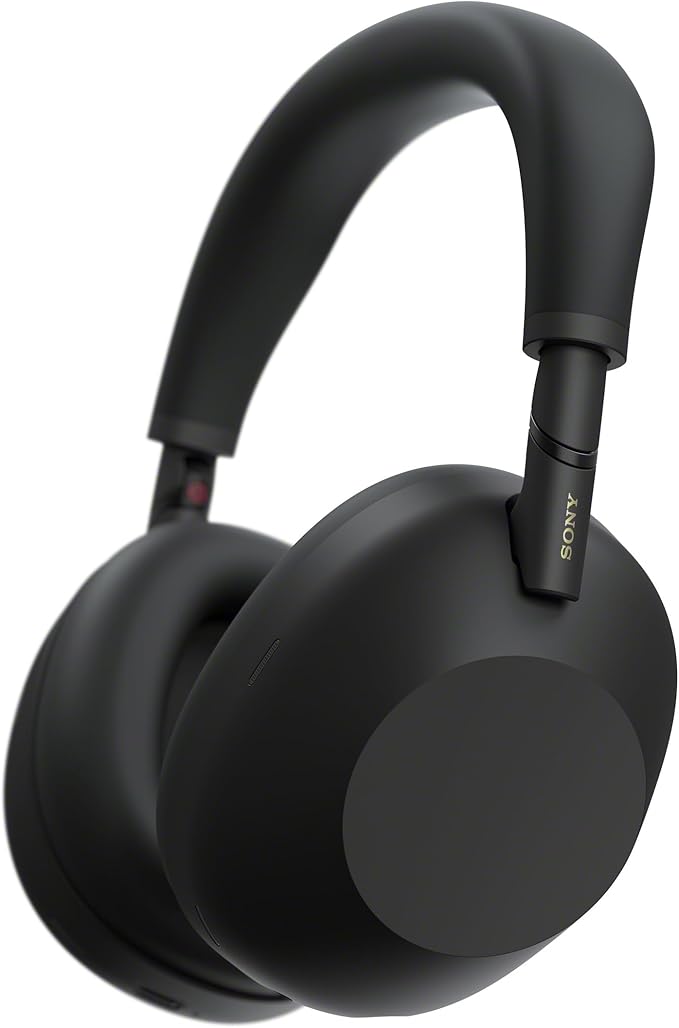
Some pairs simply clamp too hard or pad too thin for any technique to rescue, and switching is the honest answer. The three designs below are the ones we steer glasses wearers to: light clamp, deep soft pads, and comfort scores at the top of our ratings. Our Bose QuietComfort Ultra Headphones (2nd Gen) review and our Sony WH-1000XM6 review cover two of them in full.


Frequently asked questions
Why do headphones hurt when you wear glasses?
Because the ear pad presses the glasses arm into the side of your head, and the arm concentrates the clamping force onto a narrow line instead of spreading it across the pad. Pain that builds after twenty or thirty minutes, rather than starting at once, is the classic sign: the pressure is low but constant, and the fixes in this guide all work by spreading it out or reducing it.
Should the glasses arms go over or under the ear pads?
Under, in almost every case, with the arm lying flat along your temple inside the pad’s seal. Resting the arms on top of the pads lifts the frames, tilts your lenses and breaks the seal along the whole bottom edge. The one useful exception is the halfway trick for long sessions: slide each arm up so it rests along the top edge of the pad for a short break, accept the tilted view for a few minutes, then reseat everything properly.
Do glasses change how headphones sound?
Yes, mainly in the bass. The arm lifts the pad just enough to leak the seal, and a leaking seal costs low-end weight on closed-back headphones. RTINGS builds this into its frequency response consistency testing and notes that certain glasses cause a noticeable drop in bass on some closed-back models. Thick, soft pads that wrap around the arm recover most of the seal, which is why pad choice changes both comfort and sound for glasses wearers.
Are on-ear headphones ever comfortable with glasses?
For short sessions, sometimes, if the pads are soft and the clamp is light. The design works against you, though: an on-ear pad presses directly on the ear, exactly where the glasses arm passes, so pressure builds faster than with an over-ear cup that surrounds the ear and spreads the load. If you love an on-ear pair, keep sessions shorter, use the arm-position steps above, and treat worsening pain as the signal to switch designs rather than to endure it.
Will stretching my headphones over books damage them?
It can if you rush it. Stretch in small steps, a little wider than your head, overnight at a time, and stop as soon as the fit is comfortable, because every step trades a little seal and stability for comfort. Metal headbands tolerate gentle stretching best. Plastic bands can crack if forced, and a stretched pair will not go back, so work gradually and never lever the cups apart by hand in one hard pull.

I am the founder of Sound Mavericks, where I provide the polite truth about audio equipment. I started this site because consumer electronics reviews are often too technical. Instead of using a silent lab, I test headphones, earbuds, and Bluetooth speakers in the real world – like on a noisy subway or in a busy coffee shop.
To stay independent, I buy my own review units (mostly from the United States) rather than accepting free gifts from brands. Once I finish testing a product, I sell it locally to our community. My goal is to help you understand sound quality, active noise cancellation (ANC), and battery life without the marketing hype.