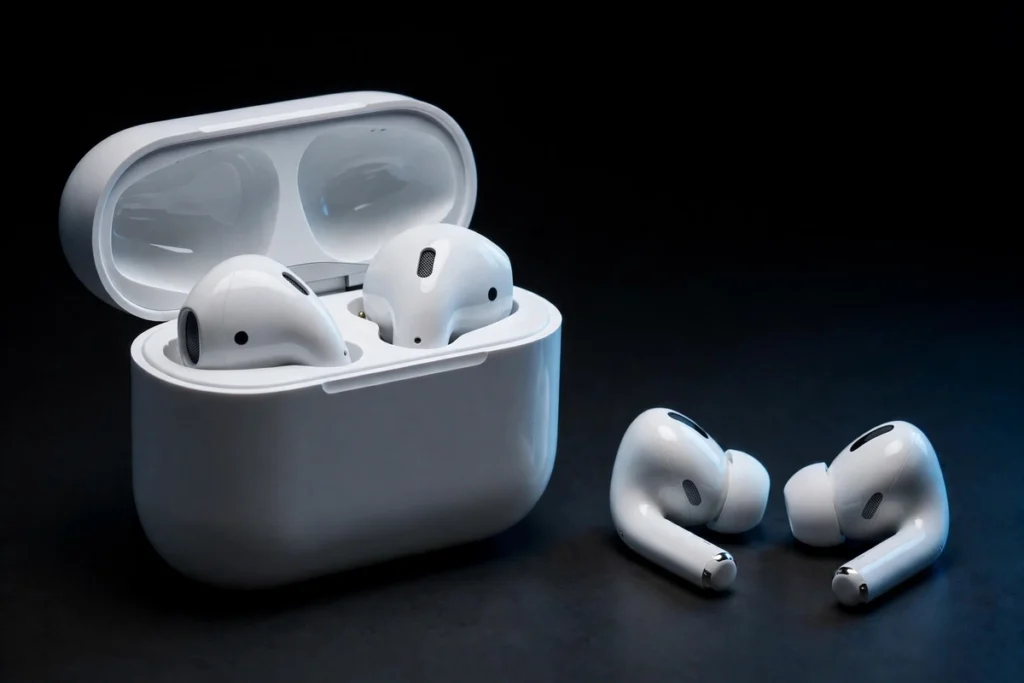
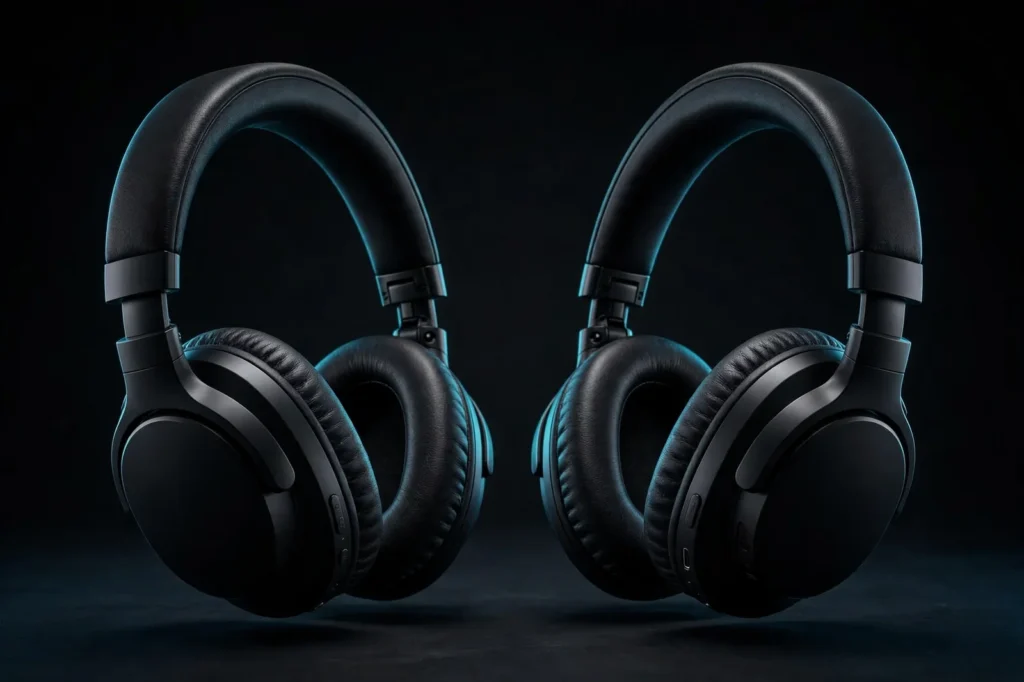
This circumaural vs supra-aural headphones comparison is about the oldest fork in headphone design. Circumaural headphones, called over-ear in shops, surround the whole ear with large cushions that rest on your head. Supra-aural headphones, called on-ear, use smaller cushions that rest directly on the ear itself. That single difference in where the cushion lands drives almost everything else: comfort over hours, how much noise each design blocks, how much sound leaks, and how small each one packs. Both scored picks below come straight from our Finder database, so the numbers are our published verdicts, not fresh estimates.

Sony WH-1000XM5 8.8/10
Why you: you want the full circumaural package: a seal that supports class-leading noise cancelling, comfort that holds for a whole workday or a long flight, and sound scored 9.1 in our database.
Trade-off: it is the bigger, warmer fit, and it does not fold flat, so it asks for more bag space than any on-ear rival.
250 g · Bluetooth with LDAC · Multipoint · ANC

Beats Solo 4 7.1/10
Why you: you want the supra-aural deal: a light on-ear that folds small, runs for up to 50 hours, and keeps you a little more aware of the room around you.
Trade-off: there is no active noise cancelling at all, and the on-ear clamp is the comfort limit on long sessions.
On-ear fit · Bluetooth 5.3 · Up to 50 h battery · No ANC
The short verdict
Choose circumaural if your listening runs long, if you fly or commute in noise, or if you want the strongest platform for noise cancelling and soundstage. Choose supra-aural if you want the smallest, lightest headphone that still sounds like a headphone, you listen in shorter sessions, and you prefer keeping some awareness of the room. The scored examples show the pattern in numbers: the circumaural pick leads on sound (9.1 against 8.0), ANC (9.3 against 2.0) and comfort (8.8 against 7.6), while the supra-aural pick answers with battery (9.2 against 8.5) and a fold that disappears into a jacket pocket. Our full-length verdicts sit in the Sony WH-1000XM5 review and the Beats Solo 4 review.
| Circumaural (over-ear) | Supra-aural (on-ear) | |
|---|---|---|
| Sony WH-1000XM5 / Beats Solo 4 | Representative circumaural pick | Representative supra-aural pick |
| Cushion contact | Rests on the head, around the ear | Rests directly on the ear cartilage |
| Passive isolation | Strong seal, blocks more noise before electronics help | Partial seal, more noise gets in |
| ANC platform | Best case for active cancelling | Weaker seal limits ANC; many models skip it |
| Long-session comfort | Pressure spread around the ear; heat builds instead | Light, but clamp pressure lands on the ear |
| Sound character | Larger chamber, wider stage, deeper bass potential | Closer, more direct sound; bass depends on seal |
| Portability | Bigger cups, bigger case | Smaller, lighter, folds flatter |
| Best for | Flights, offices, long home sessions | Short trips, walks, desk hopping |
Comfort: where the cushion lands decides it
Comfort is the section most buyers actually live with, and it follows from simple mechanics. A circumaural cushion presses on the bone and padding around your ear, so even a firm clamp spreads its force over a wide, insensitive area. Hours pass and the main complaint is warmth, because the sealed cup traps air. A supra-aural cushion presses on the ear itself, cartilage and all. The headphone weighs less, sometimes far less, but the pressure sits on the part of you least built to carry it. Most listeners feel that as an ache somewhere past the first hour.
There are honest exceptions in both directions. A heavy circumaural model with a stiff clamp can fatigue the neck and jaw, and a soft, light supra-aural model with gentle force can run comfortably for a film. Glasses change the maths too, since circumaural cushions press spectacle arms into the head while supra-aural pads press them into the ear. The long-session guidance in our most comfortable headphones for long sessions coverage starts from this same fit question.
Isolation and noise cancelling
A seal is a seal. Circumaural cups close around the ear and block a meaningful slice of outside noise before any electronics switch on, and that passive head start is why every flagship noise cancelling headphone on the market is circumaural. The electronics remove far more noise when the cushion is not leaking. Supra-aural cushions sit on a curved, uneven surface and leak at the edges, so both passive isolation and any ANC built on top of it start from behind.
Leakage runs the other way as well. Your music escapes through the same gaps, so a supra-aural headphone at commuter volume is audible to the person next to you in a quiet carriage. A closed circumaural cup keeps most of it in. Open-back models of either fit are a separate case, covered in our open-back vs closed-back headphones explainer, and they leak by design.
Sound: chamber size and seal
Circumaural cups give the driver a larger chamber and a consistent distance from the ear, which supports a wider sense of stage and deeper bass that does not depend on pressing a cushion into place. Supra-aural sound is more direct and can be excellent, as the Solo 4’s 8.0 sound score shows, but its bass depends on how well the pad happens to seal on your particular ears that day. Fit variability is the quiet tax of the on-ear design: two listeners can hear two slightly different headphones.
Neither fit guarantees better sound on its own. Driver quality and tuning decide the ceiling, and the best supra-aural models outscore mediocre circumaural ones. Fit decides the conditions the driver works under: seal consistency, chamber volume and isolation. Buy the fit for your use first, then the best-tuned example of it, which is how our best on-ear headphones list is built on the supra-aural side.
Portability and everyday life
Supra-aural wins the bag test and it is not close. Smaller cups fold flatter, cases shrink, and the weight saving is real across a day of carrying. Circumaural flagships travel in hard cases the size of a lunchbox. Heat cuts the other way outdoors: supra-aural pads breathe better in summer, while circumaural cups can turn a warm commute into a sweaty one. Calls follow the isolation story, with circumaural models generally giving microphones a quieter starting point, reflected in the 8.8 against 7.6 calls gap between the picks here.
Which fit should you buy?
Buy circumaural for flights, open offices, study sessions and any listening block measured in hours, and for noise cancelling that earns its name. Buy supra-aural for short hops, walking, desk work where you still need to hear a door or a name called, and for the smallest bag footprint. If you split your life between both, the honest answer from our database is that the circumaural pair becomes the main headphone and the supra-aural pair becomes the light one. Start with the fit your longest sessions need.
Frequently asked questions
What does circumaural mean?
Circumaural means around the ear. The earcups are large enough to surround the whole ear, and the cushions rest on the head around the ear rather than on the ear itself. Over-ear is the everyday name for the same design.
What does supra-aural mean?
Supra-aural means on the ear. The cushions are smaller and rest directly on the outer ear. On-ear is the everyday name. The design is lighter and more compact, but pressure lands on the ear cartilage itself.
Which is better for long listening sessions?
Circumaural, for most people. Because the cushions rest around the ear, clamping force spreads over the skull instead of the cartilage, so over-ear headphones stay comfortable for longer. Supra-aural models can ache after an hour or two despite weighing less.
Do supra-aural headphones have noise cancelling?
A few do, but it works against a weaker seal. Noise cancelling needs a consistent cushion seal to perform at its best, and an on-ear cushion leaks more than a circumaural one. Our scored example shows the gap plainly: 9.3 ANC for the over-ear pick against 2.0 for the on-ear pick, which has no active cancelling at all.
Which fit leaks less sound?
Circumaural. A closed circumaural cup seals sound in as well as out, so less music escapes into a quiet room or a train carriage. Supra-aural cushions leak more in both directions, which matters in shared spaces.

I am the founder of Sound Mavericks, where I provide the polite truth about audio equipment. I started this site because consumer electronics reviews are often too technical. Instead of using a silent lab, I test headphones, earbuds, and Bluetooth speakers in the real world – like on a noisy subway or in a busy coffee shop.
To stay independent, I buy my own review units (mostly from the United States) rather than accepting free gifts from brands. Once I finish testing a product, I sell it locally to our community. My goal is to help you understand sound quality, active noise cancellation (ANC), and battery life without the marketing hype.