Most headphones feel fine for twenty minutes. The real test starts at hour three, when a slightly tight clamp becomes a headache, a narrow headband turns into a hot spot on the crown, and sealed earcups quietly turn into small ovens. If you work, study, game, or listen in long unbroken stretches, comfort is not a luxury feature. It is the feature that decides whether a headphone gets worn every day or left in a drawer.
That is why this guide to the best headphones for long sessions leads with comfort science rather than sound signatures. Weight, clamp force, earpad depth and material, heat build-up, and headband pressure distribution matter more over a marathon session than a small difference in tuning. Below are six picks chosen specifically for those traits, for different kinds of long days.
Quick Picks: Most Comfortable Headphones for Long Sessions
Best overall: Bose QuietComfort Headphones — light, gentle clamp, and plush cushions owners consistently report wearing all day.
Best for long workdays: Sony WH-1000XM5 — soft-fit leather, a smooth headband, and battery that outlasts the longest shift.
Best for marathon listening: Sennheiser Momentum 4 Wireless — the endurance pick, built for days between charges.
Best lightweight budget pick: Sony WH-CH720N — the lightest ANC headphone here, and the easiest to forget you are wearing.
Best breathable home pick: Sennheiser HD 599 SE — open-back airflow and velour pads for cool, pressure-free listening at a desk.
Best for long gaming sessions: HyperX Cloud III Wireless — memory-foam comfort and a battery measured in weeks of play, not days.
What Makes Headphones Comfortable for Long Sessions?
Comfort over hours is a system, not a single spec. Five factors interact, and a headphone that fails at any one of them will usually be the one you take off first, no matter how good it sounds.
Clamp Force: The Pressure You Stop Noticing, Until You Cannot
Clamp force is the sideways squeeze the earcups apply to keep the headphone sealed and stable. Too much, and pressure builds around the jaw and temples. Too little, and the headphone slides and the bass seal breaks every time you turn your head. For long sessions, a gentle, even clamp is the sweet spot. Owners consistently report that low-clamp designs are the ones they can wear through a full workday, while firmer studio-style clamps are the ones most often described as fatiguing after a couple of hours, even when the padding itself is soft.
Weight and Weight Distribution Are Not the Same Thing
Total weight matters, and every pick below sits at the lighter end of its class for a reason. But distribution matters just as much. A slightly heavier headphone with a wide, well-padded headband can feel easier over six hours than a lighter one that concentrates its load on a narrow strip at the top of the head. Look for broad headbands, padding that spreads the contact area, and earcups that carry some of the load evenly around the ear rather than hanging everything from the crown.
Earpad Material, Depth, and Heat Build-Up
Earpads decide both pressure and temperature. Deep cups keep the driver and inner housing away from the ear itself, which removes a common source of soreness. Memory foam spreads pressure well and seals easily, but most synthetic leather coverings trap heat. Velour and fabric pads breathe noticeably better and stay cooler, at the cost of a weaker seal and less isolation. In a warm room, that trade is often worth making: heat build-up is one of the most common reasons owners give for taking an otherwise comfortable headphone off mid-session.
Wearing Headphones With Glasses for Long Hours
Glasses arms sit exactly where an earcup needs to seal, so a firm clamp presses the frames into the temples and breaks the cushion around them. For glasses wearers, the safest combination is a light headphone, a gentle clamp, and soft, conforming pads that mould around the frame instead of fighting it. Thinner frames cause fewer problems than thick ones, and putting the headphones on after your glasses, with the arms resting slightly higher on the pad, is a small adjustment owners often say helps more than expected.
All Six Picks at a Glance
| Headphone | Best For | Weight | Pads / Design | Battery | Check |
|---|---|---|---|---|---|
| Bose QuietComfort Headphones | Overall comfort + ANC | 238 g | Plush cushions, closed-back | Up to 24 hours | Check Price |
| Sony WH-1000XM5 | Long workdays + calls | 250 g | Soft-fit leather, closed-back | Up to 30 hours | Check Price |
| Sennheiser Momentum 4 Wireless | Marathon listening | 293 g | Deep cushioned cups, closed-back | Up to 60 hours | Check Price |
| Sony WH-CH720N | Lightweight budget ANC | 192 g | Light frame, closed-back | Up to 35 hours | Check Price |
| Sennheiser HD 599 SE | Breathable home listening | 250 g | Velour pads, open-back, wired | Wired, no charging | Check Price |
| HyperX Cloud III Wireless | Long gaming sessions | 330 g | Memory foam + leatherette, closed-back | Up to 120 hours | Check Price |
The Most Comfortable Headphones for Long Sessions, Pick by Pick
1. Bose QuietComfort Headphones — Best Overall for All-Day Wear

The standard Bose QuietComfort is, in SoundMavericks’ assessment, the safest answer to the comfort question. At 238 grams it is light for a full-size noise-cancelling headphone, the clamp is gentle rather than grippy, and the cushions are deep and plush enough that the ear sits inside the cup instead of being pressed by it. Owners consistently report wearing this model through full workdays and long flights without the temple ache firmer rivals can cause, and that pattern lines up with everything the design promises on paper.
It also earns its place beyond comfort. The noise cancelling is strong enough for offices, cabins, and busy homes, the sound is warm and easy to listen to at moderate volume for hours, and a wired option remains for flights and desk use. If your long sessions happen in noisy places and you want one headphone that simply disappears, start here. Readers comparing the wider ANC field should also see our guide to the best noise cancelling headphones.
2. Sony WH-1000XM5 — Best for Long Workdays and Calls

Sony redesigned the XM5 around a smoother, lighter frame, and the long-session payoff is real. The soft-fit leather pads spread contact over a wide area, the headband has no hard segmented padding to create a crown hot spot, and at 250 grams the whole headphone stays easy through back-to-back calls. Owners regularly describe it as a wear-it-and-forget-it work headphone, which is exactly the standard a workday pick has to meet.
For work specifically, the case is strong: excellent noise cancelling for shared spaces, clear call pickup for meetings, multipoint connection for moving between laptop and phone, and battery life that covers several full workdays between charges. The trade-off to know is that the cups do not fold inward the way older Sony models did, so the case is bulkier in a bag. For desk-first use, that barely matters. If your sessions are mostly meetings and focused work, pair this shortlist with our roundup of the best wireless headphones for work.
3. Sennheiser Momentum 4 Wireless — Best for Marathon Listening

The Momentum 4 is the endurance specialist. Its headline battery figure is roughly double that of most rivals in this guide, which changes the long-session equation: there is no low-battery interruption, no mid-week charging routine, and no reason to ration listening across a travel day or a long project. The padded headband and deep, cushioned cups distribute its 293 grams well, and owners consistently report that, despite not being the lightest here, it stays comfortable because the load is spread rather than concentrated.
Sound is the other marathon factor. A tiring, sharp tuning shortens sessions just as surely as a tight clamp, and the Momentum 4’s smoother, warmer presentation is well suited to hours of continuous listening. Its adaptive noise cancelling is a step behind the Bose and Sony flagships in raw strength, so buy it for endurance and sound first, silence second. For long listening at home and on the move, few models sustain a session this well.
4. Sony WH-CH720N — Best Lightweight Budget Pick

At 192 grams, the WH-CH720N is the lightest headphone in this guide by a wide margin, and weight is the one comfort advantage no amount of padding can fake. Sony bills it as its lightest noise-cancelling headband design, and owners consistently report that the low weight, balanced clamp, and wide headband make it the easiest of these picks to wear with glasses through a six-to-eight-hour day.
Expect sensible compromises elsewhere. The build feels lighter and more plasticky than the flagships, the noise cancelling is a tier below the XM5, and the pads are shallower, so larger ears may make contact with the inside of the cup late in a session. None of that undermines the core proposition: if flagship prices are out of reach and long-session comfort is the priority, this is the most convincing budget route to it, with battery life that still covers a full working week of listening.
5. Sennheiser HD 599 SE — Best Breathable Pick for Home Sessions
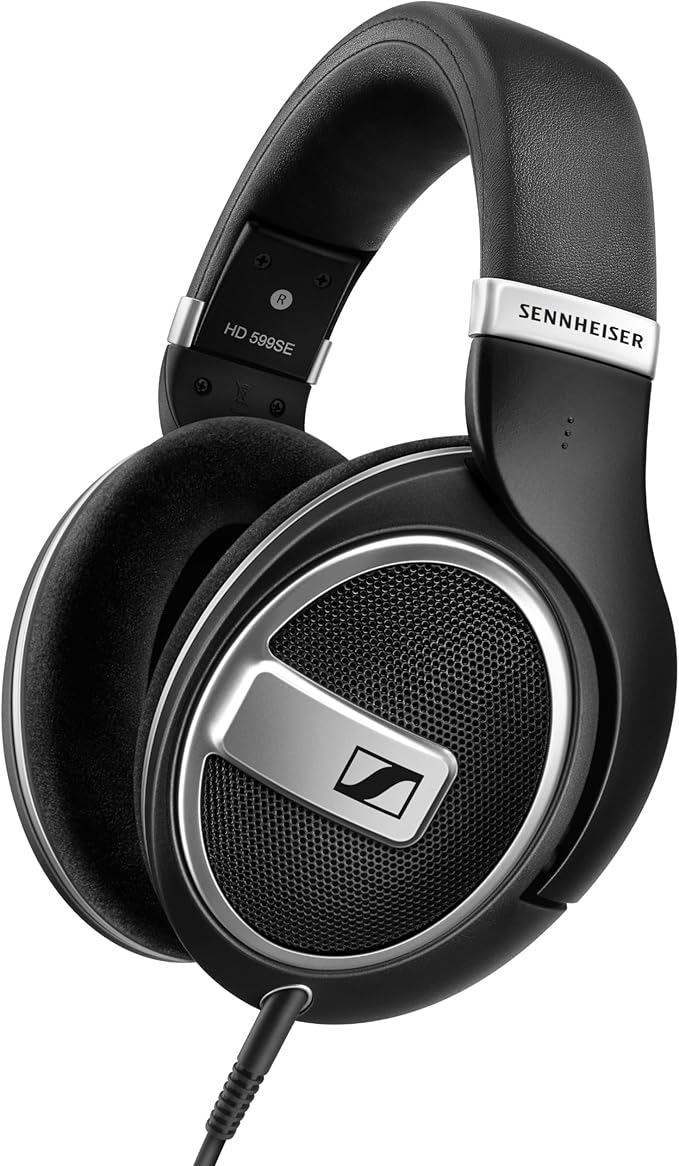
Every sealed headphone above makes the same bargain: isolation in exchange for heat. The HD 599 SE refuses that bargain. Its open-back design lets air move through the cups, and its velour ear cushions breathe in a way leatherette simply cannot, so long home sessions stay cooler and drier. Owners consistently report that this combination, plus a light 250-gram build and a relaxed fit, makes it one of the easiest headphones to wear for an evening of music, films, or desk gaming.
The limits are obvious and worth stating plainly. Open-back sound leaks in and out, so this is a quiet-room headphone, not a commuter or shared-office one, and there is no noise cancelling, Bluetooth, or microphone for calls. It is wired, with detachable cables for home and portable gear included. In the right setting, though, nothing here beats it for sheer forget-you-are-wearing-it comfort. Our explainer on open-back vs closed-back headphones and our list of the best open-back headphones dig into that trade-off in more detail.
6. HyperX Cloud III Wireless — Best for Long Gaming Sessions

Gaming sessions punish headphones differently. You are wearing them for hours, talking through a microphone, and moving your head, so a headset has to stay put without clamping hard and has to keep its pads comfortable under constant use. The Cloud line built its reputation on exactly that, and owners consistently report that the Cloud III Wireless, with memory-foam cushions in leatherette and a durable aluminium frame, carries that reputation forward for all-day and marathon play.
Honesty on weight: at 330 grams without the microphone, this is the heaviest pick here, and glasses wearers in particular should expect to notice it sooner than the Sony CH720N. What offsets it is distribution, deep memory foam, and a battery rated for up to 120 hours, which turns charging into a rare event rather than a session-ender. The low-latency 2.4 GHz connection suits PC and PlayStation play, and the detachable microphone keeps calls and squad chat clear. Gamers weighing wider options can compare it against our best PC gaming headset picks.
How to Choose by Session Type
For work and study: prioritise low weight, a gentle clamp, and call quality. The Bose QuietComfort and Sony WH-1000XM5 lead here, with the CH720N as the lighter, cheaper route. Noise cancelling genuinely helps long focus sessions in shared spaces, because lower background noise means lower listening volume, which means less listening fatigue by the end of the day.
For marathon music listening: battery and tuning join comfort at the top of the list. The Momentum 4 is built for that pattern, while the HD 599 SE is the pick when the marathon happens in one quiet room and cool, breathable wear matters more than isolation.
For gaming: look for memory foam, a frame that tolerates constant movement, a detachable or retractable microphone, and battery that does not force mid-session charging. That is the Cloud III Wireless brief, and it is why a dedicated headset beats a music headphone for this one job.
How to Make Any Headphones More Comfortable for Long Wear
Before replacing a headphone that almost works, try the adjustments that cost nothing. Extend the headband a notch further than feels natural, so more load sits around the ears and less on the crown. Take a short break every hour or so; even a few minutes off lets heat escape and pressure points recover, and it is the single habit long-session wearers mention most. If a new headphone clamps too firmly, leaving it stretched over a wide stack of books overnight is a commonly reported way to ease the clamp slightly, though it should be done gently and at your own risk.
Pads are the other lever. Worn pads compress, lose depth, and bring the ear closer to the driver housing, so replacing flattened pads often restores comfort that seemed to be a headphone problem. Where a model supports it, switching from leatherette to velour or fabric pads trades some isolation for noticeably cooler long wear. Finally, keep volume moderate. Listening fatigue is partly a comfort issue too, and a session that ends with ringing ears was too loud regardless of how soft the cushions were.
Frequently Asked Questions
Which headphones are best for wearing all day?
For most people, the Bose QuietComfort Headphones are the best all-day choice because they combine low weight, a gentle clamp, and deep plush cushions with strong noise cancelling. The Sony WH-CH720N is the lightest alternative, and the Sony WH-1000XM5 is the stronger pick if your day is built around calls and meetings.
Are over-ear headphones better for long sessions than earbuds?
Usually, yes. Over-ear headphones spread pressure around the ear and across the headband instead of concentrating it in the ear canal, so most people can wear them for longer stretches. Earbuds can suit shorter sessions and breaks between calls, but canal pressure and tip fatigue tend to arrive sooner over a full day.
What is the most comfortable headphone style for glasses wearers?
Light over-ear headphones with a gentle clamp and soft, conforming pads are the most comfortable style for glasses wearers. In this guide, the Sony WH-CH720N and Bose QuietComfort Headphones are the safest starting points, because their lower weight and softer fit press glasses frames into the temples less than firmer, heavier designs.
Do open-back headphones stay cooler for long listening?
Yes. Open-back designs such as the Sennheiser HD 599 SE let air move through the earcups, and velour pads breathe better than sealed leatherette, so heat build-up is lower over long home sessions. The trade-off is that sound leaks both ways and there is no noise isolation, so they suit quiet rooms rather than offices or travel.
How long should you wear headphones continuously?
There is no single safe number that fits everyone, but taking a short break roughly every hour is a sensible habit for long sessions. Breaks let heat escape, relieve pressure points, and give your ears a rest from continuous volume. If you develop soreness, headaches, or ringing, stop sooner and lower the volume next time.
Verdict
Long-session comfort is decided by boring-sounding things: grams, clamp, pad depth, airflow, and where the headband puts its load. Get those right and the headphone disappears, which is the whole point. Choose the Bose QuietComfort for the most forgiving all-round fit, the Sony WH-1000XM5 for workdays, the Momentum 4 for endurance, the CH720N for lightweight value, the HD 599 SE for cool home listening, and the HyperX Cloud III Wireless for gaming marathons. Your longest days deserve the pick that is still comfortable at the end of them.

I am the founder of Sound Mavericks, where I provide the polite truth about audio equipment. I started this site because consumer electronics reviews are often too technical. Instead of using a silent lab, I test headphones, earbuds, and Bluetooth speakers in the real world – like on a noisy subway or in a busy coffee shop.
To stay independent, I buy my own review units (mostly from the United States) rather than accepting free gifts from brands. Once I finish testing a product, I sell it locally to our community. My goal is to help you understand sound quality, active noise cancellation (ANC), and battery life without the marketing hype.