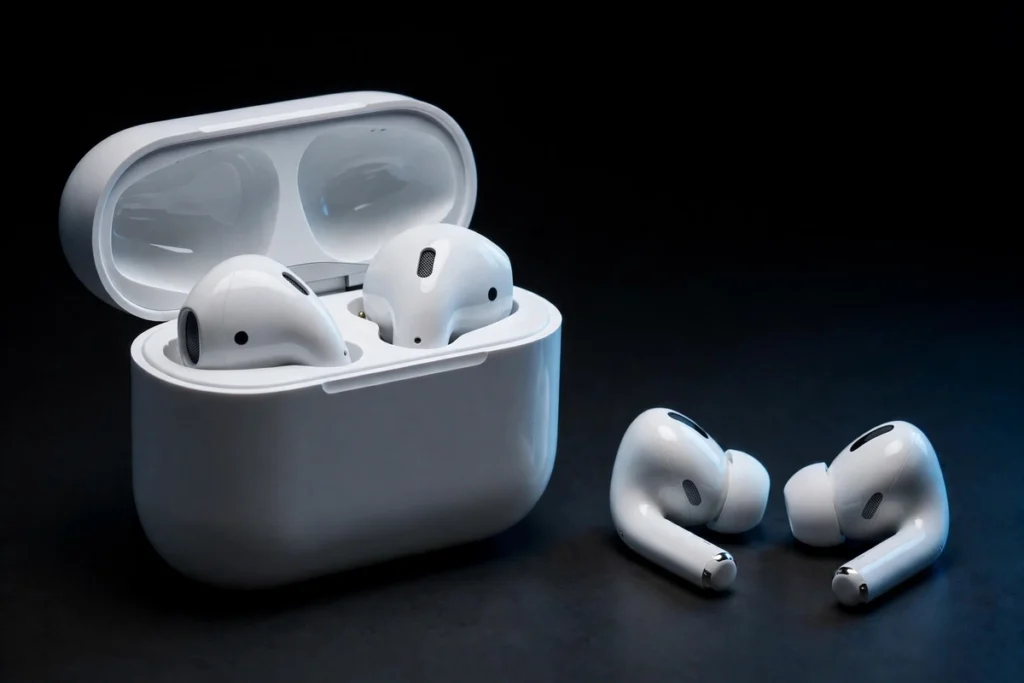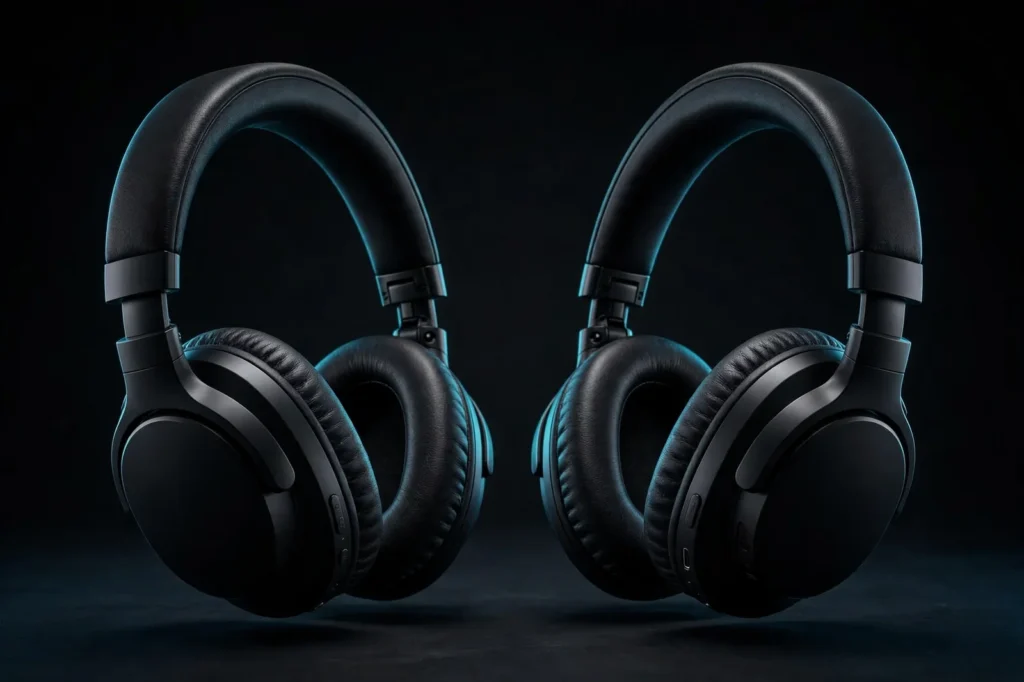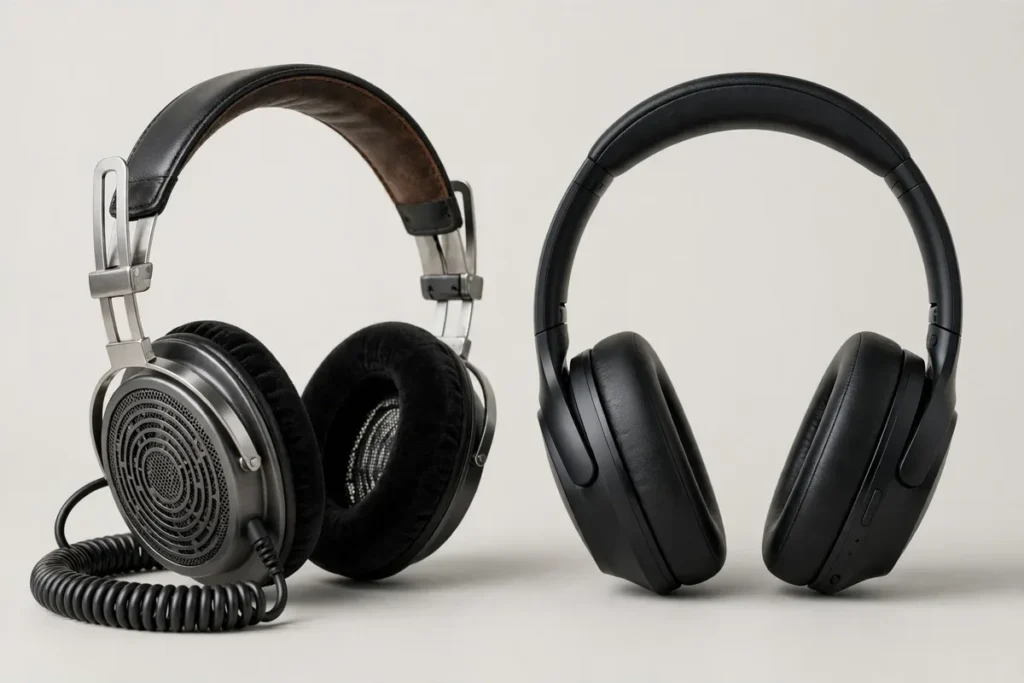
Wired vs wireless headphones is the first real decision in any headphone purchase, and it matters more than most model-to-model differences. The wired vs wireless headphones choice decides how your music reaches the drivers: through a cable that passes the signal untouched, or through a Bluetooth radio that compresses it, adds delay, and runs on a battery that will wear out. Neither format wins everywhere. This guide works through sound quality, latency, battery burden, convenience, durability, and cost, then gives a straight verdict for the desk, the commute, the gym, gaming, and calls.
The short answer
Buy wireless if you move around, commute, or want noise cancelling and calls without a cable in the way. Buy wired if you listen mostly at a desk, play competitive games, or want a pair that still works a decade from now. The two examples we use through this guide:
Wired vs wireless at a glance
| Criterion | Wired | Wireless |
|---|---|---|
| Sound quality | Lossless all the way to the driver; full hi-res files pass untouched | Compressed by a Bluetooth codec; LDAC and aptX Lossless get close to wired |
| Latency | Effectively zero | Roughly 100–300 ms on standard Bluetooth; low-latency modes and 2.4 GHz dongles cut it sharply |
| Battery | None. Works whenever the source works | Needs regular charging; the cell inside loses capacity over time |
| Convenience | Tethered to the device; cable snags, tangles, and dictates where you sit | Walk away from the desk, pace on calls, train without a cord |
| Noise cancelling | Passive isolation only, from the seal and earcup design | Active noise cancelling is standard on mid-range and flagship models |
| Durability | Simple construction; a worn cable or pad swaps out in minutes | More electronics to fail, and a dead battery can end the product’s life |
| Cost of ownership | More of the money goes to drivers and tuning; no battery replacement cycle | You pay for radios, chips, and batteries on top of the drivers |
Sound quality: what the cable actually guarantees
A wired connection passes the audio signal without any compression step. If your source file is a 24-bit lossless track, the headphone receives all of it, and the result depends only on the drivers, the tuning, and the DAC and amp behind it. That is the whole advantage, and it is a real one: nothing is thrown away before the sound reaches your ear. Our guide to Bluetooth audio codecs breaks down what each wireless format keeps and drops.
Bluetooth has to shrink the audio to fit a radio link. SBC, the universal fallback, and AAC on Apple devices both discard data, and at ordinary listening levels most people cannot pick them out against a cable in a blind test. Higher-bitrate codecs narrow the gap further: LDAC runs up to 990 kbps, aptX HD and aptX Adaptive go higher than AAC, and aptX Lossless claims bit-perfect CD quality within its limits. In practice, tuning beats connection type. A well-tuned wireless flagship sounds better than a mediocre wired pair, cable or not. Where wired keeps a clear edge is value and headroom: at any given budget, a wired model spends nearly all of its cost on drivers and housing, and it never caps a true hi-res file.
One catch cuts the other way. Many phones no longer carry a headphone jack, so wired listening often runs through a small USB-C dongle DAC. A good dongle sounds excellent. A poor one adds hiss and weak output, and high-impedance wired headphones may need a proper amp to reach full volume. Wireless headphones sidestep all of that because the DAC and amp are built in and tuned for the exact drivers inside.
Latency: the gap you can feel in games
Wired headphones add essentially no delay. The signal is analog by the time it reaches the cable, so what you see and what you hear line up. Bluetooth has to encode, transmit, buffer, and decode, and each step costs time. Standard codecs land somewhere between 100 and 300 milliseconds depending on the phone and the codec, which is enough to push lip-sync off on video and to make rhythm games and fast shooters feel disconnected.
Phones and streaming apps quietly correct video delay, so movies are rarely a problem. Games cannot be corrected the same way. Low-latency game modes on wireless buds help, and gaming headsets with a 2.4 GHz USB dongle get down near 10–25 ms, close enough that most players stop noticing. For competitive play, where a footstep cue decides a round, wired still removes the variable entirely, which is why our wired vs wireless gaming headset comparison reaches the same conclusion for headsets.
Battery and charging: the wireless tax
Every wireless headphone carries a countdown. Over-ear flagships manage around 30 to 40 hours per charge, earbuds far less per session before they go back in the case. Charging itself is quick and painless. The real cost shows up later: lithium cells lose capacity with every cycle, and after a few years a pair that once ran a full work week may need the cable every second day. When the cell dies for good, most wireless models are finished, because the battery is glued in and not sold as a spare part.
Wired headphones ask for nothing. There is no charge level to check before a flight, no low-battery warning mid-call, and no slow decline built into the design. If your listening happens in long stretches away from a socket, or you simply dislike managing one more device, that difference is worth more than it looks on a spec sheet.
Convenience and movement
This is where wireless earns its popularity, and it is not close. A cable anchors you to within arm’s reach of your phone or laptop. It catches on desk corners, rubs against clothing and injects that noise into the earcup, and it makes standing up a small project. Wireless frees your hands and your movement: pace during calls, cook while listening, train without a cord swinging into the bar.
Wireless also brings the features modern buyers expect. Active noise cancelling needs powered electronics, so it lives on the wireless side. So do multipoint pairing with two devices at once, touch and voice controls, wear detection that pauses when you lift a cup, and app-based EQ. Wired headphones answer with simplicity: plug in and they work, on a plane’s seatback screen, an old receiver, or a mixing desk, with no pairing menu and no firmware.
Durability and repairability
A wired headphone is a mostly mechanical object: drivers, housing, pads, and a cable. The parts that wear out are the parts you can replace. Detachable cables swap in seconds, earpads are sold as spares for popular models, and studio staples stay in service for decades because there is nothing inside to expire. The cable itself is the usual failure point, and on models with a fixed cable that failure can be fatal, so a detachable lead is worth insisting on.
Wireless models add radios, processors, microphones, sensors, and that battery to the list of things that can fail, and software support ends on the manufacturer’s schedule rather than yours. Earpads and cables (for the wired fallback mode many flagships offer) are still replaceable, but the core electronics are not user-serviceable. Treat a wireless purchase as a three-to-five-year product and a good wired purchase as a ten-year one, and the long-term maths changes.
Cost of ownership
At the same spend, wired usually buys better raw sound, because none of the budget went to a Bluetooth chip, a battery, ANC microphones, and the engineering to fit them. Wireless buyers are paying for convenience and features, which may be exactly what they value. The honest way to compare is over the product’s life: a wireless flagship replaced when its battery fades costs more per year than a wired pair that only ever needs pads and a cable. On the other hand, one wireless pair can replace separate purchases for commuting, calls, and the gym, which evens the ledger for many people.
Two examples, one of each

Sennheiser HD 600, the wired reference point
Why you: it is the benchmark for natural, uncoloured sound at a desk, with replaceable cables and pads that keep it running for years.
Trade-off: the open-back design leaks sound both ways, the 300-ohm load wants a decent amp, and there is no microphone or noise cancelling.
Open-back · 300 Ω · Detachable cable · No battery · Wired only
Check Price on AmazonOur full Sennheiser HD 600 review covers its sound and amp needs in depth.
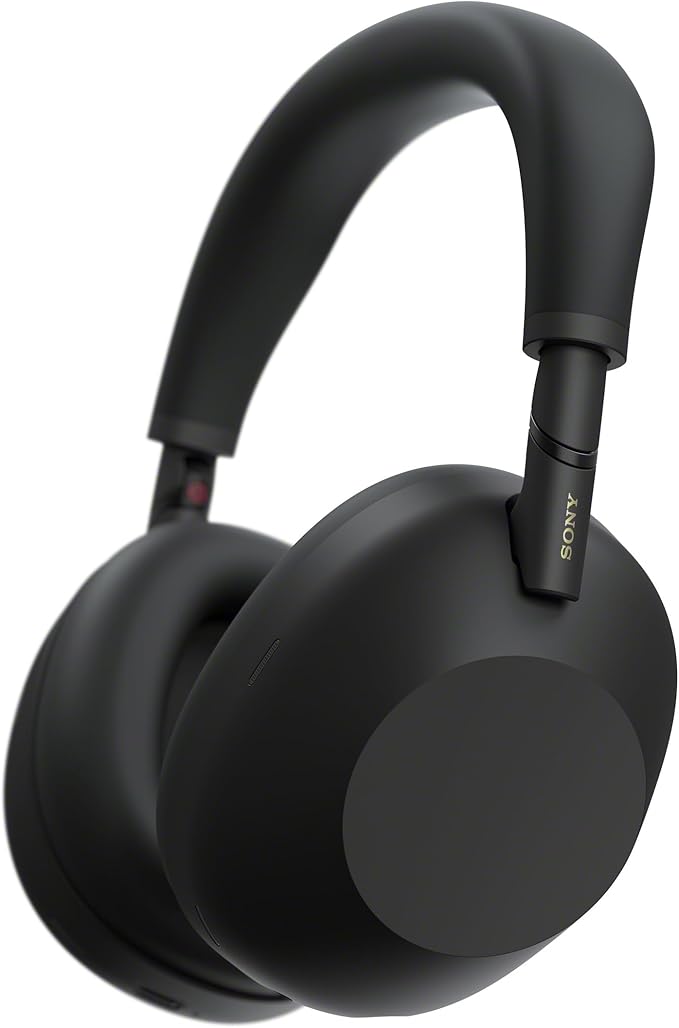
Sony WH-1000XM6, the wireless flagship standard
Why you: class-leading noise cancelling, LDAC support for higher-quality Bluetooth audio, multipoint pairing, and strong call quality in one pair.
Trade-off: the battery will age even if nothing else breaks, Bluetooth still compresses hi-res files, and it costs flagship money.
Bluetooth 5.3 · LDAC / AAC / SBC · Up to 30 hours (ANC on) · Multipoint · USB-C
Check Price on AmazonSee our Sony WH-1000XM6 review for the full breakdown of its sound, ANC, and battery claims.
Verdicts by use case
| Use case | Better format | Why |
|---|---|---|
| Desk listening | Wired | You are already next to the source; take the lossless signal, the better sound per dollar spent, and zero charging. |
| Commute and travel | Wireless | ANC erases engine and carriage noise, and no cable snags on bags, coats, or armrests. |
| Gym and running | Wireless | A cable fights every movement. Wireless buds and on-ears with a sweat rating are built for this. |
| Gaming | Wired (competitive) / wireless (casual) | Ranked play punishes Bluetooth delay; casual and console play is fine on a low-latency or 2.4 GHz wireless set. |
| Calls and meetings | Wireless | Beamforming microphone arrays and the freedom to stand and move beat a basic inline mic. |
Which should you buy?
Choose wired if most of your listening happens in one place, if you play games where timing matters, if you keep gear for a long time, or if you want the most sound quality your budget can buy and do not need noise cancelling. Choose wireless if your headphones travel with you, if you take calls while moving around, if engine and office noise are part of your day, or if a cable has ever made you leave a pair at home. Plenty of people land on one of each: a wired pair that lives at the desk and a wireless pair that lives in the bag. That is not indecision. It is each format doing the job it is actually better at.
FAQ
Do wired headphones sound better than wireless?
They can, because the signal arrives uncompressed and the budget goes to the drivers. But tuning matters more than the connection, and a good wireless flagship with LDAC beats a poor wired pair. Wired wins on sound per dollar spent and on true hi-res files.
How much latency does Bluetooth add?
Standard Bluetooth codecs add roughly 100–300 ms depending on the codec and device. Low-latency game modes reduce it, 2.4 GHz dongle headsets get near 10–25 ms, and wired headphones add effectively none.
Can wireless headphones be used wired?
Most over-ear wireless models include a cable or USB-C audio mode for planes and flat batteries. Sound quality in that mode varies: some run their internal processing, others play passively, and a few will not play at all with the power off. Check before you rely on it.
How long do wireless headphones last before the battery becomes a problem?
Capacity fades gradually with charge cycles. Expect a noticeable drop after a few years of daily use, and most models do not offer a user-replaceable battery, so the fade usually marks the start of the end.
Are wired headphones better for gaming?
For competitive games, yes: zero delay and no connection dropouts. For casual play, a wireless headset with a low-latency mode or a 2.4 GHz dongle is close enough that the freedom is worth it.
Do I need an amp for wired headphones?
Only some models. Efficient wired headphones run happily from a phone dongle or laptop. High-impedance or low-sensitivity designs, like the 300-ohm HD 600, get quiet and thin without more power, and an amp brings them to life.

I am the founder of Sound Mavericks, where I provide the polite truth about audio equipment. I started this site because consumer electronics reviews are often too technical. Instead of using a silent lab, I test headphones, earbuds, and Bluetooth speakers in the real world – like on a noisy subway or in a busy coffee shop.
To stay independent, I buy my own review units (mostly from the United States) rather than accepting free gifts from brands. Once I finish testing a product, I sell it locally to our community. My goal is to help you understand sound quality, active noise cancellation (ANC), and battery life without the marketing hype.