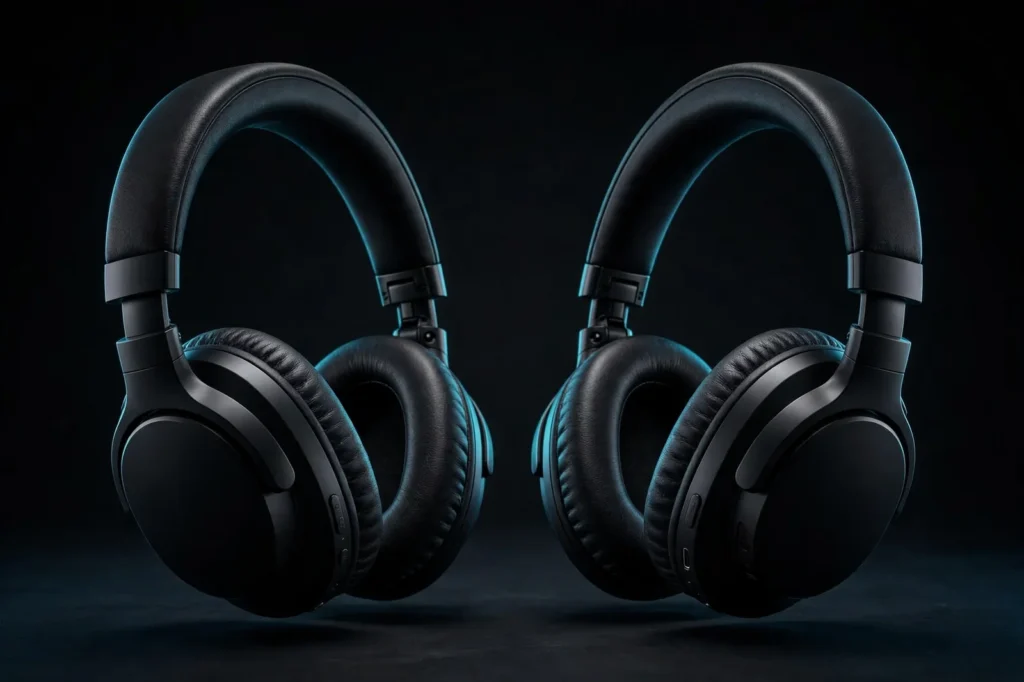
Two flagships, six months apart, one eternal argument. Sony launched the WH-1000XM6 in May 2025; Bose answered with the QuietComfort Ultra Headphones (2nd Gen) in October 2025. Both sit at the top of the noise-cancelling market in 2026, both cancel noise superbly, and both ask you to trust a very different philosophy: Sony gives you everything to tune, Bose gives you almost nothing to think about.
Here’s the short version before the evidence: pick the Sony WH-1000XM6 if you want the most capable headphone — better measured battery life, a far deeper app, LDAC and Auracast support. Pick the Bose QuietComfort Ultra 2 if all-day comfort and effortless listening matter more — its padding and clamp force are kinder over long sessions, and it’s the only one of the two that handles wired listening over USB-C.
The fuller package. SoundGuys measured 37 hours 14 minutes of ANC playback, the Sound Connect app offers a 10-band EQ, and LDAC plus Auracast/LE Audio cover the wireless high-res bases.
The comfier long-haul pick. Plush protein-leather cushions, a near-nonexistent clamp force, and USB-C digital audio for lossless wired listening that Sony simply doesn’t offer.
A note on method: we don’t have either unit in for hands-on testing, and this comparison says so rather than pretending otherwise. Scores and verdicts below are built from manufacturer specifications, published lab measurements (notably SoundGuys’ standardized battery rundown and ANC measurements), and controlled comparisons from reviewers who ran both side by side.
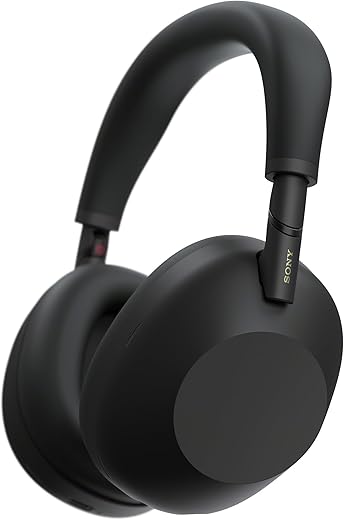

Side-by-Side Spec Comparison
| Spec | Sony WH-1000XM6 | Bose QuietComfort Ultra 2 |
|---|---|---|
| Launch | May 2025 | October 2025 |
| Driver | 30 mm carbon-fiber composite | Custom dynamic (size undisclosed by Bose) |
| ANC chip / platform | HD Noise Canceling Processor QN3 + Adaptive NC Optimizer | Proprietary ANC + CustomTune ear calibration |
| Microphones | 12 total (6 AI-beamforming for calls) | 10 total |
| Battery, ANC on | 30 h claimed; SoundGuys measured 37 h 14 min | 30 h claimed; SoundGuys measured 27 h 12 min |
| Battery, ANC off | 40 h claimed | ~45 h per early hands-on reports; ~23–24 h with Immersive Audio |
| Bluetooth | 5.3 | 5.4 |
| Codecs | SBC, AAC, LDAC, LC3 | SBC, AAC, aptX Adaptive (Snapdragon Sound) |
| Auracast / LE Audio | Yes | No |
| Foldable | Yes, flat-folding | Yes, flat-folding |
| Weight | 254 g | ~264 g |
| EQ | 10-band (Sound Connect app) | 3-band (Bose app) |
| Multipoint | Yes | Yes |
| Call quality | 6 AI-beamforming mics + AI noise reduction; rated decent in SoundGuys lab tests | 10-mic system with noise reduction; rated solid in lab demos |
| Wired listening | 3.5 mm analog only | USB-C digital audio (16-bit / 44.1 or 48 kHz) + 2.5 mm-to-3.5 mm analog |
| Colors | Black, Platinum Silver, Midnight Blue | Black, White Smoke, Desert Gold, Midnight Violet, Driftwood Sand |
Noise Cancelling: A Near-Tie With a Lab Edge to Sony
This is the category everyone asks about, and it’s also the one where the margin is thinnest. Sony’s WH-1000XM6 runs a brand-new QN3 processor — Sony claims it’s seven times faster than the QN1 — driving 12 microphones through an Adaptive NC Optimizer that continuously adjusts for air pressure, ambient noise, and wearing style. Bose counters with its CustomTune system, which plays a brief test tone and calibrates ANC to the shape of your ears every time you put the headphones on.
In SoundGuys’ standardized testing, both headsets land among the best noise cancellers ever measured — their lab curves show no clear advantage for either in real-world noise like airplane, train, and truck rumble. Long-term reviewers split the subjective crown: Tom’s Guide’s six-month tester called the Bose the absolute best at “blocking out everything, bar none,” while ZDNET’s comparison found Sony slightly ahead. The honest summary: both are top-tier, and which feels stronger will depend on your head shape and fit. We give Sony the nod on paper for the QN3’s lab numbers, but treat this category as effectively a draw.
Winner: tie (Sony by a hair in lab measurements).
Sound Quality: Sony Takes It
The Sony WH-1000XM6 uses a 30 mm carbon-fiber composite driver tuned for what Sony calls “studio-quality” clarity, and — critically — the Sound Connect app gives you a 10-band EQ to reshape the sound however you like. That matters, because SoundGuys’ objective measurements found an odd response above 3 kHz on the XM6 that you can actually fix with the EQ (only the 10 kHz spike resists correction). LDAC support means genuinely high-res wireless audio on most Android phones, and LC3 covers the low-latency gaming case.
The Bose QuietComfort Ultra 2 sounds excellent out of the box — ZDNET described it as “sculpted,” with pulled-back mids and emphasized bass and highs that suit long listening sessions and travel. But Bose’s app only offers a basic 3-band EQ with unlabeled frequency bands, so you can’t make the same precise corrections. And while aptX Adaptive (with Snapdragon Sound) is a fine near-lossless codec, SoundGuys notes it requires a Qualcomm 8 Gen 3 or newer chip and manufacturer support — LDAC’s near-universal Android availability wins on compatibility.
Both have strong immersive audio modes: Bose’s Immersive Audio emulates speakers in front of you, Sony’s 360 Reality Audio and Cinema mode place you in a virtual stage. Neither is a deciding factor. Customization is.
Winner: Sony WH-1000XM6.
Call Quality: Sony’s Mic Array Wins on Spec
Sony dedicates six of its twelve microphones to calls, combining AI beamforming with AI-based noise reduction, and SoundGuys’ lab mic tests rated the XM6’s call performance decent in both ideal and windy conditions. Bose’s 10-mic system with its own noise reduction is no slouch — SoundGuys’ comparison demos show both performing well — but Sony’s heavier investment in beamforming mics and processing gives it the spec-sheet edge. If you live on conference calls, the XM6 is the safer pick.
Winner: Sony WH-1000XM6.
Battery Life: Sony, Decisively
Both claim 30 hours with ANC on, but SoundGuys’ standardized rundown test tells the real story: the Sony WH-1000XM6 lasted 37 hours 14 minutes while the Bose QuietComfort Ultra 2 managed 27 hours 12 minutes. That’s a ten-hour gap in lab conditions — the single biggest measured difference between these two headphones. Sony also stretches to 40 hours with ANC off, and a 3-minute charge returns about 3 hours of playback. Bose answers with a 15-minute charge for 3 hours, and if you listen over USB-C while charging, downtime disappears entirely.
Winner: Sony WH-1000XM6.
Comfort and Design: Bose Wins the Long Session
Both weigh in the mid-250s grams and both fold flat into travel cases, but comfort is where Bose’s decades of ergonomics work show. Multiple reviewers — ZDNET, Tom’s Guide, Android Central — converge on the same finding: the QC Ultra 2’s softer protein-leather cushions, deeper earcups, and lighter clamp force make it the headphone you forget you’re wearing. Sony’s XM6 is comfortable too, but its firmer foam and stronger clamp can press on larger heads or glasses arms over very long sessions.
On looks, tastes differ: the XM6 is minimal and utilitarian; the Bose is more traditionally styled, with shiny metal yokes that Tom’s Guide notes are fingerprint magnets. Both lack any water-resistance rating, so neither belongs at the gym. For design polish and long-flight comfort, Bose edges ahead.
Winner: Bose QuietComfort Ultra 2.
Features and App: Power Users vs. Set-and-Forget
Sony’s Sound Connect app is overwhelming by design: 10-band EQ, codec enforcement, DSEE Ultimate upscaling, Adaptive NC controls, multipoint, wearing detection, Find My — plus Auracast and LE Audio support, which Bose currently lacks entirely. If you want every knob, Sony has every knob.
Bose deliberately takes the opposite approach. Its app is simpler and friendlier, with adjustable ANC levels, a 3-band EQ, ActiveSense transparency (which tamps down sudden loud sounds when you’re in Aware mode), Immersive Audio and the new Cinema Mode for movies. The killer feature Sony can’t match is USB-C digital audio: plug the QC Ultra 2 into a phone or laptop with a USB-C cable and you get lossless wired listening with Bose’s DSP still applied — plus an analog 2.5 mm-to-3.5 mm jack for airplane adapters. Sony offers analog 3.5 mm only.
Winner: Sony for tweakers; Bose for wired-listening flexibility.
Final Recommendation
Get the Sony WH-1000XM6 if you want the most capable flagship: the best measured battery life of the pair, a genuinely useful 10-band EQ, LDAC and Auracast support, and a mic array built for calls. It’s the headphone reviewers pick when they judge the whole package.
Get the Bose QuietComfort Ultra 2 if comfort is your top priority, you want USB-C lossless wired listening, or you’d rather Bose handle the tuning with CustomTune than fuss with a 10-band EQ. For long-haul travel and all-day wear, it’s the friendlier headphone.
Coming from an older Sony flagship? Our WH-1000XM4C review and XM4C vs XM5 vs XM6 comparison break down whether the upgrade is worth it. If flagship prices are overkill for your needs, our best noise-cancelling headphones under $100 roundup covers the budget side.
Frequently Asked Questions
Which has better noise cancelling, the Sony WH-1000XM6 or the Bose QuietComfort Ultra 2?
Lab measurements show them effectively tied — SoundGuys found no clear real-world advantage for either against airplane, train, and truck noise. Sony’s QN3 processor posts slightly stronger lab numbers, but some long-term reviewers subjectively rate the Bose as the absolute best at blocking everything. Buy either for ANC; choose on other criteria.
Does the Bose QuietComfort Ultra 2 support LDAC or aptX Lossless?
No LDAC — Bose supports SBC, AAC, and aptX Adaptive (with Snapdragon Sound certification). aptX Adaptive delivers near-lossless quality, but it needs a phone with a Qualcomm 8 Gen 3 or newer chip plus manufacturer support. Sony’s LDAC works on nearly all modern Android phones. For lossless listening regardless of phone, Bose’s USB-C wired audio is the workaround.
Which is better for phone calls?
The Sony WH-1000XM6 has the edge on paper: 12 total microphones with six dedicated AI-beamforming mics and AI noise reduction. SoundGuys’ lab tests rated its call quality decent even in wind. Bose’s 10-mic system is solid too, but Sony’s hardware and processing investment is larger.
Do either of these headphones support Auracast?
The Sony WH-1000XM6 supports Auracast and LE Audio; the Bose QuietComfort Ultra 2 does not. If you plan to use public Auracast broadcasts (airports, venues, hearing-assist streams), Sony is the only option of the two. See our Auracast explainer for what the standard enables.
Can I listen wired with a USB-C cable?
Only on the Bose: the QuietComfort Ultra 2 accepts digital audio over USB-C (16-bit / 44.1 or 48 kHz) while charging, plus analog via the included 2.5 mm-to-3.5 mm cable. The Sony WH-1000XM6 only offers a 3.5 mm analog input — its USB-C port is for charging only.
Which is more comfortable for long flights?
The Bose QuietComfort Ultra 2, according to multiple reviewers: softer cushions, deeper earcups, and a lighter clamp force make it the better all-day wear. The Sony WH-1000XM6 is comfortable but has firmer foam and a stronger clamp that some users with larger heads or glasses notice after several hours.

I am the founder of Sound Mavericks, where I provide the polite truth about audio equipment. I started this site because consumer electronics reviews are often too technical. Instead of using a silent lab, I test headphones, earbuds, and Bluetooth speakers in the real world – like on a noisy subway or in a busy coffee shop.
To stay independent, I buy my own review units (mostly from the United States) rather than accepting free gifts from brands. Once I finish testing a product, I sell it locally to our community. My goal is to help you understand sound quality, active noise cancellation (ANC), and battery life without the marketing hype.