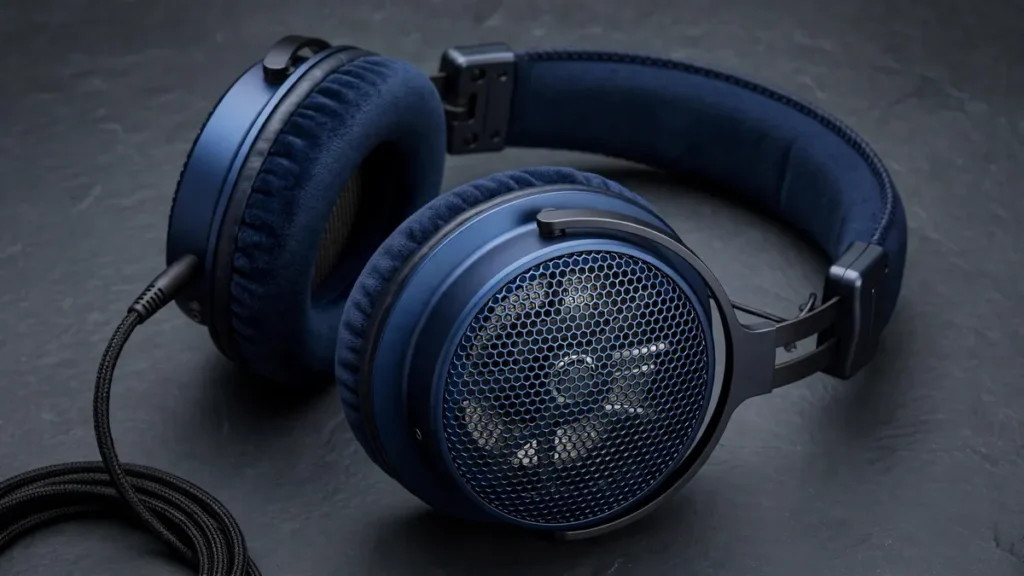
The Sennheiser HD600 is the headphone other headphones get judged against. More than two decades after its debut, this open-back, 300-ohm reference headphone is still in production, still a favorite among mastering engineers, and still the default answer to “what’s the first serious headphone I should buy?” In this research-based review, SoundMavericks puts the HD600’s specs, sound, comfort, and amp requirements under the microscope — and compares it with its famous sibling, the HD650.

The verdict: the HD600 remains one of the smartest purchases in audiophile audio. Its neutral, midrange-focused tuning is a benchmark for natural vocal and acoustic reproduction, the open-back design delivers a spacious, out-of-your-head soundstage, and everything — cable, pads, headband parts — is replaceable, so a pair can realistically serve you for decades. The trade-offs are real: the 300-ohm impedance demands a proper amplifier, bass is lean by modern standards, and there’s zero noise isolation. For critical listening at home, few headphones at any price teach you more about your music.
Scoring note: we haven’t put these on our own heads. Our score is an editorial judgment based on Sennheiser’s published specifications, Amazon listing data, and independent reviews from established audio publications.
| Sound Quality | 9.4 |
| Comfort & Design | 8.4 |
| Build Quality | 7.8 |
| Ease of Driving | 6.8 |
| Repairability & Longevity | 9.6 |
| Value | 9.2 |
What the Sennheiser HD600 is
The HD600 is Sennheiser’s legendary open-back audiophile headphone: a wired, over-ear, reference-grade model built around a 42 mm dynamic driver in an acoustically transparent earcup. It was designed as an impartial reference — a headphone that shows you exactly what’s in the recording, without adding warmth, bass lift, or treble sparkle of its own. That philosophy made it a fixture in mastering studios and the benchmark countless reviewers compare new headphones against.
Longevity is part of the story. One reviewer compared the HD600’s staying power to classic hi-fi icons like the LS3/5A loudspeaker — and they weren’t exaggerating. The HD600 has survived format wars, the Bluetooth revolution, and multiple generations of “giant killer” challengers, and Sennheiser still sells it today. When a headphone stays in production for a quarter-century on reputation alone, that tells you more than any spec sheet.
Sennheiser HD600 vs HD650: what’s the difference?
No HD600 review is complete without addressing its famous sibling. The HD650 (and its Drop-collaboration twin, the HD6XX, which we reviewed separately) shares the HD600’s 300-ohm impedance, open-back design, and basic architecture — but the tuning is different:
- HD600: neutral and analytical. 12 Hz–40.5 kHz response, 97 dB sensitivity. The midrange is the star: vocals and acoustic instruments sound startlingly natural, with a clear, slightly forward treble.
- HD650: warmer and darker. 10 Hz–39.5 kHz response, 103 dB sensitivity. More mid-bass body and a smoother, more relaxed top end — many listeners find it more forgiving of bright or harsh recordings.
SoundMavericks’ take: choose the HD600 if you want a reference — the headphone that tells the truth about your recordings and your source gear. Choose the HD650 (or the HD6XX, which delivers the HD650’s sound for less) if you want a more relaxed, musical listen with a touch more bass weight. Both demand an amplifier, both are open-back, and neither works as a commuter headphone. If you’re chasing a more modern take on the family sound, also see our Sennheiser HD 660S2 review.
Sennheiser HD600 specifications
| Driver | 42 mm dynamic, open-back |
| Impedance | 300 ohms |
| Frequency response | 12 Hz – 40,500 Hz |
| Sensitivity | 97 dB (1 V) |
| THD | < 0.1% (1 kHz, 1 V) |
| Magnet system | Neodymium ferrous; computer-optimized magnets; ultralight aluminum voice coils |
| Ear coupling | Circumaural (over-ear); velour ear cushions |
| Cable | Detachable, 3 m, oxygen-free copper; 3.5 mm plug with 6.3 mm adapter included |
| Weight | 260 g |
| Noise cancelling | None — open-back design; sound leaks out and ambient noise leaks in |
| Microphone / wireless | No microphone; no Bluetooth — wired only |
| Finish | Black with gray marble-pattern earcups |
Specs per Sennheiser’s official product documentation, corroborated by the Amazon product listing and established audio retailers.
Sound quality: a neutral reference
The HD600’s reputation rests on one thing: it doesn’t lie. The tuning is close to neutral with a particular gift for the midrange — vocals, strings, piano, and guitars are rendered with a naturalness that reviewers have praised for decades. The treble is clear and detailed without harshness, and imaging is precise, with instruments placed in a wide, believable space that the open-back design makes possible.
The honest caveat is bass. Like most open-back dynamic headphones, the HD600 rolls off in the deep sub-bass, and its bass presentation is accurate rather than impactful. If your library is heavy on electronic music or hip-hop and you crave physical slam, the HD600 will sound polite. What it gives you instead is texture and pitch definition — bass lines you can follow note by note. This is a headphone for hearing into music, not being hit by it.
One underrated quality: the HD600 scales. Fed from a basic source it sounds good; fed from a quality DAC and amplifier it sounds like a different, better headphone. That makes it an ideal long-term companion — as your system improves, the HD600 keeps revealing what the upgrade bought you.
Do you need an amp for the Sennheiser HD600?
Yes — plan on one. The HD600’s 300-ohm impedance and 97 dB sensitivity mean a phone or laptop headphone jack will produce sound, but not the right sound: volume will be limited and dynamics will sound compressed and flat. A dedicated headphone amplifier (or a DAC/amp combo) unlocks the volume, control, and dynamic range the HD600 was designed for.
The good news is you don’t need to spend a fortune. Any competent entry-level desktop amp or USB-C DAC/amp designed for high-impedance headphones gets you most of the way there. Our best headphone amps roundup covers options at every budget that pair well with 300-ohm Sennheisers. Think of the amp as part of the purchase, not an accessory.
Comfort, build, and long-term ownership
The HD600 is built for long sessions: circumaural velour earpads that surround the ear, a padded headband, and a moderate 260 g weight. The open-back design also means your ears stay cool — no heat buildup like closed-back models. The main comfort caveat reported by long-term owners is clamping force: the HD600 can feel tight on larger heads, especially during the first weeks before the headband loosens.
Build is mostly high-quality plastic with a metal headband spring — not luxurious to the touch, but functionally excellent where it matters: parts availability. Cables, earpads, headband padding, and even drivers are user-replaceable, and Sennheiser has kept parts flowing for the model’s entire production run. Owners routinely report pairs lasting a decade or more with basic maintenance. In an era of sealed, disposable electronics, that repairability is a genuine feature — and part of why our longevity score is the highest on the card.
Pros and cons
✔ Pros
| ✘ Cons
|
Who should buy the Sennheiser HD600
Buy it if: you listen at home in a quiet room, you value natural, accurate sound over bass emphasis, you’re building (or plan to build) a DAC-and-amp setup, you want a reference for judging other headphones, or you want a headphone you can keep — and repair — for decades.
Skip it if: you need headphones for commuting, the office, or travel (the open back leaks sound both ways), you won’t buy an amplifier, you want wireless convenience or noise cancelling, or deep bass slam is your priority. For portable use, our best wired earbuds roundup covers options that work straight from a phone.
Is the Sennheiser HD600 still worth it?
Yes — and the reason is the same one that has kept it relevant for a quarter-century. The HD600 doesn’t compete on features; it competes on being right. Its neutral tuning hasn’t aged because accuracy doesn’t go out of style, and its repairability means buying one is closer to buying furniture than electronics. Newer headphones have surpassed it in bass extension, materials, and convenience — but as a pure listening instrument and a reference point for the entire hobby, the HD600 remains the default recommendation for a reason. Few purchases in audio hold their value — musical and otherwise — like this one.
Frequently asked questions
What is the difference between the Sennheiser HD600 and HD650?
Both are 300-ohm open-back headphones, but the HD600 is tuned neutrally with a clearer treble, while the HD650 is warmer and darker with more mid-bass body and a smoother top end. The HD600’s response is 12 Hz–40.5 kHz at 97 dB sensitivity; the HD650’s is 10 Hz–39.5 kHz at 103 dB. Choose the HD600 for reference listening, the HD650 for a more relaxed, forgiving sound.
Do I need an amplifier for the Sennheiser HD600?
Effectively, yes. The 300-ohm impedance and 97 dB sensitivity mean phones and laptops can produce sound but not the HD600’s full dynamics and volume. A dedicated headphone amplifier or DAC/amp unlocks its intended performance — budget accordingly when you buy.
Is the Sennheiser HD600 good for beginners?
It’s one of the best first “serious” headphones you can buy, with a caveat: factor in an amplifier. The HD600 teaches you what neutral, accurate sound is, which makes it an ideal reference as you explore the hobby. Just know it’s a home-listening headphone, not a portable one.
Can you use the HD600 without an amp?
You can — it will play from a phone or laptop — but it won’t sound like the HD600 reviewers praise. Volume will be limited and dynamics compressed. Even an affordable USB-C DAC/amp makes a substantial difference.
Does the Sennheiser HD600 leak sound?
Yes. It’s an open-back headphone: sound escapes the earcups freely, and outside noise comes in. It’s designed for quiet home listening, not commuting, offices, or any situation where you’d disturb others.
Are the HD600’s cable and earpads replaceable?
Yes. The cable is detachable (3 m, with a 3.5 mm plug and 6.3 mm adapter), and earpads, headband padding, and other parts are user-replaceable — Sennheiser has supported the model with spare parts throughout its long production run.

I am the founder of Sound Mavericks, where I provide the polite truth about audio equipment. I started this site because consumer electronics reviews are often too technical. Instead of using a silent lab, I test headphones, earbuds, and Bluetooth speakers in the real world – like on a noisy subway or in a busy coffee shop.
To stay independent, I buy my own review units (mostly from the United States) rather than accepting free gifts from brands. Once I finish testing a product, I sell it locally to our community. My goal is to help you understand sound quality, active noise cancellation (ANC), and battery life without the marketing hype.