To answer what is transparency mode which headphones have it in one breath: transparency mode is the setting that pipes the world around you into your ears through the headphone’s own microphones, so you can hear a platform announcement or a colleague’s question without taking anything off, and nearly every noise cancelling headphone and earbud sold now includes a version of it. Apple calls it Transparency, Bose calls it Aware Mode, Sony calls it Ambient Sound, and the job is identical in each case. This page explains how the microphones do it, how the implementations differ, and which current models handle it best.
How transparency mode works
Noise cancelling headphones already listen to the world. Their outward-facing microphones sample the sound around you many times a second so the electronics can work against it. Transparency mode points that same hardware at the opposite task: instead of cancelling what the microphones hear, it plays a cleaned-up version of it into your ears, mixed under or over your music. What Hi-Fi?, in its explainer of this exact question, describes it as the anti-ANC: where cancelling neutralises background sound so you can focus, transparency deliberately lets ambient sound in so you are less cut off from your surroundings.
Doing it well is harder than it sounds. The microphones sit on the outside of a sealed earbud, so the raw feed sounds boomy and wind-blown. The processing has to correct for the seal, keep voices natural, and deliver the room with almost no delay, because even a small lag between seeing lips move and hearing the words feels wrong. The best implementations also balance the level automatically, so a quiet office and a busy street both come through at a comfortable volume rather than one sounding deafening and the other silent.
The many names for the same idea
Branding is the main obstacle to shopping for this feature. RTINGS, in its guide to transparency mode, groups the names by maker: Sony and Samsung call it Ambient Sound, Bose calls it Aware Mode, Apple and Sennheiser use Transparency, Soundcore uses Transparency Mode, and JBL splits it into Ambient Aware and TalkThru. Under the label, the mechanics are the same. When a spec sheet lists any of those names on a cancelling model, you are looking at the same feature described in this page.
Conversation and adaptive variants
Two refinements are worth knowing. Conversation modes sharpen voices and duck your music when you start speaking, so a quick exchange at a till or a ticket barrier needs no button press at all. Adaptive transparency goes further and reacts to the level of the room: it stays open in normal conditions, then pulls down sudden loud sounds such as sirens, alarms or a passing truck so they arrive at a safer, calmer level. What Hi-Fi? notes that Apple’s adaptive version reduces outside sounds above a high threshold to protect your hearing, which is a fair summary of how most adaptive systems behave.
When transparency mode earns its place
The everyday wins are small and frequent. You hear the doorbell during a podcast. You catch your name in an open-plan office without the sealed-off feeling that makes colleagues wave at you. You keep one continuous soundtrack through a station, hearing the announcement that your platform changed. Runners and cyclists use it for traffic awareness, though an open-ear design still hears the road more honestly, as our guide to what open earbuds are explains. Parents use it to keep an ear on the house. None of this needs studio quality. It needs the room to sound like the room, and that is the bar the models below clear.
It is also the mode that makes sealed earbuds socially usable. Without it, every interaction means removing a bud, pausing, and performing the little dance of holding it in your hand. With a good transparency mode, a long press on the stem or a tap on the cup swaps you into the conversation and back. Our explainer on how noise cancelling headphones work covers the microphone systems both modes share.
Three models that do transparency well
These are the three we recommend when transparency quality is a deciding factor. Each pairs it with strong cancelling, so you are choosing between two good ears-open and ears-closed experiences rather than compromising on one.
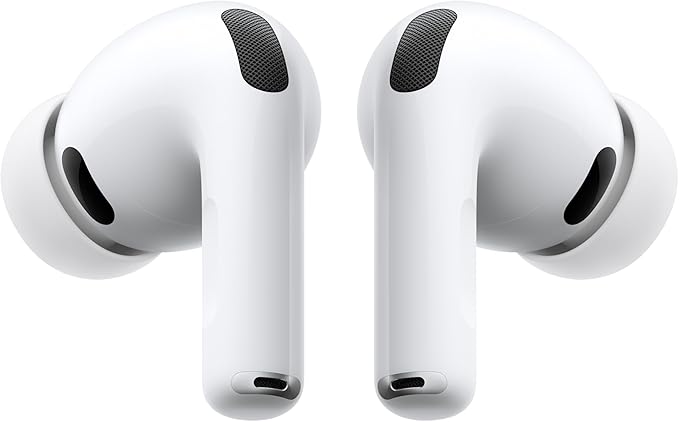


Each has a full write-up of its own: see our AirPods Pro 3 review, our Bose QuietComfort Ultra Earbuds review and our Sony WF-1000XM5 review for how the modes behave in daily use, and our roundup of the best noise cancelling earbuds for the wider field.
What to check before you buy for transparency
First, whether the level is adjustable. A fixed, too-quiet transparency is nearly useless in a station; a fixed, too-loud one hisses in an office. App control over the amount of ambient sound is the single most useful extra. Second, wind handling: cheaper implementations roar when a breeze crosses the microphones, which rules them out for outdoor use. Third, how you switch. A control on the earbud itself matters, because a mode you must open an app to reach is a mode you will stop using. Finally, accept the limit of the idea: transparency reproduces the room through microphones and small drivers, so it never matches simply having nothing in your ears. It is a well-made window, not an open door.
How you turn it on, model by model
The switching method is part of the experience, so it is worth knowing before you buy. On AirPods Pro, a long press on either stem cycles between cancelling and transparency, and the setting also lives in the phone’s control centre for a bigger, clearer toggle. Bose puts the choice on a button press on the earbud, cycling through saved modes that you can trim in the app so the cycle only contains the ones you actually use. Sony uses a tap sequence on the bud or the button on the case side of its app, and its speak-to-chat feature can enter the mode for you the moment you start talking, then drop back to music a few seconds after the conversation ends.
Two practical habits follow from this. First, set up your preferred ambient level in the app once, at home, in a room whose volume you know; the level that sounds right there is a good default everywhere else. Second, learn the on-ear control until it is muscle memory, because the moments transparency matters most, a name called across a platform, a cyclist’s bell behind you, are exactly the moments you do not want to be hunting through a phone menu. A mode that takes three seconds to reach will be reached too late, and a mode on the stem or the cup becomes part of how you wear the headphones rather than a feature you visit.
Frequently asked questions
What is transparency mode on headphones?
A mode that uses the microphones on your headphones to pick up the sounds around you and play them into your ears alongside your music. It lets you hear announcements, traffic and conversation without taking the headphones off or pausing what you are playing.
Which headphones have transparency mode?
Most noise cancelling headphones and earbuds have a version of it. Apple calls it Transparency on AirPods Pro and AirPods Max, Bose calls it Aware Mode on the QuietComfort Ultra line, and Sony calls it Ambient Sound on models like the WF-1000XM5. The name changes; the job is the same.
Is transparency mode the same as turning ANC off?
No. Turning cancelling off still leaves the physical seal of the tips or cushions blocking sound, so the world sounds muffled. Transparency mode actively microphones the room into your ears, which sounds clearer and more natural than simply switching cancelling off.
Does transparency mode use more battery?
A little. The microphones and processing run continuously while the mode is on, so a long day in transparency will drain the battery slightly faster than the same day with everything off. On current flagship earbuds the difference is small enough that most people never plan around it.
Can transparency mode protect my hearing?
Adaptive versions can. Some models automatically pull down sudden loud sounds, such as a siren or a dropped pan, while the mode is on. That limiting is a comfort and safety extra, not hearing protection in the rated sense, so do not rely on it in genuinely loud workplaces.

I am the founder of Sound Mavericks, where I provide the polite truth about audio equipment. I started this site because consumer electronics reviews are often too technical. Instead of using a silent lab, I test headphones, earbuds, and Bluetooth speakers in the real world – like on a noisy subway or in a busy coffee shop.
To stay independent, I buy my own review units (mostly from the United States) rather than accepting free gifts from brands. Once I finish testing a product, I sell it locally to our community. My goal is to help you understand sound quality, active noise cancellation (ANC), and battery life without the marketing hype.