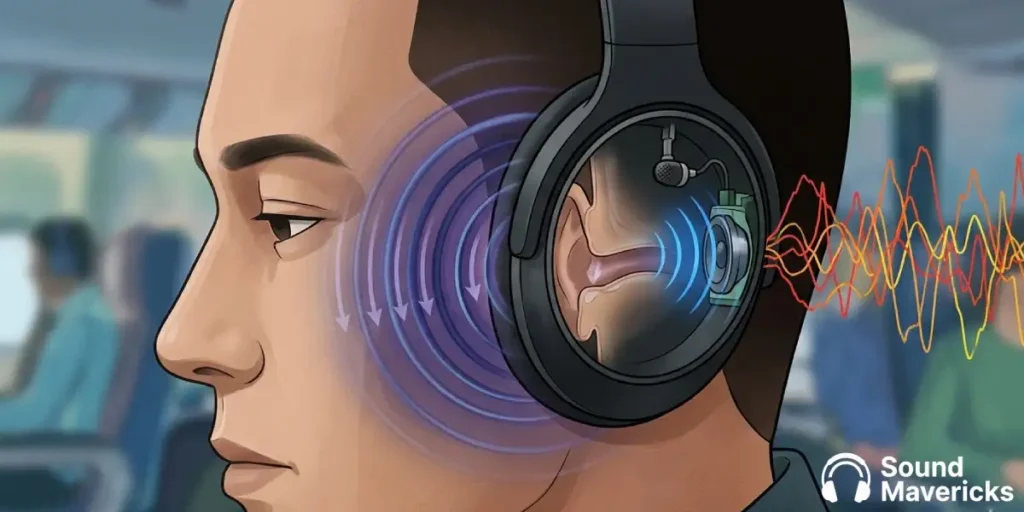
The honest answer to can headphones cause tinnitus is that the headphones are rarely the problem on their own. Tinnitus, the ringing, buzzing or hissing you hear when no outside sound is making it, is most often linked to hearing damage, and the route from headphones to that damage runs through two things you control: how loud you listen, and for how long. A pair of headphones used at a sensible level is a delivery mechanism, nothing more sinister. The same pair turned up day after day in a noisy place can push your ears past what they can recover from. This page explains how that happens, which habits raise the risk, and what actually lowers it.
What tinnitus actually is
Tinnitus is a symptom, not a disease. The sound is generated inside your hearing system rather than arriving from outside, which is why a partner sitting next to you hears nothing while the ringing in your ears seems obvious. It can be constant or occasional, in one ear or both, and it has many possible causes: earwax, infection, medication, blood pressure and age-related hearing change among them. SoundGuys, in its explainer on this exact question, makes the point that neither Bluetooth nor noise cancelling is to blame, and that hearing loss is the link that matters. That matches the wider clinical picture: the most common trigger for lasting tinnitus is sensorineural hearing loss, the kind caused by damage to the inner ear.
That distinction matters because it changes what you should worry about. There is no signal type, wireless standard or driver design that rings your ears by itself. What damages hearing is sound energy at the eardrum over time. Headphones simply make it easy to deliver a lot of that energy privately, for hours, without anyone around you noticing how loud it is.
How loud sound damages hearing
Inside the cochlea, tiny hair cells convert vibration into the signals your brain reads as sound. Very loud sound can bend or break those cells, and unlike many tissues, they do not grow back. A single extreme exposure can do it, but the headphone pattern is usually slower: slightly too loud, for slightly too long, repeated daily until the loss shows up first at high frequencies and the ringing follows. The American Academy of Audiology, summarising the research on its site, notes that people with hearing loss are about twice as likely to have tinnitus as people with normal hearing, and that noise cancelling can help indirectly because it lets you listen at a lower level.
Two features of headphone listening make the slow pattern easy to fall into. First, headphones do not feel as loud as speakers at the same level at your eardrum, because your body misses the vibration and room cues that tell you a room is loud. Second, noisy surroundings invite you to compete: on a train or a busy street you raise the volume to cover the background, and the level that felt fine at home is suddenly several notches higher. Our guide to headphones for low volume listening covers models that stay clear and full when played quietly, which is one practical way to break that pattern.
Volume and duration work together
Risk is a product of level and time. A short burst of loud sound and a whole afternoon of moderately loud sound can deliver a similar dose. That is why rules of thumb pair the two: a common one is to listen at no more than about 60 percent of maximum volume and to take a break after roughly an hour. Phone volume warnings and listening-time reports exist for the same reason. Treat them as useful guardrails rather than nagging. If your ears feel tired, dull or briefly ring after a session, the dose was too much for that day, whatever the percentage said.
Does the type of headphone change the risk?
Only through how it shapes your habits. Sealed earbuds block some outside noise, which can help you keep the level down, but they also sit close to the eardrum and make high levels feel normal. Over-ear headphones spread sound over a larger area and are often more comfortable for long sessions, which cuts both ways: comfort can mean longer sessions. Open designs leak sound in and out, so in a loud place you will turn them up more. Noise cancelling models earn their place here because they remove the main reason people raise the volume. Our explainer on whether noise cancelling headphones are safe looks at the related worries people raise about cancelling itself.
One specific case deserves a mention: children. Kids listen for long stretches on tablets and school laptops, often with the volume set by whatever the last user left it at, and they are less likely to report that something sounds too loud. Volume-limited headphones cap the maximum level in hardware, which removes the guesswork for parents. The three models below are the ones we point families and cautious listeners to.
Safer listening picks with built-in limits
Each of these approaches the problem from a different side: a hard volume cap for younger children, a capped model with cancelling for school-age listeners, and an open-ear design that never seals the canal at all.


The open-ear route has its own trade-offs, covered in our guides to what open earbuds are and how bone conduction works, and our roundup of the best bone conduction headphones compares the current options. None of these products treats or prevents tinnitus. They simply make a moderate level easier to stick to.
Habits that genuinely lower the risk
Keep the level where you can still hear someone speak to you at arm’s length with the music paused in one ear. Use cancelling or a good seal in noise instead of volume. Take short breaks during long sessions; your ears recover during quiet, and a few minutes each hour costs nothing. Turn down first and adjust up slowly when you put headphones on, because the first minute sets your sense of normal for the whole session. Finally, pay attention to after-effects. Ringing that fades in minutes after a loud gig or a loud commute is a warning shot, not a verdict, but repeated warnings are how the lasting version starts.
When to get checked rather than guess
This page cannot diagnose anything, and no headphone advice substitutes for an examination. Book an audiologist if ringing persists beyond a day or two, if it is in one ear only, if it pulses, or if you notice muffled hearing, ear pain or dizziness alongside it. Sudden hearing loss in one ear is urgent and should be seen the same day. Most headphone-related cases turn out to be about habits that can change, but only a hearing test can tell you where you stand, and catching noise damage early is what keeps a small loss from becoming a bigger one.
Frequently asked questions
Can headphones cause tinnitus?
Headphones on their own do not cause tinnitus. Loud sound played through them for long enough can damage the inner ear, and that hearing damage is a common trigger for tinnitus. The same headphones used at a moderate volume for reasonable stretches carry a far lower risk.
Can noise cancelling headphones help protect my hearing?
They can help indirectly. By cutting the noise around you, good cancelling lets you keep the volume lower on a train, a plane or a busy street instead of turning it up to compete. The protection comes from the lower listening level you choose, not from the cancelling itself.
What volume is safe for headphone listening?
A practical guide is to keep listening at or below about 60 percent of maximum volume and to take regular breaks. If someone beside you can hear your music, or you have to raise your voice to talk over it with the headphones off, the level is too high for long sessions.
Should I see a doctor about ringing in my ears?
Yes, if the ringing lasts more than a day or two, affects only one ear, pulses with your heartbeat, or comes with hearing loss or dizziness. Those are reasons to see an audiologist or an ear specialist promptly rather than waiting to see if it fades.
Are earbuds worse than over-ear headphones for tinnitus risk?
Not by design. Earbuds sit closer to the eardrum and seal the canal, which makes it easy to listen louder than you realise, especially in noise. Over-ear models can be played just as loud. The level at your eardrum and how long you stay there decide the risk, not the shape of the headphone.

I am the founder of Sound Mavericks, where I provide the polite truth about audio equipment. I started this site because consumer electronics reviews are often too technical. Instead of using a silent lab, I test headphones, earbuds, and Bluetooth speakers in the real world – like on a noisy subway or in a busy coffee shop.
To stay independent, I buy my own review units (mostly from the United States) rather than accepting free gifts from brands. Once I finish testing a product, I sell it locally to our community. My goal is to help you understand sound quality, active noise cancellation (ANC), and battery life without the marketing hype.