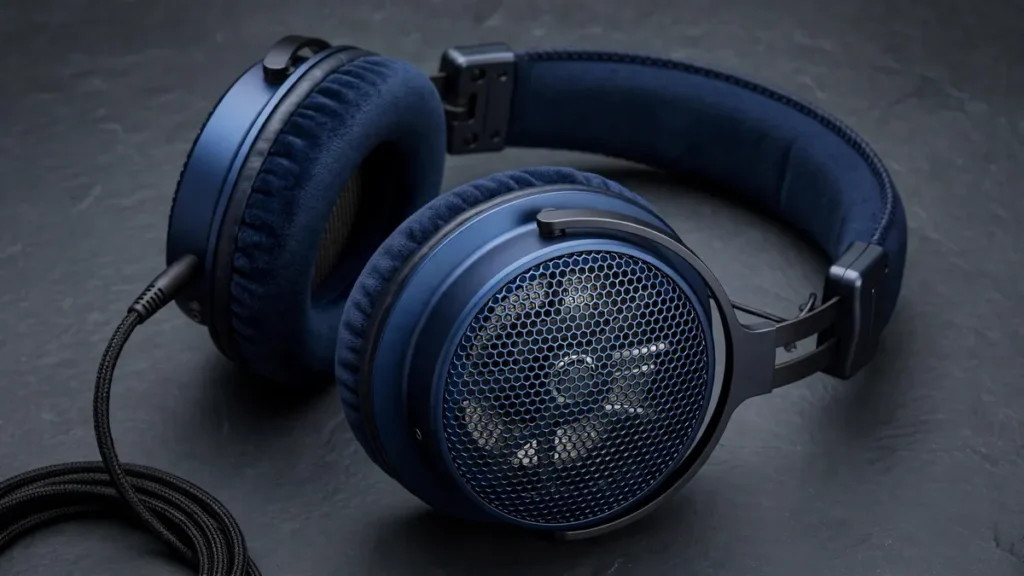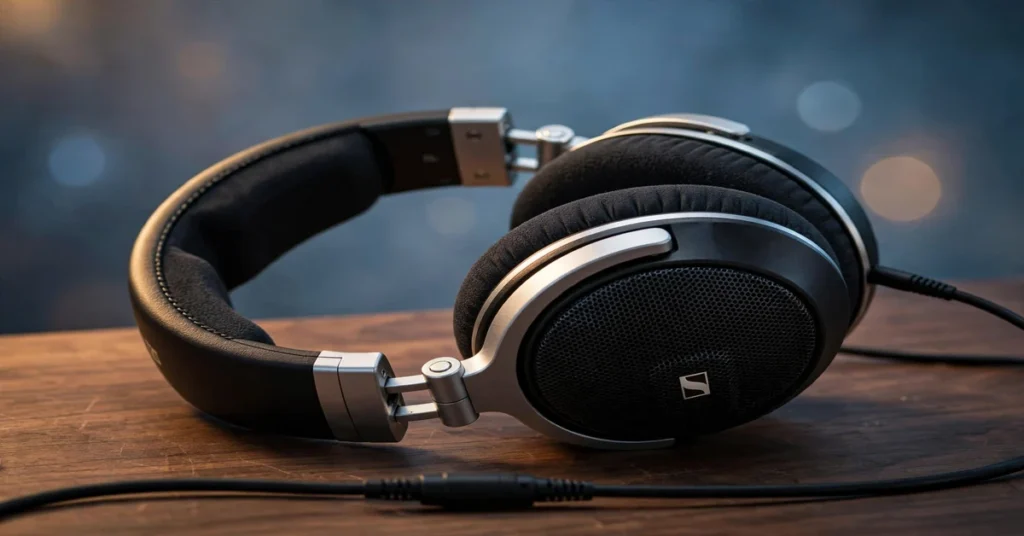
The Sennheiser HD 620S is the closed-back headphone Sennheiser fans have asked for for years: the natural, reference-tuned character of the legendary HD 600 series, sealed into an enclosure that keeps household noise out and your music in. Sennheiser describes it as the most open-sounding closed-back it has ever made, and after digging through every measurement set, spec sheet, and in-depth review available, the SoundMavericks verdict is that the claim largely holds up.
This is not an “HD 600 with the back closed off.” It is a ground-up closed-back design with angled 42 mm transducers that recreate a speaker-like triangular soundstage, a 150-ohm aluminum voice coil borrowed from higher-end Sennheiser engineering, and some of the lowest distortion figures in its class. It gives up Bluetooth, ANC, a microphone, and every modern convenience in exchange for one thing: sound.
If you want open-back-style fidelity but live with other people, the HD 620S is one of the easiest recommendations in the wired headphone world right now. Here is the full breakdown.
SoundMavericks Verdict: 8.5 / 10
The HD 620S nails its brief. It delivers reference-grade detail, genuinely impressive soundstaging for a sealed headphone, and tight, well-extended bass — all in a closed design that lets you listen seriously in a normal home. It loses points for the sparse feature set and a fit that can clamp on larger heads, but for pure listening value at this tier, little else touches it.
| Sound Quality | 9.2 |
| Comfort & Design | 8.6 |
| Build Quality | 8.5 |
| Features | 6.8 |
| Value | 8.8 |
Sennheiser HD 620S: Key Specs at a Glance
| Design | Circumaural (over-ear), closed-back |
| Driver | 42 mm dynamic, angled, with 38 mm diaphragm |
| Voice coil | Ultra-light aluminum, 150 Ω |
| Frequency response | 6 Hz – 30 kHz |
| Sensitivity | 105 dB SPL (1 kHz / 1 Vrms) |
| Distortion | <0.05% THD (1 kHz / 90 dB SPL) |
| Weight | 326 g (without cable) |
| Cable | Detachable 1.8 m single-sided, twist-lock; 3.5 mm plug + screw-on 6.3 mm adapter included |
| Balanced option | Optional 4.4 mm balanced cable (sold separately) |
| Noise control | Passive sound isolation only (no ANC) |
| Extras | No microphone, no Bluetooth, no touch controls; soft cloth pouch included |
| Color | Black |
Why the HD 620S Matters
The HD 600 series is the most respected line in headphone history. The HD 600, HD 650, and HD 660S2 are the default recommendations for anyone stepping into serious home listening — but every one of them is open-back, which means your music leaks out into the room and the room leaks into your music. The HD 620S is Sennheiser’s answer to everyone who loves the 600-series sound but shares a house, a dorm, or an office.
Closing a headphone back usually ruins the soundstage — the music collapses inward and bass gets boomy. Sennheiser’s fix here is mechanical: the 42 mm transducers are angled like loudspeaker drivers, firing sound at your ears from the front rather than dead-on, which the company says recreates the triangular imaging of a proper speaker setup. Measurements and reviewer impressions broadly agree: this is one of the most spacious-sounding closed-backs available anywhere near this tier.
Sound Quality: The Main Event
Sound is why this headphone exists, and it does not disappoint. The HD 620S delivers the classic Sennheiser reference tuning — natural, unforced mids, clean extended treble, and distortion figures (<0.05%) that keep complex passages clean at real listening volumes. Voices sound intimately true, and there is a crispness and note definition that several experienced reviewers put ahead of the open-back HD 600.
The big surprise is the bass. The old HD 600-series complaint has always been polite, rolled-off low end. The HD 620S fixes it: sub-bass reaches deeper than the HD 600, with tight, well-controlled impact that stays balanced rather than boosted. It is not a basshead headphone — nobody will mistake it for a consumer tuning — but electronic and rock tracks finally carry proper weight.
Soundstage is where the HD 620S earns its reputation. Imaging is precise, with instruments placed in a genuinely wide, layered space. It will not match a great open-back like the HD 660S2 for sheer air, but against other closed-backs — including the studio workhorse Beyerdynamic DT 770 Pro — the HD 620S sounds noticeably more open, more composed, and more refined. Gamers and film watchers get an unexpected bonus: the spatial imaging makes movies and games feel cinematic without any virtual surround trickery.
Two honest caveats from the SoundMavericks desk: the tuning is slightly W-shaped rather than perfectly neutral — a dip in the upper bass and a forward upper treble can make the HD 620S sound a touch energetic rather than laid-back, depending on your source and fit. And bass response is somewhat fit-sensitive, so getting a good seal matters.
Design, Comfort & Build
The HD 620S looks like what it is: a serious tool. The styling follows the 500-series family rather than the classic HD 600 marble, with matte black plastic, steel-reinforced headband sliders, and steel earcup covers for long-term durability. It is unapologetically a home-listening headphone — there is no folding mechanism and the cloth pouch is dust protection, not travel armor.
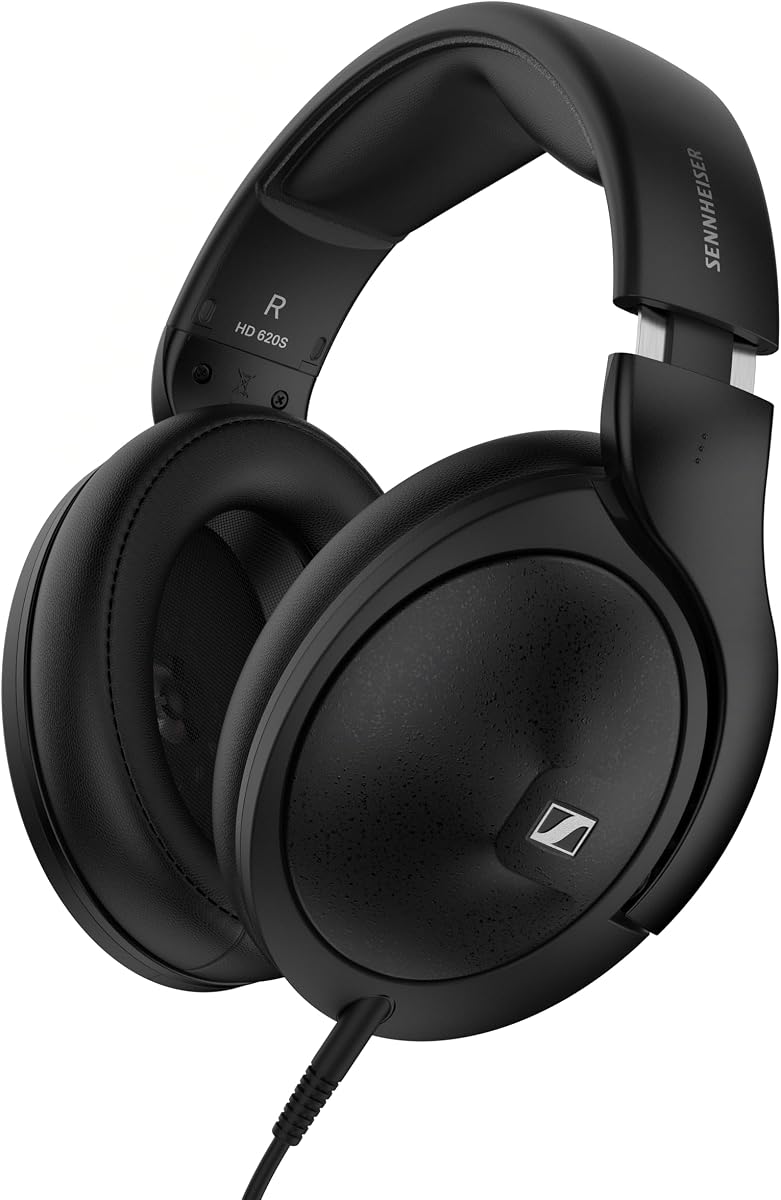
Comfort is generally excellent for long sessions. The artificial-leather earpads are supple with internal venting to keep heat down, and the large, roomy earcups fit fully around the ears. At 326 g it is on the heavier side of the mid-range closed-back class, but the weight is distributed well. One consistent note from owners with larger heads: clamping force can feel firm at first, and the headband may press on the top of a big head. If you wear glasses or have a larger head, try before you buy if you can.
The cable deserves a mention: a detachable, single-sided 1.8 m twist-lock cable with a 3.5 mm plug and a screw-on 6.3 mm adapter for amps and studio gear. It is replaceable, and Sennheiser offers an optional 4.4 mm balanced cable if your amp supports balanced output — a worthwhile upgrade path as your setup grows.
Features: Deliberately Minimal
This section is short on purpose. The HD 620S has no Bluetooth, no ANC, no touch controls, no microphone, no app support, and no in-line remote. Everything about this headphone is geared toward audio reproduction and nothing else.
That is a feature, not a bug — every dollar of the engineering went into the transducers — but know what you are buying. This is not a commuter headphone, not a call headphone, and not a do-everything daily driver. It is a purpose-built listening instrument for home, studio, and desk setups. If you want wireless convenience or noise cancelling, look at Sennheiser’s wireless lines instead; if you want sound, stay here.
Do You Need an Amp?
At 150 ohms with 105 dB sensitivity, the HD 620S sits in a friendly middle ground. A phone or laptop headphone jack will drive it to satisfying volume — this is far more forgiving than the 300-ohm flagships — but these headphones scale noticeably with better amplification. Bass tightens, dynamics open up, and the soundstage gains depth from a proper desktop or portable amp.
If you are building your first hi-fi setup around the HD 620S, a modest headphone amp is the single most cost-effective upgrade you can make after the headphones themselves. See our guide to the best headphone amps for options at every level, and our preamp vs amp explainer if the terminology is new to you.
HD 620S vs. The Competition
vs. Sennheiser HD 660S2. The open-back sibling is the purist’s pick: wider soundstage, smoother midrange, and the classic 600-series effortlessness. But it leaks sound freely in both directions. Choose the 660S2 if you listen alone in a quiet room; choose the 620S if you share your space. Our full HD 660S2 review covers the open-back side in detail.
vs. Sennheiser HD 6XX. The legendary budget open-back is unbeatable value for the money, but it is open-back and scales best with strong amplification. The 620S is the pick if you need isolation; the HD 6XX remains the pick for maximum sound per dollar in a quiet room.
vs. Beyerdynamic DT 770 Pro. The studio classic is cheaper and built like a tank, but its tuning is brighter in the treble and its bass is less composed. The HD 620S sounds more refined and more spacious; the DT 770 is the tougher, more affordable workhorse. Full comparison in our DT 770 Pro X review.
vs. open-back designs generally. If you are torn between open and closed designs, our best open-back headphones guide lays out what the open design buys you — and what it costs you in practicality.
Who Should Buy the HD 620S
Buy them if: you want reference-level sound but need isolation from your environment; you listen at home with family, roommates, or an office around you; you value natural, detailed tuning over bass-heavy consumer sound; or you are starting a hi-fi journey and want a headphone that scales with better sources.
Skip them if: you need wireless, ANC, or a microphone for calls; you want heavy bass emphasis; you commute and need something foldable and rugged; or you listen alone in a quiet room, where the open-back HD 660S2 remains the purer choice.
Frequently Asked Questions
Is the Sennheiser HD 620S good for gaming?
Yes — better than most audiophile headphones. The precise imaging makes positional audio easy to track, the closed design blocks household distractions, and the balanced bass keeps explosions weighty without masking dialogue. Add a clip-on mic (there is no built-in microphone) and you have a serious gaming setup. Note there is an optional Sennheiser boom mic accessory available separately for the HD 600-series family.
Do I need a headphone amp for the HD 620S?
Not strictly. At 150 ohms and 105 dB sensitivity, phones and laptops drive the HD 620S to good volume. But it scales well: a dedicated amp tightens the bass, widens dynamics, and adds soundstage depth. If you own or plan to own an amp, the HD 620S will reward it; if not, you can still enjoy it straight from a laptop in the meantime.
Does the HD 620S have active noise cancelling?
No. Isolation is passive only — the sealed earcups and clamping force block keyboard noise, quiet conversation, and household hum, but loud sounds and commutes will still get through. If you need true ANC, this is not your headphone.
Is the HD 620S a closed-back HD 600?
Not exactly, though Sennheiser invites the comparison. It shares the 600-series design philosophy and natural tonality, but it is its own design: angled 42 mm drivers, deeper sub-bass than the HD 600, and a slightly more energetic upper treble. Think of it as the 600-series sound adapted for the real world rather than a sealed clone.
What cable does the HD 620S use?
A detachable, single-sided 1.8 m twist-lock cable with a 3.5 mm plug, plus a screw-on 6.3 mm adapter in the box. Sennheiser also sells an optional 4.4 mm balanced cable for use with balanced amplifiers.
HD 620S vs HD 660S2 — which should I buy?
Buy the HD 620S if you need isolation — shared living space, office, or late-night listening. Buy the HD 660S2 if you listen alone in a quiet room and want the most open, effortless sound. Sound quality is excellent on both; the deciding factor is your environment, not the headphones.
Final Verdict
The Sennheiser HD 620S does something rare: it makes a genuine case for closed-back headphones among people who swore they would never buy one. The speaker-like imaging, tight extended bass, and reference-grade detail deliver the HD 600-series experience in a form that works in real homes — no soundproof room required.
It is not perfect. The feature list is a blank page, the clamp can be firm on larger heads, and the tuning has a touch more energy than the purists might want. But as a listening-first headphone, the SoundMavericks verdict stands: the HD 620S is the closed-back to beat at this level, and one of the easiest audiophile recommendations we make.

I am the founder of Sound Mavericks, where I provide the polite truth about audio equipment. I started this site because consumer electronics reviews are often too technical. Instead of using a silent lab, I test headphones, earbuds, and Bluetooth speakers in the real world – like on a noisy subway or in a busy coffee shop.
To stay independent, I buy my own review units (mostly from the United States) rather than accepting free gifts from brands. Once I finish testing a product, I sell it locally to our community. My goal is to help you understand sound quality, active noise cancellation (ANC), and battery life without the marketing hype.