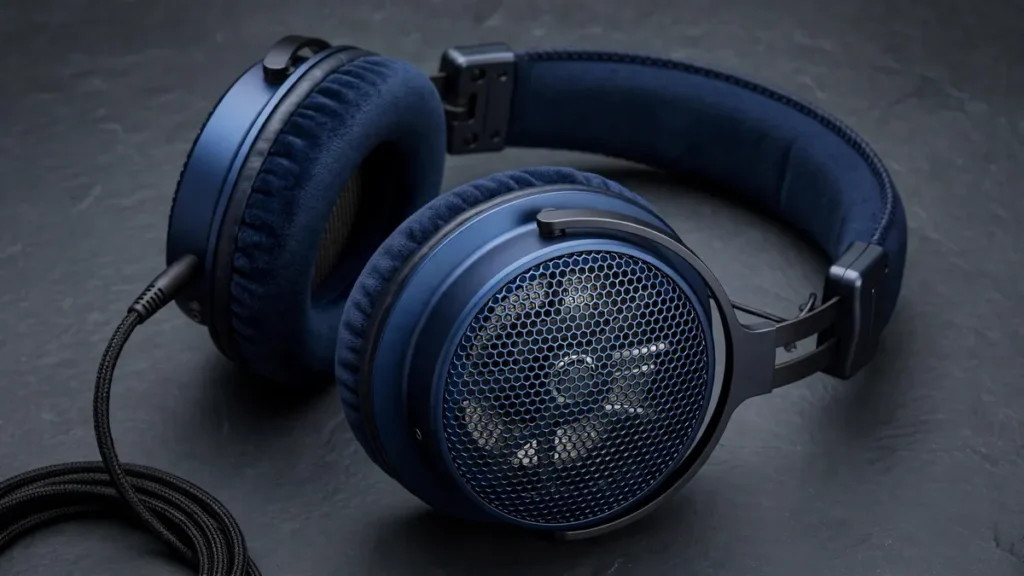
The Beyerdynamic DT 770 PRO X takes one of the most trusted studio headphones ever made and finally gives it the modernization it deserved. It keeps the legendary DT 770 closed-back shell, swaps in the new STELLAR.45 driver, drops the impedance to an easygoing 48 ohms, and — at long last — makes the cable detachable. For recording, tracking, and serious home listening, our verdict: this is the DT 770 to buy now, full stop.

| Sound Quality | 9.0 |
| Comfort & Fit | 8.8 |
| Build & Durability | 9.2 |
| Versatility (phone to studio) | 8.6 |
| Value | 8.3 |
DT 770 PRO X: Key Specs at a Glance
What’s Actually New vs. the Classic DT 770 PRO
The original DT 770 PRO has been a studio staple since the 1980s, but it was showing its age in three places: a hardwired cable, three different impedance versions (32, 80, 250 ohm) that confused buyers, and an older driver platform. The PRO X fixes all three. There is one impedance now — 48 ohms — tuned so the headphone runs well straight from an audio interface, laptop, phone, or portable DAC. The cable finally detaches via a lockable 3-pin mini-XLR on the left cup, which ends the classic’s most common failure mode: a dead cable no longer means a dead headphone. And the 45 mm STELLAR.45 driver brings lower harmonic distortion and a wider frequency response than the old drivers, according to Beyerdynamic’s own published measurements.
A little history is useful here: the PRO X debuted as a 2024 centenary Limited Edition celebrating Beyerdynamic’s 100th anniversary, then moved into the regular lineup as a standard model. So don’t be confused by “Limited Edition” labels floating around online — the current DT 770 PRO X is the full production version, and that’s what we evaluated here.
Sound Quality: the Classic Formula, Tightened Up
The DT 770 PRO X keeps the tuning philosophy that made the DT 770 famous — a bass-and-treble-forward signature — but the new driver makes it cleaner and better defined. Bass is punchy and well extended without bloating the low mids, which is exactly what you want for tracking and for enjoying music with real weight. The midrange is clear and detailed with excellent note separation; vocals can sound slightly lean rather than lush, but instruments and percussion stay crisp and easy to place in a mix.
Treble is where you should know what you’re getting. Like every DT 770 generation, the PRO X has an energetic, extended top end. Cymbals and high percussion have a lot of sparkle and air, and the sense of detail is outstanding — reviewers consistently praise the “huge headroom” and resolution. If you’re sensitive to bright treble, this can feel sharp on harsh recordings; the rest of us will find it makes the PRO X a fantastic monitoring tool because nothing in the high frequencies hides. This is a wired monitor with no EQ apps or DSP, so what you hear is the headphone’s honest tuning.
For a closed-back headphone, the soundstage is genuinely impressive — wide and layered rather than boxed-in, which helps with panning decisions and gives music a real sense of space. Read more about how soundstage in headphones affects what you hear. Isolation runs around 16 dBA passive: enough to keep click tracks from bleeding into a mic and to dull a noisy room, though it’s not active noise cancellation (and these are strictly studio/home headphones, not travel ANC cans).
Comfort and Build: German Studio Hardware
Comfort is a DT 770 strong suit and the PRO X builds on it. The velour ear pads are roomy, breathable, and stay cool far longer than leatherette pads on sealed cans, and the headband pressure is firm enough to seal without creating hot spots. A standout upgrade is the new headband pad with a relief cutout in the middle — previously reserved for Beyerdynamic’s flagship models — which takes pressure off the crown of the head during long sessions.
Build quality is old-school rugged: scratch-resistant ABS ear cups, a metal headband slider, and — true to Beyerdynamic’s sustainability philosophy — nearly every wearing part is replaceable, from pads to headband cushion. The whole thing is assembled in Heilbronn, Germany. At 305 g without the cable it’s light enough for hours of wear, though it doesn’t fold flat, so it takes up real bag space if you travel with it.
48 Ohms: Do You Need an Amp?
Short answer: no, not for normal use. The whole point of the single 48-ohm impedance is that one version works everywhere — your phone, laptop, game controller, and audio interface all drive it to satisfying levels. If you’re coming from the classic 250-ohm DT 770 PRO and the amp debates that surrounded it, you can relax: those arguments don’t apply here.
That said, a decent DAC or amp still helps. The PRO X scales: cleaner power tightens the bass and opens the top end a touch more, and with 210 mW of headroom it takes a good amp without complaint. If you want to go down that path, start with our guide to headphone amps and the primer on headphone impedance — but treat the amp as an upgrade, not a requirement.
Who Should Buy the DT 770 PRO X (and Who Shouldn’t)
Buy it if you:
- Record or track in a studio and need closed-back isolation that keeps click and backing tracks out of the mic.
- Want the classic DT 770 sound with a detachable cable and no impedance-choice headache.
- Mix, edit podcasts, or game and want sharp detail retrieval plus a wide stage from a sealed headphone.
- Value replaceable parts and German build quality over disposable gear.
Skip it if you:
- Need Bluetooth, ANC, or a microphone — this is a wired monitor, period. Our best open-back headphones guide is a better starting point for critical home listening, and the best noise cancelling headphones roundup covers travel ANC.
- Are very treble-sensitive — the bright top end is part of the DT 770 DNA. The Sennheiser HD 660S2 (see our HD 660S2 review) offers a warmer, more relaxed studio listen, albeit open-back.
- Want something that folds flat for commuting — the PRO X doesn’t collapse.
DT 770 PRO X vs. Classic DT 770 PRO
Buying Guide: Getting the Right One
A few practical tips before you buy. First, make sure the listing says DT 770 PRO X and 48 ohm — third-party sellers sometimes mix it up with the classic 80-ohm or 250-ohm DT 770 PRO, which is a different product. Second, expect one cable in the box (3 m, single-sided); shorter aftermarket or USB-C/Lightning cables are sold separately if you want a mobile-friendly length. Third, plan on pads: velour pads are consumables on any headphone worn daily, and Beyerdynamic sells official replacements, so the PRO X is genuinely a buy-it-once product.
Finally, give the clamp a week. Out of the box the 5.5 N headband pressure is snug — that’s intentional for the seal — but it eases with break-in. If you wear glasses, the thick velour pads keep the seal comfortable without pressing the arms into your temples.
Frequently Asked Questions
Is the DT 770 PRO X different from the classic DT 770 PRO?
Yes, substantially. The PRO X uses the new 45 mm STELLAR.45 driver, comes in a single 48-ohm version instead of three impedance options, and has a detachable mini-XLR cable instead of a fixed one. It shares the classic’s closed-back shell and general tuning philosophy, but it’s a modernized platform, not a rebadged original.
Do you need a headphone amp for the DT 770 PRO X?
No. At 48 ohms with 98 dB/mW sensitivity, it reaches comfortable listening levels from phones, laptops, and audio interfaces. An amp or DAC can improve the sound further, but it’s an optional upgrade, not a requirement. See our impedance guide for the full explanation.
Is the cable really detachable?
Yes — that’s the biggest practical upgrade. The 3 m cable connects via a lockable 3-pin mini-XLR on the left earcup, terminates in 3.5 mm, and ships with a screw-on 6.35 mm adapter for studio gear.
Does the DT 770 PRO X have Bluetooth or active noise cancellation?
No. It’s a wired-only studio monitor with about 16 dBA of passive isolation. If you need wireless ANC, look at our noise cancelling roundup instead.
Wasn’t this a Limited Edition?
It launched as a 2024 centenary Limited Edition celebrating 100 years of Beyerdynamic, then transitioned into the standard lineup. The current DT 770 PRO X is the regular production model — same headphone, no longer limited.
Is the DT 770 PRO X good for gaming?
Very good, with one caveat: there’s no microphone. The wide soundstage, precise imaging, and strong isolation make it excellent for positional audio, but you’ll need a separate mic or a ModMic-style attachment for voice chat.
Final Verdict
The DT 770 PRO X is what the DT 770 PRO always should have been: the same legendary studio shell with a modern driver, one sensible impedance, and a detachable cable. It sounds detailed and engaging, it’s comfortable for long sessions, and it’s built to be repaired rather than replaced. The bright treble won’t suit everyone, and it’s wired-only — but if you’re shopping for a closed-back studio headphone, the PRO X earns our strong recommendation with an 8.6/10.

I am the founder of Sound Mavericks, where I provide the polite truth about audio equipment. I started this site because consumer electronics reviews are often too technical. Instead of using a silent lab, I test headphones, earbuds, and Bluetooth speakers in the real world – like on a noisy subway or in a busy coffee shop.
To stay independent, I buy my own review units (mostly from the United States) rather than accepting free gifts from brands. Once I finish testing a product, I sell it locally to our community. My goal is to help you understand sound quality, active noise cancellation (ANC), and battery life without the marketing hype.