This nothing ear open vs bose ultra open earbuds comparison ends in a dead heat, and that is exactly why it is worth reading. Both score 8.2 overall on our bars. The Nothing Ear (Open) does it with value, calls and an IP54 rating from a hook design. The Bose Ultra Open Earbuds 2nd Gen does it with the best comfort bar in the class at 9.2, a touch more sound, and aptX on board. Same destination, very different roads.
Open-ear earbuds leave the canal open so you hear traffic, colleagues and platform announcements while you listen. SoundGuys, comparing these two designs directly, found the Nothing hook places its driver closer to the canal and gives it a bass edge, while the Bose cuff clips onto the ear rim. Fit philosophy, not the overall score, is what should decide this one.

Nothing Ear (Open) 8.2/10
Why you: calls and audiobooks in the open-ear class: calls score 8.4, comfort 9.0, with 8 hours per charge and 30 hours total, plus an IP54 rating that shrugs off rain and dust.
Trade-off: less stamina and weaker weather sealing than some hook rivals, and no wireless charging. Bass still obeys open-ear physics.
8 h buds, 30 h total · IP54 · Multipoint · 8.1 g per bud

Bose Ultra Open Earbuds (2nd Gen) 8.2/10
Why you: the comfort benchmark: 9.2 for comfort from the cuff design that clips to the ear rim and puts nothing in or over the canal, with sound at 8.4 and 9 hours per charge.
Trade-off: open-ear design means weak bass and no real noise cancelling, and the value bar of 7.2 reflects its premium tier.
9 h buds, 28.5 h total · aptX · Multipoint · IPX4
Specifications side by side
| Product | Nothing Ear (Open) vs Bose Ultra Open Earbuds (2nd Gen) |
| Form | Open-ear hook vs open-ear cuff |
| Battery | 8 h buds, 30 h total vs 9 h buds, 28.5 h total |
| Codecs | SBC, AAC vs SBC, AAC, aptX |
| Water resistance | IP54 vs IPX4 |
| Multipoint | Yes, both |
| Overall score | 8.2 vs 8.2 |
The categories, one by one
Sound quality
Bose scores 8.4, Nothing 8.2, and both numbers deserve respect because open-ear sound is a physics problem: no seal means no pressure chamber, so bass has to be suggested more than delivered. The Bose OpenAudio approach aims sound into the canal from the rim and keeps leakage low, which gives music a fuller body than the design suggests.
Nothing fights back with geometry. Its hook puts the driver closer to the canal opening, and SoundGuys found that gives the Ear (Open) noticeably more bass than the Bose in their comparison. On our bars Bose keeps the round, but podcast and pop listeners may honestly prefer the Nothing presentation. Neither replaces a sealed earbud for bass-heavy music.
Winner: Bose Ultra Open Earbuds (2nd Gen)
Awareness instead of ANC
Both score 5.5 on the ANC bar because neither cancels anything, and that is the product working as designed. The bar measures isolation, and open-ear buds isolate nothing on purpose. Judge them on awareness instead: both let you hear a bicycle bell, a boarding call or a colleague saying your name without pausing playback.
If your real need is silence on a plane or a train, neither belongs on your shortlist, and our best noise cancelling earbuds guide is the right detour. If your need is to stay reachable and road-aware all day, this tied round is the feature, not a flaw.
Winner: Draw, by design
Calls
Nothing takes calls 8.4 to 8.2. Open-ear buds usually struggle here because the microphones sit far from the mouth with no seal to help, but the Nothing call performance is a genuine strength, clear enough for work calls on a walk.
Bose is close behind and perfectly usable, losing the round on clarity in wind rather than on basic quality. Both beat most open-ear rivals we track, which is part of why both reach 8.2 overall despite the format limits on sound and isolation.
Winner: Nothing Ear (Open)
Comfort and fit
The headline round, and Bose wins it 9.2 to 9.0. The cuff clips onto the rim of the ear like an earring, distributes its weight along the cartilage, and puts nothing behind the ear, so glasses wearers lose the usual fight for space. OpenEarClub, ranking open-ear comfort, called the Bose design the most comfortable its cited lab had worn.
Nothing counters with security. The hook wraps behind the ear and stays put through gym work and cycling in a way a cuff can shift on hard strides, and SoundGuys found it stable in exactly those sessions. All-day desk comfort says Bose. Training security says Nothing. Both scores above 9.0 mean neither is a comfort risk.
Winner: Bose Ultra Open Earbuds (2nd Gen)
Battery life
A genuine split decision scored level at 8.4 each. Bose gives you more per charge, 9 hours against 8, which suits long shifts without the case. Nothing gives you more in total, 30 hours against 28.5, which suits a week of shorter wears between case charges.
Neither supports wireless charging, so both top up by cable. Call this round a draw and let the per-charge versus total distinction follow your routine rather than the marketing.
Winner: Draw
Features and durability
Nothing wins the durability half clearly: IP54 means dust protection plus rain resistance, against IPX4 splash resistance on the Bose. For outdoor training in real weather, that gap is practical, not theoretical.
Bose wins the codec half with aptX support for compatible Android phones, where Nothing stops at SBC and AAC. Both offer multipoint. We give the round to Nothing because weather sealing protects the purchase itself, while aptX improves only some listening, for some phones.
Winner: Nothing Ear (Open)
Value
Nothing scores 8.0 for value against 7.2 for Bose, the widest bar gap in this comparison, and it is the round that breaks the tie for most buyers. The Nothing delivers the same overall score, better calls and a tougher rating from a lower tier.
Bose charges for the cuff design, the comfort lead and the brand tuning, and plenty of buyers will pay it happily after one long day of wear. But on the bars, value is Nothing round by a distance. Our best open ear Bluetooth earbuds roundup places both in the wider field.
Winner: Nothing Ear (Open)
Living with them day to day
Controls and apps
Nothing uses pinch controls on the stem, which OpenEarClub noted means adjusting volume never presses the bud into your ear, a small mercy across a long day. Its app carries a proper EQ that does real work on the bright stock tuning. Bose keeps a physical button on the barrel behind the ear and a simpler app, with its Immersive Audio spatial mode as the headline extra. Both connect over multipoint, so a laptop and a phone can share either pair without re-pairing rituals.
Running, cycling and the street
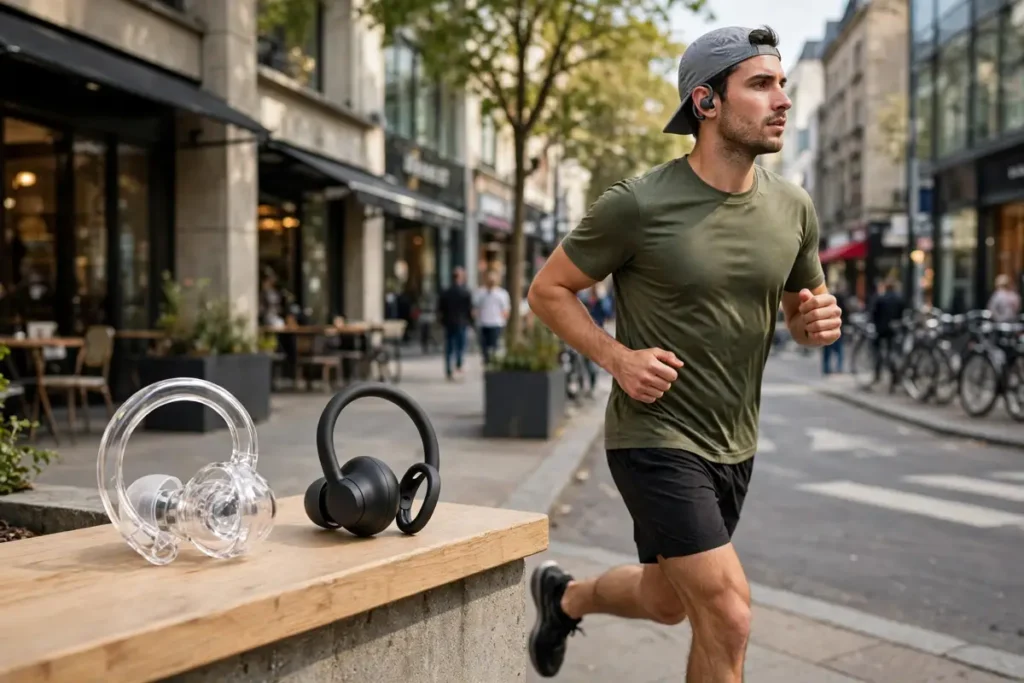
Security splits them. The Nothing hook wraps the ear and stays planted through intervals and rides, helped by the IP54 sealing when the weather turns. The Bose cuff can shift on hard strides but wins back the points at a desk, in a coffee shop and on calls, where nothing presses, seals or heats up. Road awareness is equal and total on both, which is the entire reason this category exists.
Ownership over time
Neither pair has a battery you can replace, so case habits matter: both charge by cable only, and both will reward owners who top up little and often. Tips and hooks are the wear items here rather than ear tips, and both designs avoid the canal irritation that ends many sealed-earbud relationships. The Nothing lower tier also softens the pain if a bud is lost, while the Bose asks you to protect a premium purchase more carefully.
Closing scorecard
| Category | Nothing Ear (Open) | Bose Ultra Open Earbuds (2nd Gen) |
|---|---|---|
| Sound | 8.2 | 8.4 |
| ANC | 5.5 | 5.5 |
| Calls | 8.4 | 8.2 |
| Comfort | 9 | 9.2 |
| Battery | 8.4 | 8.4 |
| Value | 8 | 7.2 |
| Overall | 8.2 | 8.2 |
Which should you buy?
Buy the Nothing Ear (Open) if
you train outdoors, take calls on the move and want the tied overall score for less. The hook fit, IP54 rating and 8.4 calls bar make it the practical athlete of the pair.
The deciding factor
With the overall score tied, the deciding factor is where the buds spend the day. Hours at a desk, on calls and in conversation favour the Bose cuff, which disappears against the ear and keeps glasses wearers happy. Hours in motion, outdoors and in weather favour the Nothing hook, which stays planted, seals better against the elements and costs less to replace if a training session goes wrong. Both deliver the same headline score and the same open awareness. Your routine, not the scorecard, is the tiebreaker, and that is a healthy place for a comparison to end.
Buy the Bose Ultra Open Earbuds 2nd Gen if
comfort across a full working day is the priority, especially with glasses. The cuff fit at 9.2 is the best comfort bar in the open-ear class, and aptX is a real bonus on the right phone. Our Bose Ultra Open Earbuds 2nd Gen review covers it in depth, and our explainer on what open earbuds are helps if the format itself is new to you.
Frequently asked questions
Which is better, the Nothing Ear Open or the Bose Ultra Open Earbuds?
Neither, on the overall: both score 8.2. Nothing wins calls, durability and value; the Bose Ultra Open Earbuds 2nd Gen wins comfort and sound by small margins. Choose on fit style and budget tier.
Which is more comfortable?
The Bose Ultra Open Earbuds (2nd Gen), 9.2 to 9.0 on our Comfort bars. Its cuff clips to the ear rim with nothing behind the ear, which also suits glasses wearers.
Which sounds better?
The Bose, 8.4 to 8.2 on our Sound bars, though the Nothing hook design gives it a bass argument of its own. Both are open-ear, so expect awareness first and bass second.
Which is better for running and workouts?
The Nothing Ear (Open). Its hook stays secure through movement and its IP54 rating handles rain and dust better than the Bose IPX4. The Bose cuff is the better all-day desk fit.
Do either of these have noise cancelling?
No. Both are open-ear by design, scoring 5.5 on the ANC bar because they isolate nothing on purpose. You hear your surroundings fully while you listen, which is the safety and awareness feature this whole category is built around, at home, at work and on the road.

I am the founder of Sound Mavericks, where I provide the polite truth about audio equipment. I started this site because consumer electronics reviews are often too technical. Instead of using a silent lab, I test headphones, earbuds, and Bluetooth speakers in the real world – like on a noisy subway or in a busy coffee shop.
To stay independent, I buy my own review units (mostly from the United States) rather than accepting free gifts from brands. Once I finish testing a product, I sell it locally to our community. My goal is to help you understand sound quality, active noise cancellation (ANC), and battery life without the marketing hype.