The Short Answer: One Mode Shuts the World Out, the Other Lets It Back In
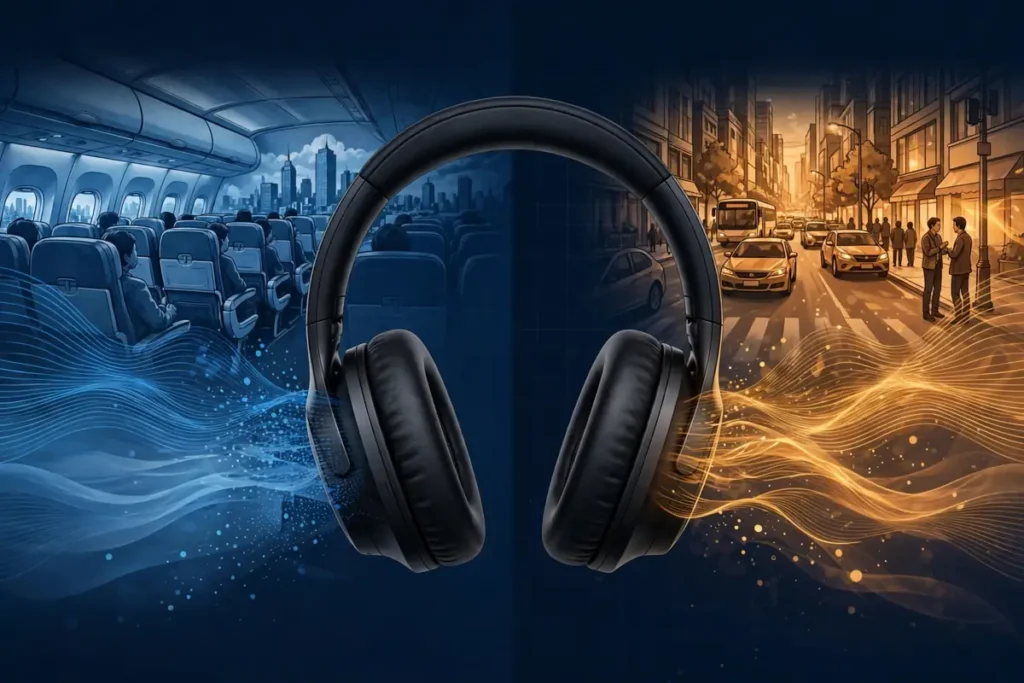
For noise cancelling vs transparency mode, SoundMavericks’ verdict is this: they are opposite jobs done by the same microphones. Noise cancelling (ANC) generates an inverted anti-noise signal to erase the sound around you. Transparency mode uses those microphones the other way round — it picks up the world and mixes it into what you hear, so you stay aware without taking your headphones off. Use ANC for flights, focus and noisy commutes; transparency for streets, conversations and office awareness. The best modern models — the Sony WH-1000XM6, Bose QuietComfort Ultra Headphones (2nd Gen) and Apple AirPods Pro 3 — do both well and can blend the two automatically.
Almost every wireless headphone and earbud worth buying in 2026 offers both modes, often on the same button. Yet plenty of owners use only one — usually whichever was set out of the box — because the two modes answer two different problems: too much world getting in, and too little. This guide explains how each works, when each one wins, the adaptive modes that blend them, what each costs in battery life, and the models rated highest at each job.
Noise Cancelling vs Transparency Mode at a Glance
| Compare | Noise Cancelling (ANC) | Transparency Mode |
|---|---|---|
| Purpose | Remove outside sound so you hear less of your surroundings | Bring outside sound in so you hear your surroundings clearly |
| How it works | Microphones sample ambient noise; a processor builds an inverted anti-noise wave that cancels it before it reaches your ear | The same microphones capture ambient sound and play it into your ears, mixed with your music or call |
| What it does best | Erases steady, low-frequency noise — engine drone, air conditioning, train rumble | Keeps voices, announcements and traffic clear and easy to locate |
| Best for | Flights, focused work, study, sleeping on transport, loud commutes | Walking and running outdoors, cycling awareness, conversations, offices, stations and airports |
| Battery impact | Highest of the modes — continuous sampling plus anti-noise generation | Moderate — microphones and mixing cost power, but usually less than full ANC |
| Awareness and safety | Low awareness — that is the point; avoid around traffic | High awareness — designed to keep you connected to what is happening around you |
| Effect on your audio | Cleaner listening at lower volume — your music no longer fights background noise | Your audio shares space with the real world; clarity drops in loud places |
The key point is the shared hardware: ANC and transparency are two directions for one system. That is why transparency almost never appears without ANC — once a product has the microphones and processor cancellation requires, passing sound through is the same machinery with the opposite intention.
How Noise Cancelling Works
Active noise cancelling is a physics trick played in real time. A sound wave is a pattern of pressure peaks and troughs. Generate the exact mirror image — a peak where the original has a trough — and play the two together, and they sum to almost nothing: near-silence where the noise used to be.
To pull that off thousands of times per second, ANC headphones carry microphones on the outside of the earcup or earbud (feedforward) that listen before sound reaches you, and on better models a second set inside (feedback) that check what got through and correct the leftovers. Designs using both are called hybrid ANC — our guides to what hybrid noise cancelling headphones are and how noise cancelling headphones work go deeper.
Two limits follow. ANC is strongest against steady, low-frequency sound — jet cabin drone, a train, a fan — because the system can model a repeating pattern. It is weakest against sudden, irregular, higher-frequency sound: a shout, a bark, a dropped plate is over before anti-noise can be built. The seal still muffles those, but that is passive isolation, not electronics — a distinction we break down in active noise cancellation vs passive isolation.
How Transparency Mode Works
Transparency mode — also sold as ambient sound, hear-through and Aware mode, all names for the identical idea — starts from a problem built into every good ANC product: a sealed ear is an unaware ear. Even with ANC off, the physical seal alone muffles the world, which is why pulling one earbud out became the universal gesture for “I need to hear you.”
Transparency removes the need for the gesture. The external microphones instead capture your surroundings and play them into your ears, blended with your audio. Done well, the headphones seem to disappear and you hear the room as if nothing were in your ears.
Quality varies enormously. Cheap transparency sounds tinny, delayed and windswept. The best implementations — Apple’s on the AirPods Pro 3 is the usual benchmark — sound natural enough that wearers forget the world is being relayed. Most good models let you set the level, and many duck loud, sudden sounds so a passing siren does not arrive at full volume.
When to Use Noise Cancelling
On a plane, train or bus. ANC’s home ground: constant engine and airflow noise is what it erases best, and removing it pays twice — better audio at a lower volume, and less fatigue on arrival.
For focused work and study. In a noisy household, café or open-plan office, ANC removes the constant layer — ventilation, traffic, the general hum — your brain otherwise spends effort ignoring. Nearby voices stay partly audible, but drop to a workable level with music playing.
Where not to use it: anywhere safety depends on hearing — streets, cycling, running near traffic, supervising children. No focus gain is worth it.
When to Use Transparency Mode
Walking, running and commuting on foot. Transparency keeps traffic, bicycles and other people’s warnings audible while your podcast plays on. For outdoor exercise it is close to a safety feature — the mode we would leave earbuds in by default anywhere near a road.
For conversations without the earbud shuffle. A colleague, a barista, a family member in the next room — transparency lets you talk naturally without removing anything or holding one earbud in your hand.
For announcements and alerts. Station platforms, airport gates, a doorbell at home: transparency keeps your environment’s information layer connected — which simply switching ANC off does muffled and badly, because the seal is still in the way.
For all-day office wear. Full ANC can feel fatiguing over many hours. A partial transparency blend keeps you comfortable and reachable, reserving full ANC for deep-focus stretches.
Adaptive Modes: The Blend That Thinks for You
The newest flagships refuse to treat this as either/or. Adaptive modes sit between the two and move the boundary automatically, based on what the microphones hear.
Apple’s Adaptive Audio on the AirPods Pro 3 blends the two continuously — quiet street, more world let in; a loud truck passes, and cancellation rises to meet it, then relaxes. Sony’s Auto Ambient Sound on the WH-1000XM6 adjusts its Ambient Sound level with your activity and location. Bose’s ActiveSense, built into the Aware mode of the QuietComfort Ultra Headphones (2nd Gen), stays aware in quiet surroundings but briefly applies cancellation when a loud sound intrudes. Samsung’s Galaxy Buds3 Pro pair Adaptive ANC with a responsive ambient mode in the same spirit.
A second adaptive trick handles conversations. Apple’s Conversation Awareness, Sony’s Speak-to-Chat and Samsung’s Voice Detect listen for your voice: start talking and your audio lowers and swings toward transparency until the conversation ends. It sounds like a gimmick until you have ordered coffee without touching anything.
SoundMavericks’ assessment: adaptive modes are now good enough to be the default on flagships that offer them. Save the full extremes for situations that clearly demand one; let adaptive handle the messy middle of an ordinary day.
What Each Mode Does to Your Battery
Both modes cost power, because both keep the microphone array and processor running continuously. Listening with both off, relying on the physical seal alone, always gives the longest runtime a headphone can manage.
Between the two, ANC is normally the heavier drain. Cancelling is harder work than passing sound through: the processor must model incoming noise and generate a precise inverted signal sample by sample, all the time. Transparency still runs the microphones and a mixing stage, so it costs more than doing nothing, but it is generally the lighter active mode. Treat exact percentages quoted online with caution — the gap varies by model, volume and environment.
Practical takeaways: headline battery figures are usually quoted with ANC on, and the same product runs noticeably longer with everything off — worth knowing before a long flight. Partial settings help, too. Above all, practise mode discipline: ANC for the noisy hours, transparency where awareness matters, off in a quiet room.
Which Headphones and Earbuds Do Each Mode Best?
The four models below are SoundMavericks’ current exemplars — each is best-in-class at at least one side of this comparison, and all four handle both modes well. For the wider field, see our guide to the best noise cancelling headphones.
| Product | Strongest at | Transparency style | Best for | Price |
|---|---|---|---|---|
 Sony WH-1000XM6 | Adaptive all-round performance — top-tier ANC plus Ambient Sound with fine-grained, automatic level control | Ambient Sound with Speak-to-Chat for hands-free conversations | One headphone for everything: flights, office and street | Check Price on Amazon |
 Bose QuietComfort Ultra Headphones (2nd Gen) | Pure noise cancelling — the benchmark for quiet cabins and commutes | Aware mode with ActiveSense, adding brief cancellation when a loud sound intrudes | Frequent flyers and commuters who want maximum quiet | Check Price on Amazon |
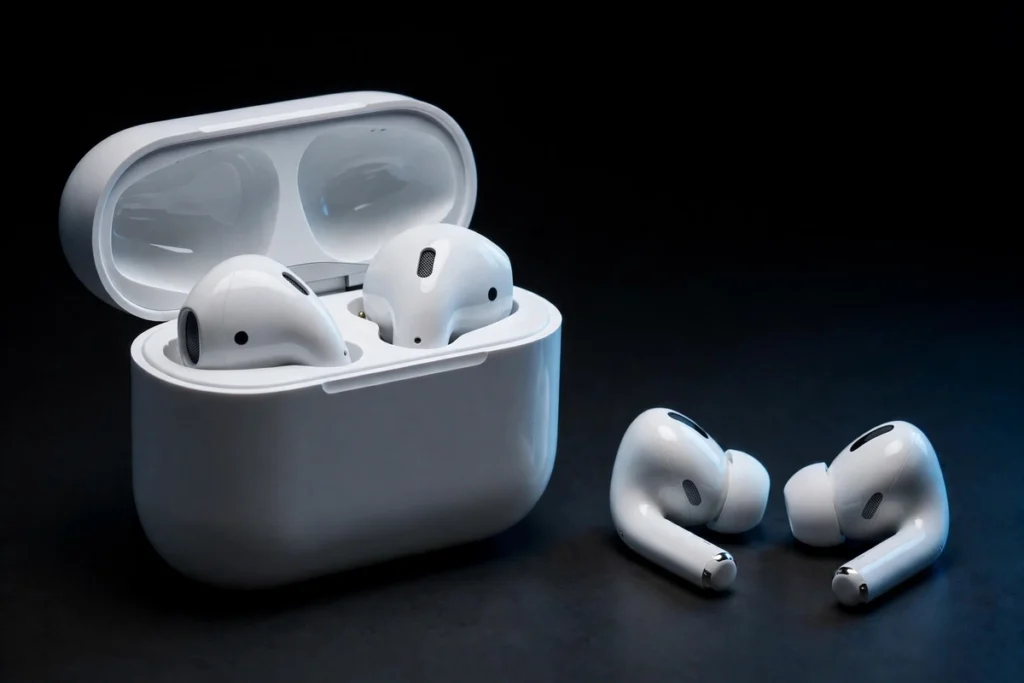
 Apple AirPods Pro 3 | Transparency and adaptive blending — the most natural hear-through in the business, plus Adaptive Audio | Full Transparency mode that sounds close to wearing nothing, with loud-sound protection | iPhone owners who move between quiet and awareness all day | Check Price on Amazon |
 Samsung Galaxy Buds3 Pro | Adaptive ANC for Android and Galaxy users, adjusting cancellation to your surroundings | Ambient sound with Voice Detect, switching in when you start speaking | Samsung and Android users who want both modes done properly | Check Price on Amazon |
Notice the pattern: buy a flagship for its cancellation and excellent hear-through comes in the same package — learning to drive both modes, rather than shopping for one, is the real upgrade.
The Bottom Line
These modes are not rivals to choose between at purchase time — they are the two halves of how modern headphones manage the world. ANC is for when the world is the problem: planes, trains, deep work. Transparency is for when missing the world is the problem: streets, conversations, announcements. Switch deliberately rather than by habit, and the feature you paid flagship money for earns it twice over.
Frequently Asked Questions
What is the difference between noise cancelling and transparency mode?
Noise cancelling samples outside sound and generates an inverted anti-noise signal that cancels it, so you hear much less of your surroundings. Transparency mode uses the same microphones in the opposite direction: it captures outside sound and plays it into your ears, mixed with your audio, so you stay aware without removing your headphones.
What is the difference between normal mode and transparency mode?
Normal mode — ANC off — switches the electronics off and relies on the physical seal of the earcups or eartips, which still muffles the world and makes voices sound dull. Transparency mode actively relays outside sound through the microphones, so voices, announcements and traffic sound clear and natural, as if you were wearing nothing.
Does transparency mode drain the battery faster?
Yes, compared with having both modes off — the microphones and processing stay active while it runs. But transparency is generally a little lighter on the battery than full noise cancelling, which must generate a precise anti-noise signal continuously. The reliable rule: off lasts longest, transparency sits in the middle, ANC drains fastest.
Can you use noise cancelling and transparency mode at the same time?
Not as two full modes — they are opposites. But adaptive modes blend them continuously: cancellation stays engaged for steady noise while voices and alerts are let through, and the balance shifts automatically as your environment changes. Apple’s Adaptive Audio, Sony’s Auto Ambient Sound and Bose’s Aware mode with ActiveSense all work this way.
Is transparency mode better for your ears than noise cancelling?
Neither mode is harmful in itself. The benefit runs through volume: ANC lets you listen at lower levels in noisy places, while transparency stops you raising the volume to hear the world over a sealed ear. The risk in both cases is playing audio too loudly for too long — the mode matters less than the level.
Should I use transparency mode when running or cycling?
Yes — anywhere near traffic, transparency is the safer choice because it keeps vehicles and warnings audible while you listen. Full noise cancelling outdoors removes exactly the sounds your safety depends on. Keep the volume moderate too: loud playback can still mask a quiet approaching vehicle.

I am the founder of Sound Mavericks, where I provide the polite truth about audio equipment. I started this site because consumer electronics reviews are often too technical. Instead of using a silent lab, I test headphones, earbuds, and Bluetooth speakers in the real world – like on a noisy subway or in a busy coffee shop.
To stay independent, I buy my own review units (mostly from the United States) rather than accepting free gifts from brands. Once I finish testing a product, I sell it locally to our community. My goal is to help you understand sound quality, active noise cancellation (ANC), and battery life without the marketing hype.