
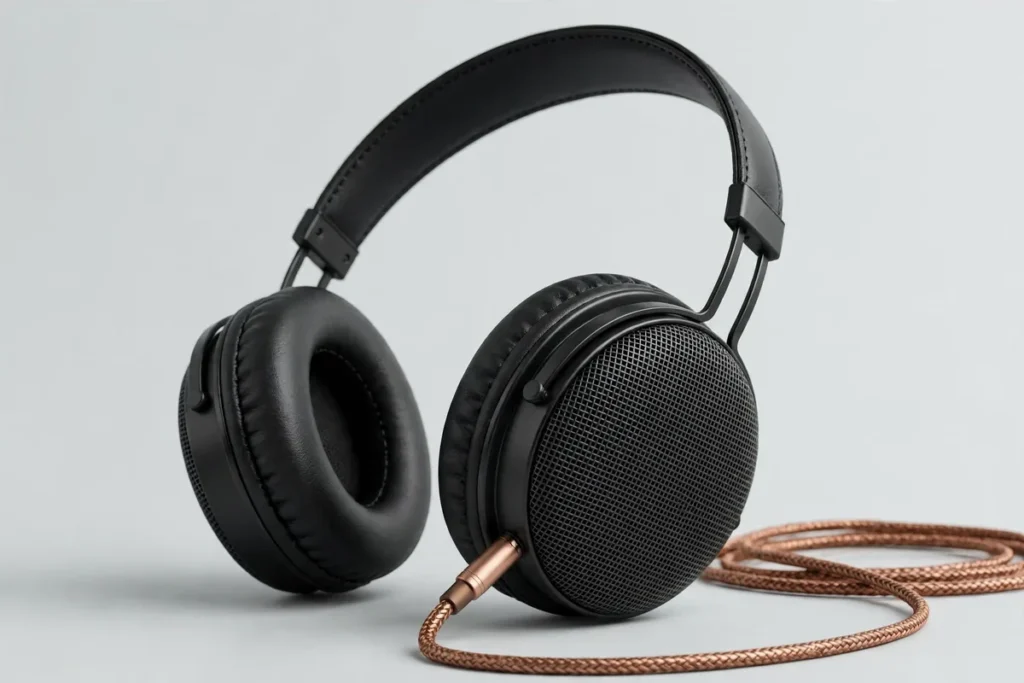
The Grado Signature S150 is the cheapest way into Grado’s Signature Series, and it is not a cut-down badge job. It carries a newly developed 44mm S driver scaled down from the 52mm unit in the flagship HP100 SE and S950, a detachable Signature Bronze cable, and a new single-piece housing, all assembled in Brooklyn. In this Grado Signature S150 review we score it on the same scale as every headphone on this site and place it against the open-back rivals it has to beat.
One honest note before the scores. We have not had the S150 on our own test bench, so this verdict is research-based: Grado’s published specifications, the verified Amazon listing, and hands-on coverage from reviewers who have lived with it. Where listening impressions are described, they reflect that published coverage, not our own ears.

Why you: It fixes the two complaints Grado owners repeat most, a fixed cable and a top end that bites, and it does so on the cheapest Signature model. The new 44mm S driver keeps the family clarity and adds real bass weight underneath it.
Trade-off: The housings are molded polymer rather than the wood or machined metal of the pricier Signature models, and an open-back on-ear leaks sound in both directions.
Three bars need a footnote, because the S150 is wired and open-back. Battery sits at our neutral 5.0 placeholder for wired models, Calls at 3.0 because there is no microphone anywhere on it, and ANC at 2.0 because an open-back on-ear blocks almost nothing. The 5.7 overall is dragged down by those conventions, not by the sound, which is where this headphone earns its keep.
Where the S150 sits in the Signature Series
Above the S150 sit the S550, the S750, the S950 and the HP100 SE, a ladder of wood and machined-metal flagships. The S150’s job is to carry the same S-driver engineering and the same detachable-cable standard down to the bottom rung, swapping exotic housing materials for molded polymer to get there. It also sits alongside the upper Prestige models in Grado’s range, which makes it a genuine fork in the road for buyers: the classic Prestige formula, refined over decades, or the new Signature approach at its most accessible.
Design and build
The S150 introduces a single-piece acoustic chamber molded from engineered ABS polymer. That is a deliberate step down in materials from the wood and machined-metal housings of the expensive Signature models, and hands-on coverage is split on it: the cups feel plasticky next to those flagships, yet the stitched leather headband looks and feels more premium than anything on the Prestige line. At 220 g the whole thing is light enough to forget on a desk shift.
The bigger story is the cable. Grado owners have asked for detachable cables for decades, and the Signature Series finally delivers them. The Signature Bronze cable is softer, lighter and more flexible than the stiff cords of older Grados, plugs into each earcup with a standard 3.5 mm connector, and terminates in a 3.5 mm plug with a 6.3 mm adapter in the box for home amplifiers and players. Reviewers who wore it out walking reported no audible cable noise rubbing against jackets, which is a first for this brand.
The fit is classic Grado: flat foam cushions resting on the ear, a simple sliding-rod adjustment, and modest clamp. If you already know you dislike on-ear pressure, that has not changed here. If you get along with the Prestige fit, the S150 will feel familiar, just lighter. The cushions are user-replaceable, as they are across the Grado range, so the part that wears out first is a cheap swap rather than a service job.
Grado remains a family-run operation, and its headphones are still assembled in Brooklyn. That small-batch reality is part of the appeal for many buyers, and it shows in the priorities: money spent on the driver and the cable, very little spent on packaging theatre or luxury materials at this level.
Sound: less bite, more bass
The 44mm S driver uses a paper-composite diaphragm derived directly from the 52mm S driver program. Grado’s stated goal was clarity and detail with a full-bodied presentation, and published listening coverage says that is roughly what you get. Bass is the surprise. Open-back Grados have a reputation for speed over weight, but the S150 is described as clean, articulate and genuinely fuller down low, the strongest low end the brand has put in an affordable open-back.
Up top, the classic Grado bite has been reined in. Treble is present and detailed rather than aggressive, which makes longer sessions easier than on the brighter Prestige models. Two qualifications come up repeatedly in coverage. First, a slight hard edge in the treble when the headphone is fresh out of the box, which settles after extended play. Second, the S150 responds to what feeds it: a brighter phone output can push the top end forward, while a warmer dongle DAC or desktop amp pulls it back. The presentation stays unmistakably Grado, immediate and forward, with vocals and guitars right in front of you.
Genre fit follows from that balance. Hands-on coverage leans on rock, metal, jazz and acoustic recordings as test material, and describes a headphone that keeps guitars and vocals vivid without punishing brighter masters the way older Grados could. Electronic music benefits from the fuller low end, though the deepest sub-bass weight still belongs to sealed designs and planars. Classical listeners get air and string detail, with a stage that stays intimate rather than hall-like.
Soundstaging is the honest limit. An on-ear open-back at this level gives you openness and air around instruments, not the wide, layered stage of a big planar. If that stage is your priority, our HiFiMan Sundara review covers the planar alternative at this tier, and our guide to the best open-back headphones maps the wider field.
Driving it
At 38 ohms and 104 dB SPL from a single milliwatt, the S150 is easy to drive by any modern standard. A phone with a headphone jack, a laptop, or a basic USB-C dongle gets it loud with headroom to spare. That is a real dividing line against the 300-ohm Sennheiser HD 600, which wants a proper amplifier before it wakes up. Buy an amp for the S150 because you like what a good source does to its treble, not because it needs the power.
Grado Signature S150 specifications
| Model | Grado Signature S150 |
|---|---|
| Type | Wired, open-back, on-ear |
| Driver | 44 mm S dynamic driver, paper-composite diaphragm |
| Frequency response | 16 Hz to 34 kHz |
| Impedance | 38 Ω |
| Sensitivity | 104 dB SPL at 1 mW |
| THD | Under 0.3% at 100 dB |
| Weight | 220 g |
| Cable | Detachable Signature Bronze, dual 3.5 mm earcup connectors, 3.5 mm plug, 6.3 mm adapter included |
| Housing | Single-piece engineered ABS polymer, stitched leather headband |
| Microphone | None |
How it stacks up
The S150 lands in the most contested corner of wired audio. The Sennheiser HD 600 is the smoother, more neutral over-ear reference, but it is a 300-ohm headphone that asks for an amplifier and gives you a polite, laid-back presentation. The HiFiMan Sundara answers with planar width and a calm top end. The Grado is the lightweight on-ear that plugs into anything and puts the music right in front of you. Our Sennheiser HD 600 review and our roundup of the best wired headphones cover both sides of that choice in depth.
| Headphone | Driver | Fit | Character |
|---|---|---|---|
| Grado Signature S150 | 44 mm dynamic | On-ear, open-back | Forward and energetic, fuller bass than classic Grado, easy to drive |
| Sennheiser HD 600 | Dynamic | Over-ear, open-back | Neutral and smooth, wants an amplifier at 300 Ω |
| HiFiMan Sundara | Planar magnetic | Over-ear, open-back | Wide stage, calm treble, heavier on the head |
Who should buy it, and who should not
Buy the S150 if you have always been Grado-curious but bounced off the fixed cables and the sharper Prestige tuning, or if you want the current Signature driver technology without the flagship outlay. It suits a desk, a listening chair and any source you already own.
Skip it if you need isolation, because it offers none in either direction. Skip it if you want sealed, physical bass impact, since an open-back on-ear trades that for openness. And skip it if on-ear cushions bother you within the hour, because the fit is traditional Grado and proud of it.
Frequently asked questions
Does the Grado Signature S150 need an amplifier?
No. At 38 ohms with 104 dB SPL sensitivity from 1 mW, a phone, a laptop or a small dongle DAC drives it to full volume without strain. A better source still changes the balance a little, mostly by softening the top end, so a decent dongle is a worthwhile partner rather than a requirement.
Is the Grado Signature S150 good for calls or gaming chat?
Not really. There is no microphone on the headphone or on the included cable, and the open-back design leaks your audio to the room while letting room noise in. It is a listening headphone; take calls on something else.
How is the S150 different from Grado’s Prestige models like the SR325x?
Different family and different engineering. The S150 uses the new S driver scaled down from the flagship Signature models, a single-piece polymer housing and a detachable cable as standard. Published listening coverage also finds its tuning softer up top and fuller in the bass than the classic Prestige balance.
Can you replace the cable on the Signature S150?
Yes. The Signature Bronze cable detaches at both earcups with standard 3.5 mm connectors, so a damaged cable is a swap rather than a repair bill. The cable terminates in a 3.5 mm plug and a 6.3 mm adapter is included for home amplifiers and players.
Does the S150 leak sound?
Yes, like every open-back headphone. People nearby will hear a faint version of your music, and you will hear the room. It suits a quiet desk or listening chair, not a shared office or a train.
Verdict
The Grado Signature S150 is the most convincing affordable Grado in a long time, precisely because it concedes the two points its rivals always won: the cable detaches, and the treble behaves. Add the strongest bass the brand has put in an open-back at this level, a driver borrowed from genuine flagships, and a weight your neck will not notice. The polymer housings and the on-ear fit keep it from feeling luxurious, and the wired score conventions pull the headline number down to 5.7, but judged on sound per the scale we use, it earns its place on the shortlist. Check Price on Amazon

I am the founder of Sound Mavericks, where I provide the polite truth about audio equipment. I started this site because consumer electronics reviews are often too technical. Instead of using a silent lab, I test headphones, earbuds, and Bluetooth speakers in the real world – like on a noisy subway or in a busy coffee shop.
To stay independent, I buy my own review units (mostly from the United States) rather than accepting free gifts from brands. Once I finish testing a product, I sell it locally to our community. My goal is to help you understand sound quality, active noise cancellation (ANC), and battery life without the marketing hype.
