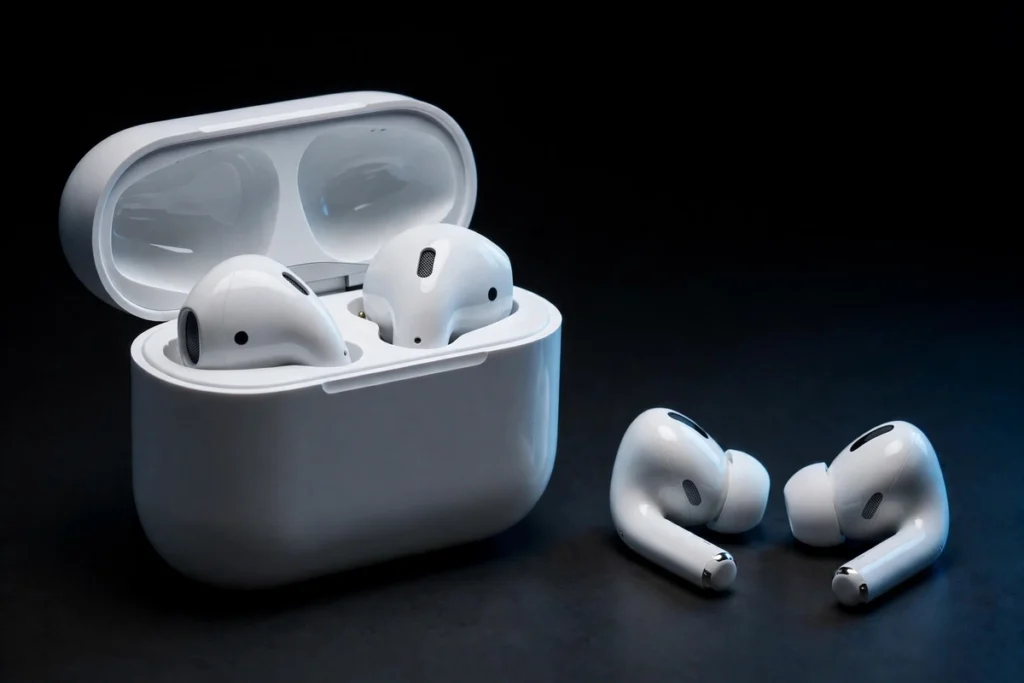
The earbuds with the longest range on paper are Class 1 Bluetooth models such as the Powerbeats Pro 2 and Beats Studio Buds +, both rated by their makers at up to 100 metres. The honest version is less exciting: that figure is an open-field rating, your phone sets half the terms of the link, and indoors most earbuds give you one to three rooms before the audio breaks up. This guide explains what the numbers mean, then lists the picks whose rated range and radio hardware give you the best chance of walking away from your phone without dropouts.
Everything below is research-based, from manufacturer specifications, Amazon listing data and published review consensus. We have not measured range hands-on, and every range figure here is a manufacturer rating, labelled as such.

Beats Powerbeats Pro 2 8.3/10
Why you: you leave your phone on a bench, a desk or a kitchen counter and keep moving, and the Class 1 radio plus secure earhooks are built for exactly that.
Trade-off: the 100 metre rating is an open-field figure, and the earhook design is bulkier in a pocket than stem-style buds.
Class 1 Bluetooth · Rated up to 100 m · Bluetooth 5.3 · 45 h total battery · IPX4
Bluetooth classes: where the range numbers come from
Bluetooth radios are grouped into power classes, and the class sets the maximum transmit power, the main ingredient in the range figure on a spec sheet. Class 3 tops out at 1 milliwatt and about 1 metre. Class 2, which covers most earbuds and phones, allows 2.5 milliwatts and carries the familiar 10 metre rating. Class 1 allows up to 100 milliwatts and is the source of the 100 metre claims. Those ratings assume open air and line of sight. They are best-case physics, not a promise about your house.
Two consequences follow. A Class 1 earbud transmits with more power, so at the edge of coverage it holds a link a Class 2 bud has already dropped. But the link runs in both directions: your phone also has to reach the earbuds, and if the phone transmits at lower power with a small internal antenna, the return path gives out first. Range is set by the weaker end, which is why a Class 1 rating improves real-world distance without multiplying it by ten.
Why rated range collapses indoors
The 2.4 GHz band Bluetooth uses is absorbed and reflected by the things houses are made of. A stud wall costs the signal a few decibels. Brick, concrete and tiled walls cost much more, and metal appliances and reinforced floors are worse again. Your own body is mostly water, and water absorbs 2.4 GHz energy well, so a phone in a back pocket, with your torso in the path, can halve usable distance on its own.
Crowding matters too. Wi-Fi routers, microwaves and your neighbours’ networks share the band. Bluetooth hops channels to dodge interference, but in a dense apartment block the radio spends more time retransmitting, and retransmission is what you hear as stutter at the edge of range. Put together, a 10 metre rated bud typically manages one or two rooms through walls, and a 100 metre Class 1 rating turns into perhaps 20 to 30 metres of real indoor coverage: two to three times the useful distance, and the honest reason to buy Class 1.
Bluetooth 5.3, 5.4 and the range claim that does not apply
Newer Bluetooth versions help range indirectly. Bluetooth 5.3 and 5.4 brought better connection management and improved coexistence with Wi-Fi, so a 5.3 or 5.4 earbud tends to hold a cleaner link near its limit than a Bluetooth 5.0 model with the same transmit power. Antenna design matters at least as much, and models that keep the antenna clear of the part buried in your ear canal simply reach further.
One claim deserves a direct correction. Bluetooth 5 marketing promised four times the range, and that figure is real, but it belongs to the LE Coded PHY mode, a low-data-rate mode for sensors and beacons. Music streaming does not use it, so a Bluetooth 5.x badge on its own tells you nothing about streaming range. Transmit class, antenna and the phone at the other end decide that. Our guide to Bluetooth audio codecs explained covers what the version number does change for sound quality and latency.
What actually extends usable range
Before spending anything, the free fixes work surprisingly often. Keep the phone in the open rather than in a pocket or a bag, ideally raised and near the middle of the space. Keep your body out of the direct line between phone and earbuds, and move the phone away from a Wi-Fi router and a microwave. A laptop on a desk usually has a better antenna position than a phone in a pocket, so the same earbuds often reach further from it.
For genuinely longer reach at home, the effective upgrade is at the source end: a Class 1 USB Bluetooth transmitter on a PC or TV transmits at the same 100 milliwatt ceiling as a Class 1 earbud, fixing the weak return path. The trade-off is a fixed listening spot. The safety side of these radios is covered in 2.4 GHz vs Bluetooth: which is safer.
The picks, ranked by rated range and radio hardware
Every pick below is labelled with its manufacturer-rated range and its Bluetooth version. Treat the rated figure as a comparison tool between models, not as the distance you will get through your walls.
| Product | Rated range | Bluetooth | Check Price |
|---|---|---|---|
| Beats Powerbeats Pro 2 | Up to 100 m (Class 1) | 5.3 | Check Price |
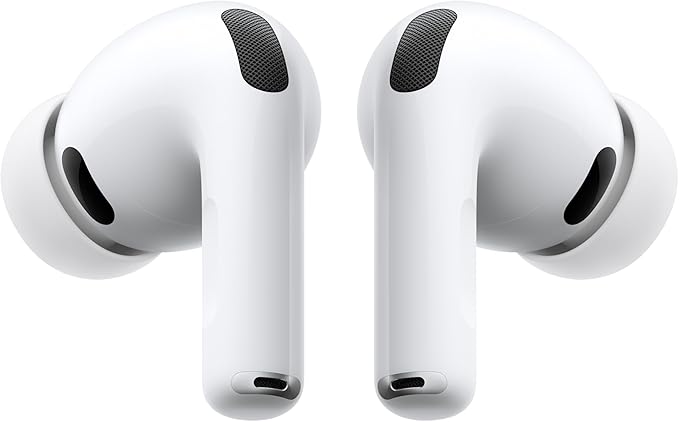 Apple AirPods Pro 3 | Up to 10 m (Class 2) | 5.3 | Check Price |
 Sony WF-1000XM6 | Up to 10 m (Class 2) | 5.3 | Check Price |
 EarFun Air Pro 4 | Up to 10 m (Class 2) | 5.4 | Check Price |
 Beats Studio Buds + | Up to 100 m (Class 1) | 5.3 | Check Price |
Longest rated range: Beats Powerbeats Pro 2
The Powerbeats Pro 2 sits at the top of this page, and its section is short because the card above carries the detail. Beats fits a Class 1 radio rated at up to 100 metres, and the earhook design keeps the buds stable while you move through that range: gym floors, yards and workshops where the phone stays in one place. Battery supports the same pattern, at up to 10 hours per charge and 45 hours with the case.
Best for iPhone range in practice: Apple AirPods Pro 3
Apple AirPods Pro 3 8.6/10
Why you: you use an iPhone and want the connection that reviewers consistently describe as unusually hard to break around a house.
Trade-off: the rated range is the standard 10 metres, and the best behaviour depends on staying inside Apple’s ecosystem.
Bluetooth 5.3 · H2 chip · ANC · 8 h buds, 24 h with case · IP57
Apple rates the AirPods Pro 3 at the standard Class 2 distance, so on the spec sheet it looks ordinary. In published range tests and review consensus it punches above that figure with an iPhone, because Apple controls both ends of the link: the H2 chip in the buds and the radio in the phone are tuned as one system. Inside a house, that shows up as fewer dropouts at the far end of the rated range. If your problem is stutter in the next room rather than distance across a field, this is the practical pick. Android owners get the buds without the ecosystem tuning, so the Class 1 models suit them better.
Best connection stability at the limit: Sony WF-1000XM6
Sony WF-1000XM6 8.6/10
Why you: you want flagship sound and noise cancelling from a bud whose LDAC link holds together well across a home.
Trade-off: rated range is the standard 10 metres, and LDAC at its highest bitrate is the first thing to stutter at the edge of coverage.
Bluetooth 5.3 · LDAC · ANC · Multipoint · 8 h buds, 24 h with case
Sony rates the WF-1000XM6 at roughly 10 metres, the standard Class 2 figure. It earns its place for a different reason: at the edge of that range, behaviour depends on how the radio handles a weakening signal, and Sony’s recent XM buds have a good record in reviews for holding a stable link across a typical house. One setting matters here. LDAC at 990 kbps needs a strong link, and at distance it breaks up first. Sony’s app lets the codec favour connection stability, stepping the bitrate down and buying back range.
Best value with Bluetooth 5.4: EarFun Air Pro 4
EarFun Air Pro 4 8.5/10
Why you: you want a current Bluetooth 5.4 radio, multipoint and strong battery life without paying flagship money.
Trade-off: rated range is the standard 10 metres, so it wins on connection quality and price, not on headline distance.
Bluetooth 5.4 · aptX Lossless and LDAC · Adaptive ANC · Multipoint · 52 h total playtime
The EarFun Air Pro 4 is the budget entry, and its range story is about the radio generation rather than the rating. Bluetooth 5.4 brings the improved channel management described above, so in a crowded 2.4 GHz environment the link degrades gradually instead of dropping in bursts. You also get multipoint, aptX Lossless and LDAC, and 52 hours of total playtime. The rated figure is 10 metres and walls still win; what you are buying is stability inside that footprint, at a much lower price.
Class 1 without the earhooks: Beats Studio Buds +
Beats Studio Buds + 7.9/10
Why you: you want the same Class 1 transmit power as the Powerbeats Pro 2 in a small stemless bud that disappears into a pocket.
Trade-off: no earhooks means a less locked-in fit for training, and the sound and ANC sit a step below the flagships here.
Class 1 Bluetooth · Rated up to 100 m · Bluetooth 5.3 · ANC · 36 h total battery · IPX4
Beats lists Class 1 Bluetooth for the Studio Buds +, and the Amazon specification table rates Bluetooth range at 100 metres, the same ceiling as the Powerbeats Pro 2. The difference is the package: a compact stemless bud and a small case, with a fit aimed at everyday wear rather than training. Expect the Class 1 advantage to show up as extra rooms indoors, not as a literal 100 metres through a house.
FAQ
Which earbuds have the longest Bluetooth range?
Class 1 models carry the longest manufacturer ratings, up to 100 metres in open air. In this list that means the Beats Powerbeats Pro 2 and Beats Studio Buds +. Most other earbuds are Class 2 and rated at 10 metres, and indoors every model delivers far less than its rating.
Why do my earbuds cut out in the next room if they are rated for 10 metres?
The rating assumes open air and line of sight. Walls, floors, metal appliances and your own body all absorb or reflect the 2.4 GHz signal, and other networks in the same band force retransmissions. One or two rooms of reliable coverage is normal for a Class 2 earbud in a real home.
Does Bluetooth 5.3 or 5.4 increase range over Bluetooth 5.0?
Not directly. Newer versions manage connections and interference better, so links tend to stay cleaner near their limit, but transmit power class and antenna design set the distance. The four-times-range figure attached to Bluetooth 5 belongs to a low-data sensor mode that music streaming does not use.
Does the phone affect earbud range?
Yes. The link runs in both directions and is limited by the weaker radio. A phone transmitting at lower power, or buried in a pocket or bag, can be the reason a link drops even when the earbuds themselves are Class 1 models with a 100 metre rating.
Verdict
Range shopping starts with a correction: the number on the box is an open-field rating, and your walls, your body and your phone decide what you actually get. Within that reality, Class 1 is worth roughly two to three times the indoor reach of a standard bud. Buy the Powerbeats Pro 2 if distance is the priority, or the Studio Buds + for the same radio in a compact design. iPhone owners should look at the AirPods Pro 3; the WF-1000XM6 and Air Pro 4 hold their links well at the limit for sound and value.

I am the founder of Sound Mavericks, where I provide the polite truth about audio equipment. I started this site because consumer electronics reviews are often too technical. Instead of using a silent lab, I test headphones, earbuds, and Bluetooth speakers in the real world – like on a noisy subway or in a busy coffee shop.
To stay independent, I buy my own review units (mostly from the United States) rather than accepting free gifts from brands. Once I finish testing a product, I sell it locally to our community. My goal is to help you understand sound quality, active noise cancellation (ANC), and battery life without the marketing hype.