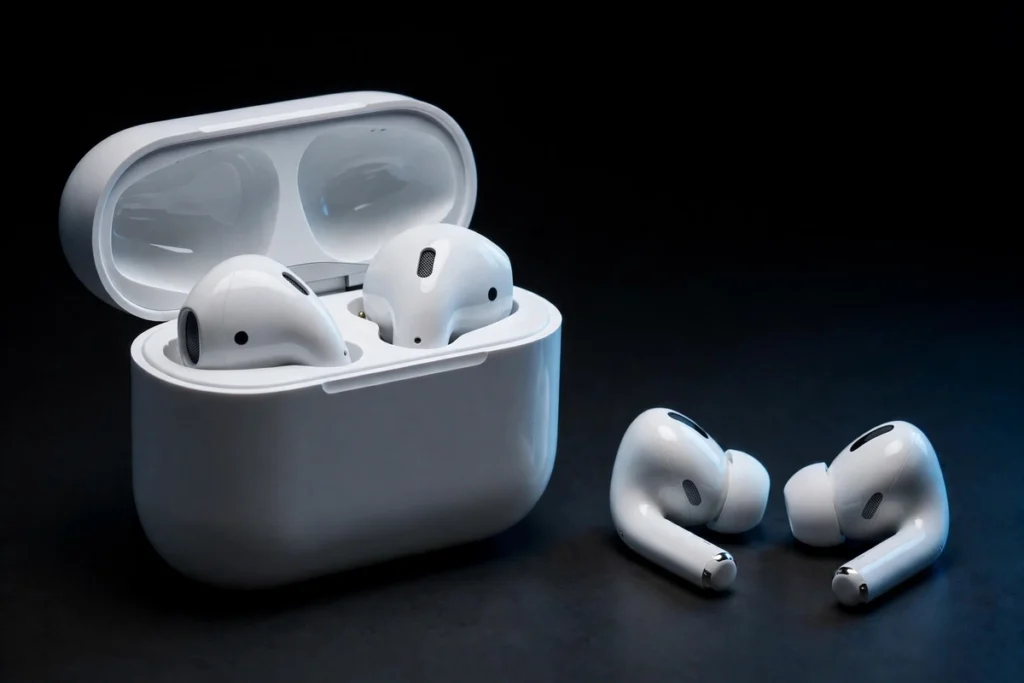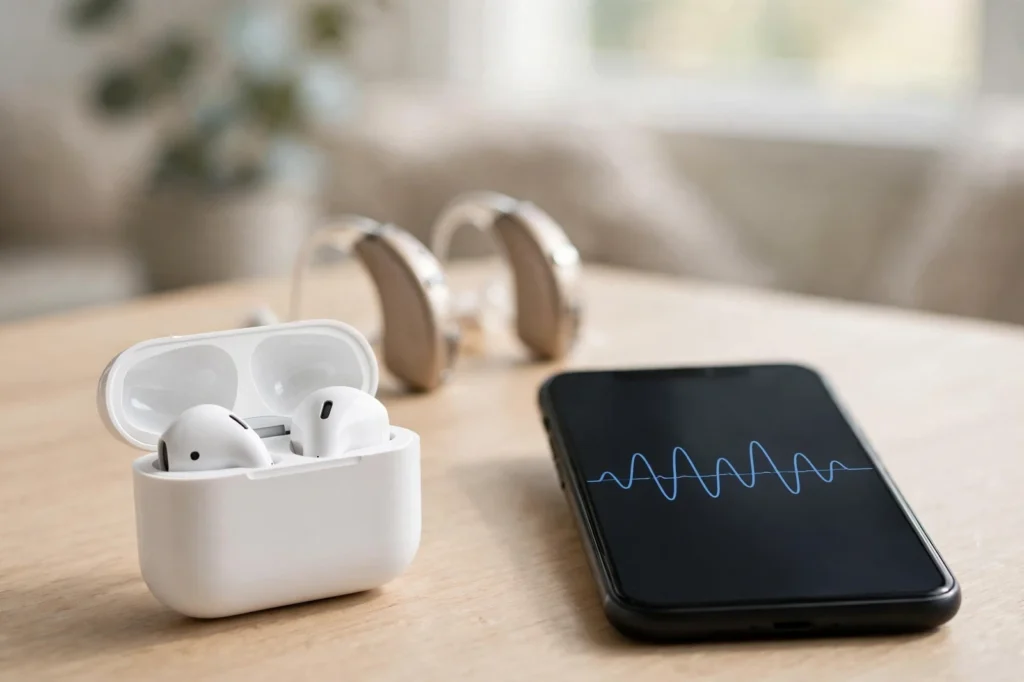
Earbuds as hearing aids sounds like a shortcut — you already own earbuds, so why not let them do a hearing aid’s job? SoundMavericks’ honest answer: a very small number now genuinely can, for a specific group, and the rest cannot, however good their transparency mode sounds. One model line carries an FDA-authorized hearing aid feature built around a real hearing test; a few hearing brands sell true over-the-counter (OTC) hearing aids that look like earbuds. Everything else is amplification — turning the whole world up — not treating hearing loss. This guide separates those categories and marks the point where you should stop shopping and book an audiologist instead.
Please read this first: This is general product information, not medical advice, and no substitute for a hearing evaluation. If loss came on suddenly, affects one ear, or comes with pain, drainage, dizziness or one-sided ringing, see a doctor or audiologist promptly.
For iPhone owners with perceived mild to moderate hearing loss, the AirPods Pro 3 are the only mainstream music earbuds with a genuine, FDA-authorized hearing aid feature — built on a hearing test, for adults 18+. Want a device whose whole job is hearing? The Sony CRE-E10 and Jabra Enhance Select are real OTC hearing aids. Ordinary earbuds are not.
Best genuine earbud option: AirPods Pro 3, for iPhone users who want music, calls and hearing assistance in one device.
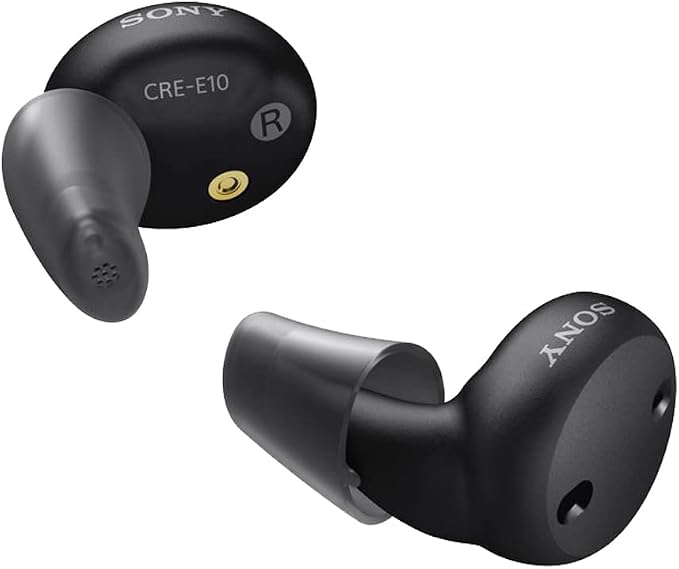
Best dedicated OTC option in an earbud shape: Sony CRE-E10, a self-fitting OTC hearing aid with iOS streaming.
Best OTC option with audiology support included: Jabra Enhance Select 500, sold as an OTC hearing aid with audiology support.

The Short Answer: Some Earbuds Can Help, Most Cannot Be Hearing Aids
Start with the distinction marketing blurs. A hearing aid is a regulated medical device: it applies gain — extra volume — mainly at the frequencies where your test shows you need it, while limiting output so loud sounds stay safe. An ordinary earbud’s transparency mode does almost the opposite, making speech, cutlery, traffic and air conditioning louder together.
So SoundMavericks divides this topic into three buckets. One: music earbuds with an authorized hearing aid feature — in practice, AirPods Pro 2 and Pro 3. Two: true OTC hearing aids in an earbud-like form — Sony’s CRE series and Jabra’s Enhance Plus, alongside Jabra’s conventional Enhance Select aids. Three: everything else — transparency modes, conversation modes and personal sound amplification products (PSAPs), which can help in a moment but are not hearing aids, and can delay real help beyond very mild difficulty.
Which Earbuds Actually Have Hearing-Assistance Features?
Apple AirPods Pro: The FDA-Authorized Hearing Aid Feature
Apple’s position is unique because it is regulatory, not just a feature list. In September 2024, the FDA authorized Apple’s Hearing Aid Feature as the first over-the-counter hearing aid software device. What was authorized is the software on compatible hardware — AirPods Pro 2 and, since its launch, AirPods Pro 3 — not every AirPods model.
The feature is intended, in Apple and FDA wording, for adults 18 and over with perceived mild to moderate hearing loss. “Perceived” matters: OTC does not require a prescription or prior diagnosis, which is why the boundaries matter. It is not authorized for severe or profound loss, and not for children.
What makes it more than amplification is the chain around it. Apple’s Hearing Test — a roughly five-minute, pure-tone style test in a quiet room — produces a profile stored in the Health app, or you can add a professional audiogram instead. The feature then adjusts amplification to that profile, with controls for amplification, tone and balance. Hearing Protection sits around it in supported regions; availability varies by country.
The FDA’s summary of the supporting study: 118 participants with perceived mild to moderate loss, and self-fitting users reported similar benefit to those professionally fitted in the study, with no device-related adverse events reported. Encouraging for this feature and population — not evidence earbuds work for every kind or degree of loss.
Conversation Boost, Transparency and Live Listen: Helpful, Not Hearing Aids
Below that feature sit useful — but different — tools. Conversation Boost focuses beamforming microphones on the voice in front of you. Transparency amplification raises the world around you, and Live Listen turns a paired iPhone into a remote microphone. They can help in a moment, but are not fitted to an audiogram and not regulated as hearing aids. Shopping mainly for music? See our best noise cancelling earbuds guide — not a hearing treatment.
Jabra Enhance: A Hearing Brand, Not a Music Earbud With a Mode
Jabra sits on both sides of the fence. Its Elite range is music earbuds; its Enhance range is hearing aids, built on technology from parent hearing group GN. The Enhance Plus is the earbud-shaped member: a self-fitting OTC hearing aid in a true-wireless body, for perceived mild to moderate loss, with app setup. The Enhance Select models take a conventional receiver-in-ear form, are sold as OTC aids for the same population, and bundle Jabra audiology support — stated in the Enhance Select 500’s Amazon listing title, and a real part of what you are buying. At the top sits a prescription model fitted in person; our Jabra Enhance Pro 20 review explains why that route is a different purchase entirely.
Sony CRE Series: OTC Hearing Aids That Happen to Look Like Earbuds
The CRE-E10 is not a WF-series music earbud with a hearing mode; it is a self-fitting OTC hearing aid developed in Sony’s hearing partnership, described by Sony for mild to moderate hearing loss. Its listing calls out prescription-grade sound quality in Sony’s wording, an earbud design, rechargeable battery and Bluetooth streaming for iOS. Setup runs through Sony’s Hearing Control app, and Sony rates battery at up to 26 hours. Its sibling, the CRE-C10, takes a smaller in-canal form aimed at discretion rather than streaming.
The Featured Products, Side by Side
Every product name links to its tagged Amazon listing, and every row has a Check Price link.
| Product | What it actually is | Hearing basis | Best for | Buy |
|---|---|---|---|---|
| Apple AirPods Pro 3 | Music earbuds, FDA-authorized Hearing Aid feature (software) | Apple Hearing Test or audiogram in Health app | iPhone owners with perceived mild to moderate loss who also want music and calls | Check Price |
| Sony CRE-E10 Self-Fitting OTC Hearing Aids | Self-fitting OTC hearing aid, earbud design | Self-fitting in the Sony Hearing Control app | Hearing-first listeners wanting iOS streaming; up to 26 hrs per Sony | Check Price |
| Jabra Enhance Select 500 OTC Hearing Aids | Dedicated OTC hearing aid, receiver-in-ear form | App setup; audiology support included per listing | Hearing-first listeners wanting support access | Check Price |
Earbuds vs Hearing Aids: The Comparison That Matters
| Feature | Ordinary music earbuds | Earbuds with authorized / OTC hearing function | Prescription hearing aids |
|---|---|---|---|
| Regulatory status | Consumer electronics | FDA-authorized feature (Apple); FDA-regulated OTC aids (Sony, Jabra) | Dispensed after professional evaluation |
| How sound is adjusted | Overall volume, transparency level and music EQ | Shaped by a hearing test / self-fit profile | Fitted to a full audiogram, professionally verified |
| Who it is intended for | People with normal hearing, for music and calls | Adults with perceived mild to moderate hearing loss | Any degree a professional judges suitable, incl. severe |
| Professional involvement | None | Self-fitting; some brands add remote audiology support | Evaluation, fitting and ongoing care |
| Battery expectation | Listening sessions, with case top-ups | AirPods Pro 3: up to 10 hrs in Transparency with Hearing Aid (Apple); CRE-E10: up to 26 hrs (Sony) | All-day, waking-hours wear |
| Music and calls | The whole point of the product | Good to strong; varies by model | Secondary to the hearing fitting |
Amplification vs Fitted Gain: Why “Louder” Is Not “Clearer”
Most hearing loss is not uniform: low frequencies often remain audible while the higher frequencies carrying consonants fade first. Speech then sounds loud enough but muffled — the difference between “cap”, “cat” and “cash” lives in the detail you are missing. A simple amplifier cannot fix that shape: turn everything up and the lows boom before the highs clear.
Fitted gain works differently: a test produces an audiogram — a map of the quietest sound you detect at each frequency — and the device adds more help where your map dips, less where it does not. That mapping step separates a hearing device from a loud earbud. If a product cannot describe how it learns your hearing, assume it only amplifies.
Who Earbuds Are Enough For — and Who They Are Not
Based on what manufacturers and the FDA state, the “enough” group is narrow: adults noticing mild, gradual difficulty — asking for repeats, struggling with the TV, missing soft speech — where the problem is situational, not constant. AirPods Pro suit iPhone owners who wear earbuds for hours daily; a dedicated OTC aid suits hearing-first buyers. Treat it as a first step: if a properly set-up option still leaves you straining, that is your cue for a full evaluation.
See an audiologist or doctor instead of, or before, buying anything here if: your loss feels moderate-to-severe or worse; it came on suddenly; it is worse in one ear; you have pain, drainage, fullness, dizziness or one-sided ringing; the person struggling is a child; or you already wear hearing aids and are considering replacing them with earbuds. Those situations can have medical causes no consumer device can identify, and OTC products are explicitly not intended for them. A professional also remains the route for all-day wear, complex loss, or tinnitus programs earbuds do not provide as medical features.
How to Set Up the AirPods Pro Hearing Aid Feature
Apple’s published setup path, for compatible AirPods Pro with an iPhone or iPad (names vary slightly by software version and region):
- Update and charge. Update your iPhone or iPad and AirPods firmware, charge and pair the AirPods.
- Get a good fit. Try the ear tip sizes and use the fit test in settings — a poor seal undermines the test and the result.
- Open hearing settings. AirPods in, open Settings, tap your AirPods name, find Hearing Health / Hearing Assistance, choose Set Up Hearing Assistance.
- Take the Hearing Test — or add a result. In a quiet room, take the roughly five-minute test, tapping when you hear each tone, one ear at a time. Or add an audiogram from a hearing professional in the Health app.
- Turn on Hearing Aid. If your result is in the supported range, follow the prompts and tap Turn On Hearing Aid. Settings are stored on the AirPods.
- Fine-tune in real life. In Hearing Assistance adjustments, set amplification, balance, tone and noise reduction, and try Conversation Boost. Test on a familiar voice and the TV.
- Use the right mode. Hearing Aid works in Transparency mode — make sure Transparency is among your selectable modes, and switch to it for assistance.
A rushed test in a noisy room with a loose tip produces a poor profile — retake it quietly before judging the feature. And protect the hearing you have: our explainer on best Bluetooth hearing protection covers that side in depth.
The Limits Nobody Should Skip: Battery, Occlusion, Comfort and Stigma
Battery is the biggest practical gap. A prescription aid is built for waking-to-sleeping wear; a music earbud is built for sessions. Apple rates AirPods Pro 3 at up to 10 hours in Transparency using the Hearing Aid feature — a figure you plan a day around once calls and music share the charge. Hearing-first OTC aids like Sony’s CRE-E10, rated up to 26 hours, show what designing around the job buys you.
Occlusion is the second gap. Sealing the ear canal traps your own voice, chewing and footsteps, making them boomy or hollow; independent lab testing flags own-voice comfort as a recurring weakness of earbud-style devices. A professional fitting has more tools to address it.
Comfort and stigma cut both ways. Earbuds meant for an hour’s music can ache over a full day, and irritated ears are a sign to stop and seek advice. Yet earbuds are ordinary — nobody reads AirPods as a medical device — and for adults who delayed acting on mild loss because they did not want to “wear hearing aids,” that normality finally gets help into their ears. A real benefit, provided the device is a genuine option above. Remember too: Apple’s features need an iPhone, and no earbud offers a hearing practice’s follow-up care.
SoundMavericks Bottom Line
Can earbuds be hearing aids? Yes — narrowly, and only in the cases named here. AirPods Pro 2 and Pro 3 carry an FDA-authorized feature for adults with perceived mild to moderate loss. Sony’s CRE series and Jabra’s Enhance line are genuine OTC hearing aids, some in an earbud shape. Every other earbud is an amplifier. Start with a hearing test, and if in doubt, let an audiologist make the call.
Frequently Asked Questions
Can I use earbuds as hearing aids?
Only specific ones. AirPods Pro 2 and 3 have an FDA-authorized Hearing Aid feature for adults with perceived mild to moderate loss, and the Sony CRE-E10 and Jabra Enhance Plus are regulated OTC hearing aids in an earbud style. Ordinary earbuds only amplify; they are not hearing aids.
Are AirPods Pro really FDA-authorized as hearing aids?
The FDA authorized Apple’s Hearing Aid Feature software in September 2024 as the first OTC hearing aid software device, for compatible AirPods Pro, intended for adults 18+ with perceived mild to moderate loss — not a blanket approval of all earbuds or all loss.
Do I need a prescription to buy earbud-style hearing aids?
No. OTC aids — Apple’s feature and self-fitting Sony and Jabra models — can be bought without a prescription in the US, for adults with perceived mild to moderate loss. Prescription aids remain the route for severe or complex loss.
How do I know if I have mild to moderate hearing loss?
Common signs: frequently asking for repeats, struggling in noisy places, and turning the TV up beyond others’ preference. Apple’s Hearing Test gives an initial result; an audiologist confirms type and degree, and can rule out medical causes.
Can earbuds damage my hearing if I use them to hear better?
Yes, if you simply turn everything up — over-amplification and prolonged loud listening can harm hearing. Use a test-based profile rather than raw volume, keep levels comfortable, and seek professional advice if sound is painful or leaves ringing.
Are OTC hearing aids better than earbuds for hearing loss?
For hearing as the main job, generally yes: a dedicated OTC aid like the Sony CRE-E10 or a Jabra Enhance model is designed and supported as a hearing device. AirPods Pro are the exception doing both jobs for iPhone owners in the mild-to-moderate group.
This article is for general information only and is not medical advice. Hearing loss can have medical causes; please consult a qualified hearing healthcare professional or doctor for diagnosis and treatment advice for your own situation.

I am the founder of Sound Mavericks, where I provide the polite truth about audio equipment. I started this site because consumer electronics reviews are often too technical. Instead of using a silent lab, I test headphones, earbuds, and Bluetooth speakers in the real world – like on a noisy subway or in a busy coffee shop.
To stay independent, I buy my own review units (mostly from the United States) rather than accepting free gifts from brands. Once I finish testing a product, I sell it locally to our community. My goal is to help you understand sound quality, active noise cancellation (ANC), and battery life without the marketing hype.