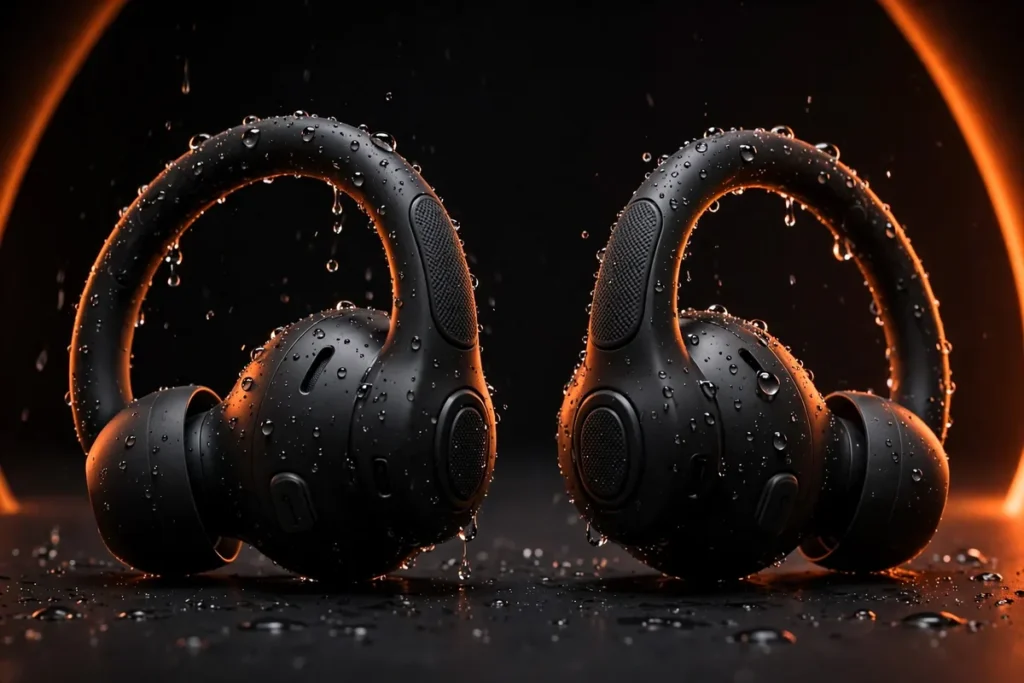
Quick verdict: The ISOtunes PRO 3.0 is the best Bluetooth hearing protection for most workers — a manufacturer-rated 27 dB NRR, up to 20 hours of battery, IP67 toughness, and an 85 dB SafeMax volume limiter in a secure ear-hook design. If maximum protection is the priority, the Elgin Rebel posts a 31 dB NRR in a true-wireless package, and the 3M WorkTunes Connect +AM/FM remains the earmuff to beat for anyone who wants radio on the job.
Mowing, grinding, sawing, and running heavy equipment all sit well above the level where hearing damage starts — but the workday is long, and silence gets old. Bluetooth hearing protection solves both problems at once: certified passive attenuation that blocks the noise, plus wireless audio for music, podcasts, and calls at a capped, safe volume. Our analysis below is based on manufacturer specifications, current product lineups, and published third-party reviews — here is how the leading options compare for 2026.
Best Bluetooth Hearing Protection at a Glance
| Pick | Best for | Type | NRR* | Battery |
|---|---|---|---|---|
| ISOtunes PRO 3.0 | Best overall | Ear-hook earbuds | 27 dB | Up to 20 hrs |
| Elgin Rebel | Highest NRR | True wireless | 31 dB | 12 hrs + case |
| ISOtunes PRO Aware 2.0 | Situational awareness | Ear-hook earbuds | 26 dB | Up to 15 hrs |
| ISOtunes FREE 2.0 | Best true wireless | True wireless | 25 dB | 7 hrs + 14 hrs case |
| 3M WorkTunes Connect +AM/FM | Best earmuff + radio | Earmuff | 26 dB | AA / rechargeable |
| DEWALT Jobsite Pro X2 | Best for trades | True wireless (ANC) | Not rated | 10 hrs + 30 hrs case |
| ISOtunes LINK 2.0 | Best battery earmuff | Earmuff | 25 dB | Up to 50 hrs |
| Elgin Discord Gen 3 | Best value | Neckband | 31 dB | Up to 14 hrs |
*NRR figures are manufacturer-published laboratory ratings (ANSI S3.19). Real-world protection depends on fit — see the buying guide below.
1. ISOtunes PRO 3.0 — Best Overall

ISOtunes built its name on jobsite hearing protection, and the PRO 3.0 is the current flagship of the line — the model most reviewers now point to as the default answer. The headline numbers explain why: a manufacturer-rated 27 dB NRR, up to 20 hours of battery life, and an IP67 dust-and-waterproof build tested to MIL-STD-810H shock standards. The ear-hook design keeps the buds planted through bending, climbing, and mowing, and the large in-line buttons are genuinely usable with work gloves — a detail touch controls on consumer buds can’t match.
Bluetooth 5.4 with dual pairing keeps the connection current, and ISOtunes’ SafeMax technology caps audio output at 85 dB, which is the line that matters for long shifts (more on that in the buying guide). A 10-minute USB-C quick charge adds roughly two hours of playback, which saves the morning you forgot to charge overnight. The tradeoff is the form factor: the two buds are joined by a reinforced cable, so if you want completely cord-free true wireless, the FREE 2.0 below is the alternative.
Key specs: 27 dB NRR (manufacturer rated) · Bluetooth 5.4 with dual pairing · up to 20 hrs battery · IP67 · MIL-STD-810H · SafeMax 85 dB limiter · noise-isolating mic · USB-C
| Hearing Protection | 9.4 |
| Sound Quality | 8.8 |
| Comfort & Fit | 9.0 |
| Battery Life | 9.4 |
| Call Quality | 8.6 |
| Value | 8.8 |
2. Elgin Rebel — Highest NRR

If the single number you care about is attenuation, the Elgin Rebel wins the spec sheet: a manufacturer-rated 31 dB NRR, ANSI-certified, delivered through high-density foam tips that physically block noise before any audio even plays. That is a meaningful step up from the 25–27 dB most competitors publish, and it matters on genuinely loud work — grinding, demo, heavy equipment.
The Rebel is also the most complete true-wireless package here: Bluetooth 5.3, 12+ hours per charge with the case holding several more full charges, IP65 dust and water resistance, and a noise-isolating mic for calls. The party trick is a 250-lumen LED flashlight built into the charging case — odd on paper, genuinely useful in crawl spaces and dark work areas. Tradeoffs: there is no volume control on the buds themselves (use your phone or voice assistant), and the firm foam tips that deliver that 31 dB rating can irritate sensitive ear canals on long shifts.
Key specs: 31 dB NRR (ANSI-certified, manufacturer rated) · Bluetooth 5.3 · 12+ hrs per charge + case · IP65 · LED flashlight in case · noise-isolating mic
| Hearing Protection | 9.6 |
| Sound Quality | 8.6 |
| Comfort & Fit | 8.4 |
| Battery Life | 9.2 |
| Call Quality | 8.4 |
| Value | 8.8 |
3. ISOtunes PRO Aware 2.0 — Best for Situational Awareness

Total isolation is a liability when you need to hear a coworker’s shout, a backup alarm, or equipment changing pitch. The PRO Aware 2.0 is ISOtunes’ answer: a 26 dB NRR earplug-style bud with Aware Technology — adjustable audio passthrough that lets safe sounds through while harmful noise stays blocked. It is the pick for shared jobsites, roadwork, and anywhere communication is a safety issue.
Under the hood it matches the flagship line: Bluetooth 5.4, IP67, MIL-STD-810H toughness, and the SafeMax 85 dB limiter. Battery runs up to 15 hours with Aware and Bluetooth active (up to 24 hours in Aware-only mode), and a 15-minute quick charge buys about two hours. The passthrough costs a little raw attenuation versus the passive PRO 3.0 (26 dB vs 27 dB), and you pay a premium for the electronics — but if your site requires you to hear your surroundings, nothing else in this roundup does the job as completely.
Key specs: 26 dB NRR (manufacturer rated) · Aware Technology passthrough · Bluetooth 5.4 · up to 15 hrs (BT + Aware) · IP67 · MIL-STD-810H · SafeMax 85 dB limiter
| Hearing Protection | 9.0 |
| Sound Quality | 8.8 |
| Comfort & Fit | 8.8 |
| Battery Life | 8.8 |
| Call Quality | 8.6 |
| Value | 8.2 |
4. ISOtunes FREE 2.0 — Best True Wireless

For workers who hate cables, the FREE 2.0 is the true-wireless answer in ISOtunes’ lineup: no neckband, no connecting wire, just two buds with a 25 dB NRR each. Battery runs about 7 hours per charge with roughly 14 more in the case (up to 21 hours total), Bluetooth 5.2 keeps the connection stable to about 30 feet, and a noise-suppressing mic with echo cancellation handles calls. The SafeMax limiter caps output at 85 dB, and the buds are IP45-rated against dust, sweat, and splashes.
There is also a listen-only variant with no microphone, built for workplaces with strict security or compliance rules — worth knowing about if your site bans mics. Compared with the PRO 3.0 you give up a little attenuation (25 dB vs 27 dB), some battery, and the glove-friendly in-line controls; touch controls are fiddlier with dirty hands. But for freedom of movement — especially under a hard hat or earmuffs — true wireless is hard to beat.
Key specs: 25 dB NRR (manufacturer rated) · Bluetooth 5.2 · 7 hrs buds + 14 hrs case · IP45 · SafeMax 85 dB limiter · noise-suppressing mic · listen-only variant available
| Hearing Protection | 8.6 |
| Sound Quality | 8.6 |
| Comfort & Fit | 8.8 |
| Battery Life | 8.4 |
| Call Quality | 8.6 |
| Value | 8.4 |
5. 3M WorkTunes Connect +AM/FM — Best Earmuff with Radio

Some workers just prefer muffs — no tips in the ear canal, easy on and off, and the familiar 3M Peltor pedigree. The current WorkTunes Connect +AM/FM (model 90572-DC) pairs a manufacturer-rated 26 dB NRR with both Bluetooth streaming and a proper AM/FM tuner with voice-guided controls, so you never take the muffs off to change the station. 3M also caps the internal audio output, so cranking the volume cannot quietly undo the protection the shell provides — a detail cheaper radio muffs skip.
The new generation runs on two AA batteries or an optional rechargeable pack, and a built-in mic handles calls. If you mostly mow, snowblow, or work the shop and want one device that does protection plus radio plus phone audio, this is the established choice. Just note the model number at checkout: the older 90542 generation (24 dB NRR) is still listed in places, and the current 90572-DC protects 2 dB better. For more on mowing-specific picks, see our noise-cancelling headphones for mowing and construction guide.
Key specs: 26 dB NRR (manufacturer rated) · Bluetooth + AM/FM tuner · 2×AA or optional rechargeable pack · voice-guided tuning · built-in mic · safe volume limiter
| Hearing Protection | 9.0 |
| Sound Quality | 8.0 |
| Comfort & Fit | 8.6 |
| Battery Life | 8.8 |
| Call Quality | 7.8 |
| Value | 8.6 |
6. DEWALT Jobsite Pro X2 — Best for Trades

The Jobsite Pro X2 comes at the problem from the tool-brand angle: active noise cancellation plus a passive foam seal, a patented turn-dial volume control that works with heavy gloves, and a 40-hour total runtime with the case (10 hours per charge). Four EQ modes, IP54 dust and water resistance, and a carabiner-clip case round out a package clearly designed for construction workers, electricians, and plumbers.
One honest caveat: DEWALT publishes no NRR rating for the X2 — it is ANC plus passive isolation, not a certified hearing protector. That makes it the best pick in this roundup for moderate-noise work where comfort and glove-friendly controls matter most, but not the pick for a site that requires a certified NRR. For the distinction, read our explainer on active noise cancellation vs. passive isolation.
Key specs: ANC + passive isolation (no published NRR) · 10 hrs buds + 30 hrs case · glove-friendly dial control · IP54 · 4 EQ modes · Bluetooth 5.3
| Hearing Protection | 7.6 |
| Sound Quality | 8.6 |
| Comfort & Fit | 8.6 |
| Battery Life | 9.0 |
| Call Quality | 8.2 |
| Value | 8.0 |
7. ISOtunes LINK 2.0 — Best Battery Earmuff
ISOtunes launched the LINK 2.0 in October 2026 as its new flagship over-ear model, and the headline figure is the battery: up to 50 hours per charge — roughly a full work week of listening without plugging in. The manufacturer rates it at 25 dB NRR with an IP67 dust-and-waterproof build, SafeMax 85 dB volume limiting, and an adjustable headband with raised, glove-friendly buttons. A boom-mic attachment is available separately for workers who live on calls.
It is too new for a long track record, and the 25 dB NRR trails the WorkTunes’ 26 dB slightly — but for earmuff loyalists who dread daily charging, the battery life is unmatched in this roundup. Note: as a brand-new release, Amazon listings may still be stabilizing; use the search link below to find the current listing.
Key specs: 25 dB NRR (manufacturer rated) · Bluetooth · up to 50 hrs battery · IP67 · SafeMax 85 dB limiter · optional boom mic · launched October 2026
| Hearing Protection | 8.6 |
| Sound Quality | 8.2 |
| Comfort & Fit | 8.8 |
| Battery Life | 9.6 |
| Call Quality | 8.4 |
| Value | 8.2 |
8. Elgin Discord Gen 3 — Best Value
The Discord Gen 3 is the value play that doesn’t read like one: a manufacturer-rated 31 dB NRR — matching the Rebel’s class-leading attenuation — in a magnetic neckband design that snaps together around your neck when not in use. Bluetooth 5.3, an 8mm precision-tuned driver, up to 14 hours of playback, replaceable high-density foam and silicone tips, and an all-weather waterproof build round out a spec sheet that punches well above its price tier.
Why isn’t it ranked higher? The neckband form factor won’t suit everyone, the brand’s fit consistency gets mixed reports, and unlike the ISOtunes models there is no 85 dB hard volume limiter — so discipline about volume is on you. But for pure protection-per-dollar in a Bluetooth package, the Discord Gen 3 is the pick. Note: we could not verify a stable single-ASIN listing at research time, so use the search link below to find the current Amazon listing.
Key specs: 31 dB NRR (ANSI-certified, manufacturer rated) · Bluetooth 5.3 · up to 14 hrs battery · 8mm driver · magnetic neckband · replaceable foam tips · waterproof
| Hearing Protection | 9.4 |
| Sound Quality | 8.4 |
| Comfort & Fit | 8.2 |
| Battery Life | 8.6 |
| Call Quality | 8.0 |
| Value | 9.2 |
Buying Guide: How to Choose Bluetooth Hearing Protection
NRR and SNR, explained
The Noise Reduction Rating (NRR) is the U.S. laboratory rating — tested to ANSI S3.19 — that states how many decibels of sound a protector blocks when worn correctly. In Europe the equivalent is SNR. Every NRR figure in this guide is a manufacturer-published lab rating, and two caveats apply. First, the number assumes a perfect seal; a loose foam tip or a cracked earmuff cushion can cost you 10 dB or more of real protection. Second, a 31 dB NRR does not block “twice as much” as a 22 dB model in the way people expect — but the gap between 25 and 31 dB is genuinely significant on loud equipment, which is why the Elgin models lead on this metric.
OSHA, the 85 dB line, and volume limiters
OSHA’s permissible exposure limit is 85 dB averaged over an 8-hour shift — and that limit applies to everything reaching your ears, including your music. A high NRR is only half the equation if your earbuds can then pump 100 dB of bass directly into your canal. That is why models like the ISOtunes line carry a SafeMax-style limiter that caps audio output at 85 dB: the protection the plug provides can’t be undone by the volume knob. For OSHA-regulated work, confirm three things before buying: an ANSI-certified NRR, a volume-limited output, and your employer’s approval of the specific model.
ANC is not hearing protection
Active noise cancellation uses microphones to erase steady drone — engines, fans, HVAC. It does nothing certified against sudden impulse noise, and consumer ANC headphones carry no NRR. Some jobsite products (like the DEWALT X2 above) combine ANC for comfort with passive foam for basic attenuation, which is fine for moderate noise — but if your site’s hearing-conservation program requires certified protection, only a published NRR counts.
Bluetooth vs. radio vs. wired
Bluetooth streaming from your phone covers music, podcasts, and calls — and newer Bluetooth 5.3/5.4 radios hold up better in RF-crowded jobsites with less battery drain. If you want Bluetooth multipoint, the PRO 3.0’s dual pairing lets two devices stay connected. An AM/FM tuner (WorkTunes) is the better pick where phones stay in lockers or reception is the point. Wired plug-style headphones still exist and never need charging, but a cable snagging on equipment is its own hazard.
Earmuffs vs. earbuds

Over-ear earmuffs are easy on and off; earplug-style buds fit under hard hats. (Image: Wikimedia Commons)
Earmuffs win on convenience: nothing in your ear canal, quick to remove for conversation, and the seal is visible — you can see whether the cushion sits right. Earbuds win on compatibility: they fit under hard hats, beanies, and even a second set of muffs for double protection, and they’re far more comfortable in heat. For all-day wear in hot conditions, most workers end up preferring buds; for intermittent loud tasks, muffs.
Fit and seal: where NRR is won or lost
With foam tips, roll the foam, insert deep, and hold while it expands — a shallow insertion is the most common reason real-world protection falls short of the rating. Try every tip size in the box; ear canals differ more than people think. With muffs, the cushion must seal fully around the ear — safety glasses with thick temples break the seal, so route the arms carefully or choose thin-temple eyewear.
Battery life and charging
Match the battery to your shift: 7–12 hours per charge covers a workday for most earbuds (the case covers the rest of the week), while earmuffs like the LINK 2.0 stretch to 50 hours. USB-C is now standard and worth insisting on — one cable for everything. If your site runs on AA batteries anyway, the WorkTunes’ dual-power option is genuinely practical.
Frequently Asked Questions
Can you listen to music with hearing protection?
Yes — that is exactly what these products are for. Bluetooth hearing protection pairs certified passive attenuation (the NRR-rated plug or muff) with wireless audio, so you get music, podcasts, and calls while the noise stays blocked. The key is the volume limiter: models with an 85 dB cap ensure your audio can’t undo the protection.
Are Bluetooth hearing protection earbuds OSHA compliant?
They can be, provided three conditions hold: the product carries an ANSI-certified NRR, its audio output is volume-limited (typically 85 dB), and your employer approves that specific model for the task. The ISOtunes models in this guide are marketed as OSHA-compliant on exactly that basis. Always confirm with your site’s safety policy — a high NRR alone is not the whole test.
What NRR do I need for mowing or construction?
A typical gas mower or circular saw runs around 90–100 dB at the operator’s ear. OSHA’s action level is 85 dB over 8 hours, so you want enough attenuation to land comfortably below that — in practice, a 25 dB+ NRR with a good seal handles mowing and most shop tools with margin. For sustained exposure near 100 dB, consider the 31 dB options here or doubling up earplugs under muffs. See also our guide to headphones for mowing and construction.
Is active noise cancelling the same as hearing protection?
No. ANC cancels steady low-frequency drone electronically and carries no certified protection rating; NRR measures physical attenuation of all sound, tested in a lab to an ANSI standard. For workplace hearing conservation, only the NRR (or SNR) counts. Our ANC vs. passive isolation explainer breaks down the difference, and our piece on how many decibels noise-cancelling headphones block covers what ANC can and can’t do.
Can I wear Bluetooth hearing protection under a hard hat?
In-ear models — earbuds and neckband buds like the ISOtunes PRO 3.0, Elgin Rebel, and Elgin Discord Gen 3 — fit comfortably under a hard hat. Standard over-ear muffs generally don’t, unless you use a hard-hat-mounted earmuff variant; low-profile true-wireless buds can also be worn under a separate pair of muffs for double protection in extreme noise.
Does the Bluetooth version matter?
Modestly. Bluetooth 5.3 and 5.4 bring better power efficiency, longer range, and more resistance to dropouts in RF-busy jobsites than 5.0/5.2, and 5.4 adds Auracast broadcast audio. For music and calls on the job, any of these work — but if you’re choosing between two otherwise equal models, take the newer radio.
The Bottom Line
For most workers, the ISOtunes PRO 3.0 is the complete package: strong certified protection, shift-beating battery, jobsite toughness, and a volume limiter that keeps long listening days safe. Chase maximum attenuation with the Elgin Rebel, situational awareness with the PRO Aware 2.0, or radio-equipped simplicity with the 3M WorkTunes Connect +AM/FM — and whatever you choose, remember that the rating on the box only counts if the seal in your ear is right.

I am the founder of Sound Mavericks, where I provide the polite truth about audio equipment. I started this site because consumer electronics reviews are often too technical. Instead of using a silent lab, I test headphones, earbuds, and Bluetooth speakers in the real world – like on a noisy subway or in a busy coffee shop.
To stay independent, I buy my own review units (mostly from the United States) rather than accepting free gifts from brands. Once I finish testing a product, I sell it locally to our community. My goal is to help you understand sound quality, active noise cancellation (ANC), and battery life without the marketing hype.