
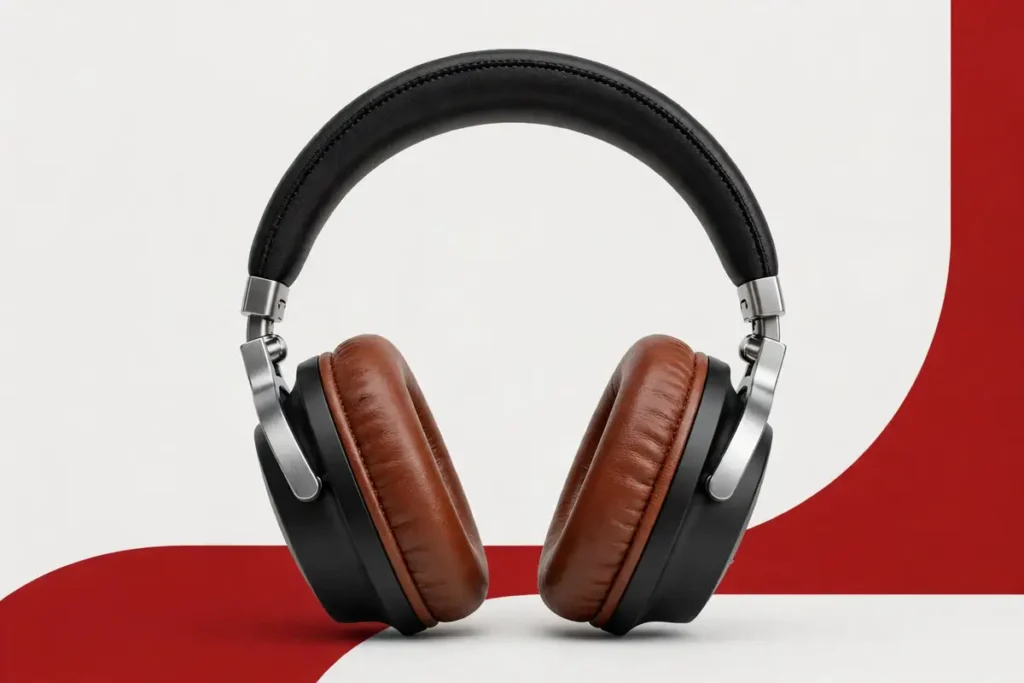
This dali io 8 review covers the wireless headphone DALI built like one of its loudspeakers: a 50mm free-edge paper fibre driver with the company’s SMC magnet system, aptX HD and aptX Adaptive support, real noise cancelling, and no companion app at all. What Hi-Fi? and TechRadar both gave it top marks for sound and comfort. The price is premium and the ANC is not the strongest in the class, so the question is whether sound-first buyers get their money’s worth. On our scoring, they do.
A note on method. This review is research-based. The scores are our provisional assessment, built from specialist reviewers’ hands-on verdicts together with DALI’s confirmed specifications for this exact model. They sit on the same scale as the rest of our headphone database. Where the evidence is thin or sources conflict, the copy says so rather than guessing. The verified listing behind our buttons is the Iron Black finish.
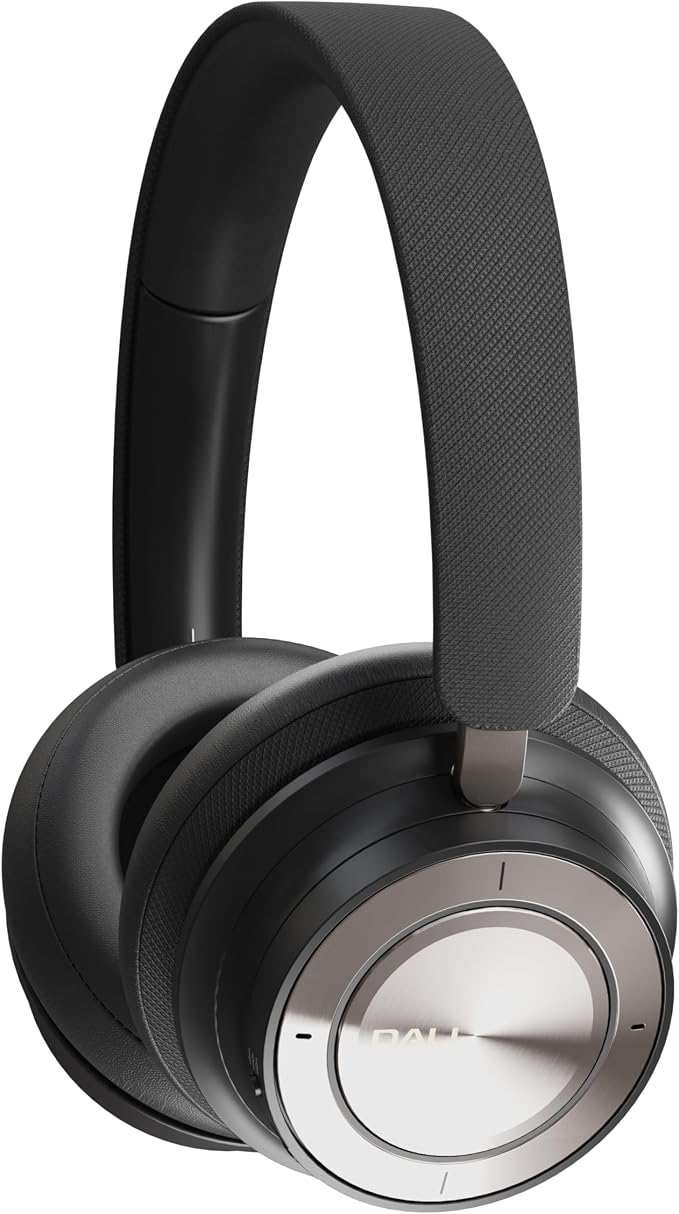
DALI IO-8 8.0/10
Why you: you want a wireless headphone that sounds like hi-fi, not like a gadget. The 50mm SMC driver delivers crisp, dynamic sound, comfort is top-tier for long sessions, and wired USB-C and 3.5mm modes are built in.
Trade-off: the ANC trails the Bose flagship, there is no app and no EQ to adjust, and the premium US price caps the value score. You are paying for voicing and build, not features.
50mm paper fibre SMC driver · aptX HD / Adaptive · Bluetooth 5.2 · 35 h battery · USB-C + 3.5mm wired
Sound quality
Sound scores 9.4, among the highest marks in our wireless database, and both What Hi-Fi? and TechRadar reached for their top ratings when they reviewed it. The driver is the story: 50mm, paper fibre, free-edge, with DALI’s SMC magnet system borrowed from its loudspeaker line to cut distortion in the motor. The result is a presentation reviewers describe as crisp and dynamic, with bass that has shape and texture instead of a boosted shelf.
The tuning trusts the recording. Midrange detail is explicit, vocals sit forward without shouting, and the treble carries air without turning sharp at volume. aptX HD and aptX Adaptive support means Android owners with the right phones feed the driver a better stream than standard Bluetooth, and AAC covers Apple devices properly. DALI rates the response from 10 Hz to 43 kHz, and the wired tests in the specialist press back the hi-fi claim up. This is a headphone voiced by a speaker company, and it sounds like one.
Wired listening confirms the voicing rather than changing it. Over USB-C the IO-8 keeps its character and adds a margin of clarity at the top end; over 3.5mm it behaves like a well-mannered passive headphone that a modest amplifier can drive. Reviewers who compared the modes found the wireless tuning close enough to the wired one that the choice becomes practical rather than sonic: wireless at the desk, wired when you want the last few percent or the battery is charging. That consistency is harder to engineer than it looks, and it is part of what the price buys.
Noise cancelling
ANC scores 7.8: effective, honest, and not the reason to buy. The three modes are On, Transparency and Off, controlled on the headphone itself. It takes the roar out of flights and the hum out of offices, and paired with the well-sealed earcups it makes long journeys calmer. It does not match the class leaders. The model in our Bose QuietComfort Ultra Headphones review cancels harder, full stop.
The fair way to frame it: the IO-8’s cancelling is good enough that sound quality, not silence, decides most journeys. Frequent flyers who buy on ANC numbers alone should buy the Bose. Listeners who buy on what the music sounds like after the engines fade will not feel short-changed here.
Comfort and design
Comfort scores 9.0, the IO-8’s second great strength. Reviewers single out the fit: generous earcups, a clamp judged for long sessions rather than security theatre, and a headband that spreads the load. Big heads, often an afterthought in this class, are properly served. Multi-hour listening at a desk is exactly what this headphone was shaped for.
The design language is restrained Scandinavian: clean lines, real materials, no light show. Physical controls handle playback, volume and ANC mode, which keeps everyday use free of app-diving and touch-panel guesswork. There is no folding-flat travel trickery to speak of, and the case is sized for a desk drawer more than a jacket pocket. This is a home-and-office headphone that travels, not a travel headphone that visits home.
Calls, battery and wired life
Calls score 7.2. Voices come through clearly in quiet and moderate noise, with the usual drop-off in hard wind that every headphone in this format shares. It handles the working day without embarrassment and does not pretend to be a call specialist.
Battery scores 8.2. DALI rates up to 35 hours with ANC off and 30 hours with it on, which covers a week of desk listening per charge. The wired options are the quiet highlight: USB-C carries digital audio at up to 24-bit/96kHz for a genuine hi-fi feed from a computer, and the 3.5mm input runs the IO-8 passively at 25 ohms, so a flat battery never fully silences it. Among the models in our best headphones for audiophiles coverage, that wired fall-back is rarer than it should be.
Charging runs over USB-C, and the ownership picture is simple: no app account, no feature paywall, no settings to back up when you change phones. The IO-8 asks to be treated like a piece of hi-fi that happens to be wireless, maintained rather than managed, and for the buyer DALI built it for, that simplicity is a feature in itself.
The no-app question
There is no companion app for the IO-8. No EQ, no firmware-driven feature drops, no ANC level slider. DALI’s position is that the voicing is finished when the headphone leaves the factory, and the review consensus is that the voicing is good enough to defend that position. Buyers who tune every headphone they own will feel the absence. Buyers who find their sound and stop fiddling will feel relief.
The natural rival is the model in our Focal Bathys MG review, which takes the app-and-flagship route at a similar level of ambition. The IO-8 counters with comfort and a cleaner control story. Neither is the wrong answer; they are different answers to the same hi-fi wireless question.
DALI IO-8 specs
| Spec | DALI IO-8 |
|---|---|
| Driver | 50mm free-edge paper fibre with SMC magnet system |
| Noise cancelling | ANC with On / Transparency / Off modes |
| Battery | Up to 35 hours (ANC off), 30 hours (ANC on) |
| Codecs | AAC, aptX, aptX HD, aptX Adaptive |
| Bluetooth | 5.2 |
| Wired | USB-C digital (24-bit/96kHz) and 3.5mm passive |
| Impedance | 25 Ω (passive mode) |
| Frequency response | 10 – 43,000 Hz |
| App | None (hardware tuning only) |
Verdict
Buy the IO-8 if sound quality and comfort outrank every other line on your list. At 8.0 overall, with a 9.4 sound score and a 9.0 comfort score, it is the wireless headphone in our database that behaves most like a hi-fi component: voiced once, voiced well, and left alone. The wired modes extend its life past any battery conversation.
Skip it if maximum noise cancelling is the purchase, if you need an app and EQ, or if the premium price needs features to justify itself. The value score of 6.6 is the honest cost of the DALI badge and the driver technology. Sound-first buyers will consider it money correctly spent.
Frequently asked questions
Does the DALI IO-8 have an app?
No. There is no companion app and no adjustable EQ. DALI tuned the IO-8 on the hardware and left it there: what you hear is the voicing the engineers chose. Listeners who rely on EQ to fix headphones should know this before buying; listeners who never open EQ apps will not miss it.
How good is the DALI IO-8 noise cancelling?
Effective, but not class-leading. It takes the edge off flights and offices and scores 7.8 here, a clear step behind the Bose flagship in our database. Buy the IO-8 for sound and comfort; if maximum silence is the priority, the cancelling specialists win.
Can the DALI IO-8 be used wired?
Yes, two ways. A USB-C connection carries digital audio at up to 24-bit/96kHz, and a 3.5mm connection runs them passively like ordinary wired headphones. That makes the IO-8 usable with everything from a phone to a desktop DAC, and keeps it working when the battery is flat.
How long does the DALI IO-8 battery last?
DALI rates the IO-8 at up to 35 hours with ANC off and 30 hours with ANC on. Those are solid figures for a hi-fi-first wireless headphone, and battery scores 8.2 here. The wired modes mean a flat battery never fully stops the music anyway.
DALI IO-8 or Focal Bathys MG: which is the better hi-fi wireless buy?
Both chase the same buyer with different answers. The Bathys MG adds a companion app and a French flagship finish; the IO-8 answers with comfort, a cleaner control scheme and the SMC driver technology from DALI’s speaker line. We cover the Focal in its own review. Sound-first listeners with big heads tend to land on the DALI; app-first listeners land on the Focal.

I am the founder of Sound Mavericks, where I provide the polite truth about audio equipment. I started this site because consumer electronics reviews are often too technical. Instead of using a silent lab, I test headphones, earbuds, and Bluetooth speakers in the real world – like on a noisy subway or in a busy coffee shop.
To stay independent, I buy my own review units (mostly from the United States) rather than accepting free gifts from brands. Once I finish testing a product, I sell it locally to our community. My goal is to help you understand sound quality, active noise cancellation (ANC), and battery life without the marketing hype.
