
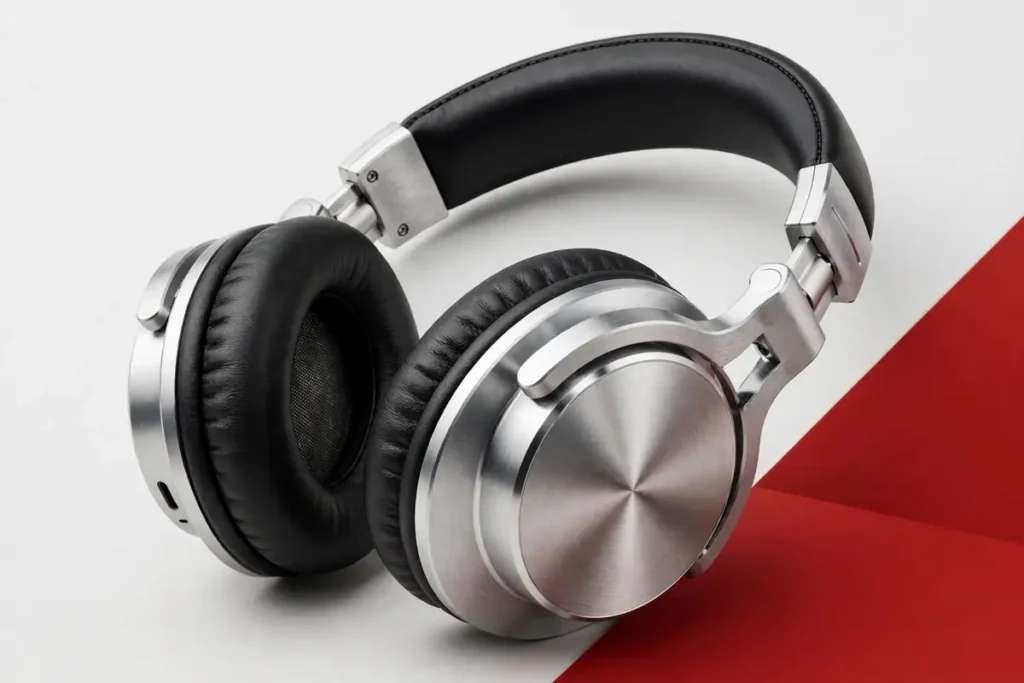
This audeze mm-500 review covers Audeze’s studio planar, built with mix engineer Manny Marroquin and tuned for one job: mixes that translate. The 90mm planar magnetic driver sits in an open-back frame, the tuning is neutral and mid-forward, and there is no battery, no Bluetooth and no noise cancelling to score, which is why the overall below needs reading properly. Sound is the story here, and on sound the MM-500 is one of the strongest wired headphones in our database.
A note on method. This review is research-based. The scores are our provisional assessment, built from specialist reviewers’ measurements and hands-on verdicts together with Audeze’s confirmed specifications for this exact model. Wired conventions apply: with no battery, microphone or active cancelling, those bars sit at the database floor, and the copy says so openly rather than dressing the average up as a sound verdict.

Audeze MM-500 5.6/10
Why you: you mix or master and need headphones whose midrange tells the truth. The Marroquin tuning is neutral, forward in the mids and consistent, so decisions made on these ears survive the trip to monitors, cars and earbuds.
Trade-off: the open-back design leaks sound both ways, so the studio has to be quiet and private. Clamp force is firm, and the flagship-grade price buys no features beyond the sound itself.
90mm planar magnetic · Open-back · 18 Ω · 495 g · Mini-XLR cable
Sound quality
Sound scores 9.2, and it is the whole point of this headphone. The tuning brief came from Manny Marroquin, whose mixing credits run across decades of hit records, and the target was translation: what you hear on the MM-500 should predict what a mix does on everything else. Reviewers across the specialist press agree the voicing lands there. The midrange is forward and honest, vocals sit where the mix put them, and the low end is tight rather than boosted.
The 90mm planar driver gives the MM-500 speed that dynamic studio headphones struggle to match. Reverb tails and layered backing vocals stay separate instead of smearing together, and imaging is precise enough for panning decisions. Treble is present and detailed without the peak that makes long sessions hard work. If your reference point is a boosted consumer tuning, the MM-500 will sound lean for an hour. Then it starts sounding right, which is the professional compliment.
The staging deserves its own mention because it is where the MM-500 earns its keep in daily work. The presentation is intimate rather than vast, closer to nearfield monitors at a desk than to a concert hall, and that is deliberate: elements sit at believable distances, centre images lock in place, and depth cues in a mix read as decisions you can act on rather than atmosphere you admire. Reviewers who measure as well as listen note the consistency from unit to unit, which matters when a studio buys a second pair or replaces a first. A reference headphone that varies pair to pair is not a reference, and the MM-500 clears that bar.
Isolation: there is none, by design
The ANC bar reads 1.5 because the MM-500 is open-back. Sound leaks in from the room and out to anyone nearby. That rules out shared offices, tracking rooms with live microphones and late-night mixing next to a sleeping household. It also buys the open, speaker-like presentation that makes mix checks believable.
Buy this headphone for a treated, private room. If your workspace is noisy, a closed-back studio model from our best studio headphones roundup serves you better, even at a lower sound score.
Comfort and build
Comfort scores 7.6. The MM-500 weighs 495 grams, which is substantial, and the clamp force is firm out of the box. The suspension headband spreads the load well and the ear pads are deep, so weight is manageable across a session, but the grip is real: reviewers with larger heads report pressure after a couple of hours, and the clamp only relaxes slowly with use. Short, focused mix sessions suit it better than all-day wear.
Build quality is a clear step above the price tier below. The frame is metal, the yokes feel engineered rather than assembled, and the cable connects with mini-XLR plugs at each cup, terminating in a 6.35mm stereo jack for studio gear. A travel case is included, though most MM-500s will live on a desk stand. Everything about the hardware says working tool, and the finish holds up to daily handling.
Driving the MM-500
At 18 ohms and 100 dB/mW sensitivity, the MM-500 is easy to drive by planar standards. An audio interface’s headphone output gets it loud, and a decent dongle DAC handles it without strain. Amazon’s detail table lists the impedance as 20 ohms; Audeze’s own specification says 18, and the brand figure is the one we print.
Easy to drive is not the same as indifferent to amplification. Reviewers note the low end firms up and the stage settles with a good desktop amp behind it, and most buyers at this level already run one. Our best headphone amps guide covers the sensible pairings. The MM-500 does not demand that purchase on day one, which is part of its value case.
Practical pairing notes from reviewer experience: low output impedance suits the MM-500 best, since its impedance curve is flat and low, and balanced outputs add headroom rather than a different sound. The stock cable terminates in a full-size studio jack, so a simple adapter covers portable sources. Nothing in the chain needs to be exotic. Clean power and honest gain get you the whole performance, which keeps the total cost of ownership lower than the sticker suggests and stands in welcome contrast to fussier flagships.
Where it sits in the Audeze line
Audeze’s flagship is the LCD-5, covered in our LCD-5 review, and it plays a different game: a grander presentation and finer micro-detail at a far higher price. The MM-500 is the working engineer’s tool, voiced for decisions rather than pleasure, and it costs a fraction of the flagship while sharing the planar house sound. Engineers who check mixes reach for the MM-500. Listeners chasing the summit reach for the LCD-5.
One availability note. Audeze now lists the MM-500 as a legacy model, succeeded by the MM-520 at the same price point, so Amazon and dealer stock is winding down. If the Marroquin tuning is the one you want, the window to buy it new is closing rather than opening.
Audeze MM-500 specs
| Spec | Audeze MM-500 |
|---|---|
| Driver | 90mm planar magnetic |
| Design | Open-back, over-ear |
| Impedance | 18 Ω (brand specification; Amazon’s table says 20 Ω) |
| Sensitivity | 100 dB/mW |
| Frequency response | 5 – 50,000 Hz |
| Weight | 495 g |
| Cable | Mini-XLR connectors at the cups, 6.35mm stereo termination |
| In the box | Travel case included |
Verdict
Buy the MM-500 if you mix, master or edit audio and want a headphone whose midrange you can trust. The 5.6 overall is a database artefact of scoring a wired, open-back tool on wireless bars; the 9.2 sound score is the number that describes this product. For translation work, it is one of the most credible headphones Audeze has made, and it undercuts the flagship by a wide margin.
Skip it if your room is shared or noisy, if you want any wireless features, or if clamp force bothers you in the first hour with a new headphone. Casual listeners will also find the tuning lean compared with pleasure-first rivals. This is a professional instrument, priced like one, and it rewards buyers who treat it that way.
Frequently asked questions
Is the Audeze MM-500 good for mixing?
Yes, that is what it was built for. The tuning was co-developed with mix engineer Manny Marroquin and aims at neutral, mid-forward translation: mixes checked on the MM-500 tend to hold up on other systems. Reviewers consistently praise its midrange accuracy and imaging for studio work.
Does the MM-500 need a headphone amp?
Not strictly. At 18 ohms and 100 dB/mW it runs to useful volume from interfaces and modest dongles. A good desktop amp still tightens the low end and adds headroom, and most owners at this level will already own one. It scales with better amplification without depending on it.
Is the MM-500 being replaced?
Audeze now lists the MM-500 as a legacy model with the MM-520 as its successor at the same price point, so dealer and Amazon stock is winding down. That makes remaining stock a considered purchase rather than a preorder: buy while the exact model is available if it is the one you want.
Why is the overall score only 5.6 if the sound scores 9.2?
Our database scores every product on the same six bars, including ANC, calls and battery. An open-back wired studio headphone has no cancelling, no microphone and no battery, so those bars sit at the convention floor and drag the average down. Judge this headphone on its Sound, Comfort and Value bars; the overall is a database artefact, not a sound verdict.
MM-500 or LCD-5: which should a mixer buy?
The LCD-5 is Audeze’s flagship, with a bigger stage and finer detail retrieval at a much higher price. The MM-500 was voiced specifically for mix translation with Manny Marroquin and costs far less. Engineers who check mixes buy the MM-500; listeners chasing the flagship presentation buy the LCD-5.

I am the founder of Sound Mavericks, where I provide the polite truth about audio equipment. I started this site because consumer electronics reviews are often too technical. Instead of using a silent lab, I test headphones, earbuds, and Bluetooth speakers in the real world – like on a noisy subway or in a busy coffee shop.
To stay independent, I buy my own review units (mostly from the United States) rather than accepting free gifts from brands. Once I finish testing a product, I sell it locally to our community. My goal is to help you understand sound quality, active noise cancellation (ANC), and battery life without the marketing hype.
