If you want to know what Bose can do when it stops holding back, the QuietComfort Ultra Headphones are the answer. Launched in 2023 as the flagship above the regular QuietComfort line, they combined the strongest noise cancelling Bose had ever shipped with a new party trick — Immersive Audio, a spatial sound mode that works with any stereo source — plus Snapdragon Sound support for higher-quality Bluetooth audio on compatible Android phones. Two years on, they remain the Bose over-ears we recommend most often.
This review covers the original QuietComfort Ultra Headphones — the 2023 model — not the earbuds of the same name and not the later 2nd Gen refresh. That distinction matters when you shop, because the names are nearly identical. Our assessment is research-based, drawn from Bose’s published specifications, the Amazon listing data, and the broad reviewer and owner record for this model. The headline findings: the noise cancelling is still elite, the comfort lives up to the QuietComfort name, and the compromises are specific and knowable before you spend anything.
Below you’ll find our full verdict, a scored breakdown, the complete spec table, and an honest comparison against the Sony WH-1000XM6 — the rival most buyers cross-shop, and the subject of our Sony WH-1000XM6 vs Bose QuietComfort Ultra 2 head-to-head if you want the newer Bose in the frame too.
The Bose QuietComfort Ultra Headphones pair class-leading noise cancelling with all-day comfort and a warm, powerful sound, and Immersive Audio is genuinely enjoyable for films and live recordings. Battery life trails Sony, the EQ is a simple three bands, and Immersive Audio shortens runtime noticeably. If silence and comfort are your top priorities, these are the over-ears to beat. If battery and codec flexibility matter more, look at the Sony WH-1000XM6.
| Sound Quality | 9.2 |
| Noise Cancelling | 9.6 |
| Comfort & Design | 9.4 |
| Battery Life | 8.4 |
| Call Quality | 8.8 |
| Value | 8.2 |
Bose QuietComfort Ultra Headphones: Specifications
| Product | Bose QuietComfort Ultra Headphones | Check Price |
|---|---|---|
| Driver / Design | 35mm dynamic drivers; closed-back over-ear, folding design | |
| ANC | Active noise cancelling with CustomTune calibration; Quiet, Aware and Immersion modes; 9-microphone system | |
| Battery Life | Up to 24 hours (up to 18 hours with Immersive Audio); 15-minute quick charge adds up to 2.5 hours | |
| Bluetooth / Codecs | Bluetooth 5.3 with multipoint; Snapdragon Sound with aptX Adaptive, plus SBC and AAC; Google Fast Pair | |
| Weight | 250 g | |
| Water Resistance | No IP rating — not a workout headphone | |
| Key Features | Bose Immersive Audio with head tracking, CustomTune sound calibration, capacitive volume strip, wired listening via included audio cable, USB-C charging | |
Design and Comfort: QuietComfort, Earned
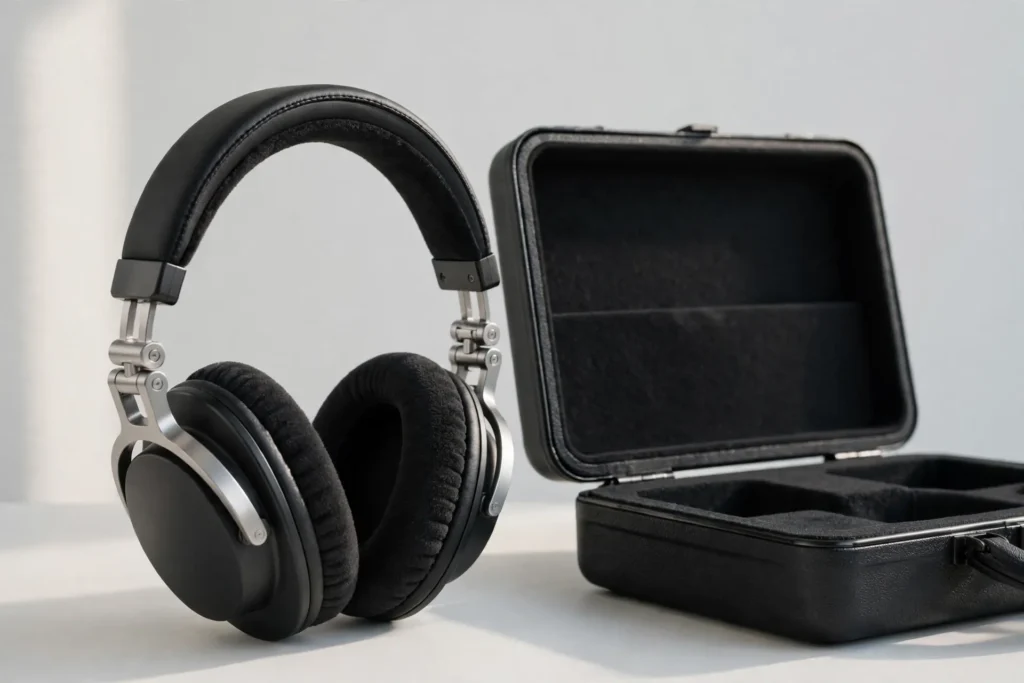
The Ultra Headphones return to the classic QuietComfort formula that the experimental Noise Cancelling Headphones 700 strayed from: the earcups fold up and rotate flat, the headband is wide and cushioned, and the whole thing collapses into a proper carry case for travel. Metal yokes and arms give the hinges a reassuring solidity, while the earcups themselves use lighter materials to keep total weight at 250 grams — a figure that matters more than spec-sheet one-upmanship on a nine-hour flight.
Comfort is where our assessment puts these at the top of the class. Clamping force is gentle but secure, the protein-leather cushions distribute pressure evenly, and the headband padding avoids the single hot spot that plagues narrower rivals. Owner feedback over long-haul use is consistently strong, and it’s why these anchor our best noise cancelling headphones guide for travellers. Two honest caveats: the case, while protective, is bulky, and the plastic elements of the build don’t feel as jewellery-grade as the metal-heavy competition at this level. Neither affects how they wear.
Controls are a highlight. A capacitive strip on the right earcup handles volume with a thumb slide, physical buttons cover power and pairing, and a multifunction button cycles listening modes and manages playback and calls. It all works without looking at your phone, and it works with gloves off a winter platform — details Bose gets right more often than most, as our Bose vs Beats headphones comparison also found.
Noise Cancelling: Still the Benchmark
Bose built its reputation on ANC, and the QuietComfort Ultra is the company’s strongest implementation in an over-ear. A nine-microphone system feeds the cancellation processing, and Bose’s CustomTune technology measures your ear’s response each time you put the headphones on, tailoring both the noise cancelling and the sound profile to your anatomy. Three modes cover the realistic use cases: Quiet for full cancellation, Aware for transparency, and Immersion, which pairs full cancellation with Immersive Audio.
In practice, across the reviewer record, the Ultra sits at or near the top of the category for the sounds that matter most: jet engine drone, train rumble, air-conditioning roar and the low-frequency wash of a busy street are suppressed superbly. Voices and sudden higher-frequency sounds are reduced rather than erased — no ANC at any price deletes those completely — but the Ultra’s overall hush is the one rivals are still measured against. Aware mode is clear and natural enough for platform announcements and quick conversations without removing the headphones.
Sound Quality and Immersive Audio
The stock tuning is unmistakably Bose: a full, warm low end with genuine punch, clear vocals, and a treble that’s present without turning sharp. Bass lovers get the depth they want without the midrange drowning, and the 35mm drivers keep composure at high volume. The Bose Music app includes an adjustable EQ, though it’s a simple three-band affair — enough to tame the bass or lift the top end, not enough for precision work. Listeners who want granular control should note the limitation; listeners who want to unbox and enjoy will never open it.
Immersive Audio is the headline feature and the one that divides opinion, so here’s our balanced take. Bose’s spatial processing takes any stereo content — it doesn’t need special masters — and renders it as a wide, out-of-head soundstage, with Still and Motion head-tracking modes. For films, live recordings and acoustic music, the added space and separation can be genuinely delightful. For tightly produced studio pop, the processing sometimes smears imaging in a way purists won’t love. Crucially, it’s a mode, not a mandate: turn it off and the Ultras are simply excellent conventional headphones.
Codec support favours Android. With a Snapdragon Sound phone, aptX Adaptive delivers higher-bitrate, low-latency audio than standard Bluetooth; iPhone users get AAC, which still sounds very good. There’s no LDAC, which is Sony’s one clear technical win in this matchup.
Battery Life, Calls and Everyday Use
Bose rates the QuietComfort Ultra at up to 24 hours of playback with ANC on, dropping to around 18 hours with Immersive Audio engaged — spatial processing and head tracking cost power. A 15-minute quick charge returns up to 2.5 hours, enough to rescue a forgotten overnight charge before a flight. Those numbers are good, not great: Sony’s flagship runs longer, and heavy Immersive Audio users will charge more often than the headline figure suggests. For a week of commuting or a long-haul return trip, it’s ample.
Call quality is a real step up from earlier Bose over-ears. The microphone system focuses on your voice and suppresses wind and surrounding chatter well enough for work calls from a street or station, though a dedicated headset mic still wins in a gale. Bluetooth 5.3 multipoint connects to two devices at once — laptop and phone is the standard pairing — and switching is reliable. Google Fast Pair makes Android setup nearly instant. Wired listening is available via the included 2.5mm-to-3.5mm cable for flights and zero-latency use; note that on this 2023 model the USB-C port is for charging only, not audio.
Bose QuietComfort Ultra vs Sony WH-1000XM6
This is the flagship fight that decides most purchases, so here it is in one table. The XM6 is Sony’s newer flagship, with longer battery life and LDAC; the Ultra counters with stronger cancellation for low-frequency noise, Immersive Audio, and aptX Adaptive for Snapdragon phones.
| Feature | Bose QuietComfort Ultra Headphones | Sony WH-1000XM6 |
|---|---|---|
| ANC | Class-leading; CustomTune calibration | Excellent; Auto NC Optimizer |
| Battery (ANC on) | Up to 24 hours (18 with Immersive Audio) | Up to 30 hours |
| Bluetooth / Codecs | 5.3; aptX Adaptive, SBC, AAC | LDAC, AAC, SBC |
| Spatial Audio | Immersive Audio, works with any stereo source | 360 Reality Audio with compatible content |
| Weight | 250 g | Around 254 g |
| Buy | Check Price | Check Price |
Our call: choose the Bose if maximum quiet and comfort top your list, and especially if you fly often. Choose the Sony if battery life, LDAC, or a more neutral tuning matter more. There’s no wrong answer — there’s a wrong answer for you, and the table above should make it obvious which one it is.
Who Should Buy the QuietComfort Ultra Headphones
Buy them if: you’re a frequent flyer or commuter who values silence above all; you wear headphones for long stretches and comfort decides everything; you have a Snapdragon Sound Android phone and want aptX Adaptive; or you watch a lot of video and like the idea of spatial audio that works with everything. Our Beats Studio Pro vs Bose QuietComfort comparison shows the same Bose strengths winning a different fight.
Skip them if: you need the longest possible battery between charges; you want LDAC or deep EQ control; you plan to work out in them (there’s no water resistance rating); or your budget sits a tier lower — in which case Bose’s own standard QuietComfort model below keeps most of the comfort and cancellation for less.
Alternatives Worth Considering
Sony WH-1000XM6 — the main rival and the safer all-rounder: longer battery, LDAC, superb ANC of its own, and a slightly more neutral sound. If the Bose’s Immersive Audio doesn’t tempt you, the XM6 is the default flagship alternative.
Bose QuietComfort Headphones — the step-down Bose. You give up Immersive Audio, CustomTune and aptX Adaptive, but you keep the QuietComfort comfort, strong ANC, multipoint and the same 24-hour battery class, in a simpler package.
Frequently Asked Questions
Are the Bose QuietComfort Ultra Headphones better than the Sony WH-1000XM6?
It depends on your priorities. The Bose offers class-leading noise cancelling, CustomTune calibration and Immersive Audio, plus aptX Adaptive on Snapdragon phones. The Sony counters with longer battery life (up to 30 hours) and LDAC. For maximum quiet and comfort, we lean Bose; for battery and codec flexibility, Sony.
How long does the Bose QuietComfort Ultra battery last?
Up to 24 hours with ANC on, or up to 18 hours with Immersive Audio enabled. A 15-minute quick charge adds up to 2.5 hours of playback.
Do the QuietComfort Ultra Headphones support multipoint?
Yes. Bluetooth 5.3 multipoint lets them stay connected to two devices at once — for example a laptop and a phone — and switch between them as audio plays.
Can you use the Bose QuietComfort Ultra wired?
Yes, with the included 2.5mm-to-3.5mm audio cable, which also works for in-flight entertainment systems. On this 2023 model the USB-C port is for charging only and doesn’t carry audio.
What’s the difference between the QuietComfort Ultra and the Ultra 2nd Gen?
The 2nd Gen is a later refresh of the same flagship line with refinements including longer rated battery life and wired USB-C audio. This review covers the original 2023 QuietComfort Ultra Headphones, which remain widely available and deliver the same core experience: top-tier ANC, CustomTune and Immersive Audio.
Final Verdict
The QuietComfort Ultra Headphones are Bose doing what Bose does best, with one eye on the future. The noise cancelling and comfort are the reasons to buy, Immersive Audio is a sometimes-wonderful bonus rather than the main event, and the weaknesses — mid-pack battery, simple EQ, no LDAC — are all visible before you buy. If your listening life is flights, commutes and long focused stretches, this is still one of the easiest flagship recommendations we make.

I am the founder of Sound Mavericks, where I provide the polite truth about audio equipment. I started this site because consumer electronics reviews are often too technical. Instead of using a silent lab, I test headphones, earbuds, and Bluetooth speakers in the real world – like on a noisy subway or in a busy coffee shop.
To stay independent, I buy my own review units (mostly from the United States) rather than accepting free gifts from brands. Once I finish testing a product, I sell it locally to our community. My goal is to help you understand sound quality, active noise cancellation (ANC), and battery life without the marketing hype.