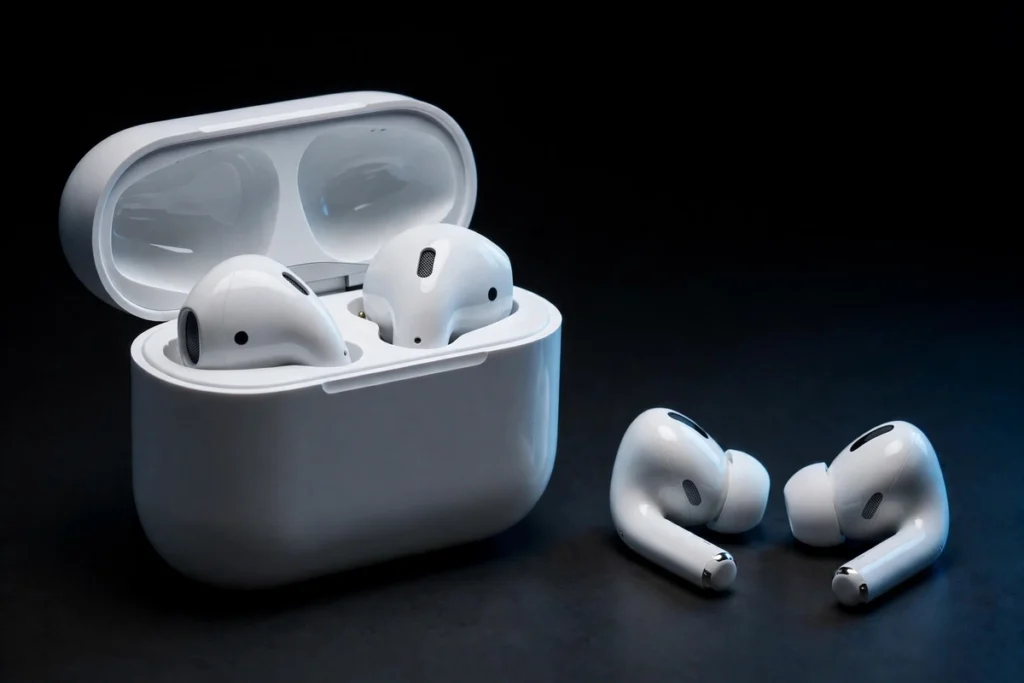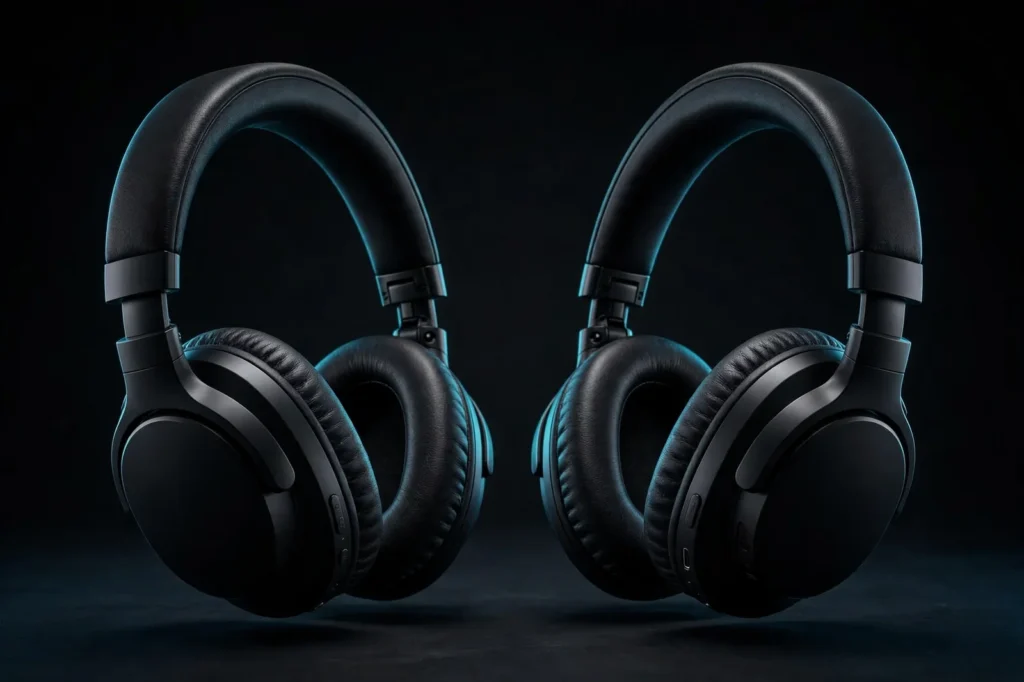
Short Answer: They Take the Edge Off Barking — They Do Not Silence It
For can noise cancelling headphones block dog barking, SoundMavericks’ honest answer is: not completely, and no headphone can. Active noise cancelling excels at steady, low-frequency noise, while barking is sudden, irregular, and concentrated in the mid and high frequencies — roughly 500 Hz to 2 kHz at its peaks — exactly where ANC is weakest. What a top ANC headphone such as the Sony WH-1000XM6 or the Bose QuietComfort Ultra Headphones (2nd Gen) actually does is combine a strong passive seal with ANC to make barking noticeably quieter, duller, and far less startling, especially from another room or outside. Add music or masking sound on top and most people can work straight through it. Expect the edge taken off, not silence — and plan around that truth.

Sony WH-1000XM6
Sony’s flagship over-ear ANC headphone, pairing class-leading cancellation with a deep, well-sealed earcup fit.

Bose QuietComfort Ultra Headphones (2nd Gen)
Bose’s top over-ear noise cancelling headphone with spatial audio and up to 30 hours of play time.
A note on what this article is — and is not — about. This guide is for humans trying to block out barking noise: a neighbor’s dog, a dog down the hall, your own dog announcing every delivery to the street. It is not about headphones or hearing protection for dogs themselves, which is a different question entirely. If barking is the soundtrack to your workday, your study sessions, or your attempts to sleep after a night shift, here is the physics of why it is such a hard sound to cancel, what today’s best headphones genuinely do to it, and the combination of tactics that actually works in a real home.
Why Dog Barking Is ANC’s Hardest Test
Active noise cancelling works by listening to the sound around you and generating an opposite sound wave that cancels it out. That trick depends on prediction. If a sound is steady and repetitive — an engine drone, an air conditioner, traffic rumble — the system can hear it, model it, and keep cancelling it sample after sample. This is why ANC feels almost magical on a plane: a noise that never changes is a noise that can be erased.
A bark fails every part of that test. It starts without warning, so there is nothing to predict. It is short and sharp, so by the time the system has heard enough of it to build an anti-noise signal, the bark is already over. And it lives in the wrong part of the frequency range. Barking energy peaks roughly between 500 Hz and 2 kHz — the mid and upper frequencies where human hearing is most sensitive and where ANC, which is strongest at low frequencies, contributes the least. Higher-pitched dogs push further into ANC’s weakest territory still, which is why a small dog’s yap can cut through headphones that make a plane cabin disappear. SoundMavericks’ summary of the physics is simple: ANC was built for hums, not for shouts — and a bark is a shout.
What Noise Cancelling Actually Does to Barking
None of that means ANC headphones are useless against barking. It means the benefit comes from a different place than most people expect, and understanding it stops you from feeling cheated by a good product.
First, the passive seal does much of the work. A well-fitted over-ear headphone is a padded barrier around your ear, and that barrier blocks mid and high frequencies — the bark’s home turf — far better than electronics do. Second, ANC still removes the lower body of the bark and, just as importantly, it erases the constant background underneath it: street noise, room tone, ventilation. With that floor gone, a distant bark sounds thinner and further away. The real-world result reported again and again, and consistent with how the technology measures, is that a large dog in another part of the house goes from room-filling to muffled and easy to ignore, a dog outside a closed window fades to a background detail, and a dog in the same room stays clearly audible — quieter and duller, but present. If your problem dog is behind a door or a wall, headphones help a lot. If the dog is three feet from your desk, no headphone on sale will make it vanish.
ANC Effectiveness by Noise Type: An Honest Table
Use this table to calibrate any noise cancelling purchase. It describes what ANC itself does to each kind of sound, before you add music or masking on top.
| Noise Type | Character | Expected ANC Effect |
|---|---|---|
| Steady drone (plane engines, HVAC, fans) | Low-frequency, constant, predictable | Excellent — the sound ANC was designed for; largely erased |
| Traffic rumble | Low-frequency and fairly steady, with occasional peaks | Very good — rumble mostly gone; horns and sirens still break through |
| Voices and conversation | Mid-frequency, irregular, constantly changing | Limited — nearby clear speech stays intelligible; distant chatter softens into murmur |
| Dog barking | Sudden, irregular, roughly 500 Hz–2 kHz peaks | Limited from ANC alone — the seal does most of the work; barking is dulled and distanced, not removed |
| Keyboard clicks and office snaps | Short, sharp, high-frequency transients | Weak from ANC — each click is over before it can be cancelled; isolation and distance help more |
The pattern in that table is the whole lesson of this article: the steadier and lower a sound is, the better ANC handles it, and the more sudden and higher-pitched it is, the more you are relying on the physical seal instead. Our explainer on active noise cancellation vs passive isolation goes deeper on how those two systems divide the work inside every ANC headphone.
What Actually Works Against Barking: The Combination
Since no single feature defeats barking, the people who successfully work, study, or sleep through it stack several smaller wins. Here is the stack, in the order SoundMavericks recommends building it.
1. Start with seal plus ANC, in that order. Choose an over-ear headphone known for both strong cancellation and a deep, even seal, and fit it properly — glasses arms, hair, and a loose fit all leak exactly the frequencies a bark uses. This base layer turns a sharp bark into a muffled thump, and for barking from outside or another room, it may be all you need.
2. Add distance and doors before you add volume. Sound loses energy with distance and with every closed barrier. A closed door between you and the dog, working in the room furthest from the street, or simply closing the window does more against mid-frequency barking than any model upgrade. It is unglamorous advice, and it outperforms a more expensive headphone used in a bad spot.
3. Mask what remains. This is the step that turns “quieter” into “gone.” Once ANC and the seal have lowered a bark’s level, a modest layer of music, brown noise, rain sounds, or a fan recording at comfortable volume covers what is left — the remaining bark no longer stands out against silence, so your brain stops flagging it. Masking works precisely because it does not need to be loud; it needs to be louder than the reduced bark, which your headphones have already handled.
4. Know when earbuds beat over-ears. Over-ear models are the default recommendation here because they combine the best ANC with a full seal and long-session comfort. But a deeply seated earbud with well-fitted tips can isolate high frequencies surprisingly well — passive isolation is its strength — and some people find in-ear sealing more effective against a high-pitched dog specifically. If you already own good ANC earbuds, try them with the largest tips that seal comfortably before spending on over-ears. If you are buying fresh for all-day work, over-ears remain SoundMavericks’ pick, and our best noise cancelling headphones guide ranks the current field.
The Two Picks SoundMavericks Recommends for Barking Noise
Both picks below earn their place the same way: flagship-level ANC to strip out the low end and the room underneath the bark, plus a serious passive seal to do the mid-frequency work. Every product name in this table links to its Amazon listing, and every row carries a Check Price link.
| Product | Why It Helps With Barking | Best for | Check Price |
|---|---|---|---|
| Sony WH-1000XM6 | Class-leading ANC plus a deep over-ear seal; excellent all-round reduction with music or masking on top | Working or studying through a neighbor’s dog, all day, every day | Check Price |
| Bose QuietComfort Ultra Headphones (2nd Gen) | Bose’s strongest cancellation in a plush over-ear fit built for long, distraction-free sessions | Long work sessions and calls where barking keeps breaking your concentration | Check Price |
Between the two, the honest tiebreaker is fit and sound taste rather than bark-blocking power — both sit at the top of what ANC can currently do, and both will perform near-identically against the same dog in the same room. Try the seal with your glasses on if you wear them, pick the one you can wear for four hours without thinking about it, and spend your remaining effort on doors, distance, and a good masking track. That is where the rest of the win lives.
Setting Realistic Expectations Before You Buy
Buy ANC for barking with this test in mind: a dog barking outside your closed window or in another room with the door shut should become a minor background event you can work through, especially with low music playing. A dog barking in your room, in a hallway outside an open door, or at a fence a few feet from your window will still be heard — softer, duller, less jarring, but heard. Anyone who promises you total silence from any headphone, at any price, is describing physics that does not exist yet. The good news is that “much quieter, behind a door, under light masking” is enough for the overwhelming majority of people searching this question. It was never really silence they needed. It was their concentration back.
Can Noise Cancelling Headphones Block Dog Barking? FAQ
Why can I still hear voices with noise cancelling headphones?
Because voices share barking’s problem: they are irregular, constantly changing, and concentrated in the mid frequencies where ANC is weakest and human hearing is most sensitive. ANC erases steady low-frequency sound, so the room gets quieter overall, but a nearby clear voice stays intelligible — what you are hearing is mostly being reduced by the earcup seal, not the electronics. This is normal behavior for every ANC headphone, not a fault with yours.
What headphones block out barking dogs?
No headphone blocks barking out completely, but flagship over-ear ANC models come closest: the Sony WH-1000XM6 and the Bose QuietComfort Ultra Headphones (2nd Gen) combine the strongest available cancellation with a deep passive seal. Used in a different room from the dog, with a door closed and music or masking sound playing at a modest level, they reduce most real-world barking to a background murmur most people can work through.
Are earbuds or over-ear headphones better for blocking barking?
Over-ears are the safer buy: they pair the best ANC with a full seal and stay comfortable for long sessions. Well-fitted ANC earbuds can isolate high frequencies very effectively thanks to their in-ear seal, and are worth trying first if you already own a pair — fit the largest tips that seal comfortably. Against a particularly high-pitched dog, a great-sealing earbud can rival an over-ear; against everything else across a full workday, over-ears win.
Can noise cancelling headphones block barking through a wall?
They help more in this situation than in almost any other. A wall or closed door already strips much of a bark’s energy, especially its higher frequencies, and the headphone’s seal and ANC then reduce what is left to a low, muffled level that masking sound covers easily. Barking that has passed through a barrier is exactly the kind of reduced, softened noise the ANC-plus-seal combination handles best.
Will playing music make noise cancelling work better on barking?
Yes — this is the most effective upgrade available, and it is free. ANC and the seal lower the bark’s volume; music or a masking track then covers the remainder, because a quiet bark competing with steady music no longer stands out to your brain. You do not need the music loud. Once the headphones have done their part, a comfortable listening level is usually enough to make intermittent barking effectively disappear.
Can I sleep in noise cancelling headphones to block a dog?
Over-ear ANC headphones are bulky for side-sleeping and are not designed to be worn all night, so they are a poor long-term answer for barking that ruins sleep. For daytime naps they can work well combined with masking sound. If nighttime barking is the core problem, address the barrier first — a closed door and window, and the bedroom furthest from the noise — and treat headphones as a daytime work and focus tool instead.

I am the founder of Sound Mavericks, where I provide the polite truth about audio equipment. I started this site because consumer electronics reviews are often too technical. Instead of using a silent lab, I test headphones, earbuds, and Bluetooth speakers in the real world – like on a noisy subway or in a busy coffee shop.
To stay independent, I buy my own review units (mostly from the United States) rather than accepting free gifts from brands. Once I finish testing a product, I sell it locally to our community. My goal is to help you understand sound quality, active noise cancellation (ANC), and battery life without the marketing hype.