Short Answer: Every ANC Headphone Has Microphones — But Not Always One You Can Talk Into
Do all noise cancelling headphones have a microphone? For the noise cancelling itself, yes — active noise cancelling cannot work without microphones sampling the sound around you. But a microphone you can use for phone calls, meetings, or voice chat is a separate feature, and it is not guaranteed. Most modern wireless ANC headphones do route a microphone to calls, yet some wired ANC models, some sleep and travel models, and some headphones in wired mode have no usable voice microphone at all. If calls matter to you, these two verified models are known for clear call microphones as well as strong ANC:
The confusion behind this question is understandable, because the word “microphone” does three different jobs inside a noise cancelling headphone, and product pages rarely separate them. A headphone can be packed with microphones — six, eight, even more — and still leave you unable to take a call in some situations, while a model with a modest spec sheet might handle meetings beautifully. SoundMavericks’ answer below separates the three microphone jobs, names the real exceptions, and shows you exactly what to check on a spec sheet before you buy.
Job One: The ANC Sensing Microphones (Always Present)
Active noise cancelling is a listening technology before it is anything else. To cancel noise, the headphone must first hear it: microphones sample the ambient sound, a processor builds an inverted anti-noise wave, and the driver plays that wave so the two cancel out. Without microphones, there is no sample, no anti-noise, and no active cancellation — only the passive isolation of the ear cushions.
These sensing microphones come in the placements covered by ANC design: feedforward microphones on the outside of the ear cup hear noise before it arrives, feedback microphones inside the cup hear what actually reached your ear, and hybrid systems use both. Crucially, these microphones exist to serve the cancellation processor. On many designs they never carry your voice anywhere — they are instruments, not a phone mic. (A headphone with only passive noise isolation — no “active” in its description — is the one category with no microphones at all.)
Job Two: Transparency Microphones (Usually Present)
Transparency mode — called Ambient Sound, Aware Mode, or similar names across brands — reuses microphones to do the opposite of cancelling: it pipes the outside world into your ears so you can hear announcements, traffic, or a colleague without removing the headphones. It typically draws on the same external microphone array as the ANC system, processed differently. If a headphone offers a transparency or ambient mode, it confirms external microphones are fitted, but it still tells you nothing by itself about call quality.
Job Three: The Voice Microphone (The One That Isn’t Guaranteed)
The voice microphone is the one you talk into on calls, in meetings, in voice chat, and to voice assistants. On most modern wireless ANC headphones, the headphone routes one or more of its microphones — often with beamforming and wind-reduction processing — to your voice during a call, and the result ranges from acceptable to genuinely excellent. Our best noise cancelling headphones with a microphone for clear calls guide ranks models on exactly this job.
But “most” is not “all,” and the exceptions cluster in predictable places:
Some wired ANC headphones. Older and airline-focused wired ANC models were built purely for listening; some carry no voice microphone at all, and others rely on an inline microphone in the cable — lose the cable, lose the mic.
Some sleep and travel models. Noise cancelling sleep headphones and masking earbuds are designed to quiet the night, not to carry conversations, and some omit a call microphone entirely.
Wired mode on wireless models. A common gotcha: several wireless ANC headphones disable their built-in microphones when you plug in the audio cable. Listening wired works fine, but the call microphone goes dead unless the cable itself has an inline mic.
Gaming headsets. Gaming models often use a detachable boom microphone instead of (or alongside) built-ins. Detached, the headset may fall back to weaker internal mics — or, on some models, no voice mic at all — so the boom is not just an accessory, it is the microphone.
ANC Microphone vs Voice Microphone: At a Glance
| Microphone Job | What It Does | Always Present on ANC Headphones? |
|---|---|---|
| ANC sensing | Samples ambient noise (outside and/or inside the cup) so the processor can generate anti-noise | Yes — ANC is impossible without it |
| Transparency | Plays the outside world back into your ears for awareness | Usually — wherever a transparency/ambient mode is offered |
| Voice / calls | Carries your voice to calls, meetings, voice chat, and assistants | No — check the spec sheet; wired mode, sleep models, and some wired ANC models are exceptions |
Headphones With Microphones You Can Actually Talk Into
If the voice job matters — calls from the train, meetings between flights — these verified models pair flagship ANC with microphone systems designed for speech, including beamforming arrays that focus on your voice and suppress the noise around it:
| Model | Microphone Setup | Best For | Price Check |
|---|---|---|---|
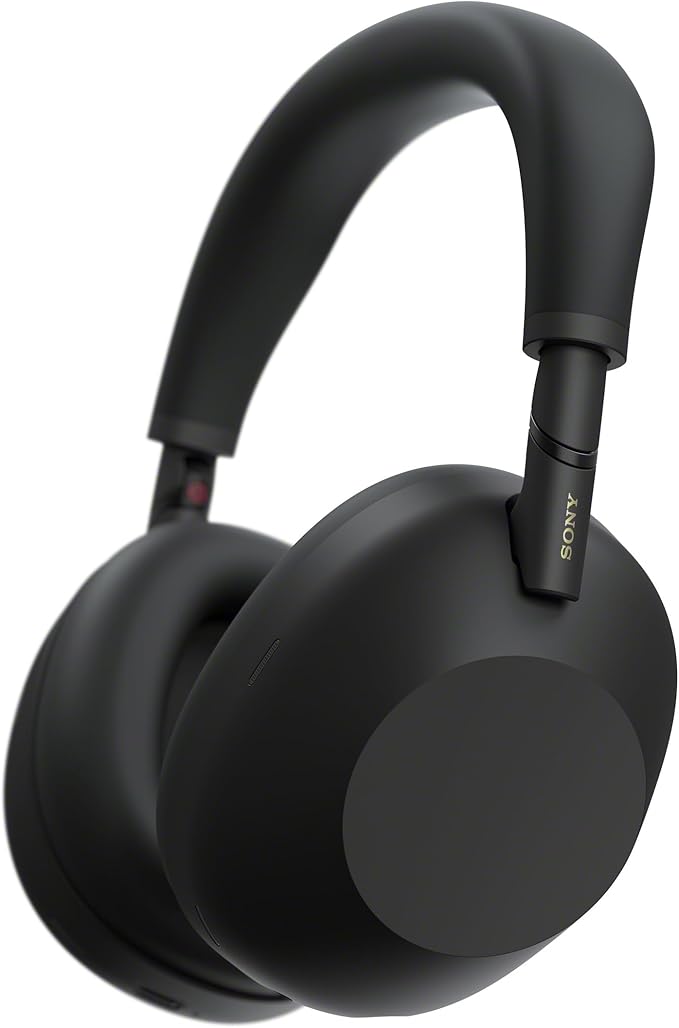
| Sony WH-1000XM6 | Multi-microphone array shared between hybrid ANC and beamforming call pickup with AI noise reduction | Clear calls in noisy streets, stations, and offices | Check Price |
| Bose QuietComfort Ultra Headphones (2nd Gen) | Multi-microphone array feeding hybrid ANC, transparency, and voice pickup with wind and noise rejection | Travellers who take calls wherever they land | Check Price |

How to Check Whether a Headphone’s Microphone Works for Calls
Before buying, run these four checks on the spec sheet or product page:
1. Look for call features, not microphone counts. A “total microphone count” mostly describes the ANC array. What proves a voice mic exists is call language: “built-in microphone for hands-free calling,” call controls, or named call technology. No call language usually means no call microphone.
2. Check the Bluetooth profiles. Hands-free calling rides on the HFP Bluetooth profile. A spec sheet listing HFP (often alongside A2DP for music) confirms the headphone can carry your voice over Bluetooth; A2DP alone is music only.
3. Read the wired-mode fine print. If you plan to plug in — for flights, consoles, or a desk amp — check whether the microphone works over the cable or lives in an inline cable remote. As noted above, built-ins frequently switch off in wired mode.
4. For gaming, check the boom. If the model uses a detachable boom, confirm what happens with it removed and whether the boom is required for voice chat on your platform.
Once those boxes are ticked, compare the shortlist against our best noise cancelling headphones rankings, where call quality is weighed alongside cancellation.
What to Buy If Calls Matter Most
If your headphone’s second job is meetings and calls, buy for the voice microphone first and the cancellation second. Prioritise models whose pages lead with call technology — beamforming arrays, AI voice isolation, and wind reduction — rather than a raw microphone count, and favour over-ear models whose microphones sit closer to your mouth’s sound path. Test the wired-mode behaviour against how you actually work: a headset that mutes its mics on a cable is a poor desk companion if your laptop calls run plugged in. Get those decisions right and the ANC sensing microphones — the one kind every model guarantees — will quietly do their job underneath.
The Bottom Line
So, do all noise cancelling headphones have a microphone? The sensing kind, yes — every single one, because there is no active cancellation without them. The talking kind, almost always on modern wireless models, but with real exceptions in wired ANC, sleep models, and wired mode that catch buyers out every week. SoundMavericks’ rule is simple: never infer a call microphone from a microphone count. Check for call features, HFP, and wired-mode behaviour, and you will never be the person miming into a silent headset on a work call.
Do All Noise Cancelling Headphones Have a Microphone: FAQ
Can you make calls with noise cancelling headphones?
With most modern wireless ANC headphones, yes — they route a microphone to your voice for calls and meetings, often with beamforming and noise reduction so you stay clear in loud places. The exceptions are some wired ANC models, some sleep-focused models with no call microphone, and wireless models used in wired mode, where the built-in mic may switch off.
Do noise cancelling headphones have a mic for gaming?
Many do, but gaming deserves a specific check. Lifestyle ANC headphones use built-in microphones that work for console and PC voice chat, though latency and mic quality vary. Gaming headsets usually rely on a detachable boom microphone for clearer chat — detach it and voice pickup can drop to weaker built-ins or disappear. Confirm the model’s wired and boom behaviour before buying for gaming.
Why do noise cancelling headphones need microphones?
Because active cancellation starts with listening. Microphones sample the ambient noise so the processor can generate an equal and opposite anti-noise wave that cancels it at your ear. Feedforward microphones sit outside the cup, feedback microphones inside, and hybrid systems use both — but those sensing microphones serve the cancellation system, which is not the same as a microphone provided for your voice.
Does the microphone work when noise cancelling headphones are plugged in with a cable?
Often, no. On many wireless ANC models the built-in microphones are disabled in wired mode, so calls need either the Bluetooth connection or a cable with its own inline microphone. Check the product’s wired-mode notes before relying on a plugged-in headset for calls.
Do noise cancelling earbuds have microphones too?
Yes — the same logic applies. ANC earbuds carry sensing microphones for cancellation and, on the vast majority of current models, voice microphones for calls. Rare listening-only or sleep-focused exceptions exist, so the same spec-sheet checks apply: look for calling features and HFP support rather than a microphone count.

I am the founder of Sound Mavericks, where I provide the polite truth about audio equipment. I started this site because consumer electronics reviews are often too technical. Instead of using a silent lab, I test headphones, earbuds, and Bluetooth speakers in the real world – like on a noisy subway or in a busy coffee shop.
To stay independent, I buy my own review units (mostly from the United States) rather than accepting free gifts from brands. Once I finish testing a product, I sell it locally to our community. My goal is to help you understand sound quality, active noise cancellation (ANC), and battery life without the marketing hype.