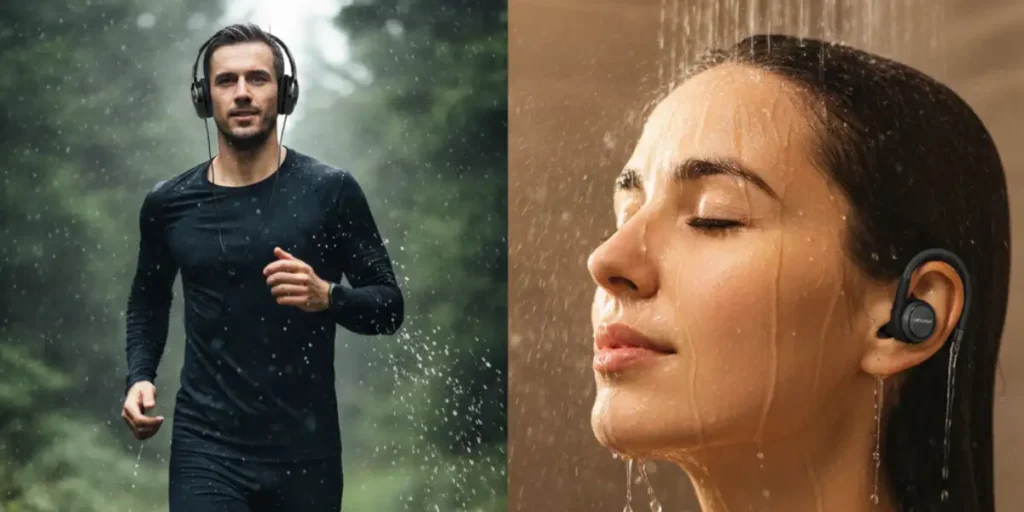
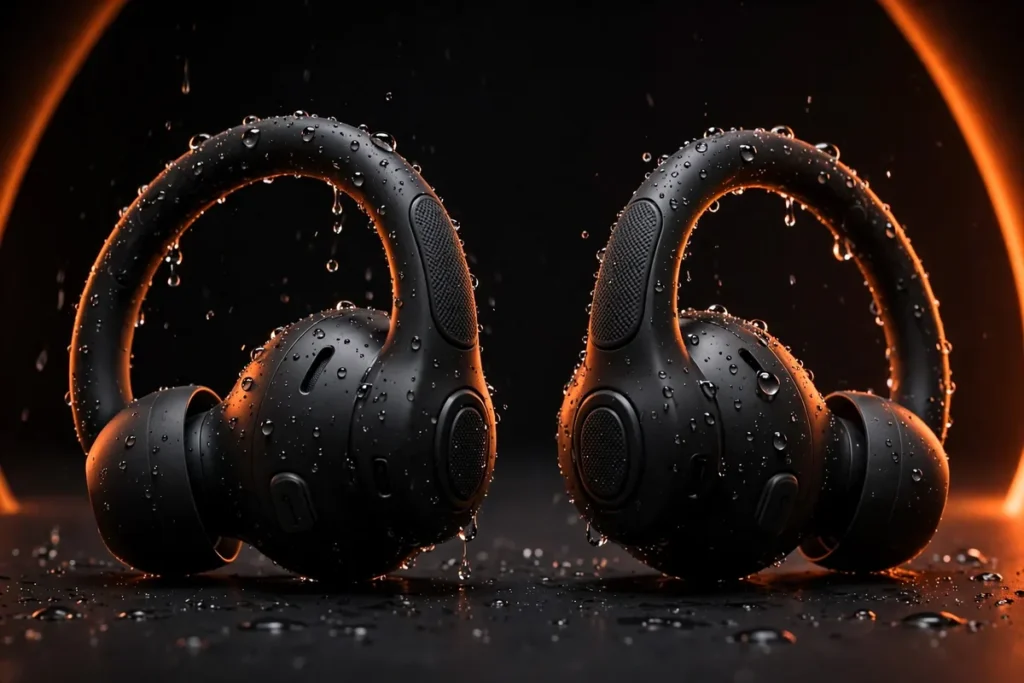
The best bone conduction headphones solve a specific problem: you want music, podcasts or calls while you train, and you still need to hear the car approaching, the bike bell, or the training partner next to you. The transducers rest on your cheekbones and pass vibration through the bone to your inner ear, so nothing covers or plugs your ears.
That design sets the terms for everything below. There is no active noise cancelling in this category, and the ANC bars in our score cards sit near the bottom on purpose: your ears stay open, so outside sound comes through by design, not by failure. Bass stays thinner than on sealed headphones too. What you get back is awareness, a band that stays put for hours, and none of the ache that ear tips cause on long sessions. Shokz makes most of the models worth buying and its flagship leads this list, but Suunto and Mojawa each earn a place by doing something Shokz does not.
Best overall: Shokz OpenRun Pro 2: the fullest sound in the category, a 12-hour battery and USB-C charging. Check Price on Amazon
Best for runners: Shokz OpenRun: the lightest frame here at 26g, with IP67 sealing that beats the flagship in bad weather. Check Price on Amazon
Best for swimming: Shokz OpenSwim Pro: IP68 waterproofing and 32GB of onboard storage, so laps get music with no phone nearby. Check Price on Amazon
Best budget pick: Shokz OpenMove: the low-cost way to find out if bone conduction suits you, with USB-C charging. Check Price on Amazon
Best for night training: Suunto Wing 2: LED lights on the band make you visible to drivers, and head gestures handle calls hands-free. Check Price on Amazon
Best swim-and-run value: Mojawa Run Plus: IP68 sealing and 32GB of storage for triathletes who want the same spec sheet from a smaller brand. Check Price on Amazon
The best bone conduction headphones, pick by pick

Why you: DualPitch pairs the bone conduction driver with a small air-conduction driver that handles bass, so music gets real low-end weight instead of the usual buzz against your cheekbones.
Trade-off: IP55 sealing is the weakest in the Shokz range here, and there is no onboard storage, so it stays out of the pool.
Every bone conduction headphone before this one made the same compromise: all of the sound, bass included, arrived as vibration, and low notes came out thin. DualPitch splits the job. The bone driver keeps the mids and highs, a small conventional speaker aimed at the ear takes the bass, and the result is the first Shokz sport model that sounds complete on music rather than adequate. A side benefit is less cheek tingle at high volume, because the bone driver is no longer straining to produce notes it handles badly.
The rest of the package supports the flagship billing. Twelve hours per charge covers a week of training for most runners, five minutes plugged in returns about two and a half hours, and the Shokz app adds preset EQ profiles plus two custom slots. Dual AI microphones keep calls clear in wind better than anything else in this roundup. We compared it directly against the standard model in our Shokz OpenRun vs OpenRun Pro 2 breakdown, and the Pro 2 won on sound, battery and charging. It lost on sealing, which brings us to the runner-up.

Why you: The lightest frame in this list at 26g, with IP67 sealing that handles downpours and a rinse under the tap. For podcasts, audiobooks and calls, the sound gap to the Pro 2 mostly disappears.
Trade-off: Charging runs through Shokz’s proprietary magnetic cable, and there is no app support, just two EQ modes on the headset itself.
The OpenRun is the design that built this category’s reputation, and it still does the basics better than its replacement in two ways. It weighs less, and its IP67 rating is dust-tight and immersion-rated, where the Pro 2 manages IP55. If your training regularly meets serious weather, the older model is the safer buy in the literal sense. A ten-minute charge returns about an hour and a half of playback, and multipoint pairing lets it sit on your phone and laptop at once.
What you give up is refinement. Sound is clear and loud enough for spoken word at any pace, but bass lines stay faint and pushing the volume adds cheek vibration. There is no app, so the two built-in EQ modes are the whole toolkit. For runners who mostly listen to voices, that trade is easy to accept.
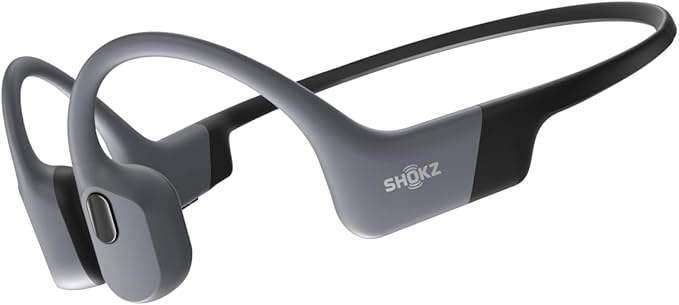
Why you: IP68 sealing rated for two metres of water, plus 32GB of onboard storage that holds roughly 8,000 songs. Your laps get music with no phone in range, and Bluetooth mode takes over back on land.
Trade-off: Swimming means MP3 mode, so you load files yourself instead of streaming, and the microphones are the weakest here for calls.
Swimming breaks the normal headphone rules, because Bluetooth signals do not travel through water. The OpenSwim Pro answers that with storage: drag music files onto its 32GB of memory, switch to MP3 mode before you get in, and the playlist lives on your head. Bone conduction helps here too, since water in your ears muddies normal earbuds while vibration through the cheekbone stays clear. The band sits happily under a cap and alongside goggle straps.
On dry land it behaves like a regular Shokz headset, with Bluetooth streaming for runs and rides. Battery runs about nine hours streaming and six in MP3 mode, which covers a heavy training week either way. Buy it if water is a regular part of your training. Runners who never swim are paying for sealing and storage they will not use, and the two models above serve them better.

Why you: The entry point into genuine Shokz bone conduction: the same open-ear fit and control layout as the pricier models, with USB-C charging instead of a proprietary cable.
Trade-off: Six hours of battery is the shortest in this list, and the older Bluetooth 5.1 radio gives up multipoint pairing.
Plenty of people are curious about bone conduction and unsure the idea will suit them. The OpenMove exists for that test. It sounds leaner than the OpenRun and the band feels a touch less refined, but the core experience is intact: open ears, stable fit, clear spoken word, easy controls. IP55 sealing covers sweat and rain showers, and the dual microphones handle calls better than the no-name alternatives at this end of the market.
Spend less still and you land on headsets like the Raycon bone conduction headphones we reviewed, which cost less, with plainer sound and a less polished fit. Our call: if the concept appeals at all, the OpenMove is the cheapest version of it done properly, and it doubles as a perfectly good walking and desk headset long after the experiment phase ends.

Why you: LED lights on both sides of the band make you visible to drivers on dark roads, and head gestures let you answer a call or change track with a nod when your hands are on bars or busy with gear.
Trade-off: Sound tuning leans thin next to the OpenRun Pro 2, and the snap-on powerbank that extends battery life is one more piece of kit to carry.
Suunto comes at this category from sports watches, and the Wing 2 is built around a problem Shokz mostly ignores: being seen. The LED strips on each side of the band glow or flash so drivers spot you on unlit roads, which matters for the dawn and dusk miles when open-ear awareness alone is not enough. It is the only pick here that adds visibility to the safety equation instead of just hearing.
The battery system is the other point of difference. The headset itself runs about ten hours, and the included powerbank clips on to add twenty more, which suits ultra training and multi-day trips away from a socket. Sound is clean and speech comes through well, though music lacks the Pro 2’s low-end body. Pick the Wing 2 if your routes are dark and your sessions are long.

Why you: The OpenSwim Pro’s headline specs, IP68 waterproofing and 32GB of onboard storage, from a smaller brand at a lower tier. One headset covers pool, bike and run.
Trade-off: The band holds less firmly than the Shokz swim model at hard efforts, and the controls and finish feel a step behind.
Triathletes are the natural audience here. The Run Plus stores your music for the swim, streams over Bluetooth for the bike and run, and survives all three without a second thought about water. Sound is respectable rather than rich, with a haptic feedback touch Mojawa adds so you feel a buzz confirm your button presses, handy when your hands are wet or gloved.
Set against the OpenSwim Pro, the gaps are about polish. Fit runs looser, the app is plainer, and long-term support from a smaller brand is a fair question. The spec sheet at this level is hard to argue with, though, and for a first swim-capable headset it is the sensible place to start.
Side by side: the six picks compared
| Model | Best for | Battery | Water rating | Onboard storage | Buy |
|---|---|---|---|---|---|
| Shokz OpenRun Pro 2 | Most people, running and cycling | 12 hours | IP55 | No | Check Price |
| Shokz OpenRun | Runners, wet-weather training | 8 hours | IP67 | No | Check Price |
| Shokz OpenSwim Pro | Swimming and triathlon | 9h Bluetooth / 6h MP3 | IP68 | 32GB | Check Price |
| Shokz OpenMove | First bone conduction pair | 6 hours | IP55 | No | Check Price |
| Suunto Wing 2 | Night runs and rides, long days | 10h + 20h powerbank | IP67 | No | Check Price |
| Mojawa Run Plus | Swim, bike and run on one headset | 8 hours | IP68 | 32GB | Check Price |
How bone conduction works, in brief
A small transducer on each side presses against your cheekbone and turns audio into vibration. The vibration travels through the bone of your skull straight to the inner ear, skipping the eardrum entirely. Your ear canal never gets blocked, which is why traffic, conversation and your own breathing stay fully audible while you listen. Our explainer on how bone conduction works walks through the mechanics in detail.
Keep the distinction straight when you shop: some open-ear products are not bone conduction at all, but tiny speakers hovering near the ear that send sound through the air. Those leak more sound to the people around you and lose more bass outdoors. Our air conduction vs bone conduction comparison lays out where each approach wins.
What to look for before you buy
Water rating decides the sport. IP55 shrugs off sweat and light rain and is enough for most runners. IP67 adds dust-tight sealing and short immersion, the safer pick for wet climates and rinse-clean habits. Swimming needs IP68, and that alone is not sufficient on its own: Bluetooth dies at the water’s surface, so a swim model must also carry onboard music storage.
Fit is a band, not a tip. There is nothing in your ear to size, but band length matters. Shokz sells Mini versions of its main models with a shorter band; if standard headsets bounce or overlap a collar on you, take the Mini. Glasses wearers should check that the arms and the band do not fight for the same space behind the ear.
Battery and charging shape daily life. Six hours covers most training weeks, twelve covers nearly all of them. The quiet annoyance with older models is the proprietary magnetic charging cable: lose it and no drawer cable saves you. USB-C models remove that problem entirely.
Set your sound expectations. Bass is the tax this design pays for open ears. The OpenRun Pro 2’s extra air driver narrows the gap, but no bone conduction headset matches a sealed earbud for low-end weight or detail, and none of them blocks noise. Buy them for awareness and comfort, not for isolation.
Frequently asked questions
Do bone conduction headphones work while swimming?
Only the waterproof models with onboard storage. Bluetooth signals do not travel through water, so a streaming headset goes silent when you submerge. The Shokz OpenSwim Pro and Mojawa Run Plus carry 32GB of music storage and IP68 sealing, which is the combination swimming actually requires.
Why do none of these headphones have noise cancelling?
Because cancelling noise would defeat their purpose. Bone conduction leaves your ear canal open so you can hear traffic and people around you, and open ears let sound in by design. The microphones on these models do use noise reduction, but that cleans up your voice on calls; it does nothing to quiet your surroundings.
Can other people hear what I am listening to?
A little, at high volume in quiet places. The transducers vibrate against your cheekbones, and some of that energy escapes as audible sound, especially with bass-heavy tracks turned up. At normal training volumes outdoors, someone would need to stand close to notice. In a silent office, keep the volume modest.
Are bone conduction headphones safe for your hearing?
They bypass the eardrum, but the inner ear still receives the sound, so loud listening can still damage hearing over time. The honest rule is the usual one: if you need to push the volume to the top to hear over traffic, the level is too high. The open design at least removes the temptation to seal out the world by turning up.
Can I wear bone conduction headphones with glasses or a helmet?
Usually, yes. The band wraps behind your head and the transducers sit in front of your ears, so glasses arms pass over the band and most helmets clear it. Put your glasses on after the headset so the arms rest on top. If standard bands have ever felt loose on you, choose a Mini size where the brand offers one.

I am the founder of Sound Mavericks, where I provide the polite truth about audio equipment. I started this site because consumer electronics reviews are often too technical. Instead of using a silent lab, I test headphones, earbuds, and Bluetooth speakers in the real world – like on a noisy subway or in a busy coffee shop.
To stay independent, I buy my own review units (mostly from the United States) rather than accepting free gifts from brands. Once I finish testing a product, I sell it locally to our community. My goal is to help you understand sound quality, active noise cancellation (ANC), and battery life without the marketing hype.