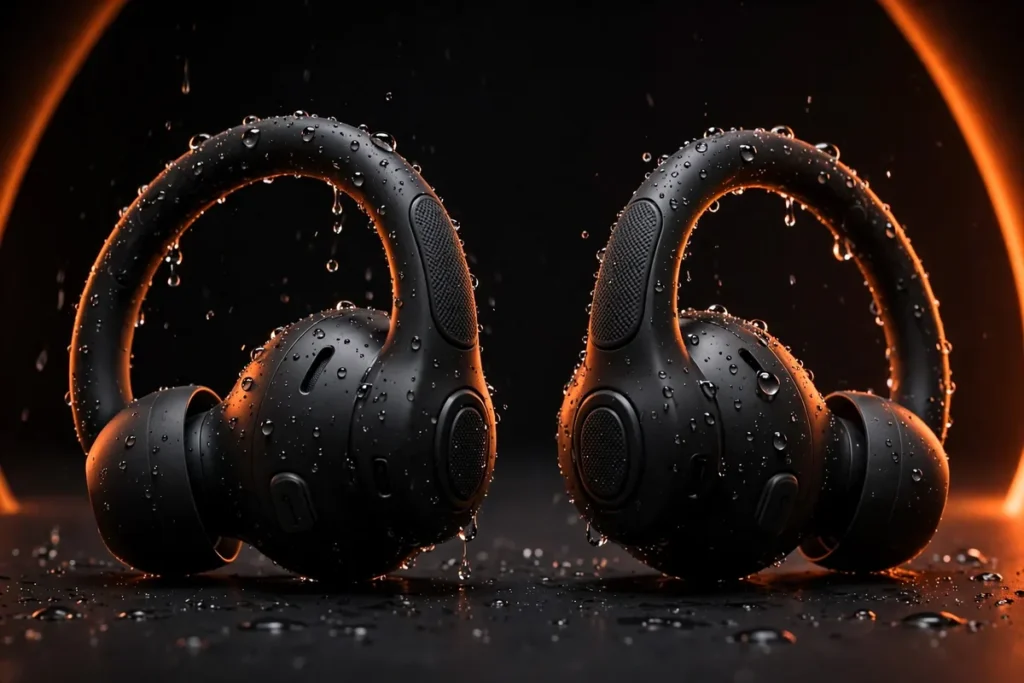
The best USB-C headphones solve a simple problem: phones, tablets and laptops dropped the headphone jack, and the cable did not die with it. This list covers the three honest ways to listen over USB-C: earbuds with a native USB-C plug, an IEM that ships with a USB-C DAC dongle in the box, and wireless over-ears that also carry a wired USB-C audio mode for lossless listening or a flat battery. Every pick is scored in our published records.
The connection claim is stated on each card, because the three types behave differently. A native USB-C earbud has a digital-to-analogue converter in the plug and works with any USB-C audio device. A dongle IEM separates the DAC into an adapter you can also use with other earphones. A wireless over-ear with a USB-C mode keeps Bluetooth for the street and the cable for the desk. Our best wireless headphones guide covers the Bluetooth-first field these over-ears also compete in.
Native wired USB-C pick: Razer Hammerhead V3 Chroma: the true plug-in USB-C earbud, wired for PC and handheld gaming. Check Price on Amazon
USB-C dongle-in-the-box IEM pick: Meze Alba: a proper IEM with the USB-C DAC dongle included in the box. Check Price on Amazon
Wireless over-ear with USB-C wired mode: Sennheiser HDB 630: sound at 9.5, a 60-hour battery and a wired USB-C mode in one headphone. Check Price on Amazon
USB-C lossless wired mode pick: Beats Studio Pro: multipoint Bluetooth plus a lossless USB-C wired mode with built-in DAC profiles. Check Price on Amazon
USB-C wired lossless pick (Apple): Apple AirPods Max (USB-C): the Apple entry, with ANC at 9.4 and wired lossless over USB-C. Check Price on Amazon
USB-DAC mode pick: Focal Bathys: a dedicated USB-DAC mode, with sound at 9.3 and comfort at 9.4. Check Price on Amazon
USB-C high-resolution wired pick: Bowers & Wilkins Px8 S2: USB-C audio at 24-bit/96kHz plus aptX Lossless over Bluetooth. Check Price on Amazon
The three kinds of USB-C headphone, and why the claim matters
USB-C is a connector, not a promise. Some ports and plugs carry analogue audio, most carry digital audio that needs a DAC somewhere in the chain, and a few headphones use the port for charging only. Every pick here has its audio claim checked against its listing, its feed record or its review on this site, and the claim is printed on the card so you know which kind you are buying. If a headphone you already own charges by USB-C but says nothing about wired audio, assume the port is power-only until the maker says otherwise.
Scores come from our Finder records on the usual six-bar scale. The two wired picks carry the wired convention on the battery bar, a neutral 5.0, because there is no battery to run down; that is a genuine advantage of the format, since a wired USB-C earbud cannot die mid-call. Judge the wired pair on sound, calls and value, and the over-ears on the full set.
The best USB-C headphones, pick by pick

Why you: The only true plug-in USB-C earbud set here, with scores across the board in our records and a review on this site. It is aimed at PC and handheld gaming.
Trade-off: The ANC is gentle rather than strong, the cable is on the stiff side, and the plug occupies your USB-C port for as long as you listen, per our records.
The Hammerhead V3 Chroma is the purest answer to the question this list asks: a wired earbud whose cable ends in USB-C and carries audio digitally, no dongle and no Bluetooth anywhere in the chain. Latency is a non-issue, the connection never drops, and the microphone makes it a workable headset for calls and team chat, with calls at 7.5 in our records. Our Razer Hammerhead V3 Chroma review covers the lighting and the fit.
The wired life has its terms. The cable is stiff enough to notice, the plug holds your only USB-C port for the whole session, so charging while listening needs a hub, and the ANC at 6.5 is gentle because a wired bud has limited power to spend on cancelling. For a gaming handheld, a laptop bag or a phone with no jack, it is the simplest pick here: plug in and it works.

Why you: It ships with a USB-C DAC dongle in the box, per our records, so it connects to USB-C phones and laptops with no extra purchase. Sound scores 8.7.
Trade-off: No microphone anywhere in the box, treble can turn sharp at high volume, and the stock cable tangles, per our records.
The Alba takes the other route to the same desk: it is a conventional wired IEM that includes its USB-C DAC dongle in the box, so nothing extra stands between it and a modern phone or laptop. That also makes the dongle useful beyond the Alba, since it can drive other wired earphones you own. Sound at 8.7 and value at 8.8 are the strongest wired numbers in this list, and comfort holds at 8.6. Our Meze Alba review covers the tuning in full.
It is a listening-only purchase. There is no microphone in the box at all, so calls mean unplugging or using the phone, and the treble can turn sharp at high volume on bright recordings. The stock cable tangles more than it should. None of that changes the core offer: the best sound in this list that reaches a USB-C port without a separate accessory purchase.

Why you: A sound score of 9.5 in our records, the highest here, with a 60-hour battery (a 9.4 battery score) for listeners who want one headphone for both modes.
Trade-off: Noise cancelling sits a level below the Bose and Sony flagships and the touch controls are fiddly, per our records.
The HDB 630 is the one-headphone answer: a wireless over-ear with aptX Adaptive for the street and a wired USB-C audio mode for the desk, backed by our records showing a USB-C dongle path in the box. Its 9.5 sound score is the highest in this list, and the 60-hour battery scores 9.4, so the wired mode is a choice rather than a rescue. Our Sennheiser HDB 630 review works through both modes.
The compromises sit where Sennheiser usually leaves them: ANC at 8.2 is a level below the Bose and Sony flagships, and the touch controls are fiddly enough that most owners end up using the app or the cable. If your listening splits between a phone on the move and a laptop at a desk, and sound quality outranks silence, this is the most complete USB-C headphone here.
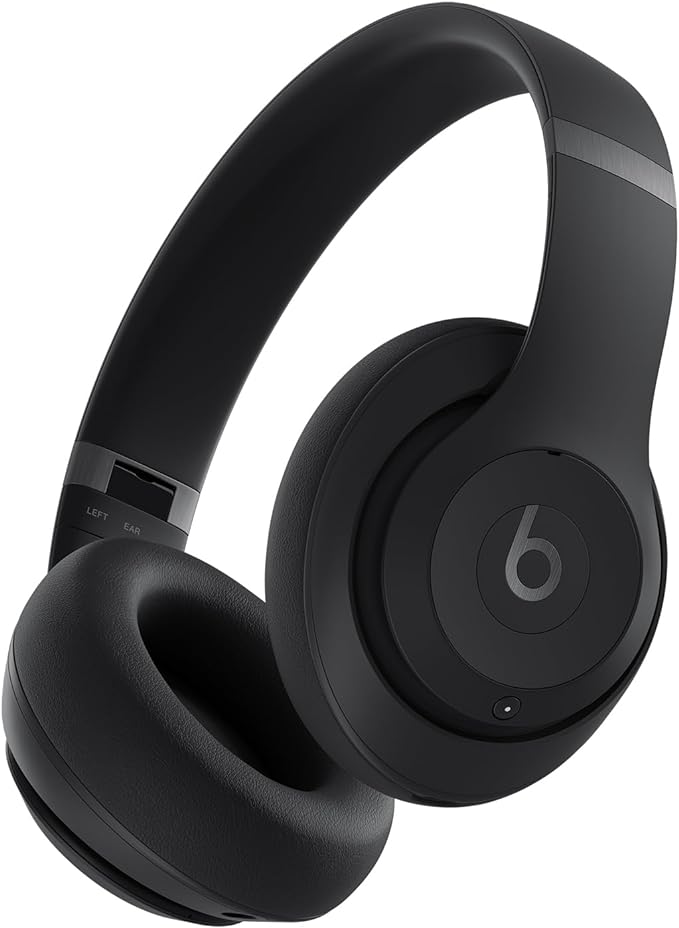
Why you: An 8.2 overall in our records with multipoint Bluetooth for wireless use and a genuine wired USB-C mode when the battery or latency matters.
Trade-off: Less refined tuning than Sony, and no aptX or LDAC over Bluetooth, per our records.
The Studio Pro’s USB-C port does double duty in a way most rivals skip: beyond charging, it carries lossless wired audio through built-in DAC profiles, so the same cable that tops the battery up also gives you a wired, latency-free listen. Over Bluetooth it adds multipoint pairing, and the full set of scores is even, with ANC at 8.5, comfort at 8.6 and an 8.2 overall.
The tuning is the reservation. Our records call it less refined than Sony’s, and over Bluetooth there is no aptX or LDAC, so the wired mode is also the quality mode for Android owners. That actually strengthens its place in this list: it is the mainstream pick where the USB-C mode is a feature you will use weekly, not a spec-sheet line.
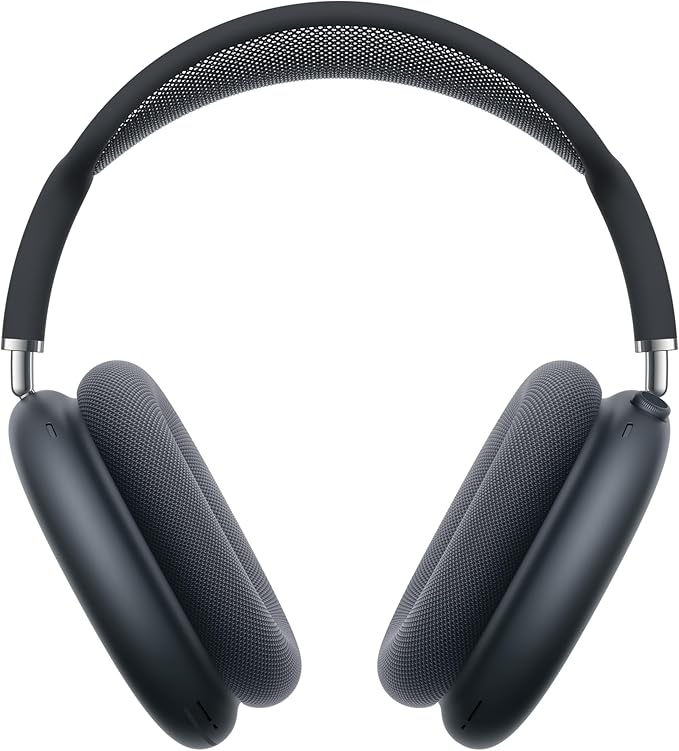
Why you: An ANC score of 9.4 in our records with a wired USB-C route for lossless listening: the only Apple entry that works as a USB-C headphone.
Trade-off: Heavy at 385g, no LDAC or aptX, and it is an Apple-ecosystem product, per our records.
Only the USB-C generation of the AirPods Max belongs in this list: its port supports wired lossless audio over a USB-C cable alongside Bluetooth, which turns Apple’s flagship into a genuine USB-C headphone for a Mac or iPad desk setup. ANC scores 9.4 in our records, the strongest in this list, and calls at 8.4 lead the over-ears here. Our AirPods Max review covers the model in full.
The familiar terms apply: 385g on the head, no LDAC or aptX for non-Apple sources, and a value score of 7.4 that reflects the premium. The wired mode also assumes your source has a USB-C port and a cable run you can live with. Inside Apple’s ecosystem it is the obvious USB-C over-ear; outside it, the HDB 630 and Studio Pro above are easier to recommend.

Why you: A sound score of 9.3 and comfort at 9.4 in our records: the audiophile route into USB-C listening in this list.
Trade-off: Heavy next to mainstream rivals, and its ANC (7.6) trails the dedicated leaders, per our records.
The Bathys treats the USB-C port as a hi-fi input. Its dedicated USB-DAC mode routes the signal through the headphone’s own converter for wired high-resolution listening, which makes it the natural partner for a laptop full of lossless files. Sound scores 9.3 and comfort 9.4 in our records, both near the top of this list, and over Bluetooth it remains a full noise cancelling travel headphone.
It is heavy next to the mainstream rivals, the ANC at 7.6 trails the leaders, and the price tier is Focal’s usual one. None of that is hidden. The Bathys is in this list for the listener who already owns good wired headphones and wants the USB-C mode to be a destination rather than a fallback. For that listener, nothing else here sounds like it.

Why you: It pairs a USB-C wired mode at up to 24-bit/96kHz with the broadest wireless codec list in our records, up to aptX Lossless, and it has a review on this site.
Trade-off: ANC is tuned to preserve dynamics rather than maximise silence, and the 30-hour battery is mid-pack at this level, per our records.
The Px8 S2 covers both ends of the USB-C question. Wired, it takes USB-C audio at up to 24-bit/96kHz, per the research behind its review on this site. Wireless, it carries the broadest codec support in our records, up to aptX Lossless. Sound scores 9.2 and comfort 8.8, and our Bowers & Wilkins Px8 S2 review sets out where the wired mode earns its keep.
The ANC is tuned to preserve the music’s dynamics rather than to maximise silence, so at 8.0 it sits behind the Max and the Sony and Bose flagships, and the 30-hour battery is mid-pack at this level. Value at 7.0 is the list’s lowest. This is the pick for the listener who wants the cable and the codec list to be equally serious, and is willing to pay for both.
USB-C headphones compared
Read the connection column first: it decides what the headphone can plug into and whether a dongle is involved. Scores are our published records for each model.
| Pick | Best for | USB-C connection | Our score | |
|---|---|---|---|---|
| Razer Hammerhead V3 Chroma | Native wired USB-C pick | Native USB-C plug | 7.3 | Check Price on Amazon |
| Meze Alba | USB-C dongle-in-the-box IEM pick | USB-C DAC dongle in box | 6.4 | Check Price on Amazon |
| Sennheiser HDB 630 | Wireless over-ear with USB-C wired mode | Wired USB-C audio mode | 8.4 | Check Price on Amazon |
| Beats Studio Pro | USB-C lossless wired mode pick | USB-C lossless wired mode | 8.2 | Check Price on Amazon |
| Apple AirPods Max (USB-C) | USB-C wired lossless pick (Apple) | USB-C wired lossless | 8.3 | Check Price on Amazon |
| Focal Bathys | USB-DAC mode pick | USB-DAC mode | 8.4 | Check Price on Amazon |
| Bowers & Wilkins Px8 S2 | USB-C high-resolution wired pick | USB-C audio to 24-bit/96kHz | 8.2 | Check Price on Amazon |
Decide by the device you plug into. A gaming handheld or a phone with no jack points to the Hammerhead or the Alba, wired and worry-free. A desk with a laptop points to the over-ears, where the USB-C mode buys lossless listening and a headphone that never dies mid-meeting. Among those, the HDB 630 sounds best, the Studio Pro is the mainstream all-rounder, and the Bathys and Px8 S2 serve listeners who treat the wired mode as the main event.
Frequently asked questions
Do all USB-C headphones work with all USB-C phones?
No. The port shape is universal but the audio path is not. Every pick in this list carries its digital audio conversion in the plug, the dongle or the headphone, so each works with phones and laptops that support USB audio. A headphone whose USB-C port is for charging only will stay silent over a cable, which is why each card here states its claim.
Is USB-C audio better than Bluetooth?
It can be. A wired USB-C link removes codec compression and latency from the chain, and several picks here support lossless or high-resolution wired modes, up to 24-bit/96kHz on the Px8 S2. Bluetooth with LDAC or aptX Lossless narrows the gap, but the cable remains the reliable route for critical listening and gaming.
Can I charge my phone while using wired USB-C headphones?
Not through the same port without help. A native USB-C earbud occupies the port for the whole session. A USB-C hub or splitter with power delivery solves it on most laptops and many phones. The wireless over-ears in this list dodge the problem: use Bluetooth while charging, and plug in when you sit down.
What is the difference between a USB-C dongle IEM and a native USB-C earbud?
Where the DAC lives. A native USB-C earbud, like the Hammerhead V3 Chroma, builds the converter into its plug and works only as a complete set. A dongle IEM, like the Meze Alba, separates the converter into an adapter, so the earphones also work from a 3.5mm source and the dongle can drive other wired earphones you own.
Do wired USB-C headphones need charging?
No. Native USB-C earbuds and dongle IEMs draw a small amount of power from the source device and have no battery of their own, which is why their battery bar in our scoring is a neutral placeholder. The wireless over-ears here charge over USB-C as well as playing through it.

I am the founder of Sound Mavericks, where I provide the polite truth about audio equipment. I started this site because consumer electronics reviews are often too technical. Instead of using a silent lab, I test headphones, earbuds, and Bluetooth speakers in the real world – like on a noisy subway or in a busy coffee shop.
To stay independent, I buy my own review units (mostly from the United States) rather than accepting free gifts from brands. Once I finish testing a product, I sell it locally to our community. My goal is to help you understand sound quality, active noise cancellation (ANC), and battery life without the marketing hype.