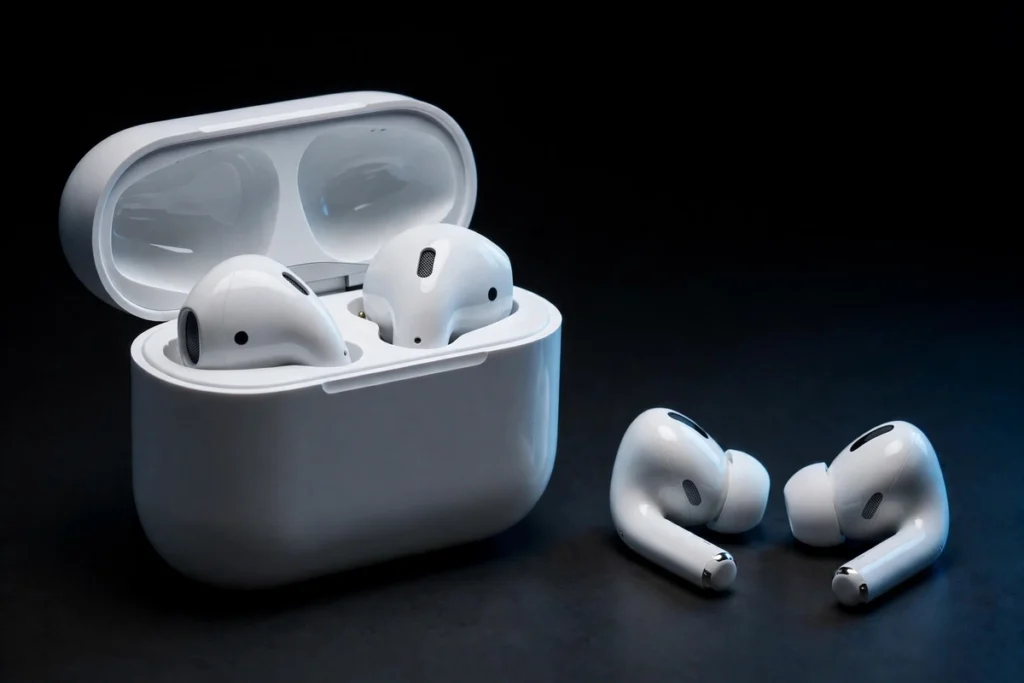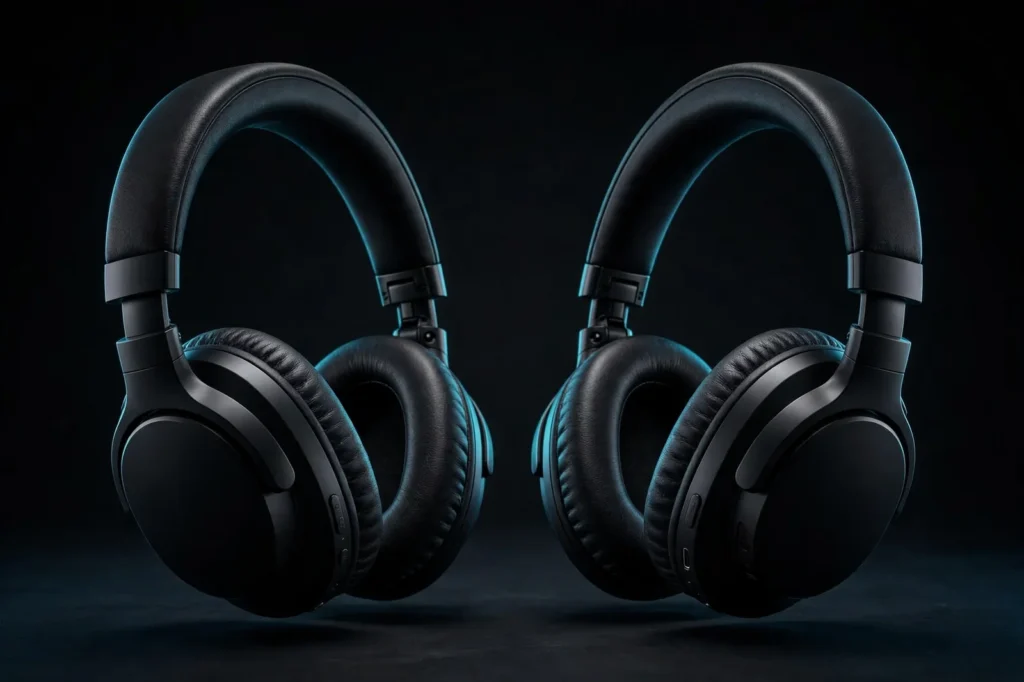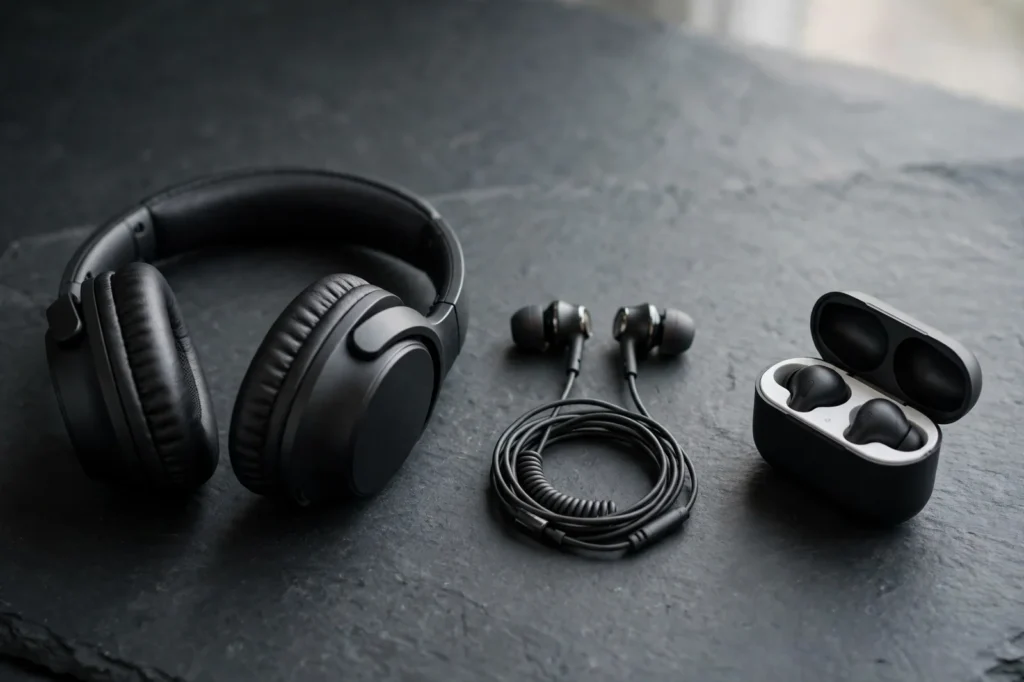
Earphones insert into your ear canal and seal it shut, giving you the best passive noise isolation of the three. Earbuds rest in the bowl of your outer ear without sealing the canal, so they feel airier but leak sound in and out. Headphones sit on or around your ears with a headband, delivering the biggest, most spacious sound and the most effective active noise cancelling. Commuters and travelers usually do best with earphones or ANC headphones; gym-goers and casual listeners often prefer earbuds.
earphones vs earbuds vs headphones is one of the most confusing comparisons in personal audio — and not because the answer is complicated. It’s because retailers, brands, and even manufacturers use the three words interchangeably, so shoppers end up comparing products that are built for completely different ears. This guide fixes that. SoundMavericks breaks down exactly how each category fits, sounds, isolates noise, and holds up over long listening sessions, so you can stop guessing and buy the right form factor the first time.
Earphones vs Earbuds vs Headphones: Quick Comparison
| Aspect | Earphones | Earbuds | Headphones |
|---|---|---|---|
| How they fit | Insert into the ear canal with silicone or foam tips | Rest in the outer ear (concha) without sealing the canal | Cups sit on or around the ears with a headband |
| Noise isolation | Excellent — the seal physically blocks outside noise | Poor to modest — sound leaks in and out | Good passive isolation; ANC models are the best overall |
| Sound character | Intimate, detailed, strong bass from the seal | Open and airy but thin on bass | Biggest soundstage, fullest bass, most dynamic headroom |
| Comfort (long sessions) | Great once the fit is right; wrong tips cause pressure | Usually the least fatiguing — nothing in the canal | Excellent for hours, but clamp force and heat build up |
| Portability | Pocket-sized, best for travel | Pocket-sized, tiny charging cases | Bulkiest — needs a case or bag |
| Battery life | Wired models need none; wireless models use a charging case | Shortest per charge; charging case extends total playtime | Longest — no case needed, big internal battery |
| Best for | Commuters, travelers, office focus, budget audiophiles | Workouts, calls, casual everyday listening | Home listening, flights, gaming, long work sessions |
What Are Earphones?
Earphones are in-ear devices that insert into the ear canal and seal it with a soft silicone, foam, or rubber tip. That seal is the defining trait. It blocks outside noise passively, couples the driver directly to your eardrum for strong bass, and keeps the earphone anchored in your ear. Classic wired earphones plug into a headphone jack or USB-C port; modern wireless versions pair over Bluetooth and come with a charging case. In-ear monitors (IEMs) — the kind musicians wear on stage — are simply the professional end of the earphone family. If you want the full picture of that sub-category, see our IEMs vs headphones comparison.
Earphones: Key Strengths
- Best passive noise isolation of any form factor. A proper tip seal can block as much ambient noise as budget active noise cancelling — no batteries required. Our breakdown of ANC vs passive isolation explains why that matters.
- Strong, detailed bass. The sealed canal traps low frequencies, so even inexpensive earphones can sound fuller than earbuds several times the price.
- Tiny and pocketable. A pair of wired earphones weighs almost nothing and needs no charging case.
- Great value for money. Because drivers and housings are small, earphones are where the least money buys the most sound quality.
Earphones: Key Weaknesses
- Fit is everything — and fit is personal. The wrong tip size means weak bass, poor isolation, and aches within an hour. Experimenting with the included tip sizes is mandatory, not optional.
- Some people dislike the “plugged” feeling. The sealed sensation can feel claustrophobic if you’re used to open earbuds.
- Earwax and hygiene. Anything that lives in your ear canal needs regular tip cleaning — more maintenance than earbuds or headphones.
 Moondrop CHU II — a classic in-ear earphone
The CHU II is a wired in-ear earphone with a detachable cable and silicone tips — a textbook example of the category, and a strong budget pick for commuters who want real isolation without wireless complexity.
What Are Earbuds?
Earbuds are the small, open-style pieces that rest in the bowl of your outer ear (the concha) rather than inserting into the ear canal. Because they don’t seal the canal, they let in ambient sound naturally — you can hear traffic, office chatter, and your own voice without a transparency mode. This is the design Apple popularized with the original iPod-era EarPods and later the standard AirPods line. Today’s true wireless earbuds keep the same open fit and add a tiny charging case.
Earbuds: Key Strengths
- Most comfortable for sensitive ears. Nothing goes inside the canal, so there is no pressure, no seal fatigue, and no tip sizing to get wrong.
- Natural situational awareness. Cyclists, runners, office workers, and parents all benefit from hearing the world while they listen.
- Tiny cases, grab-and-go convenience. A true wireless earbud case disappears into any pocket.
- Easy to share and quick to wear. No fiddling with tips — drop them in and go.
Earbuds: Key Weaknesses
- Weakest noise isolation. On a train or plane, open earbuds are nearly useless — ambient noise floods in, and many users end up cranking the volume, which risks hearing damage over time.
- Thin bass response. Without a seal, low frequencies escape. Earbuds almost always sound leaner than sealed earphones at a similar price.
- One-size-fits-most fit. If your outer ear shape doesn’t match the bud’s shape, they fall out — and there’s no tip swap to fix it.
- Shortest battery life per charge. The tiny buds hold small batteries, so you’re dependent on the charging case.
 Apple EarPods (USB-C) — the classic earbud
EarPods are the archetypal earbud: they rest in the outer ear, never seal the canal, and work with zero setup. A handy reference point for what “earbuds” meant long before true wireless existed.
What Are Headphones?
Headphones are the largest category: two ear cups connected by a headband, worn either over the ears (over-ear/circumaural) or resting on them (on-ear/supra-aural). The large drivers and spacious ear cups give headphones the biggest soundstage and the most physical room for features — large batteries, powerful ANC circuitry, and plush cushioning. They come wired, wireless, open-back, and closed-back; our open-back vs closed-back guide covers the acoustic trade-off inside the category.
Headphones: Key Strengths
- Best sound quality per dollar at the mid-to-high end. Bigger drivers, bigger enclosures, and more room for tuning mean the most spacious, dynamic, detailed presentation.
- Most effective active noise cancelling. The ear cups create a sealed chamber around the ear, which is the ideal starting point for ANC — the flagship over-ears are the gold standard for flights.
- Most comfortable for multi-hour sessions. Nothing touches your ear canal; the weight rests on the headband and cushions instead.
- Longest battery life. Big cups mean big batteries — days of typical use between charges.
Headphones: Key Weaknesses
- Bulkiest by far. Even folding models need a bag; you won’t pocket a pair of over-ears.
- Heat and sweat. Sealed ear cups trap warmth — uncomfortable in summer and during workouts.
- Clamp force. Too much clamping pressure causes jaw and temple fatigue; too little and they slide around.
- Not gym-friendly. Weight, sweat, and bulk make headphones the worst pick for intense exercise.
 Sony WH-1000XM5 — the headphone archetype
Over-ear cups, headband, flagship ANC — the XM5 shows exactly what headphones do best: immersive sound, serious noise cancelling, and all-day comfort for home, office, and travel.
Are Earphones and Earbuds the Same Thing?
No — and this is where most confusion starts. Earphones seal your ear canal; earbuds don’t. Retailers often label true wireless earbuds like the AirPods Pro as “earbuds,” but because they insert into the canal with sealing tips, they function as earphones by the technical definition. For a deeper look at the terminology tangle, our earbuds vs earphones article goes through it piece by piece.
The practical test: if a “bud” ships with multiple tip sizes in the box, it’s an earphone in earbud clothing — shop for it accordingly. If it has one fixed shape and no tips, it’s a true earbud: expect open sound, weak isolation, and maximum comfort.
Earphones vs Earbuds vs Headphones: Sound Quality Compared
Sound quality depends more on engineering than form factor, but the categories do have inherent acoustic tendencies:
- Headphones have the natural advantage. Large drivers (typically 30–50mm) move more air, produce deeper sub-bass, and create a wider, more speaker-like soundstage. This is why critical listeners and studio users gravitate toward over-ears.
- Earphones punch above their size. A 10mm driver coupled directly to a sealed ear canal produces surprisingly powerful bass and excellent detail retrieval — the sealed coupling is so efficient that earphones need far less power than headphones for the same perceived loudness.
- Earbuds are acoustically handicapped by their open design. Bass leaks out and ambient noise leaks in, so they almost always sound thinner and less detailed than sealed earphones in the same price bracket.
One caveat: wireless audio quality is capped by the Bluetooth codec, regardless of form factor — see our Bluetooth codecs explained guide.
Noise Isolation and Noise Cancelling Compared
- Earphones: the best passive isolation. A deep-sealing foam or silicone tip can knock 20–25 dB off ambient noise — enough for most commutes and offices, no batteries needed.
- Headphones: the best active cancelling. Closed-back over-ears give ANC circuitry a sealed chamber to work with, and flagship models erase low-frequency drone (engines, HVAC, train rumble) better than any earphone.
- Earbuds: the worst of both. Open fit means almost no passive isolation, and without a seal, ANC has little to work with — which is why the best ANC earbuds are the ones that actually seal (earphones in disguise).
Which Is More Comfortable for Long Listening Sessions?
It depends on what bothers you. If you hate anything inside your ears, earbuds win — there’s simply nothing in the canal to cause pressure. If you find headbands and clamping pressure annoying, earphones win — once you find the right tip size, they all but disappear. Headphones are the middle ground for most people: plush over-ear cushions distribute weight well for 3–4 hour sessions, but glasses wearers often feel temple pressure, and everyone eventually deals with ear heat.
Comfort is the most personal variable in this entire comparison: earphones need a tip-fitting session, earbuds need an ear-shape match, and headphones need a clamp-force check. Try before you buy if you can.
Portability and Battery Life Compared
- Earphones and earbuds win portability — both vanish into a pocket, with the charging case supplying most of the total playtime.
- Headphones win battery life — the big cups hold big cells, and there’s no case to top up. They lose portability decisively; even folding flagships need dedicated bag space.
- Wired earphones sidestep the question entirely: no batteries, no charging, no case — just plug in and listen. For a curated shortlist, see our best wired earbuds roundup.
Which Should You Buy? Our Use-Case Recommendations
Here’s how SoundMavericks maps each category to real life:
- Commuting and travel: earphones or ANC headphones. Sealed earphones block train and bus noise without bulk; flagship ANC headphones block it best on planes. True wireless models with sealing tips — earphones by our definition — are the sweet spot for most commuters.
- Gym and running: earbuds. Nothing in the canal to shift around with sweat, natural awareness of your surroundings, and a tiny case that survives a gym bag.
- Home listening and movies: headphones. The soundstage and bass authority of good over-ears make everything else feel small.
- Office and work calls: earphones with a good mic array, or comfortable over-ear headphones with a boom-free design. Sealed earphones keep your audio private and your colleagues’ chatter out.
- Maximum sound per dollar: wired earphones. The category where modest spending buys genuinely impressive audio.
 The in-between pick: Apple AirPods Pro 2
Marketed as earbuds but functionally earphones — sealing tips, strong ANC, pocketable case. One device for commuting, calls, and casual listening.
SoundMavericks Verdict
Stop shopping by the label on the box and start shopping by the fit. If you want isolation and bass in a pocketable package, buy earphones — the sealing kind, with real tip options. If you want awareness, zero in-ear pressure, and maximum convenience, buy earbuds. If you want the biggest sound, the best noise cancelling, and the most comfortable multi-hour sessions, buy headphones. Most people end up owning two of the three — headphones for home and flights, plus earphones or earbuds for the move. That’s not indecision; it’s how the categories are designed to complement each other.
Frequently Asked Questions
Are earphones and earbuds the same thing?
No. Earphones insert into the ear canal and seal it with silicone or foam tips; earbuds rest in the outer ear without sealing. Retailers use the terms interchangeably, but the seal changes isolation, bass, fit, and hygiene — they’re different products to shop for.
Are earbuds better than earphones for running?
Usually yes. Open earbuds let you hear traffic and surroundings, and there’s nothing in the canal to work loose with sweat. Sealed earphones isolate better, but for outdoor running, awareness is the safer choice.
Do earphones damage your hearing?
No form factor is inherently dangerous — volume and exposure time are what matter. Sealed earphones can actually protect your hearing in noisy environments because the isolation lets you listen at lower volumes. The risk comes from cranking open earbuds to overcome background noise.
Which is better for phone calls: earbuds or headphones?
For call clarity in noisy places, sealed earphones with a good mic array usually win — the seal keeps your voice isolated from background noise. For all-day call comfort at a desk, lightweight over-ear headphones are easier to wear for hours.
Are headphones better than earbuds for sound quality?
Generally yes. Headphones’ larger drivers and sealed ear cups produce a wider soundstage and deeper bass than open earbuds. But well-engineered sealed earphones can match or beat budget headphones for detail — form factor is only part of the story.

I am the founder of Sound Mavericks, where I provide the polite truth about audio equipment. I started this site because consumer electronics reviews are often too technical. Instead of using a silent lab, I test headphones, earbuds, and Bluetooth speakers in the real world – like on a noisy subway or in a busy coffee shop.
To stay independent, I buy my own review units (mostly from the United States) rather than accepting free gifts from brands. Once I finish testing a product, I sell it locally to our community. My goal is to help you understand sound quality, active noise cancellation (ANC), and battery life without the marketing hype.