SoundMavericks’ picks are editorial analysis: we compared the headsets Tarkov players actually recommend — open-back audiophile headphones and proven gaming headsets — against live Amazon US listings for imaging, soundstage, comfort and mic quality. Specs below are manufacturer and listing figures, not invented numbers. Last updated October 2026.
Finding the best headset tarkov players can buy is a different job than picking headphones for music. Escape from Tarkov is one of the most audio-dependent shooters ever made: footsteps, rustling gear, magazine reloads and distant gunfire are your radar, your minimap and your early warning system rolled into one. The right headset lets you hear a scav creeping up behind you on Interchange before he ever sees you. The wrong one buries those cues under bass and fake surround processing.
Here is the short version of what Tarkov communities consistently agree on: clean stereo imaging beats virtual 7.1, open-back designs usually win for positional awareness, and neutral-to-bright tuning that highlights footstep frequencies beats bass-heavy “gaming” tuning. That is why this guide mixes dedicated gaming headsets with audiophile headphones that Tarkov players genuinely use. For more on how we judge gaming audio in general, see our best headsets for Rainbow Six Siege guide, which applies the same imaging-first logic.
The Best Headsets for Tarkov at a Glance
★ BEST OVERALL: Sennheiser HD 560S
Open-back reference tuning with outstanding imaging — the consensus pick for Tarkov players who prioritize hearing first.
🎯 BEST FOR FOOTSTEPS: Audio-Technica ATH-AD700X
A legendary open-air design with an enormous soundstage — the classic competitive-FPS headphone for a reason.
🎮 BEST GAMING HEADSET: Logitech G Pro X
A proven esports headset with a detachable boom mic and Blue VO!CE — the all-in-one pick for players who squad up.
💰 BEST BUDGET: Razer BlackShark V2 X
Lightweight 50mm-driver wired headset with a neutral-for-gaming tune — the cheapest way into serious Tarkov audio.
🔋 BEST WIRELESS: Audeze Maxwell
90mm planar magnetic drivers with low-latency wireless and 80+ hours of battery — the wireless endgame for Tarkov.
Quick Comparison
| Headset | Best for | Design | Mic | Connection |
|---|---|---|---|---|
| Sennheiser HD 560S | Overall / imaging | Open-back | None | Wired 3.5mm |
| Audio-Technica ATH-AD700X | Footstep detection | Open-air | None | Wired 3.5mm |
| Beyerdynamic DT 770 Pro 80 Ohm | Closed-back isolation | Closed-back | None | Wired 3.5mm |
| Logitech G Pro X | Team play / mic | Closed-back | Detachable boom | Wired 3.5mm / USB |
| HyperX Cloud Alpha | Value | Closed-back | Detachable boom | Wired 3.5mm |
| Razer BlackShark V2 X | Budget | Closed-back | Detachable boom | Wired 3.5mm |
| Audeze Maxwell | Wireless | Closed-back | Detachable boom | 2.4GHz / BT / USB / 3.5mm |
| SteelSeries Arctis Nova Pro | Premium wired setup | Closed-back | Retractable boom | Wired via GameDAC |
| Philips SHP9500 | Cheap open-back | Open-back | None | Wired 3.5mm |
Why Tarkov Rewards a Different Kind of Headset
Tarkov’s audio engine renders sound binaurally — the game itself computes how a footstep should arrive at each of your ears based on direction, distance and occlusion. That means the headphone’s job is to reproduce a clean, uncolored stereo image, not to add its own spatial processing. Virtual 7.1 modes, which duplicate and smear channels to fake surround, fight against the game’s own positional math. Community testing and years of forum consensus point the same way: a good stereo headphone with precise imaging tells you where a sound is coming from more reliably than a “surround” gaming headset.
Tuning matters just as much. Footsteps and gear-rustle live mostly in the upper mids and treble, while explosions and gunfire dominate the bass. A bass-heavy headphone buries the quiet cues you are listening for under the loud ones — Tarkov rewards neutral-to-bright tunings with clear treble detail.
What to Look for in a Tarkov Headset
- Imaging and soundstage first. Soundstage is how wide the audio “room” feels; imaging is how precisely a sound can be placed inside it. Tarkov lives and dies on imaging — you need to know a footstep is behind-left at 20 meters, not just “somewhere left.”
- Neutral or bright tuning. Flat-to-treble-forward signatures keep footsteps audible. Avoid bass cannons; they mask exactly the cues you need.
- Open-back vs closed-back. Open-backs breathe, feel lighter over long raids and typically image better — but they leak sound both ways, so they are a solo-room choice. Closed-backs isolate you from room noise and work anywhere.
- Wired over wireless for consistency. Wired removes battery and latency variables. Modern low-latency wireless (2.4GHz) is genuinely fine for most players, but competitive purists still wire up.
- A mic only if you squad. Solo rats can run pure headphones; duos and squads need a boom mic. Audiophile headphones can be converted with an attachable mic (see below) — our headset vs headphones guide covers the trade-offs.
- Comfort for multi-hour raids. Clamp force, earcup depth and weight matter more than they look like they should when you are six raids deep.
The Best Headsets for Escape from Tarkov in 2026
1. Sennheiser HD 560S — Best Overall

The HD 560S is SoundMavericks’ top pick because it hits Tarkov’s exact priorities: an open-back design, a neutral reference tuning with excellent treble detail, and imaging precision that competitive players consistently rate among the best in its class. Footsteps resolve as distinct, locatable events rather than vague noise, and the lightweight build stays comfortable across long sessions. It needs no special amp — most PC onboard audio drives it fine — and it doubles as an excellent music headphone when you leave the raid.
Specs worth noting: Open-back, over-ear, wired (detachable 3.5mm cable), Sennheiser’s reference tuning.
- Pros: Outstanding imaging and positional accuracy; neutral tuning keeps footsteps forward; light and comfortable; easy to drive.
- Cons: No microphone (pair with a ModMic); open-back leaks sound in shared rooms.
2. Audio-Technica ATH-AD700X — Best for Footstep Detection

The AD700X is a legend in competitive FPS circles, and Tarkov is where it earns that reputation. Its open-air drivers produce one of the widest soundstages of any headphone near its class, with a light, treble-forward signature that pushes footstep and reload cues right to the front of the mix. It is not a musical headphone — bass is deliberately lean — but for hearing enemies first, that leanness is the feature. The 3D wing headband design is polarizing at first but disappears over long raids.
Specs worth noting: Open-air, over-ear, wired, 53mm drivers, Audio-Technica’s airy competitive tuning.
- Pros: Huge soundstage; footsteps and distant cues rendered clearly; very comfortable wing system for long play.
- Cons: Almost no bass (by design); no microphone; leaks sound freely.
3. Beyerdynamic DT 770 Pro 80 Ohm — Best Closed-Back Studio Pick

The DT 770 Pro is the closed-back answer for players who game in noisy rooms or just prefer isolation. The 80-ohm version is the sweet spot for PC gaming — it runs acceptably on good onboard audio while scaling up nicely with a dedicated DAC/amp, and its studio tuning delivers crisp, detailed highs that keep positional cues intact. The velour earpads and tank-like build quality are famous for surviving years of daily use. If you want the amp upgrade path later, see our best headphone amp DAC combos guide.
Specs worth noting: Closed-back, over-ear, wired, 80-ohm drivers, velour earpads.
- Pros: Excellent isolation; detailed treble for cues; superb build quality and comfort; scales with an amp.
- Cons: Soundstage narrower than open-back rivals; no microphone; 80-ohm benefits from an amp.
4. Logitech G Pro X — Best Gaming Headset for Team Play
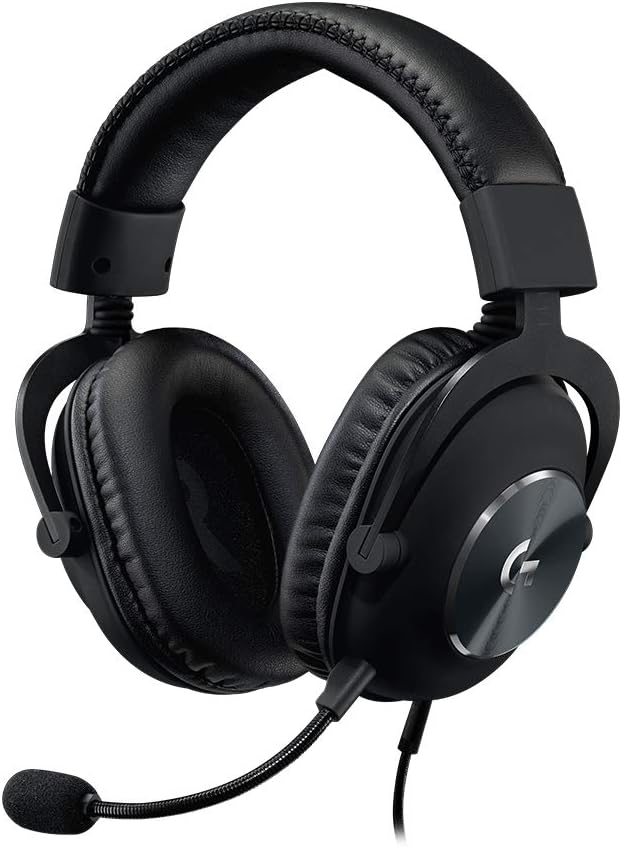
If you run squads, the G Pro X is the complete package. The detachable boom mic with Blue VO!CE processing is one of the best headset mics in gaming — your callouts stay clear even in a chaotic firefight — and the tuning is restrained enough for Tarkov by gaming-headset standards, with a dedicated USB DAC option and EQ via G Hub to trim the bass for footstep clarity.
Specs worth noting: Closed-back, wired (3.5mm + USB DAC), detachable boom mic with Blue VO!CE, DTS Headphone:X 2.0 option (leave it off for Tarkov).
- Pros: Excellent mic quality; all-in-one convenience; EQ-able via software; proven Tarkov community favorite.
- Cons: Imaging a step behind the audiophile picks; disable virtual surround for best results.
5. HyperX Cloud Alpha — Best Value Gaming Headset

The Cloud Alpha earns its permanent spot on Tarkov recommendation lists through a rare combination: genuinely comfortable for marathon raids, a clean and controlled tuning from its dual-chamber drivers, and a detachable noise-cancelling mic that handles squad comms without fuss.
Specs worth noting: Closed-back, wired 3.5mm, dual-chamber 50mm drivers, detachable noise-cancelling mic.
- Pros: Outstanding comfort; controlled tuning good for cues; solid detachable mic; great durability record.
- Cons: Closed-back soundstage limits ultimate positional precision; no mic monitoring on basic connection.
6. Razer BlackShark V2 X — Best Budget Pick
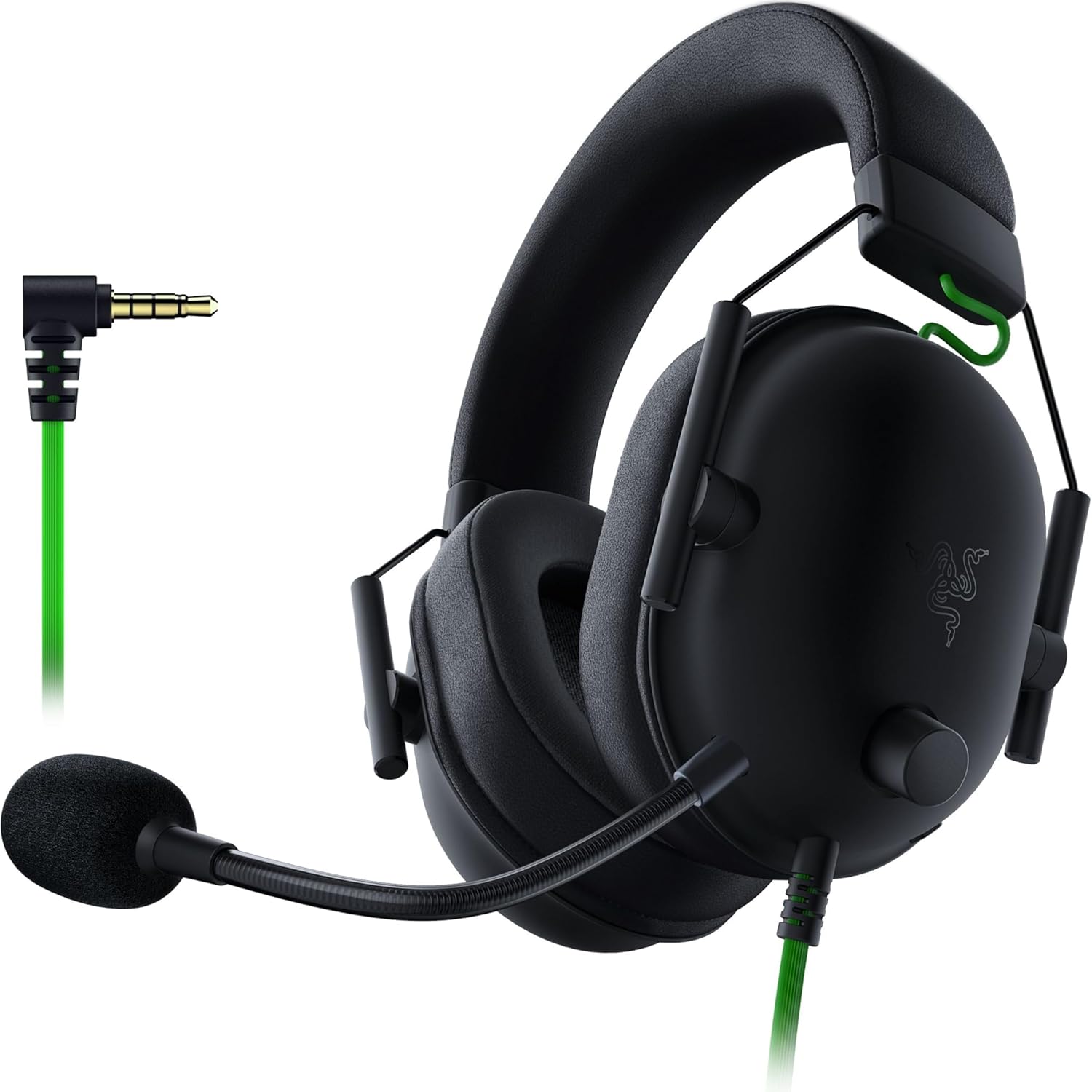
The BlackShark V2 X is the cheapest credible way into serious Tarkov audio. Its 50mm drivers are tuned more neutrally than most budget gaming headsets — which matters, because budget gaming audio usually means bass mud — and at just 240 grams with breathable memory-foam cushions it stays comfortable far longer than its price suggests. The detachable mic handles callouts fine. Turn the software 7.1 surround off (it is Windows-only and hurts more than it helps in Tarkov) and run it in pure stereo.
Specs worth noting: Closed-back, wired 3.5mm, 50mm drivers, detachable boom mic, 240g, optional software 7.1.
- Pros: Remarkably neutral for the price; very light and comfortable; includes a usable mic; simple wired reliability.
- Cons: Build is plasticky; keep virtual surround disabled for Tarkov.
7. Audeze Maxwell — Best Wireless

The Maxwell is the exception that proves the wireless rule. Its 90mm planar magnetic drivers deliver detail and transient speed that dynamic-driver wireless headsets cannot match, and the low-latency 2.4GHz connection keeps audio in sync with the game. With 80+ hours of battery life, a free Dolby Atmos license in the box, and an AI-filtered boom mic, it is a genuine endgame wireless headset. It is heavy at nearly 500g — planar drivers carry weight — but for players who refuse cables without sacrificing audio, nothing else in wireless comes close.
Specs worth noting: Closed-back, 90mm planar magnetic drivers, 2.4GHz low-latency wireless + Bluetooth + USB + 3.5mm, 80+ hour battery, detachable boom mic with AI noise filtering.
- Pros: Best-in-class wireless sound quality; enormous battery; versatile connectivity; excellent mic.
- Cons: Heavy; premium price tier; Bluetooth mode adds latency — use the dongle.
8. SteelSeries Arctis Nova Pro — Best Premium Wired Setup

The wired Arctis Nova Pro pairs premium hi-fi drivers with SteelSeries’ GameDAC — an external DAC/amp with a clean wired signal path and onboard EQ — making it the most complete premium wired package for Tarkov. The retractable ClearCast boom mic is excellent, the ski-goggle headband distributes weight well for long raids, and multi-system support means one headset for PC and console. For more from the brand, see our best SteelSeries headsets roundup.
Specs worth noting: Closed-back, wired multi-system via GameDAC, premium hi-fi drivers, retractable boom mic.
- Pros: Complete premium wired package with DAC; great mic and comfort; EQ on tap for footstep tuning.
- Cons: Premium tier; closed-back soundstage is not class-leading; keep surround modes off.
9. Philips SHP9500 — Best Cheap Open-Back

The SHP9500 is the budget audiophile’s open-back: a wide, airy soundstage and clear midrange for very little money, which is exactly the recipe Tarkov rewards. It will not match the HD 560S or AD700X for imaging precision, but it dramatically outperforms bass-heavy budget gaming headsets for footstep detection — and it is light and comfortable enough for long sessions. Like the other pure headphones here, it has no mic, so pair it with the attachable mic below or a cheap desktop mic.
Specs worth noting: Open-back, over-ear, wired 3.5mm, 50mm drivers.
- Pros: Open-back soundstage on a budget; light and comfortable; easy to drive from any PC.
- Cons: Imaging a tier below the top picks; no microphone; leaks sound.
No Mic? Fix It With the Antlion ModMic Wireless

The audiophile picks above have no microphones — that is the classic headset vs headphones trade-off. The fix Tarkov players have used for a decade is the ModMic: a magnetic attachable boom mic that sticks to any headphone and turns it into a headset. The wireless version runs on a low-latency wireless link with 16-bit/48kHz audio and a long-lasting rechargeable battery, so you keep the wired headphone’s pure signal path while adding broadcast-quality voice. If you prefer IEMs for Tarkov instead of full-size headphones, our best IEMs for gaming guide has you covered.
In-Game Headsets vs Your Real Headset
One thing that confuses new Tarkov players: the game has in-game headsets — ComTac, GSSH, M32, Sordin, Razors — that you equip on your PMC and that change your in-game hearing distance. Those are loot items inside the raid, completely separate from the physical headset on your head. Community testing has repeatedly shown the in-game ComTac 4 gives the longest hearing range, with cheaper in-game options giving less.
The two layers stack. The in-game headset determines how much audio information the game sends; your real headset determines how much of it you can actually hear and locate. Equip the best in-game headset you can afford, then make sure your real-world audio chain is clean enough to use it.
EQ and Audio Settings for Hearing Footsteps in Tarkov
Hardware is half the battle; settings are the other half. The community’s most repeated advice:
- Run pure stereo. Disable virtual 7.1, “spatial sound” modes and surround upmixing in your headset software and in Windows. Tarkov renders binaural audio itself.
- Cut bass, lift the upper mids. A gentle bass reduction below ~120Hz plus a modest lift in the 2–6kHz region brings footsteps and gear sounds forward without making gunfire painful. Keep changes subtle — extreme EQ smears imaging.
- Use binaural audio in-game. Tarkov’s binaural audio setting (Steam Audio) is the engine doing positional math for you — leave it on.
- Balance game vs voice chat. Keep Tarkov’s volume high enough that faint cues survive, and set Discord/Teamspeak lower so comms never drown out footsteps.
- Wear your in-game headset. As covered above, the in-game item multiplies your hearing range — the real headset only helps if the game is sending it information.
Frequently Asked Questions
Do you need a special headset for Escape from Tarkov?
Not strictly — any clean stereo headphone works — but Tarkov punishes bass-heavy, processing-laden audio more than almost any other shooter. A neutral open-back headphone with precise imaging is the single biggest audio upgrade most players can make.
Is 7.1 surround sound good for Tarkov?
No. Tarkov renders its own binaural positional audio, and virtual 7.1 modes reprocess that already-positional signal, smearing directional cues. Run your headset in pure stereo and let the game’s audio engine handle positioning.
Are open-back or closed-back headphones better for Tarkov?
Open-back headphones generally win for Tarkov: wider soundstage, better imaging and lighter long-session comfort. The trade-off is sound leakage — they are a poor choice in shared or noisy rooms, where a closed-back like the DT 770 Pro is the better pick.
What do the in-game headsets in Tarkov do?
In-game headsets (ComTac, GSSH, M32, Sordin, Razors and others) are equipment items your PMC wears in-raid that increase your hearing distance for walking and running sounds. They are separate from your physical headset: the in-game item changes how much audio the game sends, while your real headset determines how well you hear and locate it.
What EQ settings help hear footsteps in Tarkov?
Start with a gentle bass cut below ~120Hz and a modest lift in the 2–6kHz range, where footstep and gear sounds live. Keep adjustments subtle, run pure stereo with all virtual surround disabled, and leave Tarkov’s binaural audio setting on.
Can I use audiophile headphones with no mic for Tarkov?
Yes — many Tarkov players do exactly that. Solo players often skip the mic entirely, and squad players attach a magnetic boom mic like the Antlion ModMic Wireless to their headphones, getting audiophile imaging plus clear voice comms in one setup.
The Bottom Line
The best headset for Tarkov is the one that gets out of the game’s way: clean stereo imaging, neutral-to-bright tuning, and comfort for long raids. For most players, the Sennheiser HD 560S is the sweet spot. Footstep hunters on a budget should look at the Audio-Technica ATH-AD700X, squad players at the Logitech G Pro X, and wireless holdouts at the Audeze Maxwell. Run it in stereo, trim the bass, and wear your in-game ComTacs — your survival rate will thank you.

I am the founder of Sound Mavericks, where I provide the polite truth about audio equipment. I started this site because consumer electronics reviews are often too technical. Instead of using a silent lab, I test headphones, earbuds, and Bluetooth speakers in the real world – like on a noisy subway or in a busy coffee shop.
To stay independent, I buy my own review units (mostly from the United States) rather than accepting free gifts from brands. Once I finish testing a product, I sell it locally to our community. My goal is to help you understand sound quality, active noise cancellation (ANC), and battery life without the marketing hype.