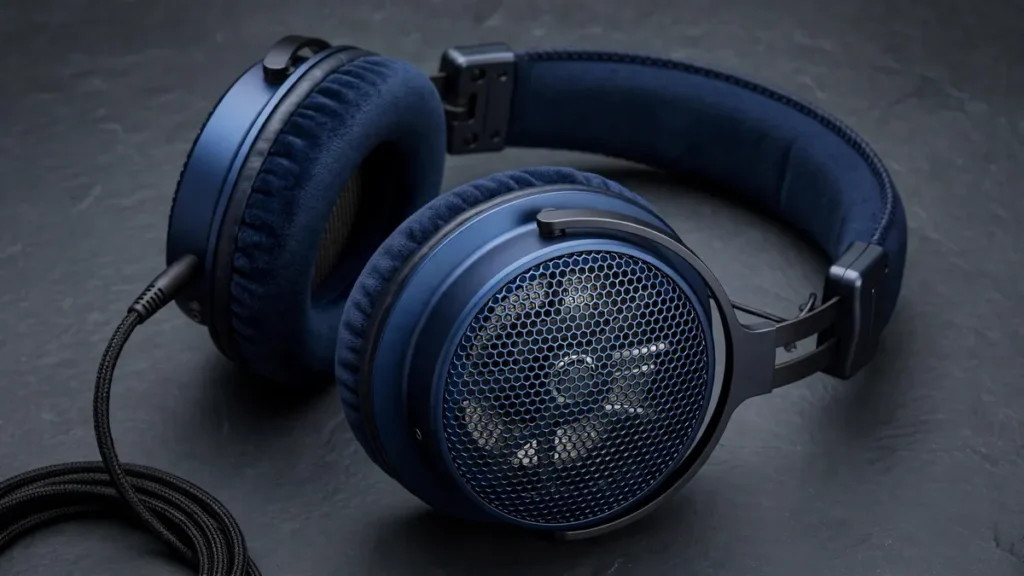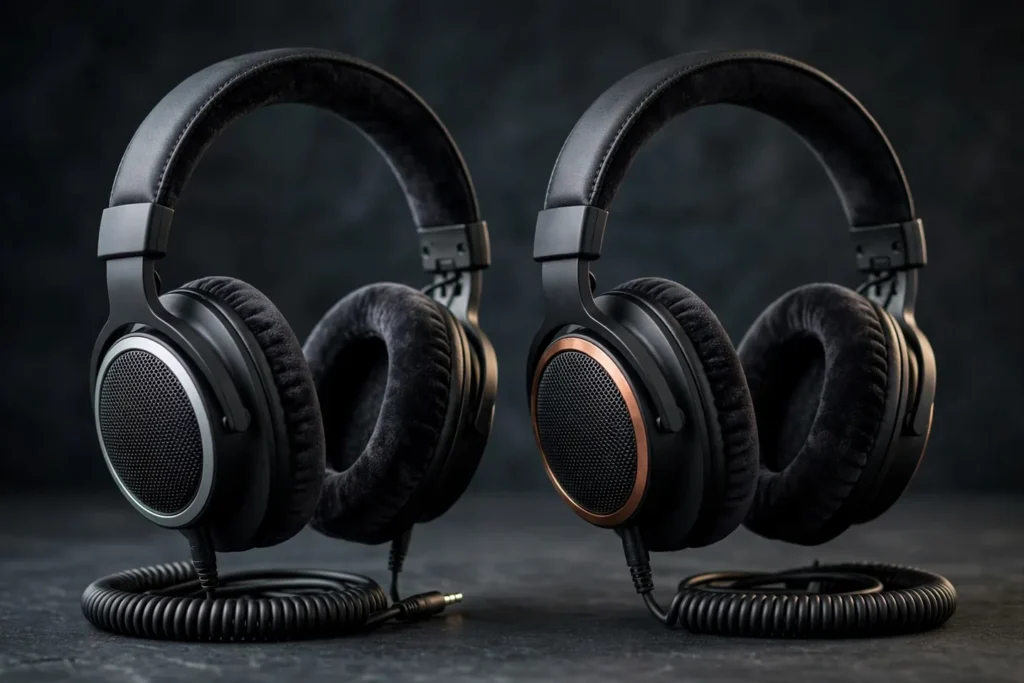
Choosing the Sennheiser HD 660 S or HD 660 S2 is one of the most common dilemmas in mid-tier audiophile headphones — and it is trickier than it looks. The two models share a name, a near-identical black open-back design, and the same 260-gram frame. But underneath, the Sennheiser HD 660S (2017) and the Sennheiser HD 660S2 (2023) are tuned for different listeners. Sennheiser positioned the S2 as the official successor to the 660S: deeper sub-bass, a warmer and smoother signature, and a return to the 300-ohm impedance the HD 600 series is famous for.
In this head-to-head comparison we break down the real differences — sound signature, impedance and amplification needs, comfort, cables, and who should buy which — based on Sennheiser’s published specifications and established review consensus. If you want the deep dive on the newer model alone, see our full Sennheiser HD 660S2 review.
SoundMavericks Verdict: HD 660S vs HD 660S2
For most listeners in 2026, the HD 660S2 is the better buy — its warmer tuning, genuinely extended sub-bass, and smoother treble make it the more enjoyable all-rounder for modern music, and it is the current model with full manufacturer support. The original HD 660S still earns its place if you want a more neutral, analytical presentation, an easier 150-ohm load for phone and laptop listening, or you find remaining stock at a lower street price. Upgrading from a 660S you already own? Only the bass and warmth will tempt you — everything else is a refinement, not a revolution.
Sennheiser HD 660S vs HD 660S2 Specs: Side-by-Side Comparison
Here is how the two generations stack up on the spec sheet — this is where the most consequential differences live.
| Specification | Sennheiser HD 660S | Sennheiser HD 660S2 |
|---|---|---|
| Position in lineup | HD 600-series classic (2017) | Official successor (2023) |
| Driver | 38 mm dynamic | 38 mm dynamic, lighter voice coil, optimized airflow |
| Impedance | 150 ohms | 300 ohms |
| Frequency response | 10 Hz – 41 kHz | 8 Hz – 41.5 kHz |
| Sensitivity | 106 dB (1 kHz, 1 Vrms) | 104 dB (1 kHz, 1 Vrms) |
| THD | < 0.04% (1 kHz, 100 dB) | < 0.04% (1 kHz, 100 dB) |
| Transducer resonant frequency | 110 Hz | 70 Hz |
| Sound signature | Neutral, detailed, forward mids | Warmer, smoother, fuller bass |
| Weight | 260 g | 260 g |
| Included cables | 6.35 mm + 4.4 mm balanced, detachable | 6.3 mm + 4.4 mm balanced (1.8 m each), detachable |
| Adapter & accessories | 6.35 mm to 3.5 mm adapter | 6.3 mm to 3.5 mm adapter + carry pouch |
| Finish | Black with silver accents | Black with bronze accents |
| Amplifier need | Helpful, not mandatory | Recommended for full performance |
The Sennheiser HD 660S: What the Original Does Best

Launched in 2017, the HD 660S was Sennheiser’s modern take on the legendary HD 600 series — a more efficient, slightly more forward alternative to the HD 650. Its headline trick was the 150-ohm impedance, unusually low for the 600 line, which let it run respectably straight from phones, laptops, and portable DACs. Sonically it is the more neutral and analytical of the two: detailed mids, a brighter and more present treble, and articulate — if lean — bass. That leanness is its one widely repeated criticism; even fans concede the original can sound thin or bass-light next to modern warm-tuned headphones.
Where the 660S still wins: critical listening sessions where you want the recording as-is, long-term comfort at 260 g with plush velour pads, and easier drivability. With Sennheiser having moved on to the S2, new stock of the original is thinning out — but it remains a respected reference-style open-back.
| Sound Quality | 8.8 |
| Detail & Imaging | 8.7 |
| Bass Performance | 7.9 |
| Comfort & Design | 8.6 |
| Build Quality | 8.3 |
| Value | 9.0 |
The Sennheiser HD 660S2: What Changed in the Successor

The HD 660S2 arrived in 2023 as Sennheiser’s answer to the single biggest complaint about its predecessor: the bass. Engineers reworked the transducer — a lighter voice coil, optimized airflow around the driver, and a resonant frequency dropped from 110 Hz to 70 Hz — which Sennheiser says doubles sound pressure in the lowest octaves. The result is a warmer, smoother, fuller-sounding headphone with genuinely extended sub-bass that lets you feel kick drums without the bass ever bleeding into the mids.
Just as significant is what went back: the impedance returns to 300 ohms, matching the HD 600 and HD 650. Sennheiser’s own explanation is that audiophiles prefer the better electrical damping a 300-ohm load provides. You also get a slightly wider frequency response (8 Hz – 41.5 kHz), bronze accent styling, and both 6.3 mm and 4.4 mm balanced cables plus a carry pouch in the box. For the full breakdown, read our Sennheiser HD 660S2 review.
| Sound Quality | 9.2 |
| Detail & Imaging | 8.9 |
| Bass Performance | 9.0 |
| Comfort & Design | 8.6 |
| Build Quality | 8.4 |
| Value | 8.5 |
Sound Comparison: HD 660S vs HD 660S2
This is where the two diverge most, and it is the heart of the buying decision. Think of the S2 as a more forward, warmer evolution of the original’s sound — the classic review-site summary (notably from Moon Audio’s head-to-head) is that a brighter, more analytical headphone became a warmer, smoother one, without losing its detail-retrieving ability.
Bass and Sub-Bass
The S2’s headline upgrade is real on paper: resonant frequency cut from 110 Hz to 70 Hz, optimized transducer airflow, and — per Sennheiser — double the sound pressure at the lowest frequencies. In practice, the HD 660S2 reaches deeper into the sub-bass with more weight and physicality, where the original HD 660S rolls off earlier and can sound thin on bass-heavy tracks. If you listen to electronic, hip-hop, or modern pop, this alone may settle the debate. Crucially, the added low end stays controlled — it does not bloat or bleed into the midrange.
Mids and Vocals
Both are 600-series Sennheisers, so mids are the family stronghold: natural, present, and richly textured on either model. The original 660S presents vocals slightly more forward and clinically; the S2 keeps the vocal presence but wraps it in a touch more warmth. Neither model will disappoint on acoustic, jazz, or vocal-centric music.
Treble
The HD 660S has the brighter, more energetic top end — great for detail, occasionally fatiguing on bright recordings. The S2 smooths the peaks, giving a more relaxed, listen-all-day treble. Detail retrieval stays high on both; the S2 simply trades a little analytical edge for long-session comfort.
Soundstage and Imaging
Both are open-back with the wide, airy presentation the format is known for. The S2’s deeper low-end extension adds a sense of space and impact that makes the soundstage feel slightly deeper, and its precise imaging keeps instruments well separated. Differences here are subtle — neither is a soundstage champion in the absolute sense, but both image accurately for the class.
Impedance and Amplification: 150 Ohms vs 300 Ohms
This is the most practical difference in the spec table. The original HD 660S runs at 150 ohms — Sennheiser deliberately made it easier to drive so it would pair well with phones, laptops, and portable hi-res players. At 106 dB sensitivity, it reaches satisfying volume from modest sources, though a dedicated DAC/amp still tightens things up.
The HD 660S2 goes back to 300 ohms, the traditional HD 600-series load. Sennheiser’s stated reasoning is better electrical damping for the audiophile listener. At 104 dB sensitivity it is still relatively easy to drive for a 300-ohm headphone — a decent dongle DAC or portable player will get you sound — but to hear what the S2 is actually capable of, a proper desktop headphone amp or DAC/amp is strongly recommended. If you have no interest in buying an amp, the original 660S is the more forgiving partner for everyday sources.
Design, Comfort and Build
Honestly? You would struggle to tell them apart across a room. Both weigh 260 g, both use the same plush velour earcushions and padded headband, the same pivoting yokes, and the same metal mesh outer grilles. Comfort is excellent on both — the 600-series frame is a proven long-session design. The tells are small: bronze accents on the S2’s grilles versus silver accents on the original, and the S2 is built at Sennheiser’s Ireland facility. Build quality is durable-but-plasticky on both, typical of the series — these are built for sound, not for luxury materials. Call this category a draw.
Cables and What’s in the Box
Both models ship with detachable cables terminating in 6.3 mm single-ended and 4.4 mm balanced plugs, plus a 6.3 mm to 3.5 mm adapter for portable gear. The S2’s cables are shorter (1.8 m each) than the long 3 m leads the original came with, per Digital Trends’ launch reporting — arguably more practical for desk setups. The S2 also adds a carry pouch in the box, which the original lacked. Minor points, but they favor the newer model.
HD 660S vs HD 660S2 for Gaming and Mixing
Gaming: Both work well for immersive single-player gaming — wide soundstage, accurate imaging, and no Bluetooth latency to worry about. The S2’s fuller bass gives explosions and soundtracks more weight. Neither has a microphone, so competitive multiplayer needs a separate mic, and the open-back design leaks sound — fine in a quiet room, poor in shared spaces or LAN parties.
Mixing and mastering: Neither is a studio monitor, and open-backs are rarely first choice for tracking. For reference checking, the original 660S’s more neutral, analytical signature leans closer to a monitoring tool, while the S2’s warmth is a coloration you would need to account for. If critical work is the goal, the 660S has the edge; if enjoyment is the goal, the S2.
HD 660S vs HD 660S2: What Audiophiles Say Online
The community consensus across forums and review discussions is consistent: the S2 is widely considered the more musically satisfying headphone for everyday listening, especially for modern genres, while the original keeps a loyal following among listeners who prize neutrality and treble energy. The most common owner verdict is that the S2 fixed the 660S’s one real weakness (bass lightness) without breaking what made it special. Owners upgrading from the 650 or 6XX often describe the S2 as the 600-series sound with the low end finally filled in — a fair summary of Sennheiser’s own tuning goals.
Which Should You Buy? Our Verdict
After weighing the specs, the tuning changes, and the practical realities of driving each model, here is SoundMavericks’ buying guidance:
- Buy the HD 660S2 if: you want the best all-round listening experience — deeper, more physical bass; a warmer, smoother signature that flatters modern music; the current model with full support; and you are willing to pair it with a decent amp or DAC/amp to unlock it. This is our pick for most buyers.
- Buy the HD 660S if: you prefer a more neutral, analytical presentation for critical listening; you mainly listen from a phone or laptop and want the easier 150-ohm load; or you find remaining new stock at a meaningful discount. It remains an excellent headphone — the S2 is a refinement, not a replacement of its strengths.
- Already own the HD 660S? Upgrade only if the bass lightness genuinely bothers you. Everything else — comfort, detail, build — is essentially the same headphone. The S2 is the better first purchase, not a must-have upgrade.
For context within Sennheiser’s wider lineup, the Drop HD 6XX remains the budget king of the family (see our Sennheiser HD 6XX review), and our best Sennheiser headphones roundup places both 660 models against the rest of the range.
HD 660S vs HD 660S2 FAQs
What is the difference between the HD 660S and HD 660S2?
The HD 660S2 is Sennheiser’s successor to the HD 660S with three core changes: a reworked transducer (resonant frequency dropped from 110 Hz to 70 Hz) for deeper, fuller sub-bass; a warmer and smoother overall tuning; and a return to 300-ohm impedance versus the original’s 150 ohms. It also adds bronze accent styling, shorter 1.8 m cables, and a carry pouch.
Is the HD 660S2 better than the HD 660S?
For most listeners, yes — the S2’s extended bass, warmer signature, and smoother treble make it the more enjoyable all-rounder, and it is the current model. The original 660S keeps an edge in neutrality and is easier to drive, so analytical listeners and phone-first users may still prefer it. It comes down to taste, not a clear technical knockout.
Do I need an amplifier for the HD 660S2?
It is strongly recommended. At 300 ohms, the HD 660S2 benefits audibly from a dedicated headphone amp or DAC/amp, which provides the voltage swing and electrical damping Sennheiser designed around. It will produce sound from a phone or laptop via the included adapter, but you will not hear its full performance without proper amplification.
Can I use the HD 660S or HD 660S2 with a phone?
Yes, with caveats. Both include a 6.3 mm to 3.5 mm adapter. The 150-ohm HD 660S is the easier phone partner and reaches good volume from mobile devices. The 300-ohm HD 660S2 will play from a phone but sounds noticeably better through an amp — and both are open-back, so they are home-listening headphones, not commuter picks.
Is the original HD 660S discontinued?
Sennheiser has positioned the HD 660S2 as the replacement for the HD 660S, and new stock of the original is increasingly hard to find. If you want the 660S specifically, buy while remaining stock lasts; otherwise the S2 is the safe long-term choice.
Which is better for gaming, the HD 660S or HD 660S2?
The HD 660S2, slightly — its fuller bass and deeper soundstage make single-player games more immersive. Both share wide imaging and zero wireless latency, but neither includes a microphone, and the open-back design leaks sound, so both suit quiet home gaming rather than shared spaces or competitive voice chat.

I am the founder of Sound Mavericks, where I provide the polite truth about audio equipment. I started this site because consumer electronics reviews are often too technical. Instead of using a silent lab, I test headphones, earbuds, and Bluetooth speakers in the real world – like on a noisy subway or in a busy coffee shop.
To stay independent, I buy my own review units (mostly from the United States) rather than accepting free gifts from brands. Once I finish testing a product, I sell it locally to our community. My goal is to help you understand sound quality, active noise cancellation (ANC), and battery life without the marketing hype.