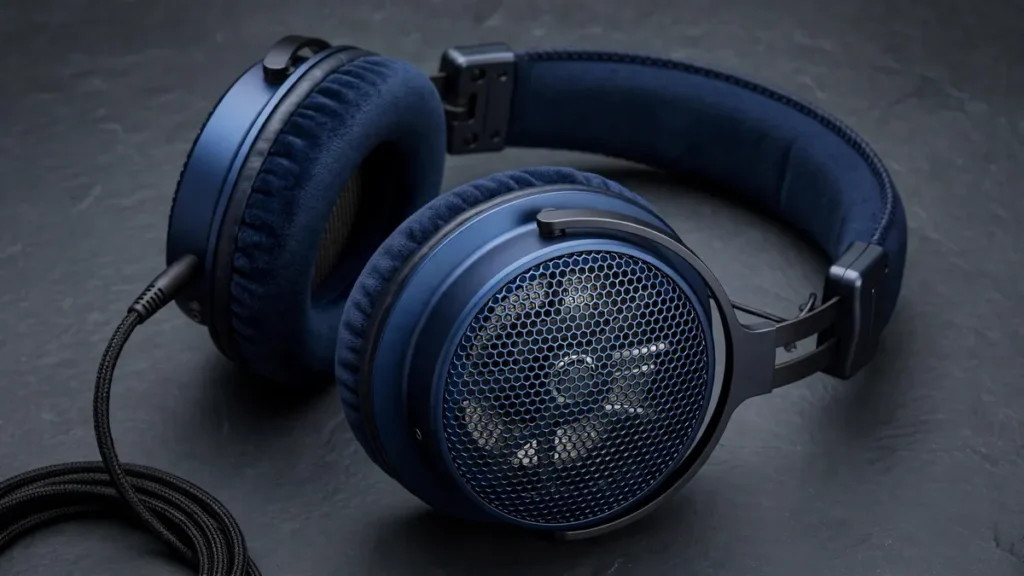
The Sony ULT Wear wireless noise canceling headphones — model WH-ULT900N — are built around one idea: bass you can control. A dedicated ULT button on the ear cup steps the low end through two boost levels, from deep bass to a full ULT POWER SOUND mode that adds pressure as well as weight, while Sony’s proven noise cancelling platform, LDAC hi-res support and up to 50 hours of battery life handle everything else. This Sony ULT Wear review works through the verified specification, what the ULT button actually does to different genres, how the noise cancelling compares with Sony’s own flagships, and who should choose the ULT Wear over the WH-1000X series — and who should not.
The Sony ULT Wear are the bass-heavy ANC headphones to beat in their class. The ULT button delivers two genuinely distinct levels of low-end boost without wrecking clarity at the first level, the Dual Noise Sensor cancelling is derived from Sony’s flagship programme, and 30 hours of ANC-on battery life with multipoint, wear detection and LDAC makes the everyday package complete. The mostly plastic build and a bass-first default tuning will not suit purists chasing a flat reference sound. For hip-hop, EDM, pop and film lovers, they are an outstanding pick.
Best for: bass lovers who want Sony noise cancelling, app EQ control and flagship-style smart features without stepping up to the WH-1000X series.

Sony ULT Wear Specifications
The verified specification shows how much flagship Sony technology has filtered down. The ULT Wear use the same Integrated Processor V1 family that powers Sony’s premium cancelling, paired here with Dual Noise Sensor microphones, a 40mm dome driver designed specifically for the ULT POWER SOUND series, and DSEE upscaling to restore detail lost in compressed streaming files. Bluetooth 5.2 carries SBC, AAC and — importantly at this level — LDAC for hi-res wireless audio from compatible Android devices and players. A carrying case is included in the box, and the headphones fold both flat and inward for packing. If bass is your deciding factor across the whole market, our roundup of the best bass noise cancelling headphones shows how the ULT Wear stack up against the other heavy hitters.
| Specification | Sony ULT Wear (WH-ULT900N) | Buy |
|---|---|---|
| Product | Sony ULT Wear Wireless Noise Canceling Headphones | Check Price |
| Driver | 40mm dome type, neodymium | Check Price |
| Bass feature | ULT button — ULT1 deep bass, ULT2 powerful bass and sound pressure | Check Price |
| Noise cancelling | Dual Noise Sensor ANC, Integrated Processor V1, Ambient Sound mode | Check Price |
| Battery life | Up to 30 hours (ANC on), up to 50 hours (ANC off) | Check Price |
| Quick charging | 3-minute charge adds up to 90 minutes playback; full charge about 3.5 hours via USB-C | Check Price |
| Bluetooth and codecs | Bluetooth 5.2, multipoint, SBC / AAC / LDAC | Check Price |
| Sound features | DSEE upscaling, 360 Reality Audio, app EQ via Sony Sound Connect | Check Price |
| Smart features | Wear detection auto pause, Adaptive Sound Control, touch controls | Check Price |
| Weight | 255g | Check Price |
| Colours | Black, Off-White, Forest Gray | Check Price |
| In the box | Headphones, carrying case, headphone cable, USB charging cable | Check Price |
The ULT Button: Two Levels of Bass, On Demand
Everything about the ULT Wear starts with that button on the left ear cup. Press it once and ULT1 engages, deepening the low frequencies for a fuller, warmer foundation. Press it again and ULT2 takes over, adding sound pressure on top of the bass lift for the maximum physical thump the driver can produce. A third press switches the processing off and returns you to the standard tuning. It is a simple idea executed well, because it solves the real problem with bass-heavy headphones: the boost you want for a workout playlist or an action film is not the boost you want for a podcast or an acoustic session, and digging through an app menu every time you switch content kills the moment. Here, the change is one press, mid-track, with no phone required.
How does it sound in practice, on the published evidence? With ULT off, the ULT Wear present a warm, bass-forward-but-controlled signature — closer to a mainstream Sony tuning than to a neutral reference, with enough midrange clarity for vocals and enough treble presence to keep cymbals and strings alive. ULT1 is the sweet spot for most music: hip-hop, EDM, pop and modern R&B gain real weight and punch while vocals stay in front of the mix. ULT2 is deliberately excessive, and that is its point — it turns bass lines into a physical sensation for bass-first listening and big film moments, at the honest cost of some midrange space on already dense recordings. Reviewer consensus, including Consumer Reports’ lab-based assessment, agrees the default character is boomy for purist tastes, which is exactly why the app matters: Sony’s Sound Connect app provides a multi-band equaliser and Clear Bass control, so owners who find the stock tuning too warm can pull the low end back permanently and still keep the ULT button for occasional fun. Few rivals offer both a hardware bass shortcut and this depth of software correction.
Supporting the headline act, DSEE upscaling works to restore high-frequency detail in compressed streams, 360 Reality Audio is supported for immersive catalogue content, and LDAC means Android listeners with hi-res sources are not bottlenecked by the Bluetooth connection with ULT off. Instrument separation and soundstage width land where you would expect for the class — not flagship-wide, but clean and organised, with the low end kept surprisingly tight at moderate volumes for a bass-focused design.
Noise Cancelling: Flagship DNA, Honest Limits
Sony did not invent a budget cancelling system for the ULT Wear; it adapted its flagship approach. Dual Noise Sensor microphones feed the Integrated Processor V1, the same processor family used in the WH-1000X line, and the result on published testing is noise reduction that is strongest exactly where it matters most — the low-frequency band covering engine drone, train rumble and air conditioning. Independent lab assessments rate the overall noise reduction highly for the class, and the Ambient Sound mode lets you dial in awareness for street listening or announcements without removing the headphones. Adaptive Sound Control can automate those switches based on your activity and location, so the headphones move between full cancelling at your desk and ambient awareness on your walk without manual input.
The honest limit is the same one every mid-tier Sony faces: the flagship WH-1000X models cancel more, across more of the frequency range, with more microphones and a second processor working the problem. If your listening life is dominated by long-haul flights and you want the quietest cabin Sony can make, the flagship remains the upgrade — our Sony WH-1000XM6 vs Bose QuietComfort Ultra 2 comparison shows what that top tier buys you. For commuting, offices, cafés and city travel, the ULT Wear’s cancelling is genuinely strong rather than merely present, and it comfortably outperforms the no-name ANC that fills the budget shelves.
Design, Comfort and Controls
At 255 grams with soft, roomy ear cushions, the ULT Wear are easy to wear for long stretches. The fit applies moderate, even pressure rather than a tight clamp, the headband padding spreads the weight well, and the folding design — cups that swivel flat and fold inward — drops neatly into the included carrying case for a commute bag. Thermoplastic construction keeps the weight down and, frankly, looks and feels less premium than Sony’s flagships; some owner reports mention creaking from the hinges under handling. That is the visible place where the money was saved, and it is a reasonable trade at this level, but careful handlers will notice the difference next to a 1000X model.
Controls blend the two approaches sensibly. Touch gestures on the right cup handle playback, volume and calls, while physical buttons cover power, noise cancelling and that all-important ULT shortcut — the functions you want to find blind, by feel, are the ones with real buttons. Wear detection pauses playback when you take the headphones off and resumes when you put them back on, a flagship convenience that many rivals at this level still omit. Google Fast Pair for Android and Swift Pair for Windows handle first connections, and multipoint keeps two devices connected at once, so a laptop video and a phone call can trade places without a trip to Bluetooth settings.
Battery Life and Charging
Battery life is a clear strength. Sony rates the ULT Wear at up to 30 hours of continuous playback with noise cancelling on and up to 50 hours with it off — figures that cover a full working week of commutes or several long travel days between charges. Quick charging is equally practical: three minutes plugged into USB-C returns up to 90 minutes of playback, which rescues the flat-battery-before-a-journey scenario more often than you would expect. A full recharge takes around three and a half hours. Wired listening remains available via the included cable when the battery does run dry, so the headphones never become a paperweight mid-trip.
Sony ULT Wear vs Sony WH-1000X: Which Sony Should You Buy?
The most useful comparison for ULT Wear shoppers is inside Sony’s own catalogue. The ULT Wear borrow the flagships’ processor, app and smart features, then redirect the budget toward bass hardware and battery life. The table below sets the ULT Wear against Sony’s current flagship family using published specifications; our Sony WH-1000XM4C review and the XM4C vs XM5 vs XM6 comparison cover the flagship side in full.
| Feature | Sony ULT Wear | Sony WH-1000XM5 | Sony WH-1000XM6 |
|---|---|---|---|
| Product | Sony ULT Wear — Check Price | Sony WH-1000XM5 — Check Price | Sony WH-1000XM6 — Check Price |
| Signature feature | ULT button, two bass boost levels | Balanced flagship tuning | Sony’s strongest ANC and sound to date |
| Battery (ANC on) | Up to 30 hours | Up to 30 hours | Up to 30 hours |
| Driver | 40mm | 30mm | 30mm |
| Codecs | SBC, AAC, LDAC | SBC, AAC, LDAC | SBC, AAC, LDAC, LC3 |
| Weight | 255g | 250g | 254g |
| Best for | Bass-first listening | All-round flagship value | Maximum cancelling and refinement |
Our read: choose the ULT Wear if bass impact is a feature you will use weekly, not a novelty — the ULT button genuinely changes how whole genres feel, and you give up surprisingly little elsewhere. Choose a WH-1000X model if you want the most neutral tuning, the strongest cancelling Sony sells, or the more premium build. Either way you stay inside the same app ecosystem, with the same multipoint, wear detection and EQ philosophy.
Calls and Everyday Use
Beamforming microphones with AI-based noise reduction handle calls, and published assessments put voice pickup at a solid everyday standard: clear for work calls and voice notes in typical indoor and street conditions, with heavy wind and loud traffic remaining the usual challenge for any headphone microphone array. Speak quality is helped by the same wear detection and multipoint pairing that make the ULT Wear easy to live with — calls interrupt laptop audio automatically, playback pauses when you lift the headphones to talk to someone in person, and Adaptive Sound Control quietly manages your ambient settings as your day moves between desk, street and train. It is this layer of flagship-borrowed polish, more than any single specification, that separates the ULT Wear from cheaper bass-branded rivals.
Pros and Cons
Pros
- ULT button delivers two real levels of bass boost, instantly, mid-track
- Strong Dual Noise Sensor ANC built on Sony’s flagship processor platform
- Up to 30 hours ANC-on and 50 hours ANC-off battery life, rapid quick charge
- LDAC hi-res support, app EQ, DSEE and 360 Reality Audio
- Wear detection, multipoint and Adaptive Sound Control included
- Comfortable 255g fit with a proper carrying case in the box
Cons
- Default tuning is too bass-heavy for purists without EQ adjustment
- Mostly plastic build can creak and feels a step below the flagships
- ANC is strong but not a match for the WH-1000X series
- No water resistance rating for workouts or rain
| Sound Quality | 8.6 |
| Noise Cancelling | 8.4 |
| Comfort & Design | 8.3 |
| Battery Life | 9.0 |
| Call Quality | 8.0 |
| Value | 8.8 |
Final Verdict: Who Should Buy the Sony ULT Wear?
The Sony ULT Wear know exactly who they are for. If your playlists run bass-first — hip-hop, EDM, pop, grime, action films — and you have ever wished your headphones had a physical button for more low end rather than an app menu, these were designed for you, and the rest of the package (flagship-derived ANC, 30-hour ANC-on battery, LDAC, wear detection, multipoint, full app EQ) is strong enough that you are not sacrificing the fundamentals to get it. If you prefer a flat, analytical tuning, want the absolute strongest cancelling available, or prize premium materials, step up to Sony’s WH-1000X series or browse our guide to the best noise cancelling headphones for the wider field. For bass lovers, the ULT Wear are the easiest Sony recommendation we make.
Frequently Asked Questions
What does the ULT button do on the Sony ULT Wear?
The ULT button cycles the bass processing through three states: off, ULT1 and ULT2. ULT1 deepens the low frequencies for a fuller sound, while ULT2 adds sound pressure on top of the bass boost for maximum impact. You can switch mid-track with a single press, no app needed.
How long does the Sony ULT Wear battery last?
Sony rates the ULT Wear at up to 30 hours of playback with noise cancelling on and up to 50 hours with it off. A three-minute quick charge adds up to 90 minutes of playback, and a full charge takes about three and a half hours over USB-C.
Are the Sony ULT Wear good for bass?
Yes — bass is their defining feature. The 40mm driver is tuned for the ULT POWER SOUND series, the default signature is warm and low-end forward, and the ULT button adds two further levels of boost. Listeners who prefer a flat signature can pull the bass back with the app equaliser.
What is the difference between Sony ULT Wear and WH-1000XM5?
The ULT Wear prioritise bass, with a 40mm driver and the ULT boost button, while the WH-1000XM5 are Sony’s balanced flagships with stronger overall noise cancelling and a more premium build. Both share LDAC, multipoint, wear detection and the Sony app; the ULT Wear match the XM5’s 30-hour ANC-on battery rating.
Do the Sony ULT Wear support multipoint connection?
Yes. The ULT Wear can stay connected to two Bluetooth devices at once — for example a laptop and a phone — and switch between them automatically for calls, over Bluetooth 5.2.
Can you use Sony ULT Wear wired?
Yes. A headphone cable is included in the box, so you can listen wired with in-flight systems or when the battery is empty. The headphones also support LDAC, AAC and SBC wirelessly, plus DSEE upscaling and 360 Reality Audio.

I am the founder of Sound Mavericks, where I provide the polite truth about audio equipment. I started this site because consumer electronics reviews are often too technical. Instead of using a silent lab, I test headphones, earbuds, and Bluetooth speakers in the real world – like on a noisy subway or in a busy coffee shop.
To stay independent, I buy my own review units (mostly from the United States) rather than accepting free gifts from brands. Once I finish testing a product, I sell it locally to our community. My goal is to help you understand sound quality, active noise cancellation (ANC), and battery life without the marketing hype.