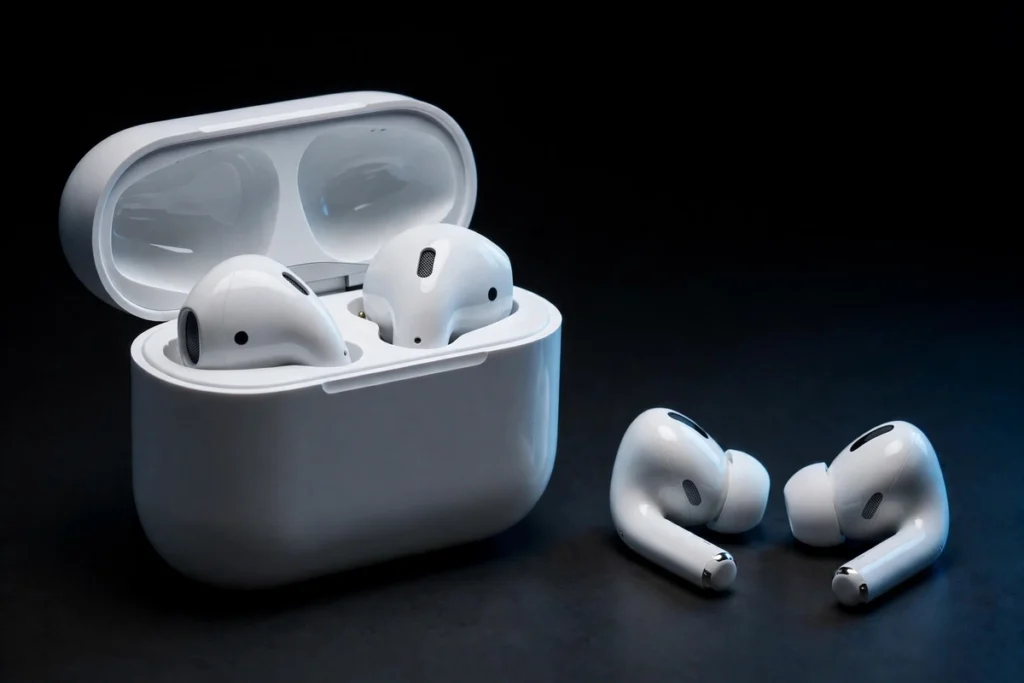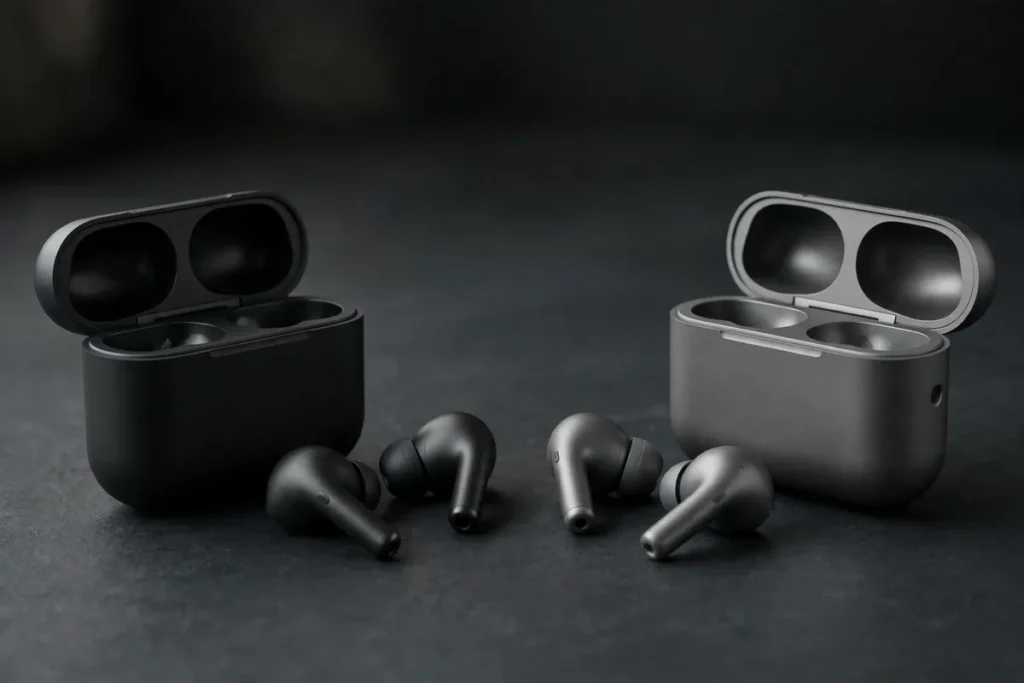
This sennheiser momentum true wireless 4 vs bose quietcomfort ultra earbuds comparison pits the two flagship earbuds with the clearest briefs in the class against each other. The Sennheiser is built for sound: a 9.3 Sound score, aptX Lossless, and the longest battery here. The Bose is built for silence: the QuietComfort Ultra Earbuds on test are the current 2nd Gen model, with ANC at 9.6, the highest mark in our database. The Bose wins overall, 9.1 to 8.8. How it gets there, and where the Sennheiser beats it, is the useful part.

Sennheiser Momentum True Wireless 4 8.8/10
Why you: audiophile sound with lossless codecs and every modern feature. Sound scores 9.3, Battery 9.2, and aptX Lossless plus LE Audio support make it the forward-looking pick for Android listeners.
Trade-off: ANC trails the absolute best and the case is on the large side. It cancels a commute well; it does not erase a plane cabin the way the Bose does.
7mm TrueResponse driver · aptX Lossless / Adaptive · Bluetooth 5.4 · Up to 30 hrs with case · Wireless charging

Bose QuietComfort Ultra Earbuds (2nd Gen) 9.1/10
Why you: the strongest noise cancelling you can buy in an earbud, built for commutes and flights. ANC scores 9.6, Calls 8.6, and CustomTune shapes the sound to your ears at every fit.
Trade-off: Immersive Audio cuts battery life to about four hours per charge, and Value scores 7.5: you pay flagship money for the silence, and the battery is the bill.
9.3mm driver · Immersive Audio · Bluetooth 5.3 · 6 hrs buds / 24 hrs with case · Wireless charging
Category by category
Sound
The Sennheiser leads, 9.3 to 9.0, and the reason is resolution. Its TrueResponse driver keeps fine detail intact at low volume, separates layered recordings cleanly, and stays composed when a track gets busy. The Bose sounds bigger at first contact, with more low-end weight and the polish of CustomTune calibration, and many listeners will prefer it for an hour. Over a long session the Sennheiser’s balance wears better, and its codec support settles the argument for Android owners: aptX Adaptive and aptX Lossless against the Bose’s SBC, AAC and standard aptX. Our full Sennheiser Momentum True Wireless 4 review goes deeper on that tuning.
Winner: Sennheiser Momentum True Wireless 4
One more sound difference matters in daily use. The Bose’s Immersive Audio widens the stage and moves instruments out in front of you, which flatters live recordings and film, and it stays anchored as you turn your head. It is a taste feature: some owners leave it on permanently, others find it smears detail and switch it off within a week. The Sennheiser has no equivalent spatial mode, betting instead on a cleaner stereo image and a five-band equaliser plus sound personalisation in its app. Purists get more to work with on the Sennheiser; listeners who want their music to feel bigger get more theatre from the Bose.
Noise cancelling
This is the widest gap in the comparison. The Bose scores 9.6, the highest ANC mark we track, and it earns it against the noise that matters most: the low, steady drone of aircraft and trains, which it reduces to a faint background presence. Its Aware mode also adapts when a sudden loud sound arrives. The Sennheiser’s adaptive ANC scores a respectable 8.4 and handles offices and streets well, with a useful anti-wind setting, but a side-by-side on a train makes the difference obvious within a minute. If you buy earbuds primarily to delete the world, this category is the decision.
Winner: Bose QuietComfort Ultra Earbuds (2nd Gen)
Transparency tells a similar story in reverse order of importance. Both pass the world through naturally enough for announcements and conversation, and the Bose’s ActiveSense raises and lowers its aware level as noise changes, which saves manual fiddling on a platform or a pavement. The Sennheiser’s transparency is clean and its anti-wind handling is the better of the two for runners and cyclists. Neither mode changes the category result, but owners who spend half their day in transparency will find the Bose slightly less tiring to live with.
Calls
The Bose takes calls, 8.6 to 8.2. Both sets use multi-microphone arrays with noise rejection, and in a quiet room there is little between them. Outdoors, the Bose keeps your voice forward when traffic and wind compete, where the Sennheiser lets more of the street into the call. Neither matches a good headset with a boom, and both are fine for the calls most people take on earbuds. Heavy callers who work in noisy places will feel the Bose’s edge; everyone else will not notice it.
Winner: Bose QuietComfort Ultra Earbuds (2nd Gen)
Comfort
Comfort ties at 9.0, with different routes to the same score. The Bose uses stability bands that grip the outer ear and spread the fit across several sizes, so the buds stay seated without deep insertion. The Sennheiser uses a more conventional sealed fit with fins, a larger case to carry, and buds that sit a little bulkier in smaller ears. Both survive long flights and full workdays in our scoring. Ears differ enough that a tie is the honest result: try the fit style you have historically preferred, because that preference predicts satisfaction better than any score. Our Bose QuietComfort Ultra Earbuds review covers the band system in detail.
Winner: Tie
Battery
The Sennheiser wins battery outright, 9.2 to 7.8. It runs up to 7.5 hours per charge and 30 hours with the case. The Bose manages six hours per charge and 24 with the case, and its headline feature taxes that further: Immersive Audio cuts a charge to about four hours. Versus.com’s side-by-side specification comparison lists the same shape, crediting the Momentum True Wireless 4 with 7.5 hours against the Bose’s six, and a longer-lasting case. Both cases charge wirelessly and both buds fast-charge well, but a long-haul flight with Immersive Audio on means a mid-flight case stop for the Bose and not for the Sennheiser.
Winner: Sennheiser Momentum True Wireless 4
Value and extras
Value goes to the Sennheiser, 8.7 to 7.5, because it wins three categories and its asking price buys the more complete listener’s package: lossless codecs, LE Audio and Auracast support on the roadmap, multipoint, and an equaliser with real range. The Bose extras aim elsewhere: Immersive Audio is a genuine spatial effect rather than a gimmick, CustomTune calibration is effortless, and the 2nd Gen model adds wireless case charging the first generation lacked. What the Bose charges for, fairly, is the ANC lead. Buyers who do not fly or commute in noise are paying for silence they will rarely use, which is why the Value bar lands where it does. Both sit near the top of our best true wireless earbuds rankings, and the wider field is in our best noise cancelling earbuds guide.
Winner: Sennheiser Momentum True Wireless 4
Apps, controls and everyday details
Both apps are mature, and the difference is emphasis. Sennheiser’s Smart Control gives you a proper equaliser, a sound personalisation routine that builds a profile from listening tests, customisable touch controls, and firmware that has already delivered LE Audio groundwork. It rewards listeners who like to adjust things. Bose Music is simpler: fewer knobs, faster setup, and the CustomTune check that runs each time the buds seal. It rewards listeners who never want to open the app again.
On the buds themselves, both use touch surfaces with the usual risk of accidental taps when adjusting a fit. The Sennheiser’s controls are the more customisable; the Bose’s are the harder to trigger by mistake. Both support multipoint pairing for a phone and a laptop at once, both find-my-bud features work through their apps, and both cases are pocketable, the Sennheiser’s being the larger of the two. None of this separates them by a category. It separates them by temperament, tweaker against set-and-forget, and that temperament split runs through every section above.
Sennheiser Momentum True Wireless 4 vs Bose QC Ultra Earbuds specs
| Spec | Sennheiser Momentum True Wireless 4 | Bose QuietComfort Ultra Earbuds (2nd Gen) |
|---|---|---|
| Driver | 7mm TrueResponse dynamic | 9.3mm dynamic |
| Bluetooth | 5.4 | 5.3 |
| Codecs | SBC, AAC, aptX Adaptive, aptX Lossless | SBC, AAC, aptX |
| Noise cancelling | Adaptive ANC with anti-wind mode | Adaptive ANC with ActiveSense aware mode |
| Battery | Up to 7.5 hrs per charge, 30 hrs with case | 6 hrs per charge, 24 hrs with case; about 4 hrs with Immersive Audio |
| Multipoint | Yes | Yes |
| Water resistance | IP54 | IPX4 |
| Case charging | USB-C and wireless | USB-C and wireless |
| Signature extra | LE Audio and Auracast support | Immersive Audio spatial sound, CustomTune fit calibration |
Scorecard
| Category | Sennheiser Momentum True Wireless 4 | Bose QuietComfort Ultra Earbuds (2nd Gen) |
|---|---|---|
| Sound | 9.3 | 9.0 |
| ANC | 8.4 | 9.6 |
| Calls | 8.2 | 8.6 |
| Comfort | 9.0 | 9.0 |
| Battery | 9.2 | 7.8 |
| Value | 8.7 | 7.5 |
| Overall | 8.8 | 9.1 |
Verdict
Buy the Bose QuietComfort Ultra Earbuds (2nd Gen) if your listening happens in the noisy world. The 9.6 ANC score is the largest single advantage in this comparison, calls are better, and the 9.1 overall reflects how completely it does the commuter and traveller job. Accept the battery tax, especially with Immersive Audio on.
Buy the Sennheiser Momentum True Wireless 4 if your listening happens in a chair. It wins Sound, Battery and Value, ties Comfort, and its 8.8 overall comes with the codec support that keeps it current longest. The category split is three wins each with one tie, and the Bose takes the verdict on the strength of the one win that cannot be equalised in software: silence.
Frequently asked questions
Which has better noise cancelling, the Momentum True Wireless 4 or the Bose QC Ultra Earbuds?
The Bose, clearly. Its ANC scores 9.6 against the Sennheiser’s 8.4, and the gap shows most against low, steady noise on planes and trains. The Momentum True Wireless 4 cancels well and adapts to changing noise, but if silence is the priority, the Bose QuietComfort Ultra Earbuds (2nd Gen) are the strongest cancelling buds in our database.
Which sounds better, Sennheiser or Bose?
The Sennheiser, by a small margin. Sound scores 9.3 for the Momentum True Wireless 4 against 9.0 for the Bose, and the Sennheiser adds aptX Lossless and aptX Adaptive support that the Bose lacks, so Android listeners with a compatible phone get a genuinely higher-quality wireless link. The Bose counters with Immersive Audio, a spatial effect some listeners love and others switch off.
Which earbuds last longer on a charge?
The Momentum True Wireless 4. It runs up to 7.5 hours per charge and 30 hours with its case, against six hours and 24 hours for the Bose. Turn on Bose Immersive Audio and the Bose figure falls to about four hours per charge, which is the single biggest battery gap between the two.
Which is better for phone calls?
The Bose, narrowly. Calls score 8.6 for the QuietComfort Ultra Earbuds (2nd Gen) against 8.2 for the Momentum True Wireless 4. Both handle quiet rooms well; the Bose keeps your voice clearer when the street or the office gets loud around you.
Sennheiser Momentum True Wireless 4 or Bose QC Ultra Earbuds: which should I buy?
Buy the Bose if noise cancelling, calls and total score lead: it wins overall at 9.1. Buy the Sennheiser if sound quality, battery life and value lead: it wins those three categories and scores 8.8 overall. Frequent flyers should take the Bose; listeners who mostly sit and listen should take the Sennheiser.

I am the founder of Sound Mavericks, where I provide the polite truth about audio equipment. I started this site because consumer electronics reviews are often too technical. Instead of using a silent lab, I test headphones, earbuds, and Bluetooth speakers in the real world – like on a noisy subway or in a busy coffee shop.
To stay independent, I buy my own review units (mostly from the United States) rather than accepting free gifts from brands. Once I finish testing a product, I sell it locally to our community. My goal is to help you understand sound quality, active noise cancellation (ANC), and battery life without the marketing hype.