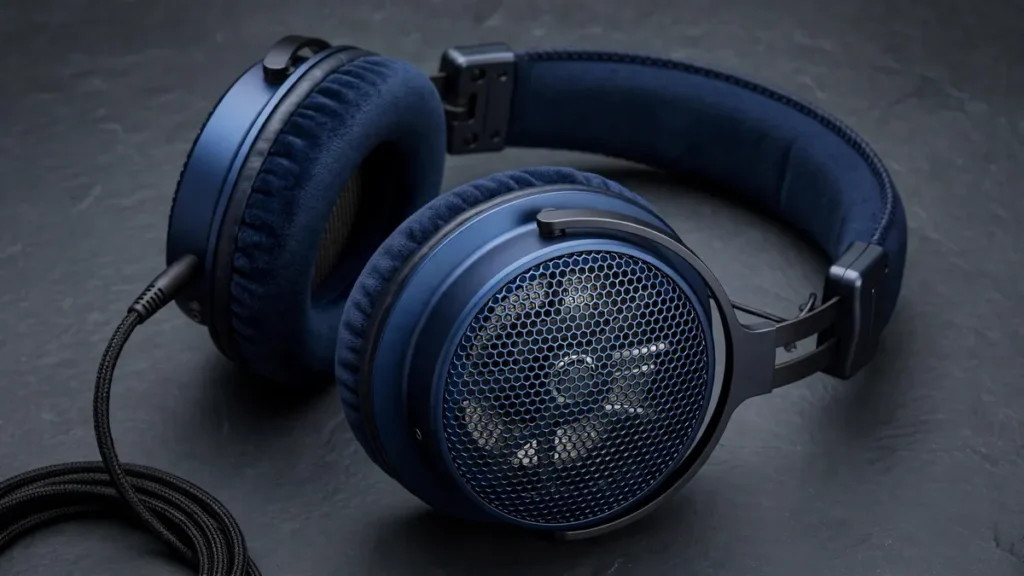
Start with the honest part, because everything else in this review depends on it: the Plantronics BackBeat Pro 2 is a discontinued headphone. Plantronics became Poly, Poly became part of HP, and HP’s own support community now describes the entire BackBeat line as end-of-life, with manufacturing stopped. There is no current retail stock, no firmware future, and no app support waiting for you. And yet people keep buying them — searching them out on the used and renewed market years after the last unit rolled off the line. Here is why, what can go wrong, and when a modern successor is the smarter buy.

Verdict: a legacy favourite — worth it only with open eyes
Our verdict: The BackBeat Pro 2 still earns its cult following on the things modern headphones often get worse: a real volume dial and tactile on-ear controls, genuine two-device multipoint, smart sensors that pause when you lift a cup, a wired fallback that works on a dead battery, and a warm, confident sound from 40mm drivers. Its active noise cancelling was mid-pack even at launch in 2016 and is a clear step behind today’s flagships, and every pair you find now is used, renewed or old marketplace stock — on the Amazon listing we checked, there was no featured new offer at all, only other sellers. Buy a clean, returnable pair if you love the controls and the sound. Buy a successor below if you want a warranty, USB-C and modern ANC.
Listing status varies by seller — check whether the offer is used, renewed or new-old-stock before you buy.
Scoring note: we have not hands-on tested the BackBeat Pro 2. Our scores are editorial judgments based on Plantronics/Poly’s published specifications, contemporary independent reviews from its launch era, and the long record of owner reports since.
| Sound Quality | 8.0 |
| Noise Cancelling | 6.5 |
| Comfort & Design | 7.5 |
| Battery Life | 8.5 |
| Call Quality | 7.5 |
| Value | 7.0 |
Specifications
| Product | Plantronics BackBeat Pro 2 Check Price |
| Type | Over-ear, closed-back, wireless with wired fallback |
| Driver | 40mm dynamic |
| Frequency response | 20–20,000 Hz |
| Sensitivity / impedance | 93 dB SPL/1mW / 32 ohms |
| Noise cancelling | On-demand active noise cancelling, plus OpenMic open-listening mode |
| Bluetooth | Bluetooth 4.0, Class 1 — up to 100m / 330ft range with a Class 1 transmitter |
| Codecs | aptX Classic and aptX Low Latency, AAC |
| Multipoint | Yes — two devices connected at once (2H2S) |
| Battery | 680mAh rechargeable, non-replaceable — up to 24 hours listening, up to 6 months standby (DeepSleep) |
| Charging | Micro-USB, up to 3 hours for a full charge |
| Microphones | Boomless dual microphone with DSP, wideband HD voice (HFP 1.6) |
| Smart sensors | Auto pause/resume on removal, answer calls by putting the headphones on |
| Weight | 289g |
| In the box (original) | Headphones, travel pouch, 3.5mm cable, micro-USB cable |
| Status in 2026 | Discontinued / end-of-life — used, renewed and marketplace stock only |
What the BackBeat Pro 2 was — and what happened to it
Launched in late 2016, the BackBeat Pro 2 was Plantronics’ second attempt at a flagship consumer noise canceller, and it fixed the first generation’s biggest problems: launch reviews noted it was roughly 35% smaller and 15% lighter than the original BackBeat Pro, with oval earcups replacing the round ones for a better seal. It went straight at the Bose QuietComfort 35 with a feature list Bose didn’t match — multipoint, smart sensors, an open-listening mode and a proper control dial — and review after review from the era called it the value pick of its class. SoundGuys, Android Police and others praised the balanced sound and the sheer amount of headphone you got for the money.
Then the brand disappeared in stages. Plantronics merged with Polycom and rebranded as Poly in 2019; HP acquired Poly in 2022. HP Poly support now states plainly that all BackBeat series products are end-of-life, manufacturing has stopped, and the headsets are not detected by the current Poly Lens app — its support community even advises against buying the series from third-party sellers. That advice is too sweeping for informed buyers, but know this before you spend anything: you are buying orphan hardware, and your only support is the seller’s return window.
Why people still buy them in 2026
The controls modern headphones forgot
This is the number one reason owners give, and it’s a fair one. The left earcup carries a large, patterned jog dial for volume that you can find and turn without thinking, a proper play/pause button flanked by track-skip buttons, and a physical ANC switch. The right cup has one big call button and a physical power switch. No touch panels that misfire when you adjust the fit, no app required to change a setting, no guessing which swipe does what. In an era when flagship headphones keep moving basic functions behind capacitive gestures, a dial you can use with gloves on feels less like an old design and more like a lost one.
Multipoint and smart sensors, before they were standard
The Pro 2 connects to two Bluetooth devices at once and lets you answer a call from either — mundane now, genuinely unusual in 2016, and still executed well here. The smart sensors pause your music when you take the headphones off, resume when you put them back, and route a call to the headset simply by putting it on. Add DeepSleep standby measured in months rather than days, and this is a headphone that behaves politely on a desk: pick it up after a week and it still has charge and still remembers your laptop and phone. That office-friendly behaviour is a big part of its second life — if that’s your use case, compare it against the dedicated picks in our best office headsets guide before deciding.
Battery life that still holds up
Plantronics rated the Pro 2 for up to 24 hours of listening, and that figure still sits respectably alongside modern headphones — many current models beat it, few embarrass it. The catch, covered in the buying-used section below, is that the 680mAh cell is not replaceable, so what you actually get depends on how the specific pair you’re buying has aged.
A sound people genuinely like
The consistent verdict across launch reviews and years of owner reports is a vibrant, balanced tuning: clear highs, natural mids that flatter voices and calls, and bass with real weight that stops short of the bloated low end of fashion headphones of the same era. The 40mm drivers, aptX support for Android and AAC for Apple devices cover the codec bases of its time. It is not a detail-monster audiophile tuning, and bass-heavy tracks can flatten out at the extremes, but as an all-day listen it holds up far better than most decade-old Bluetooth headphones.
The wired escape hatch
Plug in the included 3.5mm cable and the Pro 2 keeps playing even with a completely flat battery — a lifesaver on a long flight and, in 2026, an accidental longevity feature: even a pair whose battery has faded badly remains a perfectly usable wired headphone, which is more than can be said for many newer sealed designs.
Noise cancelling: honest expectations
Set them correctly and you won’t be disappointed. The Pro 2’s on-demand ANC was described even by friendly reviewers as useful rather than class-leading: it takes a solid bite out of low-frequency drone — engines, air conditioning, train rumble — helped by a good passive seal from the closed-back oval cups, but voices and sharper midrange sounds come through noticeably more than on a current flagship. The OpenMic open-listening mode, which lets ambient sound in at the flick of a switch so you can hear an announcement without removing the headphones, was ahead of its time and still works exactly as intended. If quiet is your primary buying reason, skip straight to our current best noise cancelling headphones roundup — a decade of ANC development is the one gap no amount of nostalgia closes.
Comfort and build
At 289g with plush cushions and pivoting earcups, the Pro 2 was praised for long-session comfort, though it folds flat rather than small, so it takes real space in a bag. Two caveats from the owner record: the fit runs snug, and the synthetic-leather cushions are the known weak point with age — reports of the coating cracking, peeling and flaking after a few years are common. Neither is a deal-breaker if you inspect before you buy, which brings us to the most important section of this review.
Buying used or renewed: what to watch for
Every BackBeat Pro 2 transaction in 2026 is a second-hand transaction, whether the listing says so or not. On the Amazon listing we verified for this review, the product page itself showed no featured offer — availability runs entirely through other sellers, in conditions ranging from used to renewed to occasional sealed new-old-stock. Treat any pair as an individual, and check these points in order:
- Battery health first. The cell is sealed and non-replaceable, and lithium cells age whether they’re used or shelved. Ask the seller for a realistic runtime figure, and favour listings with a return window long enough for you to run the battery down yourself. A pair that dies in a few hours is a wired headphone with extra steps.
- Ear cushion condition. Ask for close-up photos of both cushions. Peeling or flaking coating is the most common age failure on this model, and it only gets worse. Budget for third-party replacement pads if the originals look tired — and walk away if the seller won’t show them.
- The micro-USB port. It’s a 2016 connector on a headphone that may have been charged thousands of times. A loose, wobbly port that only charges at an angle is a common wear sign and a reason to return, not to live with it.
- Switches, dial and sensors. Test the ANC switch, the volume jog dial, the power switch and the wear sensors in the return window. The sensors in particular are part of this headphone’s charm, and a pair that won’t auto-pause has lost one of its best tricks.
- Standard vs Special Edition. Two versions exist. The Special Edition (model 207120-21) adds NFC pairing and a rigid travel case instead of the soft pouch. Neither is better-sounding; just make sure the listing, the model number and what’s in the box agree with each other.
- Completeness. An original kit is headphones, pouch, 3.5mm cable and micro-USB cable. Missing cables are cheap to replace; a missing pouch on the standard version is normal wear, not a red flag.
- No warranty, no app. Assume there is no manufacturer warranty and no companion-app support — HP considers the line end-of-life. Your protection is the marketplace’s returns policy, so buy where returns are easy.
Buy instead: two modern successors
If the checklist above feels like more homework than a headphone should require, that’s the honest signal to buy new. These two cover what the BackBeat Pro 2 did — one at flagship level, one as the value pick — with current Bluetooth, USB-C charging, app support and a warranty. Our value-tier noise cancelling guide has more options in the second category.
| Successor | Why it replaces the Pro 2 | Buy |
| Sony WH-1000XM6 | The flagship step-up: dramatically stronger ANC, modern multipoint, wear detection like the Pro 2’s smart sensors, far longer battery life and full app/EQ support. | Check Price |
| Sony WH-CH720N | The spiritual successor to the Pro 2’s value pitch: effective ANC, multipoint, a very light fit and long battery life at an entry-level position in Sony’s range — new, with a warranty. | Check Price |
Who should still buy the BackBeat Pro 2 — and who shouldn’t
Buy it if you specifically want physical controls and a volume dial, you value multipoint and wear-sensor behaviour for desk work, you enjoy its balanced, voice-friendly sound, and you can find a clean pair with intact cushions from a seller who accepts returns. Existing owners keeping a good pair running are making the most rational choice of all — the wired fallback means even a tired battery doesn’t end the headphone’s usefulness.
Skip it if strong noise cancelling is the point of the purchase, you need a warranty or app support, you want USB-C and current Bluetooth codecs, or the only listings you can find are unreturnable marketplace offers with stock photos. In every one of those cases the successors above serve you better, and the gap is not close.
Frequently asked questions
Is the Plantronics BackBeat Pro 2 discontinued?
Yes. Plantronics became Poly in 2019 and HP acquired Poly in 2022; HP Poly support describes the entire BackBeat series as end-of-life with manufacturing stopped. Pairs sold today are used, renewed or remaining marketplace stock, and the headphones are not supported by the Poly Lens app.
Is the BackBeat Pro 2 still worth buying in 2026?
Only in the right condition and for the right reasons. Its controls, multipoint, smart sensors, sound and wired fallback remain genuinely good, but its noise cancelling trails modern headphones and every pair is second-hand with an ageing, non-replaceable battery. A clean, returnable pair is a fun, capable buy; an unreturnable one is a gamble.
How long does the BackBeat Pro 2 battery last?
Plantronics rated it at up to 24 hours of listening with up to six months of DeepSleep standby, from a 680mAh cell that takes up to three hours to charge over micro-USB. On a used pair, expect less — how much less depends on the individual unit’s age and history, which is why a return window matters.
Does the BackBeat Pro 2 have multipoint?
Yes. It stays connected to two Bluetooth devices at once and can answer a call from either, which was an advanced feature at its 2016 launch and is a major reason office users still seek it out.
Can you use the BackBeat Pro 2 with a dead battery?
Yes. Connect the included 3.5mm cable and it works as a wired headphone even with the battery completely flat, although wireless features, ANC and the smart sensors need power.
What is the difference between the BackBeat Pro 2 and the Special Edition?
The headphones sound the same. The Special Edition (model 207120-21) adds NFC pairing for compatible devices and ships with a rigid travel case instead of the standard version’s soft pouch.

I am the founder of Sound Mavericks, where I provide the polite truth about audio equipment. I started this site because consumer electronics reviews are often too technical. Instead of using a silent lab, I test headphones, earbuds, and Bluetooth speakers in the real world – like on a noisy subway or in a busy coffee shop.
To stay independent, I buy my own review units (mostly from the United States) rather than accepting free gifts from brands. Once I finish testing a product, I sell it locally to our community. My goal is to help you understand sound quality, active noise cancellation (ANC), and battery life without the marketing hype.