Most flagship wireless headphones are tuned to entertain first and inform second — boosted bass, lifted treble, a sound designed to flatter whatever you play. The Shure AONIC 50 Gen 2 takes the opposite brief. Shure built its name on stage and studio microphones and in-ear monitors, and the AONIC 50 Gen 2 is that heritage in an over-ear wireless shell: custom 50mm drivers, a comparatively balanced tuning, support for nearly every serious Bluetooth codec including Snapdragon Sound and LDAC, wired USB-C audio at up to 32-bit/384kHz, and hybrid noise cancelling with four selectable modes. It is aimed squarely at critical listeners who find the usual flagship tuning too coloured.
This shure aonic 50 wireless noise cancelling headphones review is research-based, drawn from Shure’s published specifications, the verified Amazon listing, and the broad reviewer and owner record — we do not claim hands-on testing we have not done. One warning up front: the original AONIC 50 from 2020 is still sold alongside this one under a nearly identical name. The Gen 2 is the model with 45-hour battery life, spatialized audio and the newer hybrid ANC; the Gen 1 is rated at 20 hours. Check the listing title carefully before you buy.
Below: our verdict, a scored breakdown, the full linked spec table, an honest account of how the ANC stacks up against Sony and Bose, and who should — and should not — choose the Shure instead.
The Shure AONIC 50 Gen 2 is the flagship ANC headphone for listeners who put sound accuracy first. Its balanced, detail-led presentation, parametric EQ that saves to the headphones themselves, lossless-capable Snapdragon Sound and LDAC support, and true hi-res USB-C wired mode give it an audiophile toolkit neither Sony nor Bose matches. The trade-offs are equally clear: the noise cancelling is good rather than class-leading, the 334g aluminium build folds flat rather than small, and the tuning will not satisfy bass-first buyers. If you listen critically, this is the most musically honest flagship of its generation.
| Sound Quality | 9.3 |
| Noise Cancelling | 8.2 |
| Comfort & Design | 8.4 |
| Battery Life | 9.2 |
| Call Quality | 8.6 |
| Value | 8.3 |

Shure AONIC 50 Gen 2 Specifications
| Product | Shure AONIC 50 Gen 2 Wireless Noise Cancelling Headphones — Check Price on Amazon |
| Model | SBH50G2-BK (Black) |
| Driver | 50mm dynamic, custom-engineered |
| Noise cancelling | Hybrid ANC, 4 modes: Light, Moderate, Max, MaxAware; plus Environment mode |
| Battery life | Up to 45 hours; 15-minute quick charge adds up to 5 hours |
| Bluetooth | Bluetooth 5, Class 1 transmitter, up to 100m (320 ft) range, multipoint pairing |
| Codecs | Snapdragon Sound with aptX Adaptive, aptX, aptX HD, aptX Voice, LDAC, AAC, SBC |
| Wired audio | USB-C digital audio up to 32-bit/384kHz; 3.5mm analogue cable included |
| Microphones | 6-mic beamforming array for calls and ANC |
| Spatial audio | Spatialized Audio with Music, Cinema and Podcast modes |
| App | ShurePlus PLAY (iOS/Android) — parametric EQ saved to the headphones, ANC and control customisation |
| Weight | 334g |
| In the box | Headphones, zippered hard-shell carrying case, 3.5mm audio cable, USB-C cable |
Sound Quality: The Studio Argument
Sound is the entire reason this headphone exists. The 50mm dynamic drivers are large by flagship standards — Sony’s WH-1000XM5 uses 30mm units, Bose’s QuietComfort Ultra 35mm — and Shure tunes them the way a studio brand tunes: comparatively flat and balanced, with detail and separation prioritised over impact. Reviewers consistently describe the same character: a clear, revealing midrange where vocals and acoustic instruments sit naturally, controlled bass that states the note rather than swelling around it, and treble that carries genuine sparkle. Several reviewers also note the presentation can lean bright with some recordings, and that dense mixes occasionally sound more analytical than lush. That is the honest trade of a revealing headphone — well-recorded music sounds superb, while thin or heavily compressed tracks get no cosmetic help.
Two features turn that tuning from a take-it-or-leave-it proposition into a flexible one. First, the ShurePlus PLAY app offers a proper parametric EQ plus presets, and crucially your EQ profile is saved to the headphones themselves, so it follows you across phones, laptops and wired sources instead of living only inside one app. If the stock tuning is a touch bright for you, a small treble trim fixes it everywhere at once — something neither Sony’s nor Bose’s simpler EQ systems replicate as completely. Second, the Spatialized Audio mode widens the soundstage using Shure’s own algorithm, with separate Music, Cinema and Podcast presets. Owner and reviewer feedback treats it as a tasteful enhancement rather than a headline act: useful for film and live recordings, best left off for critical stereo listening.
Context matters here. If your reference point is the consumer flagship sound — the bass-forward warmth of a Sony or the cinematic scale of Bose Immersive Audio — the AONIC 50 Gen 2 will initially sound leaner and more matter-of-fact. Give it material with real dynamic range and the payoff is texture: bow noise on strings, breath before a vocal line, the decay of a piano chord. It is why this model earns its place in our roundup of the best headphones for audiophiles, and why engineers shortlisting a wireless option that can double at a desk keep landing on it in our guide to the best headphones for mixing and mastering. A caveat travels with that praise: a flatter wireless headphone is a reference for checking balances, not a substitute for proper studio monitors or a wired reference can, and Shure’s own tuning still carries a mild consumer voicing rather than a measurement-flat line.
Codecs, Snapdragon Sound and True Hi-Res Wired Audio
No flagship rival matches the AONIC 50 Gen 2’s connectivity sheet. Over Bluetooth 5 with a Class 1 transmitter — rated to around 100 metres in open conditions, far beyond the usual 10-metre class — it supports Qualcomm aptX, aptX HD and aptX Adaptive under the Snapdragon Sound umbrella, plus Sony’s LDAC, AAC and SBC. In practice that means Android listeners get genuinely high-bitrate wireless options whichever ecosystem their phone belongs to, and aptX Adaptive’s low-latency mode makes the Shure a credible wireless option for video and casual gaming where fixed-codecs headphones drift out of sync. Multipoint pairing connects two devices at once, with the app letting you choose whether the most recent source takes over (Dynamic) or the current source holds (Static).
The wired story is better still. Where Bose’s original QC Ultra treats USB-C as a charging port, the Shure’s USB-C input carries digital audio at up to 32-bit/384kHz — plug into a laptop, and the headphone becomes a hi-res DAC/amp with its own premium amplifier stage, no dongle required. A conventional 3.5mm cable is also in the box for consoles, seatback screens and battery-dead emergencies. For listeners building a hi-res library or streaming lossless tiers, this triple-path flexibility — high-end Bluetooth, USB-C hi-res, analogue — is the AONIC’s most concrete advantage over the field, and it is a specification advantage, not a matter of taste.
Noise Cancelling: Good, Honestly Ranked
The Gen 2’s hybrid ANC is a real step up from the first generation, with four selectable levels — Light, Moderate, Max, and MaxAware, which blends strong cancellation with environmental awareness — plus a dedicated Environment mode for hearing the world on demand. Against the general run of premium headphones, the cancellation is strong: low-frequency rumble from trains, buses and HVAC is cut deeply, and office chatter is pushed well down.
Against the two ANC specialists, honesty is required. Across the reviewer record, the consensus is consistent: the Sony WH-1000XM5 and Bose QuietComfort Ultra cancel more, particularly with higher-pitched and irregular noise, and the Bose remains the silence benchmark. The Shure narrows the gap compared with its predecessor but does not close it. If your primary use is long-haul flying and maximum quiet is the whole purchase, our ranking of the best noise cancelling headphones will steer you to Bose or Sony first. If ANC is one requirement among several — and sound quality is the deciding one — the AONIC’s cancellation is comfortably good enough for daily commuting, open offices and most flights, and you stop noticing the deficit within a track or two.
Build Quality, Comfort and Portability
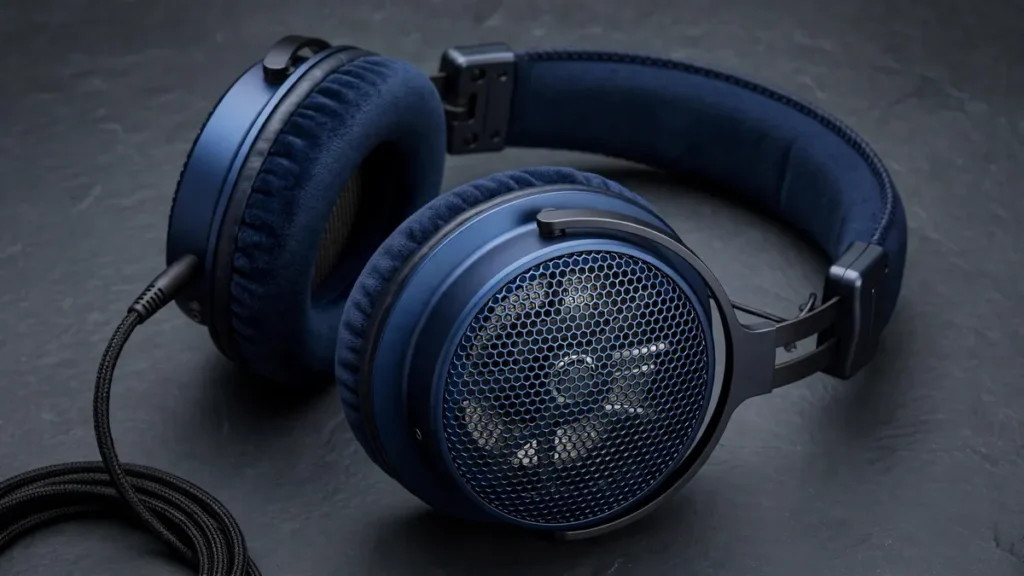
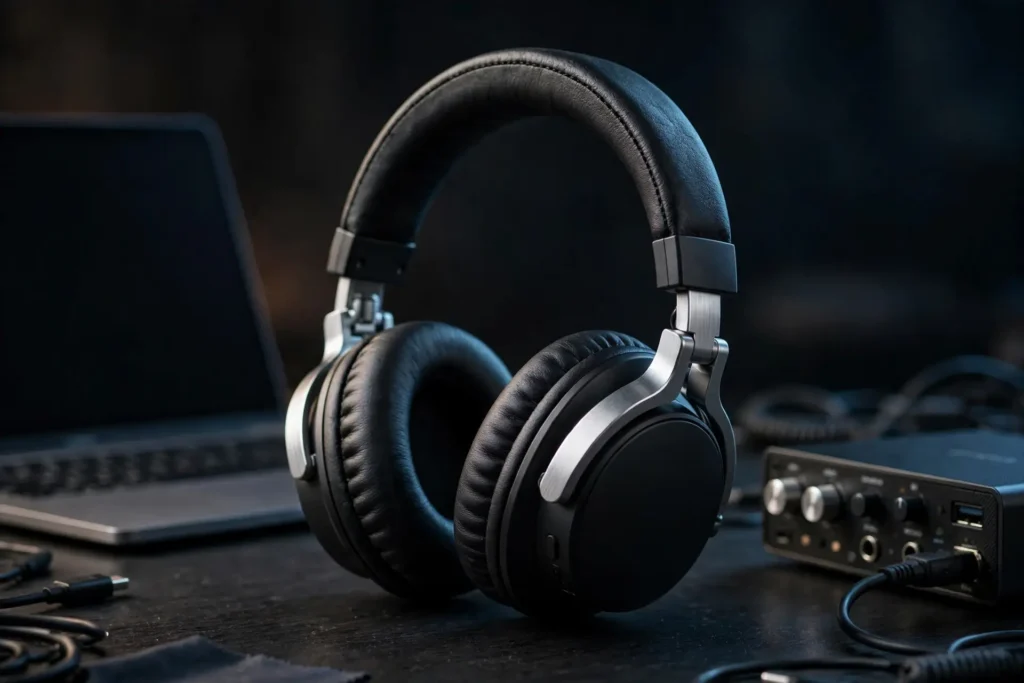
Shure builds the AONIC 50 Gen 2 like pro gear: an aluminium yoke and arms, sturdy metal swivel hinges, matte earcups and synthetic leather padding, in a patented design the company rates for long-wearing comfort. In hand and in photos it reads as equipment rather than fashion, and the reviewer consensus on durability is strongly positive — this is a headphone built to be kept. The physical controls deserve mention too: proper fingertip buttons for volume, playback and calls, which work with gloves and never misfire the way touch panels can.
The compromises are size and weight. At 334g the Shure is roughly 80g heavier than the Sony WH-1000XM5 and Bose QC Ultra, and the clamp suits smaller-to-average heads best — owners with larger heads report the fit runs snug. The earcups rotate to fold flat but do not fold inward, so even in the redesigned, slimmer hard-shell case, the package is wide. Frequent travellers packing light will feel that; desk-and-commute listeners largely will not. There is no IP rating and no wear-detection auto-pause, two small absences that matter to some buyers and not at all to others.
Battery Life and Call Quality
Battery is a headline strength. Shure rates the Gen 2 at up to 45 hours with ANC on — a 50%-plus jump over the original’s 20 hours, and comfortably ahead of the Bose QC Ultra’s 24 hours and the Sony XM5’s 30. A 15-minute quick charge returns up to 5 hours of playback. For a week of commuting or a long-haul return trip, charging becomes a monthly chore rather than a nightly one.
Calls are handled by a six-microphone beamforming array with automatic gain adjustment, and the feedback pattern is favourable: callers describe voices as clear and crisp, with the system suppressing street and office noise effectively. It does not dethrone the best call performers in the class, but for hybrid workers taking meetings from trains and kitchens, owners report the Shure is entirely dependable.
Gen 1 vs Gen 2: Why the Distinction Matters
Because both generations remain on sale, a short decoder is worthwhile. The Gen 2 (model SBH50G2-BK) doubles battery life to 45 hours, adds the four-mode hybrid ANC, adds Spatialized Audio, adds Snapdragon Sound with aptX Adaptive, and slims the carrying case. The original AONIC 50 (2020) offers 20-hour battery life, a single-mode ANC implementation and no spatial mode. The Gen 2 is the one this review covers and the one the listing below points to — if a deal looks suspiciously generous, confirm the model number before assuming it is this headphone.
Who Should Buy the Shure AONIC 50 Gen 2 — and Who Should Not
Buy it if you are a critical listener first: you stream lossless or hi-res, you hear the bass boost in mainstream flagships as a distortion rather than a feature, you want a parametric EQ that lives on the headphone, and you value a wired hi-res path for desk listening. It also suits listeners who want one premium headphone to cover home, office and travel without a separate audiophile pair, and anyone coming from Shure’s wired ecosystem — the family resemblance to the in-ears we covered in our Shure SE535 review is unmistakable.
Look elsewhere if bass impact is your pleasure — EDM, hip-hop and action-film listeners who want physical low-end weight will find the Shure polite, and no EQ preset fully converts it into a bass headphone. Look elsewhere, too, if maximum ANC is the purchase reason (choose Bose), if you need the lightest possible travel headphone (choose Sony), or if you want wear sensors and the deepest smart-feature set. The AONIC 50 Gen 2 is a specialist wearing a flagship’s clothes, and it is best bought knowingly.
Frequently Asked Questions
Are the Shure AONIC 50 Gen 2 worth it?
For critical listeners, yes. The combination of balanced studio-style tuning, parametric EQ stored on the headphones, Snapdragon Sound and LDAC support, hi-res USB-C wired audio and 45-hour battery life is unmatched in a single flagship. If your priorities are maximum noise cancelling or maximum bass, Sony and Bose flagships serve those goals better.
What is the difference between the AONIC 50 and the AONIC 50 Gen 2?
The Gen 2 (SBH50G2-BK) raises battery life from 20 to 45 hours, adds four-mode hybrid ANC, Spatialized Audio with Music, Cinema and Podcast modes, Snapdragon Sound with aptX Adaptive, and a slimmer carrying case. Both generations are still sold, so check the model number and the 45-hour battery claim in the listing before buying.
Do the AONIC 50 Gen 2 support LDAC and aptX?
Yes — both. The codec list covers aptX, aptX HD, aptX Adaptive and aptX Voice under Snapdragon Sound, plus Sony LDAC, AAC and SBC. That breadth means high-bitrate wireless on most Android phones, and standard AAC for Apple devices.
How does the AONIC 50 Gen 2 ANC compare to Sony and Bose?
It is strong but not class-leading. Reviewers consistently rank the Bose QuietComfort Ultra first for pure cancellation and the Sony WH-1000XM5 close behind, with the Shure a step below, especially on higher-pitched noise. For commuting and office use the difference is modest; for frequent long-haul flying it may decide the purchase.
Can you use the AONIC 50 Gen 2 wired?
Yes, two ways. USB-C carries digital audio at up to 32-bit/384kHz for true hi-res listening from a computer or phone, and a 3.5mm analogue cable is included for everything else. Your EQ profile, saved to the headphones via the ShurePlus PLAY app, applies across connections.
How long does the AONIC 50 Gen 2 battery last?
Up to 45 hours with ANC on, per Shure’s rating — more than double the first generation. A 15-minute quick charge adds up to 5 hours of playback.
Final Verdict
The Shure AONIC 50 Gen 2 makes a deliberate trade and makes it well: it gives up the last few decibels of ANC supremacy and the crowd-pleasing bass tune, and in return delivers the most accurate sound, the widest codec support and the best wired story of any flagship wireless headphone of its generation, wrapped in pro-grade aluminium hardware with 45 hours of battery. SoundMavericks scores it 8.7/10 — our pick for critical listeners, and the easiest flagship to recommend to anyone who has ever wished their wireless headphones sounded more like the studio intended.

I am the founder of Sound Mavericks, where I provide the polite truth about audio equipment. I started this site because consumer electronics reviews are often too technical. Instead of using a silent lab, I test headphones, earbuds, and Bluetooth speakers in the real world – like on a noisy subway or in a busy coffee shop.
To stay independent, I buy my own review units (mostly from the United States) rather than accepting free gifts from brands. Once I finish testing a product, I sell it locally to our community. My goal is to help you understand sound quality, active noise cancellation (ANC), and battery life without the marketing hype.