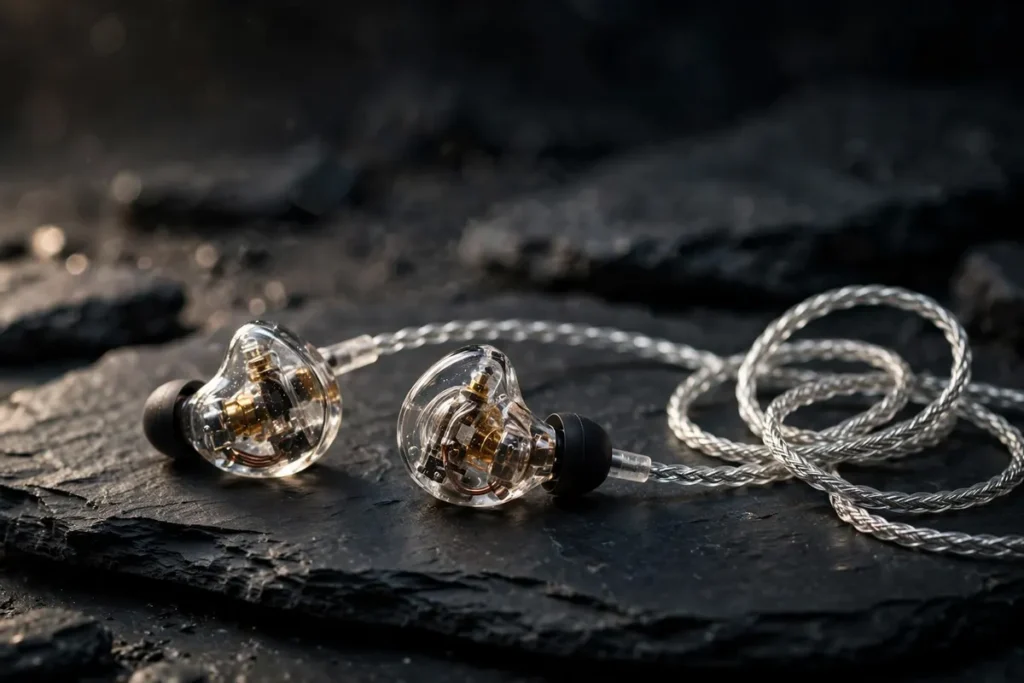
The Kiwi Ears Stardust is a five-driver hybrid IEM that launched on August 21, 2026, into the most crowded corner of the Chi-Fi market: budget hybrids. One dynamic driver and four balanced armatures per side, a resin shell with an aluminum-framed faceplate, and three cable choices at checkout, including a USB-C version with its own DAC and mic. It slipped past our release coverage in August; this page is the catch-up, with the full specs, the tuning brief and the first reviews in one place.
This is a launch review built from Kiwi Ears’ published materials and the Linsoul listing. We have not listened to the Stardust, and nothing here pretends otherwise. What follows is paper analysis: the hardware, the cable options, what the first reviewers found, and who should buy or wait.

Kiwi Ears Stardust Released Aug 21, 2026
What it is: a 1DD+4BA hybrid with a warm-neutral tuning brief, sold in three cable versions: plain 3.5mm, 3.5mm with mic, or USB-C with mic and a built-in DAC.
Watch out: no Amazon US listing, so buying means Linsoul shipping and returns; no 4.4mm balanced cable option; early reviewers split on its relaxed treble.
1DD + 4BA hybrid · 0.78mm 2-pin · 13Ω · three cable versions
Kiwi Ears Stardust quick facts
| Drivers | 1 dynamic driver + 4 balanced armatures (hybrid) |
| Launch price | $76.99 |
| Status | On sale now; released August 21, 2026 |
| Where to buy | Linsoul |
| Amazon US | Not listed on Amazon US as of November 4, 2026; sold via Linsoul |
| Tuning | Warm-neutral with an 8 dB sub-bass lift (per Kiwi Ears) |
What the Stardust is
Kiwi Ears built its name on giving budget buyers more drivers than the price suggests, and the Stardust is that formula at the low end of its hybrid line. It sits below the brand’s pricier sets like the KE4 II we reviewed earlier this year, and aims at the same buyers who cross-shop budget hybrids from Truthear, Simgot and 7Hz.
The dynamic driver is a custom 10mm unit with a composite diaphragm: a liquid crystal polymer dome on a polyurethane foundation. Per Kiwi Ears, it covers the bass and low midrange. Four custom balanced armatures handle the high and ultra-high frequencies, with particular attention to the vocal range. Kiwi Ears does not publish a crossover design or a way count, so how the five drivers are blended stays undisclosed.
The shells are resin, with the printed Stardust faceplate set into a frame of anodized aerospace-grade aluminum alloy. Kiwi Ears states each unit is hand assembled, measured and channel-matched before shipping, with a channel balance tolerance of ≤1.5 dB. The cable detaches on standard 0.78mm 2-pin connectors, which keeps replacement and upgrade paths open.
Three cable versions, chosen at checkout
The Stardust is one IEM sold three ways. The base version ships with a plain 3.5mm cable. The second version adds an inline microphone to the 3.5mm cable, which suits calls and console controllers. The third runs over USB-C, with a microphone and a built-in DAC chip, for phones and laptops that have dropped the headphone jack. The USB-C version is priced a little above the two 3.5mm versions; the earpieces are identical in all three.
The stock cable is a two-core silver litz oxygen-free copper design, 1.2 metres long. Because the 2-pin connection is detachable, the checkout choice is not permanent: a mic or USB-C cable can be added later. The gap is balanced output: Kiwi Ears sells no 4.4mm Stardust cable, so balanced-amp owners need a third-party cable.
Kiwi Ears Stardust specifications
| Product | Kiwi Ears Stardust Check Price |
| Driver configuration | 1 dynamic driver + 4 balanced armatures per side (5 drivers) |
| Dynamic driver | Custom 10mm, PU + LCP composite diaphragm (bass and low midrange) |
| Balanced armatures | Four custom units (high and ultra-high frequencies) |
| Crossover | Not published by Kiwi Ears |
| Impedance | 13Ω |
| Sensitivity | 107 ± 3 dB |
| Frequency response | 20Hz–40kHz |
| Channel balance | ≤1.5 dB |
| Rated power | 5 mW |
| Connector | 0.78mm 2-pin, detachable |
| Cable | Silver litz oxygen-free copper, two-core |
| Cable length | 1.2 m |
| Cable versions | 3.5mm (no mic) / 3.5mm (with mic) / USB-C (with mic and built-in DAC) |
| Shell | Resin |
| Faceplate | Printed design in an anodized aerospace-grade aluminum alloy frame |
| Weight | Not published by Kiwi Ears |
| Launch price | $76.99 |
Tuning: warm-neutral, on Kiwi Ears’ terms
Kiwi Ears calls the Stardust’s target “natural balance”: a controlled 8 dB sub-bass lift for tactile weight, a warm-neutral midrange, and treble shaped around outer-ear gain, with a smooth decay rather than a bright edge. That is a conservative brief, closer to a gentle U-shape than to a basshead shelf or an analytical climb. The stated aim: long, fatigue-free listening with clear vocals. That is the manufacturer’s intent, not our measurement.
The first published measurements point the same way. Audioreviews’ IEC-711 graph shows the bass shelf starting early, from around 300Hz, and a fuller band through the lower midrange than Kiwi Ears’ earlier models, which adds up to a warm, thick presentation on paper. The open question is the top end: a restrained treble over an 8 dB sub-bass lift can read as balanced or as dark, and the early reviews land on both sides of that line.
Early coverage
As of November 4, 2026, the first wave of independent reviews is in, and they agree on the basics: warm, safe tuning, an easy drive, and good bass control for the class. Nextrift found a warm U-shaped all-rounder that plays safe, with treble it called blunt and rolled off, and stock tips that needed rolling to seal well. Audioreviews heard the same warmth, flagging a thick midrange and average technical performance, while crediting its textured bass. Head-Fi’s showcase reviewers lean more positive, praising tonal coherence, separation and comfort; the basic accessory package and the missing balanced cable are the recurring complaints. The split is about taste, not quality control: treble-sensitive listeners praise it most.
Should you buy, or wait?
The buy case is narrow and clear. If you prefer a warm, relaxed listen over a bright one, want a hybrid a phone or cheap dongle drives without strain, and like picking your cable at checkout, the Stardust’s paper brief matches you well. It has been on sale since August, so early production questions have had time to surface, and none have.
The wait case rests on two things. First, distribution: with no Amazon US listing, buying means Linsoul’s shipping times and return terms, slower than most US buyers are used to. Second, the treble question: reviewers who wanted air and sparkle found the top end too restrained, so if your taste runs bright, wait for more graphs and comparisons before spending. The scored alternatives below are all sold on Amazon US, and our IEM roundup covers the wider field. Our read: a reasonable buy for the warm-tuning crowd, a wait-and-see for everyone else.
Also consider
Three covered sets that frame its tier: the budget benchmark, the cheapest serious alternative, and the step up.

The budget benchmark from our IEM roundup: one dynamic driver, a cleaner and brighter presentation than the Stardust’s brief, and the highest value score we have given in this class.
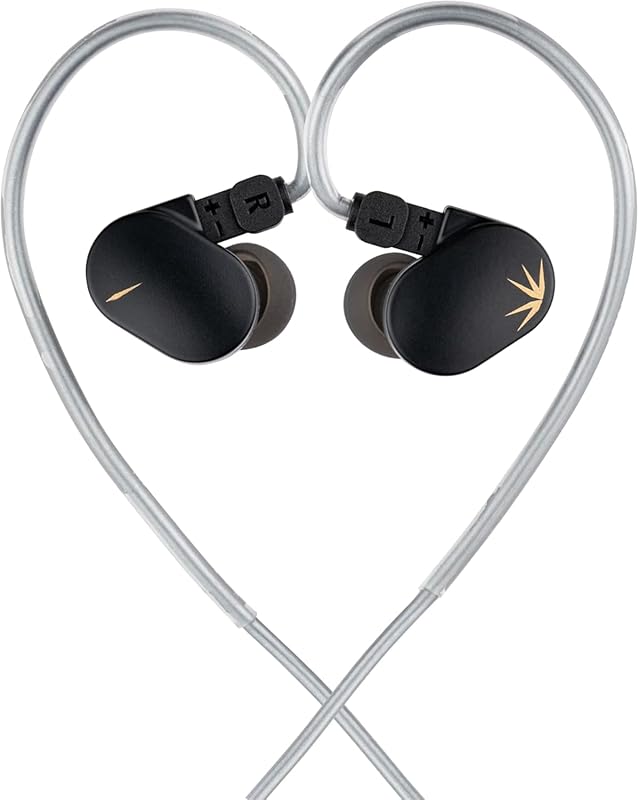
Our budget pick in the gaming IEM roundup: a metal shell, a detachable cable and clean 10mm-driver sound for a fraction of the Stardust’s price, with a value score near the top of our charts.

One dynamic driver done the premium way: metal shells, a warm-neutral tune close to the Stardust’s brief, and swappable 3.5mm and 4.4mm plugs in the box.
FAQ
When was the Kiwi Ears Stardust released?
It launched on August 21, 2026, through Linsoul. It is on sale now, not a pre-order, and all three cable versions are listed as available.
How much does the Kiwi Ears Stardust cost?
The launch price is in the quick facts box at the top of this page. The three cable versions are priced close together, with the USB-C version slightly above the two 3.5mm versions.
Where can I buy the Kiwi Ears Stardust?
Linsoul is the seller for now. The button at the top of this page goes to the Linsoul listing, where you pick the cable version at checkout. It is not sold on Amazon US.
Is the Kiwi Ears Stardust on Amazon?
Not as of November 4, 2026. Amazon US carries other Kiwi Ears models, including the KE4 II, but there is no Stardust listing. This page updates when one appears.
What drivers does the Kiwi Ears Stardust use?
Five per side: a custom 10mm dynamic driver with a PU and LCP composite diaphragm covering the bass and low midrange, plus four balanced armatures for the high and ultra-high frequencies.
Which cable version should I choose?
Pick the plain 3.5mm version if you already use a dongle, DAP or desktop amp. Pick the 3.5mm mic version for calls or a console controller. Pick the USB-C version if your phone has no headphone jack, since it carries its own DAC and mic. The earpieces are the same in all three.

I am the founder of Sound Mavericks, where I provide the polite truth about audio equipment. I started this site because consumer electronics reviews are often too technical. Instead of using a silent lab, I test headphones, earbuds, and Bluetooth speakers in the real world – like on a noisy subway or in a busy coffee shop.
To stay independent, I buy my own review units (mostly from the United States) rather than accepting free gifts from brands. Once I finish testing a product, I sell it locally to our community. My goal is to help you understand sound quality, active noise cancellation (ANC), and battery life without the marketing hype.