

This grado sr80 review covers the current SR80, the generation listings actually sell today, with its 44mm X Series drivers and padded headband. The SR80 name has been Grado’s entry point for decades, and the formula has not changed in spirit: an open-back on-ear headphone, hand-built in Brooklyn, tuned for energy rather than neutrality. Our provisional score set puts it at 5.7 overall, with Sound at 8.4 and Value at 9.0 doing the persuading and Comfort at 6.8 stating the compromise plainly.
A note on method. This review is research-based. The scores are a provisional SoundMavericks verdict built from published measurements and reviewer consensus on the current SR80 generation, cross-checked against the listing and specifications below. Earlier SR80 versions differ in drivers and details, so nothing here borrows scores or specs from them.
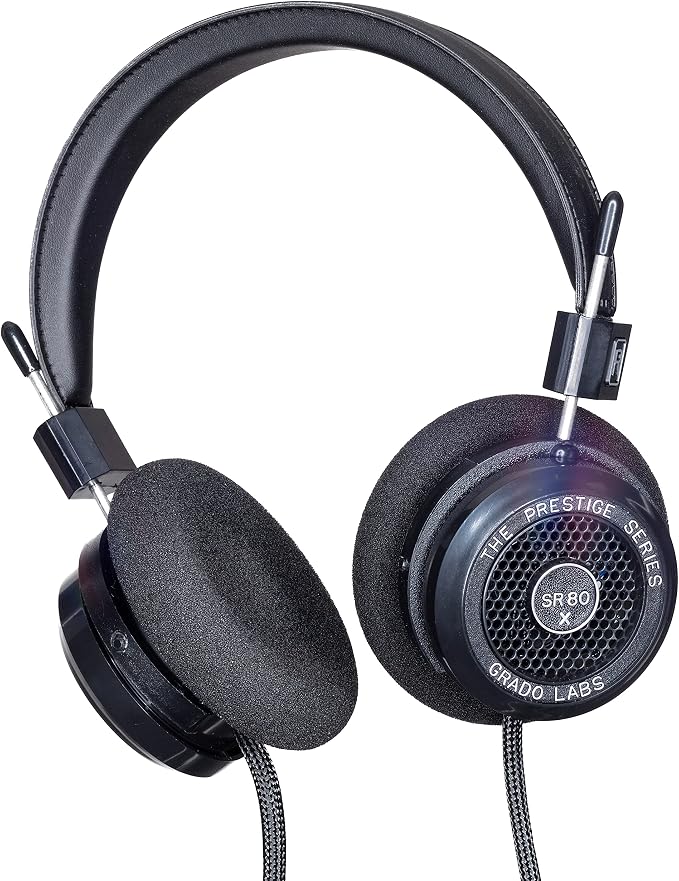
Grado SR80x 5.7/10
Why you: you listen to guitars, live recordings and anything that benefits from energy. Sound scores 8.4 and Value scores 9.0: the current SR80 puts a forward, vivid presentation within reach of almost any budget.
Trade-off: comfort is the compromise, at 6.8. The on-ear foam pads and headband pressure divide opinion, the cable is fixed, and the open design leaks everything. There is no microphone and no isolation.
Open-back · On-ear · Wired · 44mm dynamic driver · 38 ohms · Hand-built in Brooklyn
Sound quality
Sound scores 8.4, and character is the whole story. The current SR80 puts the midrange forward, which puts guitars, voices and snare drums at the front of the mix where rock and folk recordings want them. The treble is lively enough to give cymbals and string attack real sparkle. Bass is quick and lean rather than deep: you hear the notes a bassist plays more clearly than you feel them.
That tuning polarises listeners in a predictable way. Fans describe the SR80 as the headphone that makes old records exciting again, and our best headphones for jazz listening notes show the same energy flattering small-group recordings. Measurement-led listeners note the treble emphasis and the rolled sub-bass, both of which are real. The SR80 is not trying to be a reference monitor, and judging it as one misses what buyers love about it.
The open-back design gives a natural, airy spread for an on-ear headphone, and imaging is direct rather than diffuse. It stages smaller than the big over-ear open-backs in our best open-back headphones guide, but for its size and price the sense of space is part of the appeal. Our Grado Signature S150 review shows where the house sound goes when the budget stops mattering.
Comfort and build
Comfort scores 6.8, the honest weak bar. The SR80 sits on the ear with foam cushions, and the clamp is firm out of the box. Owners bend the headband to taste, which helps a great deal, and the headphone is light enough that long sessions are fine for most people once the fit is dialled in. Listeners who already know they dislike on-ear pressure should believe that about themselves before buying.
The build is deliberately simple: a vinyl-style padded headband on the current generation, plastic cups with the classic Grado grille, and a fixed four-conductor cable ending in a 3.5mm plug with a 6.35mm adapter. Nothing folds, nothing detaches, and the pads are the main replaceable wear part. It is assembled in Brooklyn rather than mass-produced offshore, which owners count as part of the value story. Our best budget audiophile headphones guide is full of better-specified rivals, and the SR80 keeps its place there on character alone.
Everyday use
Everyday use is simple and limited in equal measure. At 38 ohms the SR80 runs from anything with a headphone socket, no amplifier required, which makes it a genuine plug-and-play first step into hi-fi. It also leaks sound freely (ANC 1.0, the lowest bar we give), has no microphone (Calls 3.0 by convention) and no battery (Battery 5.0 as a neutral placeholder).
That confines it to home listening in company that does not mind hearing your music faintly across the room. Within that setting it asks for nothing: no app, no charging, no pairing. For listeners whose other headphones are wireless do-everything models, the SR80’s single-purpose honesty is often the charm.
Value
Value scores 9.0. The SR80 is the cheapest way into a genuinely distinctive hi-fi tuning from a maker with a long service record, and it holds a following that newer, better-measuring rivals have not displaced. What the money does not buy is comfort technology, a detachable cable or any feature beyond playing music with conviction.
Grado SR80 specs
| Spec | Grado SR80x |
|---|---|
| Design | On-ear, open-back, wired |
| Driver | 44mm dynamic, X Series |
| Impedance | 38 ohms |
| Sensitivity | 99.8 dB (1 mW) |
| Frequency response | 20 Hz – 20,000 Hz |
| Connector | 3.5mm with 6.35mm adapter |
| Microphone | None |
The Grado question: character or accuracy
Every SR80 review eventually arrives at the same fork, so it is better to meet it head-on. If your goal is accuracy, meaning the flattest possible path between the recording and your ear, the SR80 is not your headphone and makes no apology for it. If your goal is involvement, meaning guitars that snarl, voices that lean in and drums that crack, the SR80 delivers a version of that experience at a price where most rivals are still being polite.
That is why the model survives every measurement era. Graphs of the SR80 have been published, debated and tutted over for years, and owners keep buying it because listening to it is fun in a way the graphs do not capture. There is also a simplicity dividend: no amplifier decision, no battery anxiety, no app updates, no pairing rituals. The SR80 is a headphone in the oldest sense, a transducer on a headband, and for listeners drowning in settings menus that purity has genuine appeal.
The sensible way to buy it is with open eyes about the comfort and the fixed cable, and with a library that suits it. Rock, folk, jazz and acoustic music flatter everything the SR80 does. Bass-led electronic music and long mixing sessions flatter other headphones. Chosen for the right shelf of records, the current SR80 remains what it has always been: the liveliest first step into hi-fi that its price allows.
Verdict
Buy the current SR80 if your library leans on guitars, voices and live recordings, and you want energy and presence at an entry price. The 8.4 Sound and 9.0 Value scores describe a headphone that has survived every trend in the hobby by sounding like itself.
Skip it if on-ear pressure bothers you at all, if you need bass weight, isolation or a microphone, or if a neutral measurement is your goal. The 5.7 overall is the database shape of a characterful specialist, and the SR80 has never pretended to be anything else.
Frequently asked questions
Which SR80 is on sale now?
The current SR80 generation, sold as the SR80x, is what listings carry today: 44mm X Series drivers, a 38-ohm impedance and a padded headband. Earlier SR80 versions used different drivers and cables. This review covers the current generation, and the linked listing is for it.
Are Grado SR80 headphones comfortable?
It is the most debated part of ownership. The on-ear foam pads sit on the ear rather than around it, the clamp is noticeable, and comfort scores 6.8 here. Fans adjust the headband bend and stop noticing; listeners who dislike on-ear pressure usually know within one long session.
Is the SR80 good for rock and metal?
That is its home turf. The forward midrange and lively treble give electric guitars bite and put vocalists in front of the band. Drums sound fast rather than heavy. Listeners who want deep sub-bass weight for electronic music should look at closed-back alternatives instead.
Does the SR80 need an amplifier?
No. At 38 ohms with healthy sensitivity it runs well from phones, laptops and controllers. A better source refines it slightly, but no amplifier purchase is needed to enjoy the current SR80, which is part of its entry-level appeal.
Can the cable be replaced?
The cable on the current SR80 is fixed rather than detachable, which is the design’s main durability compromise. The ear pads are replaceable foam parts. Grado’s Brooklyn operation services its headphones, and owners commonly keep these running for many years.

I am the founder of Sound Mavericks, where I provide the polite truth about audio equipment. I started this site because consumer electronics reviews are often too technical. Instead of using a silent lab, I test headphones, earbuds, and Bluetooth speakers in the real world – like on a noisy subway or in a busy coffee shop.
To stay independent, I buy my own review units (mostly from the United States) rather than accepting free gifts from brands. Once I finish testing a product, I sell it locally to our community. My goal is to help you understand sound quality, active noise cancellation (ANC), and battery life without the marketing hype.
