
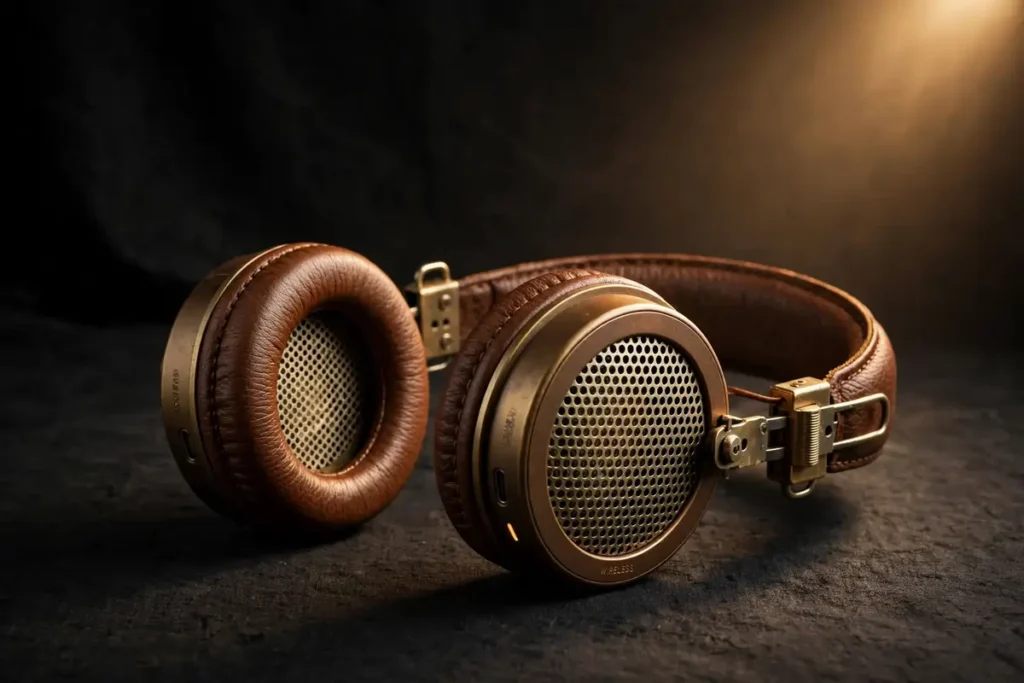
This grado gw100 review covers the GW100 line through the model you can actually buy today. The verified Amazon listing for this review sells the GW100x, the current version of Grado’s wireless open-back on-ear, so the GW100x is what this review covers and scores. It keeps the idea that made the original unusual, an open-back Bluetooth headphone in a market of sealed ANC designs, and updates the hardware around it: Bluetooth 5.2, fourth-generation 44mm X drivers, USB-C charging and a rated battery life of up to 46 hours. Our provisional overall is 6.8, and the shape of the scores explains the headphone better than the headline number does.
A note on method. This review is research-based, and the scores are provisional. No record for this model exists in our headphone database yet, so we derived the six bars from Grado’s published specifications and the consensus of specialist reviewers who have measured and lived with the GW100x. The ANC bar needs context before anything else: an open-back headphone cannot cancel noise, and the 1.8 reflects the design, scored on the same scale we use for sealed ANC models so our roundups stay comparable.

Grado GW100x 6.8/10
Why you: you want the Grado open-back sound without a cable. The GW100x keeps the wide, lively presentation the wired Prestige models are known for, adds Bluetooth 5.2 with aptX Adaptive, and runs for up to 46 hours between charges.
Trade-off: an open-back on-ear leaks sound in both directions and has no noise cancelling at all, so this is a home and quiet-office headphone, not a travel or commute pick. The ANC bar reflects that design choice, not a fault.
Open-back on-ear · Bluetooth 5.2 · aptX Adaptive · 44mm X drivers · 46-hour battery · Wired cable included
Sound quality
Sound scores 8.4, and it is the reason this headphone exists. Grado’s wired on-ears are known for a forward, energetic presentation with a wide sense of space for a small on-ear design, and the GW100x carries that character into wireless listening. The 44mm X drivers are matched closely between channels, and the tuning keeps the lively upper midrange that makes guitars, voices and small-ensemble recordings feel close and direct. Bass is present and quick rather than heavy, which suits acoustic music, rock and jazz better than bass-led electronic tracks.
Open-back designs trade isolation for space, and the GW100x sounds more spacious than any sealed Bluetooth rival at this size. Reviewers who have compared it with the wired range consistently place its wireless sound close to the entry Prestige models, which is the comparison Grado itself invites. Our Grado SR80 review covers the wired benchmark in that family, and the GW100x is best understood as that sound with the cable made optional. Listeners who want a deeper survey of the format should read our best open-back headphones guide alongside this review.
The codec list helps. aptX Adaptive gives compatible Android phones a stable, higher-quality link, AAC covers iPhones well, and the included 3.5mm cable means a flat battery or a picky source never ends a session. There is no LDAC, and the wired mode is analogue rather than a digital USB path, so the last step of source quality is left to whatever you plug it into.
Noise cancelling and calls
There is no noise cancelling here, and pretending otherwise would mislead buyers. The open backs let sound in and leak sound out, reduced compared with Grado’s wired open models but still plainly audible to anyone nearby. In a quiet home or a private office that openness is part of the appeal, because your ears never feel sealed off from the room. On a train, a bus or a busy street it is the wrong tool, and our open-back vs closed-back headphones explainer sets out that trade in full.
Calls score 6.2. The built-in microphone is clear at desk distance in a quiet room, and for home working it handles meetings without complaint. Outdoors, wind and traffic reach the microphone as easily as they reach your ears, and callers will hear the street along with your voice. Treat call quality as a home feature on this model, not a commute feature.
Design, fit and comfort
Comfort scores 7.8. The GW100x is a light on-ear with foam cushions and a simple headband, and it disappears during long home listening sessions in a way heavier over-ears do not. On-ear fit is personal, though: the pads rest on the ear rather than around it, and listeners who wear glasses or dislike any on-ear pressure should expect an adjustment period. The retro styling is pure Grado, with exposed hardware and none of the sealed, moulded look of mainstream wireless models.
The build mixes metal and plastic in the Grado workshop style. It feels honest rather than luxurious, folds flat for storage, and shrugs off desk life well. What it does not offer is a sealed travel case routine or water resistance, because it was never designed as an outdoor product. Buyers comparing it with mainstream travel models in our best wireless headphones guide should weigh that difference in purpose, not just the feature lists.
Battery and everyday use
Battery scores 9.0, the standout practical number here. Grado rates the GW100x at up to 46 hours of playback, roughly double what the original model managed, and charging is over USB-C with a full charge in about two hours. At home listening volumes that is weeks of evening sessions between charges, and it removes the battery anxiety that comes with smaller wireless designs.
Controls are simple physical buttons, and multipoint pairing lets the headphone sit on a laptop and a phone at once. Value scores 7.6. You are paying for a specific sound and a rare format, not for a long feature sheet, and judged as an open-back wireless headphone rather than a travel ANC rival, the price makes sense. Judged as a commuter headphone it would not, which is why the verdict below is conditional.
Grado GW100x specs
| Spec | Grado GW100x |
|---|---|
| Design | On-ear, open-back, wireless |
| Driver | 44mm dynamic, X Series |
| Bluetooth | 5.2 |
| Codecs | SBC, AAC, aptX Adaptive |
| Noise cancelling | None, open-back design |
| Battery | Up to 46 hours, USB-C charging |
| Impedance | 38 ohms |
| Frequency response | 20Hz to 20kHz |
| Model note | Current GW100x. The verified listing sells this model |
Verdict
Buy the GW100x if you listen mostly at home, like the Grado sound, and want it without a cable tying you to one chair. An 8.4 Sound score, a 9.0 Battery score and a genuinely open presentation make it the wireless pick for quiet rooms, and the wired cable keeps it useful when the battery runs out.
Skip it if you commute, fly often, share a busy office or need call quality outdoors. The 6.8 overall is pulled down by bars this design never tried to win, and buyers who need those bars should shop the sealed ANC field instead. For its intended job, though, the GW100x has almost no direct rivals.
Frequently asked questions
Is this review about the GW100 or the GW100x?
It covers the GW100 line through its current model, the GW100x, because that is the version the verified Amazon listing sells. The GW100x updates the original with Bluetooth 5.2, fourth-generation 44mm X drivers, USB-C charging and a longer rated battery life of up to 46 hours. Where a detail differs between the two, this review describes the GW100x.
Does the GW100x have noise cancelling?
No. It is an open-back headphone with no active noise cancelling, and sound passes in and out by design. The low ANC score in this review reflects that open design. Buyers who need quiet on trains and flights should look at a closed ANC model instead.
What codecs does the GW100x support?
Bluetooth 5.2 with SBC, AAC and aptX Adaptive. Android phones that support aptX Adaptive get the best wireless quality it offers, and iPhones run over AAC. A 3.5mm cable is included for wired listening.
How long does the battery last?
Grado rates the GW100x at up to 46 hours of playback at moderate volume, with a full charge taking about two hours over USB-C. Battery scores 9.0 in this review, the strongest single bar after sound.
Can you take calls on the GW100x?
Yes. A built-in microphone handles calls and voice assistants, and calls score 6.2 here. Voice pickup is clear in quiet rooms, but the open design and a single microphone mean wind and street noise compete with your voice outdoors.

I am the founder of Sound Mavericks, where I provide the polite truth about audio equipment. I started this site because consumer electronics reviews are often too technical. Instead of using a silent lab, I test headphones, earbuds, and Bluetooth speakers in the real world – like on a noisy subway or in a busy coffee shop.
To stay independent, I buy my own review units (mostly from the United States) rather than accepting free gifts from brands. Once I finish testing a product, I sell it locally to our community. My goal is to help you understand sound quality, active noise cancellation (ANC), and battery life without the marketing hype.
