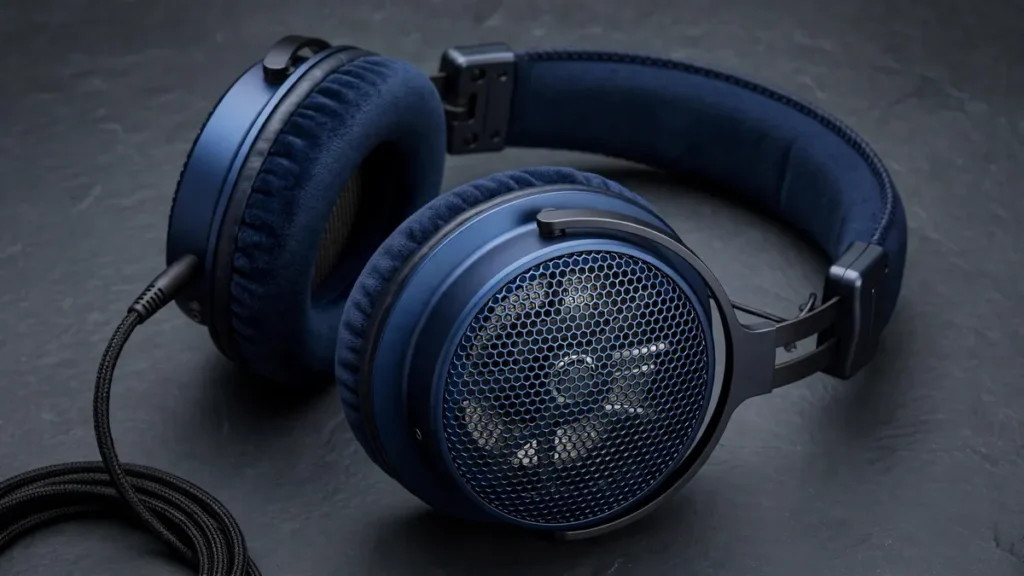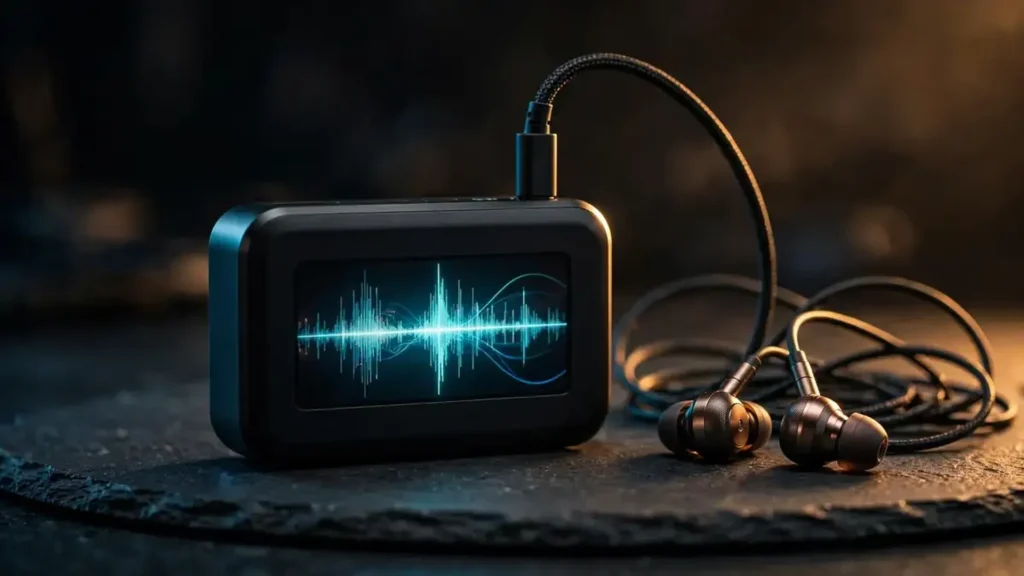
Our verdict: The FiiO BTR7 is one of the most complete portable Bluetooth DAC/amps you can buy — dual ESS DACs, THX AAA amplification, full flagship codec support including LDAC and aptX Adaptive, a genuinely useful color display, and a USB DAC mode that turns it into a serious desktop companion. If you want to take wired IEMs and headphones wireless without a big sonic compromise, this is the benchmark. SoundMavericks score: 8.7/10.
| Sound Quality | 9.0 |
| Features & Codecs | 8.9 |
| Design & Display | 8.5 |
| Battery Life | 8.0 |
| Usability & App | 8.6 |
| Value | 8.9 |

What the FiiO BTR7 Is
The FiiO BTR7 is a portable Bluetooth receiver and headphone amplifier with a built-in DAC — it takes a wireless (or wired USB) signal from your phone, laptop, or PC and drives your wired earphones or headphones with far better conversion and amplification than the dongle or headphone jack your device came with. Think of it as a pocket-sized upgrade to everything your music passes through: better DAC chips, a cleaner amplifier stage, and support for the high-resolution Bluetooth codecs your phone already supports.
It sits at the top of FiiO’s BTR line, above the smaller BTR5, and it earns that position with a genuinely flagship-grade audio architecture: two ESS ES9219C DAC chips (one per channel), two THX AAA-28 amplifier chips, and a Qualcomm QCC5124 Bluetooth chipset handling Bluetooth 5.1. That is the kind of hardware you would normally find in a dedicated desktop DAC/amp, miniaturized into a 68-gram device you can clip to a shirt pocket.
Pros and Cons
- Dual ESS ES9219C DACs + dual THX AAA-28 amps
- Full flagship codec support: LDAC, aptX Adaptive, aptX HD
- 3.5mm single-ended + 4.4mm balanced outputs
- 1.3-inch color display shows codec, battery, and sample rate
- USB DAC mode with 384kHz/32-bit, native DSD256, MQA rendering
- Qi wireless charging — a first for Bluetooth DAC/amps
- FiiO Control app with EQ, filters, and OTA updates
- Built-in mic with cVc 8.0 for calls
- Noticeably larger than the BTR5 it replaced
- Reviewers report the side buttons rattle slightly
- Battery life drops fast with LDAC + balanced output
- FiiO only recommends headphones up to 150 ohms
- Newer BTR17 successor now exists
Sound Hardware: DAC and Amp Architecture
This is where the BTR7 justifies itself. Each of the left and right channels gets its own ESS ES9219C DAC chip, each paired with a low-pass filter and a THX AAA-28 amplifier — the same THX amplifier topology FiiO uses in its desktop gear, prized for vanishingly low distortion. Measured THD+N sits below 0.00048%, and the signal-to-noise ratio reaches 118dB on the single-ended output.
In plain terms, the sound signature reviewers consistently describe is clean, detailed, and slightly warm — a controlled, musical presentation rather than a sterile one. Independent reviewers at Head-Fi and Ear Fidelity report strong results with everything from sensitive IEMs to full-size dynamic headphones, with a dark, hiss-free background that lets detail come through. The takeaway from our analysis: the BTR7’s hardware is overbuilt for its price class, and it shows in listening reports across the board.
Power is healthy for a portable: 160mW into 32 ohms from the 3.5mm output, doubling to 320mW from the 4.4mm balanced output. That is plenty for IEMs and most portable over-ears. But note FiiO’s own guidance — headphone impedance of 16–100 ohms on single-ended and up to 150 ohms balanced — so power-hungry planar magnetics are beyond its brief. It is a portable upgrade, not a desktop replacement.
Bluetooth and Codecs
Bluetooth 5.1 runs on a Qualcomm QCC5124 chipset, and the codec list is effectively complete: LDAC, aptX Adaptive, aptX HD, aptX Low Latency, aptX, AAC, and SBC. If your phone supports LDAC or aptX Adaptive, the BTR7 will use them — and the color display confirms which codec is active, which is genuinely useful when you are troubleshooting why a stream does not sound as good as it should.
aptX Adaptive deserves a mention: it scales bitrate to connection quality, so you get near-LDAC fidelity when the signal is strong and stability when it is not — ideal for commuting. If the alphabet soup of codecs is new to you, our Bluetooth codec explainer breaks down what each one actually means for sound quality.
USB DAC Mode: a Dongle DAC in Disguise
Plug the BTR7 into a PC or phone over USB-C and it becomes a wired USB DAC, handled by an XMOS XUF208 receiver that decodes PCM up to 384kHz/32-bit and native DSD256. In USB DAC mode with an MQA-capable player, it also performs MQA 8x rendering. This dual personality is one of the BTR7’s strongest arguments: it is your wireless receiver on the train and your laptop’s DAC at the desk, with no second device to buy. Gamers will appreciate the aptX Low Latency support over Bluetooth too — see our best IEMs for gaming guide for pairing ideas.
Design, Display, and App
The 1.3-inch IPS color display is the BTR7’s most visible upgrade over its predecessor: codec, charging status, battery level, volume, and sampling rate are all glanceable, and the interface is far richer than the tiny screens on older BTR models. The chassis is a seventh-generation FiiO design with a metal antenna integrated for a stable connection, and a leatherette case ships in the box.
The FiiO Control app (iOS and Android) handles EQ, digital filter selection, channel balance, gain switching, and over-the-air firmware updates — FiiO has a good track record of improving these devices post-launch through firmware. A built-in omnidirectional microphone with cVc 8.0 noise cancellation handles voice calls in Bluetooth mode, and CTIA-standard inline headphone controls are supported.
Battery and Charging
The 880mAh battery is rated for up to 9 hours of playback (AAC, low gain, single-ended) — realistic figures from FiiO’s own spec sheet drop to around 7.5 hours with LDAC over the balanced output, which matches what reviewers report in practice. That is middling for the class but honest, and the charging story is genuinely novel: the BTR7 was the first Bluetooth DAC/amp to support Qi wireless charging (full in about 3 hours), alongside wired charging over USB-C in under 1.5 hours. A top-up on a wireless pad at your desk is a small luxury that becomes a habit.
FiiO BTR7 Specs at a Glance
| DAC | 2 × ESS ES9219C (one per channel) |
| Amplifier | 2 × THX AAA-28 |
| Bluetooth | 5.1 (Qualcomm QCC5124) |
| Codecs | LDAC, aptX Adaptive, aptX HD, aptX LL, aptX, AAC, SBC |
| Headphone outputs | 3.5mm single-ended + 4.4mm balanced |
| Output power | 160mW @ 32Ω (3.5mm) · 320mW @ 32Ω (4.4mm) |
| Recommended headphones | 16–100Ω (3.5mm) · 16–150Ω (4.4mm) |
| USB DAC | XMOS XUF208 · PCM 384kHz/32-bit · native DSD256 · MQA 8x rendering |
| Display | 1.3-inch IPS color |
| Battery | 880mAh · up to 9 hours (AAC, low gain, 3.5mm) |
| Charging | USB-C wired (≤1.5h) · Qi wireless (≤3h) |
| Microphone | Built-in omnidirectional · cVc 8.0 (Bluetooth calls) |
| Size & weight | 39.6 × 83.6 × 14.6mm · about 68g |
| App | FiiO Control — EQ, filters, channel balance, OTA updates |
Who the FiiO BTR7 Is For
Buy it if: you own wired IEMs or headphones you love and want them wireless without buying a second pair; you want one device that works as a Bluetooth receiver and a USB DAC for your laptop; you care about LDAC or aptX Adaptive and want confirmation on-screen of what is actually playing; or you are assembling a portable hi-fi chain and want THX-grade amplification in your pocket. If you are still deciding what kind of amp you need, our best headphone amps roundup puts the BTR7’s class in context.
Skip it if: you need to drive 300-ohm or hard-to-drive planar headphones (get a desktop amp instead); absolute smallest size matters most to you (the BTR5 or BTR13 are smaller and cheaper); or you want the latest thing regardless — the BTR17 successor is now on the scene, though the BTR7’s value case remains strong.
BTR7 vs BTR5: Should You Upgrade?
The BTR7 is a clear step up from the BTR5: THX AAA amplification replaces the older amp stage, output power roughly doubles on the balanced output, you get the 1.3-inch color display, wireless charging, and a larger 880mAh battery. The trade-off is size — the BTR7 is noticeably bigger and heavier. If you already own a BTR5 and are happy, the upgrade is about refinement rather than revolution; if you are buying fresh, the BTR7 is the one we would pick.
Frequently Asked Questions
Is the FiiO BTR7 worth buying?
For its class, yes — our analysis of the spec sheet and professional reviews puts it at the top of the portable Bluetooth DAC/amp category. You get dual ESS DACs, THX amplification, complete flagship codec support, a useful display, and a genuine USB DAC mode in one device. The main reasons to hesitate are its size relative to smaller rivals and the existence of the newer BTR17.
What Bluetooth codecs does the FiiO BTR7 support?
The BTR7 supports LDAC, aptX Adaptive, aptX HD, aptX Low Latency, aptX, AAC, and SBC over Bluetooth 5.1. The on-device display shows the active codec, so you can confirm your phone is actually streaming in LDAC or aptX Adaptive rather than falling back to SBC.
Can the FiiO BTR7 drive high-impedance headphones?
Up to a point. FiiO recommends headphones of 16–100 ohms on the 3.5mm output and up to 150 ohms on the 4.4mm balanced output, with 320mW into 32 ohms balanced. That covers IEMs and most portable over-ears comfortably, but 300-ohm classics and power-hungry planars deserve a desktop amplifier.
Can you use the FiiO BTR7 as a USB DAC?
Yes. Connect it to a PC, Mac, or phone over USB-C and it works as a wired USB DAC via its XMOS XUF208 receiver, decoding PCM up to 384kHz/32-bit and native DSD256, with MQA 8x rendering when paired with an MQA-capable player. It effectively replaces a separate dongle DAC.
Does the FiiO BTR7 support wireless charging?
Yes — the BTR7 was the first Bluetooth DAC/amp to support Qi wireless charging, taking about 3 hours for a full charge. Wired charging over USB-C is faster at under 1.5 hours.
Final Verdict
The FiiO BTR7 remains the portable Bluetooth DAC/amp we would recommend to most people: the DAC and amp hardware is a class above, the codec support is complete, the display and app make it pleasant to live with, and the USB DAC mode means it earns its keep at your desk as well as in your pocket. Battery life with LDAC and balanced output is the honest weakness, and demanding headphones need a bigger amp — but for IEMs and portable headphones, this is the benchmark. 8.7/10.

I am the founder of Sound Mavericks, where I provide the polite truth about audio equipment. I started this site because consumer electronics reviews are often too technical. Instead of using a silent lab, I test headphones, earbuds, and Bluetooth speakers in the real world – like on a noisy subway or in a busy coffee shop.
To stay independent, I buy my own review units (mostly from the United States) rather than accepting free gifts from brands. Once I finish testing a product, I sell it locally to our community. My goal is to help you understand sound quality, active noise cancellation (ANC), and battery life without the marketing hype.