The DUNU PRS5 is a five-driver tribrid that puts three driver technologies in one shell: a 10mm dynamic driver for bass, three balanced armatures for the midrange and lower treble, and a micro-planar driver for the ultra-high frequencies. DUNU built it as a dual-purpose music and gaming set, launched on October 26, 2026 through HiFiGo. It is not on Amazon US yet, and the similar Amazon listing is a different model, the PRS6.
This is a launch review, built from DUNU’s published specifications on the official HiFiGo listing. We have not listened to the PRS5, and nothing here pretends otherwise. What follows is paper analysis: the hardware, the rivals, and who should buy now or wait. Unusually for a launch this fresh, independent reviews already exist, and where their findings are used they are credited as early coverage, not as our listening. This page will be updated as more measurements appear.

DUNU PRS5 On sale now
What it is: a five-driver tribrid (dynamic, balanced armature and micro-planar in one shell) tuned warm for music and positioned for competitive gaming.
Watch out: it is not on Amazon US yet, and the similar Amazon listing is the PRS6, a different model. Early reviews also describe a dark, relaxed treble.
1DD + 3BA + 1 micro-planar · 38Ω · 110 dB/mW · 0.78mm 2-pin · Q-Lock Mini plugs
DUNU PRS5 quick facts
| Drivers | 1 dynamic driver + 3 balanced armatures + 1 micro-planar (tribrid), four-way crossover |
| Launch price | $159 |
| Status | On sale now; launched October 26, 2026 |
| Where to buy | HiFiGo |
| Amazon US | Not listed as of November 3, 2026; this page updates when it lists |
| Tuning | Warm-neutral and musical (per DUNU), with gaming-optimized imaging |
What the PRS5 is
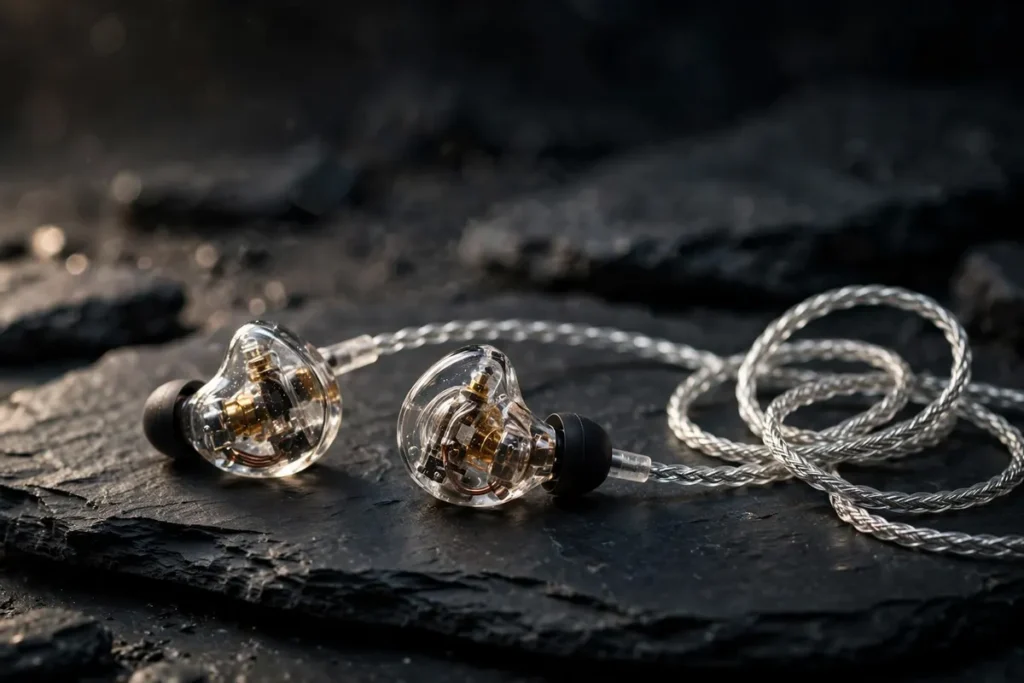
The driver layout is the pitch. A custom 10mm dynamic driver handles bass and sub-bass. Three custom balanced armatures sit above it, two on the midrange and one on the upper midrange. A micro-planar driver takes only the ultra-high frequencies. A four-way crossover, split between physical acoustic tubes and an electronic network, is DUNU’s answer to the obvious problem: three driver types with three different characters have to hand off without seams or phase errors.
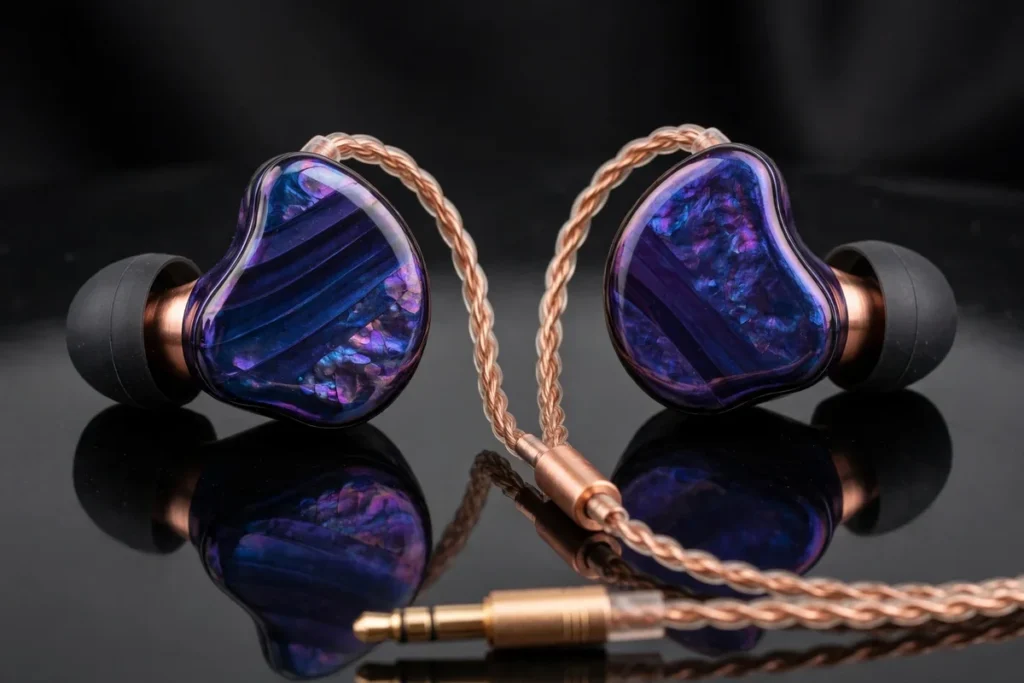
The shells are 3D-printed resin with multi-layered laminated faceplates, a finish that shifts color and depth as the light angle changes, so no two pairs look quite alike. The packaging leans into anime character artwork, a deliberate part of this series’ identity, as early reviewers note. The connectors are recessed 0.78mm 2-pin; the shells run 8g per earpiece.
The cable package is stronger than the class norm. The stock cable is a four-core hybrid of single-crystal copper and silver-plated single-crystal copper in a Litz braid, terminating in DUNU’s Q-Lock Mini modular system: both 3.5mm and 4.4mm plugs are in the box. For gamers, the 2-pin design also fits DUNU’s Gaming M1 boom microphone cable (sold separately), a proper headset path most music-first IEMs lack.
Where it sits against the rivals we have covered
The PRS5 lands between covered benchmarks. The Simgot EM6L anchors our best IEMs for gaming roundup with the same music-plus-gaming brief and a 1DD+4BA layout. The Moondrop Aria 2, in our best IEMs roundup, is the simpler single-driver alternative below it. The Kiwi Ears KE4 II is the step up, another tribrid with a micro-planar tweeter and a full review behind it. The PRS5’s pitch against all three is driver variety at a mid price.
| Product | Drivers | Cable and plug | Check Price |
|---|---|---|---|
| DUNU PRS5 | 10mm DD + 3 BA + 1 micro-planar, four-way crossover | 4-core hybrid cable, Q-Lock Mini 3.5mm and 4.4mm | Check Price |
 Simgot EM6L | 1 DD + 4 BA | Detachable OFC silver-plated cable, 3.5mm | Check Price |
 Moondrop Aria 2 | 10mm single DD | 0.78mm 2-pin, swappable 3.5mm and 4.4mm plugs | Check Price |
 Kiwi Ears KE4 II | 1 DD + 2 BA + 1 microplanar | 0.78mm 2-pin detachable | Check Price |
DUNU PRS5 specifications
| Product | DUNU PRS5 Check Price |
| Driver configuration | 1 dynamic driver + 3 balanced armatures + 1 micro-planar per side |
| Dynamic driver | Custom 10mm, bass and sub-bass |
| Balanced armatures | 3 custom (2 midrange, 1 upper midrange) |
| Micro-planar driver | 1 custom, ultra-high frequencies |
| Crossover | Four-way, physical and electronic |
| Impedance | 38Ω |
| Sensitivity | 110 dB/mW (124 dB/Vrms) @ 1kHz |
| THD | <0.3% @ 1kHz |
| Frequency response | Not published in the launch materials |
| Shell | 3D-printed resin, multi-layered laminated faceplates |
| Connector | Recessed 0.78mm 2-pin |
| Cable | 4-core single-crystal copper and silver-plated single-crystal copper hybrid, Litz braid |
| Plugs | Q-Lock Mini modular: 3.5mm and 4.4mm included |
| Weight | 8g per earpiece |
| Launch price | $159 |
Tuning: warm on paper, darker in early reviews
DUNU describes the PRS5 as warm-neutral and musical: an engaging signature for vocal tracks, rock and pop, with the spatial awareness and pinpoint imaging competitive gaming needs. The spec sheet supports the drivability side: 38Ω and 110 dB/mW is an easy load for a phone dongle or a controller. That is the manufacturer’s stated intent, not a measurement of ours.
The first independent reviews describe a darker result than the warm-neutral label suggests. Both the ecoustics review and a Head-Fi review land in the same place: big, full-bodied sub-bass, a relaxed top end with clear upper-treble roll-off, and imaging both rate as good. For treble-sensitive listeners that reads as a feature. For detail-first listeners it is the main reason to pause: a micro-planar tweeter invites expectations of air the stock tuning does not chase.
Early coverage
The PRS5 is ahead of the usual launch curve: full independent reviews already exist. Ecoustics has published a complete review with specifications, and a Head-Fi review (disclosing a HiFiGo-provided unit) reaches similar conclusions on bass weight and the rolled-off upper treble. Two reviews are not a consensus, and neither is our listening, but their agreement gives buyers more to go on than most week-old launches have.
Should you buy, or wait?
The buy case is the hardware list at the price: three driver technologies, a four-way crossover, a modular plug cable and a boom-mic path for gaming, from a brand with a long record in wired IEMs. The early reviews back the parts of the pitch that matter for its audience: bass weight, imaging and an easygoing top end for long sessions.
The wait case starts with the storefront. There is no Amazon US listing yet, so buying means HiFiGo shipping and returns, and the Amazon result that looks like this product is the PRS6, a pricier MEMS model with a leaner tuning: check the model name twice before ordering anywhere. The EM6L below is the proven alternative, scored, on Amazon US, and brighter up top. Our read: take the PRS5 if the warm, dark brief is what you want and you are comfortable ordering from HiFiGo; take the EM6L for certainty.
Also consider
Three covered sets around the PRS5: its closest rival, the step up, and the cheaper single-driver route.
The proven music-and-gaming hybrid: strong imaging, long-session comfort and a brighter all-round tune, already scored in our gaming roundup.
The tribrid idea taken a tier up: a microplanar tweeter, a three-way crossover and hand-finished resin shells on the New Meta tuning, fully reviewed.
One dynamic driver done the premium way: metal shells, a warm-neutral tune, and swappable 3.5mm and 4.4mm plugs in the box.
FAQ
When was the DUNU PRS5 released?
It launched on October 26, 2026, through HiFiGo. It is on sale now.
How much does the DUNU PRS5 cost?
The launch price is in the quick facts box at the top of this page. It launched at that price on HiFiGo.
Where can I buy the DUNU PRS5?
HiFiGo is the launch retailer; the button at the top of this page goes to the listing. It is not on Amazon US yet.
Is the DUNU PRS5 on Amazon?
No. Checked on November 3, 2026: Amazon US search returns the DUNU PRS6, a different and pricier MEMS model, plus other DUNU sets. There is no PRS5 listing yet, and this page updates when one appears.
What drivers does the DUNU PRS5 use?
Five per side across three technologies: a 10mm dynamic driver for bass, three balanced armatures for the midrange and upper midrange, and one micro-planar driver for the ultra-high frequencies, joined by a four-way crossover.
DUNU PRS5 vs Simgot EM6L: which should you buy?
Both target music and gaming. The EM6L is the proven pick: it scored 8.9 in our best IEMs for gaming roundup, it is on Amazon US, and its tuning is the brighter all-rounder. The PRS5 counters with a micro-planar tweeter, a modular 3.5mm and 4.4mm plug system, and a warmer, darker tuning in early reviews. Take the EM6L for certainty and treble energy; the PRS5 for bass weight and relaxed highs.

I am the founder of Sound Mavericks, where I provide the polite truth about audio equipment. I started this site because consumer electronics reviews are often too technical. Instead of using a silent lab, I test headphones, earbuds, and Bluetooth speakers in the real world – like on a noisy subway or in a busy coffee shop.
To stay independent, I buy my own review units (mostly from the United States) rather than accepting free gifts from brands. Once I finish testing a product, I sell it locally to our community. My goal is to help you understand sound quality, active noise cancellation (ANC), and battery life without the marketing hype.