If you have ever asked can a firmware update change how my headphones sound after an update left your pair feeling brighter, bassier or strangely quieter, the answer is yes. It is not your imagination, and it is not a placebo built into the update notes. On a modern wireless headphone, almost everything you hear is decided by software, and firmware is that software. This page explains what an update can actually reach, walks through measured cases where sound and cancelling changed, and ends with a routine that protects the tuning you already like.
The short answer
Yes, an update can change the sound, the noise cancelling, the call quality and even whether features switch themselves off. SoundGuys, which has tracked this question across many models, puts it directly: a firmware update can absolutely change how headphones sound, though deliberate retuning is rare and most changes arrive as side effects of fixes. The driver and the housing do not change. Everything the chip does with them can.
What firmware actually controls
A wired passive headphone has almost no firmware to speak of. A wireless ANC headphone is a small computer that happens to play music. Its digital signal processor runs the tuning curve, the cancelling filters, the microphone processing and the sensor logic, and a firmware update can rewrite any of it.
EQ and the tuning curve
The frequency response you hear is partly the driver and partly a digital EQ curve applied before the signal reaches it. Change that curve and the same driver sounds different: a treble peak trimmed, a bass shelf lifted, a midrange dip filled. Brands do this to respond to reviews and returns data. Your own EQ settings in the app sit on top of this factory curve, which is why an update can shift your sound even when your personal settings never moved.
ANC and transparency processing
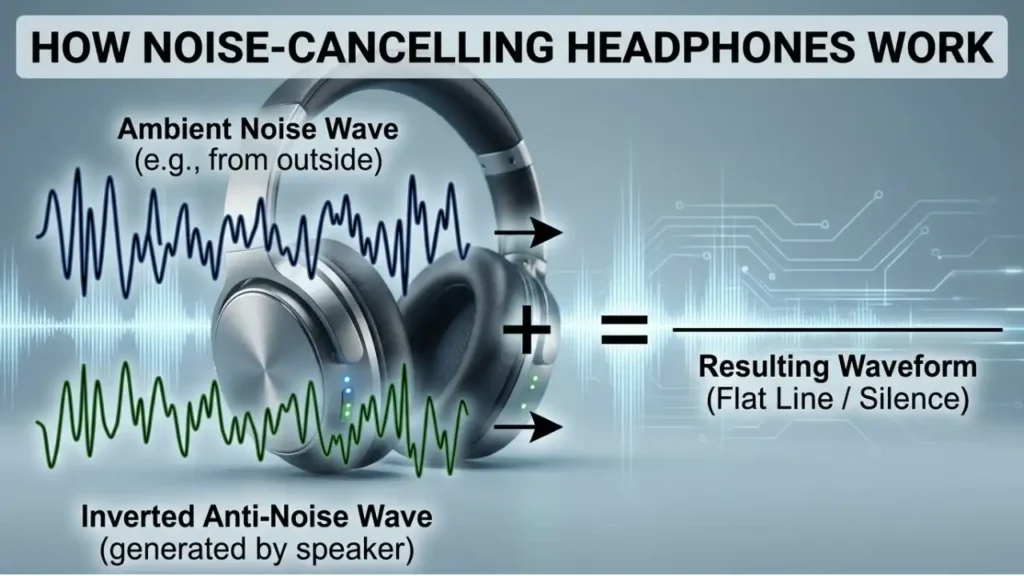
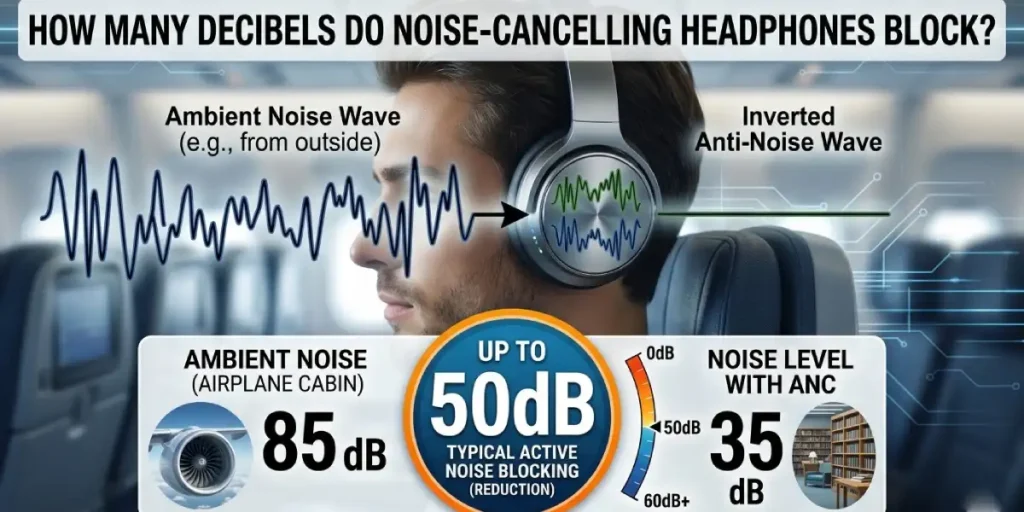
Noise cancelling is a filter calculation, updated constantly from the microphone feed. Firmware decides how aggressive that calculation is, how it handles wind, and how it balances cancelling against the pressure feeling some wearers hate. A small change in the filter can trade a little low-frequency strength for comfort, or the reverse. Transparency mode is the same system run in the opposite direction, so it can change too.
Sensors, fit detection and call processing
The least obvious changes ride in on sensors. SoundGuys lists cases where a tweak to wear detection made headphones disable ANC and EQ because the sensor decided they were not being worn, and where fit-detection logic changed the frequency response by compensating for a seal that was not actually poor. Call processing is also software: noise gating, sidetone and wind handling can all shift in an update, changing how you sound to other people even when your music sounds identical.
Documented cases where sound actually changed
Claims about nerfed ANC follow almost every major update, and most dissolve under measurement. Some do not. Loud and Wireless, which measures the same units before and after firmware releases, found that the Sony WH-1000XM6’s cancelling appeared reduced on one firmware and returned to its previous strength on firmware 3.0.0, with the bass lifting slightly and the upper mids measuring flatter than the version before. In the same round of testing, the Sony WF-1000XM5 on firmware 6.0.0 measured with no change to sound quality at all. Both halves of that result matter: updates can move the sound, and often they do not.
That pattern, measured rather than rumoured, is the honest picture. The XM6 case is useful because nothing about the hardware changed between the two versions. The difference owners debated online was a filter and a curve, changed in software and changed back in software.
Wired headphones sit outside most of this
A passive wired headphone has no tuning chip to rewrite, so its sound is fixed by its driver, housing and pads for life. That is a genuine argument for wired models in studios, where a reference that changes overnight is a problem. The exception is wired gear with a powered stage in the chain, such as a USB dongle or an amplified cable, where the processing lives in the accessory. For a plain cable into a plain jack, what you bought is what you keep, and the only updates are the pads you replace.
Why an update can feel worse even when it measures fine
Three traps catch people. First, an app update alongside the firmware can reset or overwrite your EQ, so you hear the flat default and blame the firmware. Second, expectation is loud: once a forum thread says the bass is gone, you listen for the bass. Third, fit drift is real. Pads compress over months, tips soften, and an update that lands the same week gets credited for a change that was already happening. Before concluding an update hurt your pair, reseat them, check the EQ page, and replay a track you know cold.
Headphones where firmware matters most
The models below score highly in our ratings and all run active DSP tuning and adaptive cancelling, which is exactly the combination firmware can reach. They are good examples of pairs worth updating carefully rather than automatically.


For the models themselves, see our Sony WH-1000XM5 review for the over-ear side of Sony’s range, our Bose QuietComfort Ultra Headphones review, and the head-to-head in Sennheiser Momentum 4 vs Sony WH-1000XM5.
How to protect the tuning you like
Keep a short routine. Screenshot your EQ and note your firmware version before updating. Wait a few days after a release and scan owner reports for measured changes, not vibes. Update with the headphones charged and nearby, and do not interrupt the process. Afterwards, replay two reference tracks before judging: one with deep bass, one with a voice you know well. If something feels off, check the EQ page and the ANC mode first, because app resets cause more panic than firmware does. Our guide on how to EQ your headphones will help you rebuild a curve if yours was overwritten.
Frequently asked questions
Can a firmware update change how my headphones sound?
Yes. On modern wireless headphones the tuning, noise cancelling and microphone processing all run as software on a DSP chip, and firmware is that software. An update can adjust the EQ curve, change how strongly the ANC works, or alter call processing, and the headphones you hear afterwards are genuinely different from the ones you heard before.
Can a firmware update make headphones sound worse?
It can. A sensor tweak can make fit detection misread, an app can overwrite your default EQ, or an ANC adjustment made for one complaint can weaken cancelling for everyone else. Most changes are small and many are fixes, but a worse result after an update is a real possibility, not imagination.
Why do my headphones sound different but my friend’s do not?
Fit is the usual reason. ANC and tuning compensation depend on how the headphones seal on your head or in your ears, and an update that changes sensor thresholds or fit detection will land differently on different people. The same firmware can be a small improvement for one listener and a step back for another.
Should I install headphone firmware updates straight away?
For security and bug fixes, yes, eventually. For sound, a short wait costs nothing: let other owners report for a few days, save a screenshot of your EQ settings first, and note the firmware version you are leaving. If the update only lists bug fixes, install it. If owners report tuning changes you do not want, you can usually hold off.
Can I roll back a firmware update?
Usually not. Most headphone apps offer no downgrade path, which is why the cautious routine matters: record your settings, wait for early reports, and update one device at a time if you own two pairs. A factory reset can restore a default EQ that an app overwrote, but it does not restore old firmware.

I am the founder of Sound Mavericks, where I provide the polite truth about audio equipment. I started this site because consumer electronics reviews are often too technical. Instead of using a silent lab, I test headphones, earbuds, and Bluetooth speakers in the real world – like on a noisy subway or in a busy coffee shop.
To stay independent, I buy my own review units (mostly from the United States) rather than accepting free gifts from brands. Once I finish testing a product, I sell it locally to our community. My goal is to help you understand sound quality, active noise cancellation (ANC), and battery life without the marketing hype.