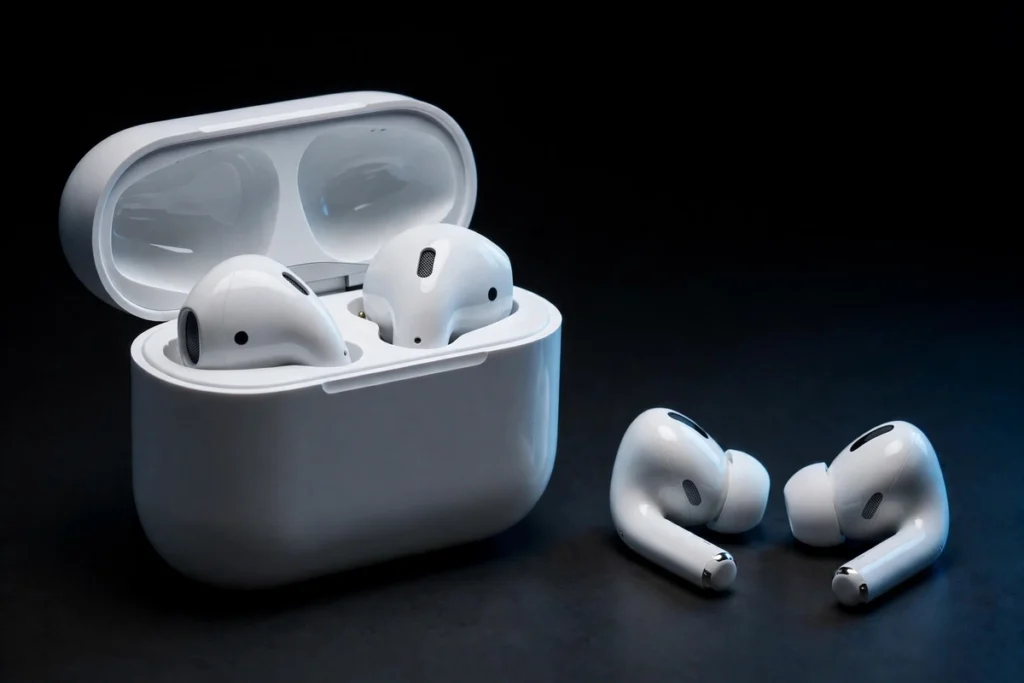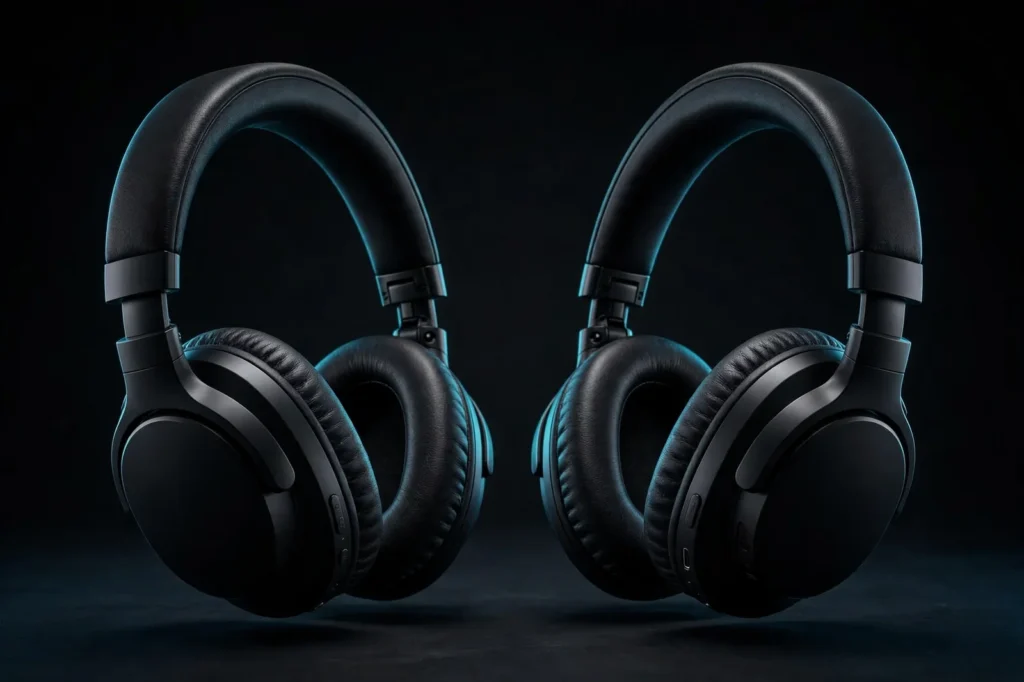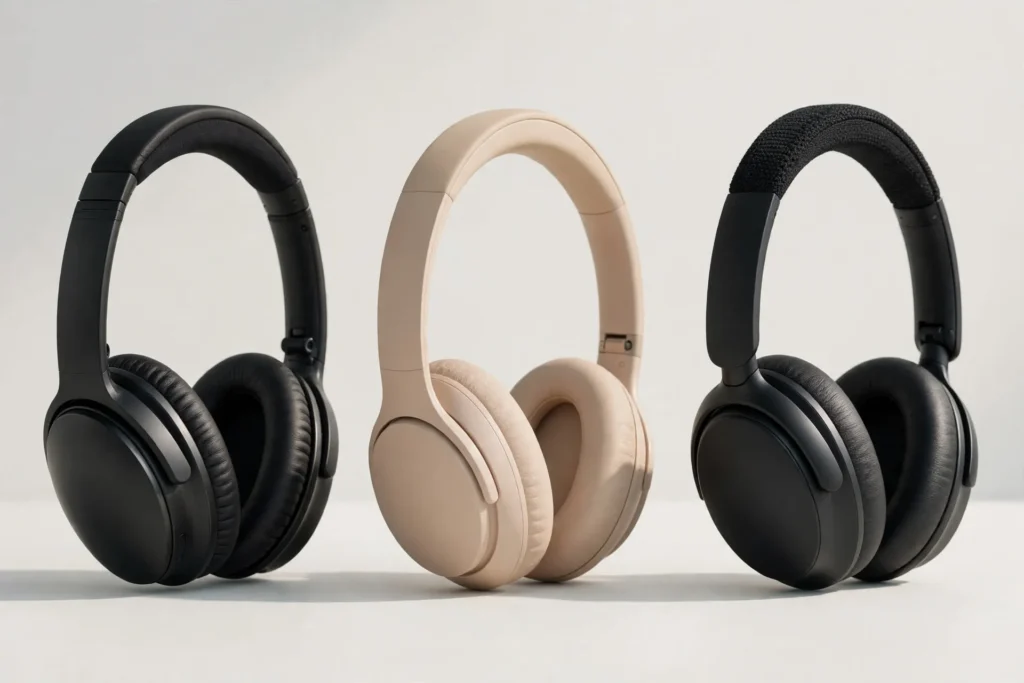
Three brands own the noise cancelling conversation, and each one got there a different way. Bose invented the category for travellers and still treats silence as the product itself. Beats, now deep inside the Apple ecosystem, sells noise cancelling wrapped in bass-forward sound, fashion-led design, and effortless pairing on both iPhone and Android. Sennheiser comes from the studio world: its pitch is that a noise cancelling headphone should first be a great-sounding headphone, and only then a quiet one.
So when shoppers search bose vs beats vs sennheiser noise cancelling, they are really choosing between three philosophies, not three spec sheets. This comparison anchors on each brand’s current flagship over-ear model — the Bose QuietComfort Ultra Headphones (2nd Gen), the Beats Studio Pro, and the Sennheiser Momentum 4 Wireless — and scores them on the things that actually separate them: cancellation strength, sound, battery, codecs, comfort, and controls.
Quick Verdict: Bose for Silence, Sennheiser for Sound, Beats for Value and Style
Best noise cancelling: the Bose QuietComfort Ultra Headphones (2nd Gen) still cancel more of the world than anything else here, and add Immersive Audio and CustomTune calibration on top.
Best sound and battery: the Sennheiser Momentum 4 Wireless pairs the most natural, detailed tuning of the three with a 60-hour battery that doubles its rivals.
Best value and ecosystem pick: the Beats Studio Pro delivers fully adaptive ANC, spatial audio, and USB-C lossless playback in the most wearable, frequently discounted package of the three.

Bose QuietComfort Ultra (2nd Gen) — Best ANC

Beats Studio Pro — Best Value

Sennheiser Momentum 4 — Best Sound
Bose vs Beats vs Sennheiser: Flagship Specs Compared
| Headphone | Noise Cancelling | Battery (ANC on) | Codecs | Weight | Controls | Check Price |
|---|---|---|---|---|---|---|
| Bose QuietComfort Ultra Headphones (2nd Gen) | Adaptive ANC with CustomTune ear calibration; Quiet and Aware modes plus Immersive Audio | Up to 30 hours (up to 23 hours with Immersive Audio) | SBC, AAC, aptX Adaptive (Snapdragon Sound); USB-C lossless audio | 254g | Touch volume strip, multi-function button, Bluetooth button | Check Price |
| Beats Studio Pro | Fully adaptive ANC with Transparency mode | Up to 24 hours (up to 40 hours with ANC off) | SBC, AAC; lossless audio via USB-C with 3 built-in sound profiles; 3.5mm input | 260g | Physical on-ear buttons, including the multi-function “b” button | Check Price |
| Sennheiser Momentum 4 Wireless | Adaptive hybrid ANC with adjustable transparency | Up to 60 hours | SBC, AAC, aptX, aptX Adaptive; USB-C audio; 3.5mm input | 293g | Touch controls on the right earcup | Check Price |
Specs are manufacturer figures from each brand’s listing. The pattern in the table is the story of this comparison: Bose spends its engineering budget on cancellation, Sennheiser on battery and codec support, and Beats on ecosystem features and wired flexibility. Nobody here is weak — they are optimised for different buyers. If you want the wider field before deciding, our best noise cancelling headphones roundup ranks these three against Sony and the rest.
How the Three ANC Systems Actually Differ
All three flagships use feedforward and feedback microphones to cancel noise, but they spend that technology differently. Bose’s system is built around CustomTune: a short calibration chime measures the acoustics of your ears on every wear, and both the cancellation curve and the EQ are re-aimed to match. That is a large part of why the Ultra handles voices and midrange noise — the hardest sounds to cancel, because they are irregular — better than systems that ship with one fixed tuning for every head. Bose also lets you step between full Quiet mode, Aware transparency, and Immersion modes that blend the two.
Sennheiser’s adaptive system takes a set-and-forget approach: it continuously adjusts cancellation strength to your surroundings and exposes a transparency slider in the app, so you choose how much of the world leaks in rather than accepting a fixed level. Beats keeps things simplest — ANC is either fully on, fully off, or replaced by Transparency — and leans on the seal of its earcups plus very fast adaptation when conditions change, such as a train door opening. None of these approaches is wrong. Bose’s is the most personalised, Sennheiser’s the most adjustable, and Beats’ the least fiddly, and that pattern repeats across every category in this comparison.
Sound Quality: Three Tunings, Three Tastes
Put measurements aside and the three sound signatures are easy to tell apart. Bose tunes the QuietComfort Ultra for smooth, low-fatigue listening: present bass, a calm midrange, and treble that never turns sharp, with Immersive Audio widening the stage for films and spatial mixes. Beats tunes the Studio Pro for energy: the low end leads, kick drums and basslines hit hardest here, and quieter detail sits further back — thrilling for pop and electronic music, less faithful for jazz trios and acoustic recordings. Sennheiser tunes the Momentum 4 closest to its studio heritage: the flattest balance of the three, the clearest separation between instruments, and bass that supports rather than stars. Listeners who already own wired hi-fi headphones almost always land on the Sennheiser; listeners who mostly stream playlists split between Bose comfort and Beats excitement. There is no objective winner — but there is a wrong pick for each taste, which is why the per-brand sections below matter.
Bose QuietComfort Ultra (2nd Gen): What Bose Does Best
Bose’s flagship remains the benchmark for raw cancellation. The QuietComfort Ultra’s microphone array samples the sound around you and inside the earcup hundreds of times per second, and CustomTune plays a brief test tone on every wear to calibrate both ANC and sound to your ear shape. The result, in SoundMavericks’ analysis of the measurements and owner reports across the category, is the deepest cut into low-frequency drone — jet engines, train rumble, air conditioning — of any headphone in this comparison, with unusually strong performance in the midrange where voices live. That last point matters: many rivals match Bose on engine hum but leak chatter, and the Ultra is the one that quiets an office properly.
The 2nd Gen model refines rather than reinvents: battery stretches to up to 30 hours, Immersive Audio spatial playback stays on board, and USB-C audio adds a lossless wired path. Comfort is the other Bose signature — the Ultra’s clamping force is gentle, the earcups are roomy, and at 254g it is the lightest flagship here, which is why frequent flyers keep defaulting to it. The trade-offs are real: the case is bulky, the touch volume strip takes practice, and hi-res Bluetooth support depends on a Snapdragon Sound phone for aptX Adaptive. None of that dents the core verdict. If silence is the purchase, this is the purchase.
One step down, the standard Bose QuietComfort Headphones keep most of the Bose comfort and Quiet/Aware experience with up to 24 hours of battery, trading away Immersive Audio and the Ultra’s stronger cancellation. It is the Bose to buy when the Ultra’s extras are not worth the step up to you.
Beats Studio Pro: What Beats Does Best
Beats’ flagship is the pragmatist of the three. The Studio Pro’s fully adaptive ANC is a clear generation ahead of older Beats models — independent measurements place it behind Bose but comfortably ahead of where Beats used to sit — and its Transparency mode is among the most natural-sounding here. Around that core, Beats piles on the features people actually touch daily: personalized spatial audio with dynamic head tracking, one-touch pairing and device switching that work properly on both iPhone and Android, Find My support, and a Fast Fuel charge that returns hours of playback from a short top-up.
Sound is unmistakably Beats: full, warm, and bass-forward, tuned for pop, hip-hop, and EDM rather than acoustic accuracy. Purists will call the low end generous; most listeners will call it fun. The wired story is the Studio Pro’s quiet superpower — USB-C lossless playback with three built-in sound profiles (Beats Signature, Entertainment, and Conversation) plus a 3.5mm input makes it the most flexible laptop and in-flight companion here. At 260g it wears light, folds flat, and is discounted so often that it regularly undercuts both rivals by a wide margin. Our dedicated Bose vs Beats headphones comparison and the head-to-head Beats Studio Pro vs Bose QuietComfort test dig into that two-brand fight in more depth.
If your day is more about portability than cancellation, the on-ear Beats Solo 4 runs up to 50 hours and weighs just 217g — but note it has no active noise cancelling at all, so it sits outside this comparison’s core brief.
Sennheiser Momentum 4 Wireless: What Sennheiser Does Best
Sennheiser builds the Momentum 4 the way it builds studio headphones: sound first. Its 42mm drivers deliver the most balanced and detailed presentation of the three — bass that is present without swamping the midrange, vocals that sit naturally, and treble detail that rewards well-recorded music. Where Bose tunes for comfort listening and Beats tunes for impact, Sennheiser tunes for accuracy, and listeners who cross-shop hi-fi brands notice immediately. Codec support backs the pitch up: aptX Adaptive alongside AAC and SBC means Android owners with compatible phones get genuinely high-quality wireless audio, something the Beats cannot offer.
Then there is the battery. Up to 60 hours with ANC on is double the Beats’ ANC-on figure and double the Bose’s — a full working week of commutes and calls between charges, and a decisive edge for travellers who hate cables. The adaptive ANC itself is strong, a step behind the Bose on deep drone but entirely convincing in daily use, with an adjustable transparency slider in the Sennheiser app. The compromises: at 293g it is the heaviest here, the touch controls divide opinion, and the design is deliberately understated. For the full Sennheiser range, see our best Sennheiser headphones guide, and for its closest cross-brand fight, our Sennheiser Momentum 4 vs Sony WH-1000XM6 comparison.
Below the Momentum 4, the Sennheiser Accentum keeps the family sound and hybrid ANC with up to 50 hours of battery in a lighter, simpler package — the Sennheiser for buyers who want the tuning without the flagship feature list.
Which Brand Wins Your Scenario?
Flights: Bose. Cancellation depth on engine drone, the lightest flagship fit, and a proper hard case make the QuietComfort Ultra (2nd Gen) the traveller’s default. The Momentum 4’s 60-hour battery is the counter-argument on ultra-long-haul trips with no charging access.
Gym and training: Beats, with a caveat — no over-ear flagship here is a true gym headphone, but the Studio Pro is the lightest-feeling, most secure fit of the three and its sound is built for workout playlists. Serious trainers should look at earbuds instead.
Office and calls: Bose again for open-plan noise, because its midrange cancellation handles nearby voices best. The Momentum 4 is the pick if your office day is mostly music with occasional calls, thanks to its battery and sound.
Audiophile listening: Sennheiser, clearly. The Momentum 4 is the only one of the three tuned like a hi-fi headphone first, and aptX Adaptive support makes that tuning count over Bluetooth.
Final Verdict: Bose vs Beats vs Sennheiser Noise Cancelling
There is no universal winner here — there are three correct answers. Choose the Bose QuietComfort Ultra (2nd Gen) if noise cancelling is the reason you are buying: nothing in this comparison cancels more, and its comfort holds up over the longest days. Choose the Sennheiser Momentum 4 Wireless if sound quality and battery life lead your list — it is the connoisseur’s pick and the traveller’s endurance champion. Choose the Beats Studio Pro if you want strong ANC, spatial audio, and the easiest cross-platform experience, especially at its frequently discounted street price. SoundMavericks’ own ranking for a single desert-island pair runs Bose first for silence, Sennheiser a close second on sound, Beats third but first on value — and that ordering flips the moment your priorities do.
Frequently Asked Questions
Which brand has the best noise cancelling: Bose, Beats or Sennheiser?
Bose. The QuietComfort Ultra line consistently measures at or near the top of the category for active noise cancellation, particularly on low-frequency drone and midrange voices. Sennheiser’s Momentum 4 is a strong second, and the Beats Studio Pro sits third — capable, but a clear step behind the Bose.
Is Bose or Sennheiser better for sound quality?
Sennheiser, for most critical listeners. The Momentum 4 Wireless offers the most balanced, detailed tuning of the two flagships, with aptX Adaptive hi-res Bluetooth support. Bose’s QuietComfort Ultra counters with a smooth, comfortable sound and Immersive Audio spatial playback, which many listeners prefer for films and casual listening.
Are Beats Studio Pro noise cancelling as good as Bose?
Not quite. The Studio Pro’s fully adaptive ANC is a major improvement over older Beats models and handles commutes and offices well, but the Bose QuietComfort Ultra cancels noticeably more — especially engine drone on flights and voices in open-plan spaces. The Beats closes the gap on value, battery with ANC off, and ecosystem features.
Which noise cancelling headphones have the longest battery life?
The Sennheiser Momentum 4 Wireless, at up to 60 hours with ANC on — roughly double the Bose QuietComfort Ultra (2nd Gen) at up to 30 hours and the Beats Studio Pro at up to 24 hours with ANC on (40 hours with it off).
Which is better for phone calls, Bose, Beats or Sennheiser?
All three handle calls competently, but the Bose QuietComfort Ultra’s microphone array and CustomTune processing give it the edge in noisy environments. The Beats Studio Pro is a close second thanks to its voice-targeting microphones, and it is the easiest of the three to switch between a phone and a laptop.

I am the founder of Sound Mavericks, where I provide the polite truth about audio equipment. I started this site because consumer electronics reviews are often too technical. Instead of using a silent lab, I test headphones, earbuds, and Bluetooth speakers in the real world – like on a noisy subway or in a busy coffee shop.
To stay independent, I buy my own review units (mostly from the United States) rather than accepting free gifts from brands. Once I finish testing a product, I sell it locally to our community. My goal is to help you understand sound quality, active noise cancellation (ANC), and battery life without the marketing hype.