Quick Verdict: Buy the A30 New, Keep (or Buy Used) the A20
The Bose A30 is the headset to buy new. It replaces the A20 with digital noise cancelling in three selectable modes, 20% less clamping force, a toolless swappable microphone, tap-through communication, and more flexible power. The Bose A20 was discontinued in 2023, so today it is a used-market buy — and a very good one. Its single-mode noise reduction, clear audio, and proven durability still hold up, which is exactly why used A20s keep their value. Already own an A20 in good shape? There is no urgent reason to upgrade unless comfort on long legs is your main complaint.
For more than a decade, the Bose A20 was the aviation headset other headsets were measured against. Then, in 2023, Bose replaced it with the A30 — not a cosmetic refresh, but a ground-up successor with digital active noise cancelling, selectable ANR modes, and a redesigned fit. That leaves pilots with a real question: is the A30 enough of a step forward to justify buying new, or does a used A20 deliver most of the experience for less?
SoundMavericks compared the two headsets spec by spec and feature by feature — noise cancelling, Bluetooth, microphone, plug options, comfort, and power — so you can see exactly what changed, what stayed the same, and which headset fits your flying. If you are still weighing aviation headsets against travel headphones in general, our guide to the best headphones for airplane travel covers the passenger side of the equation; this comparison is strictly about the cockpit.

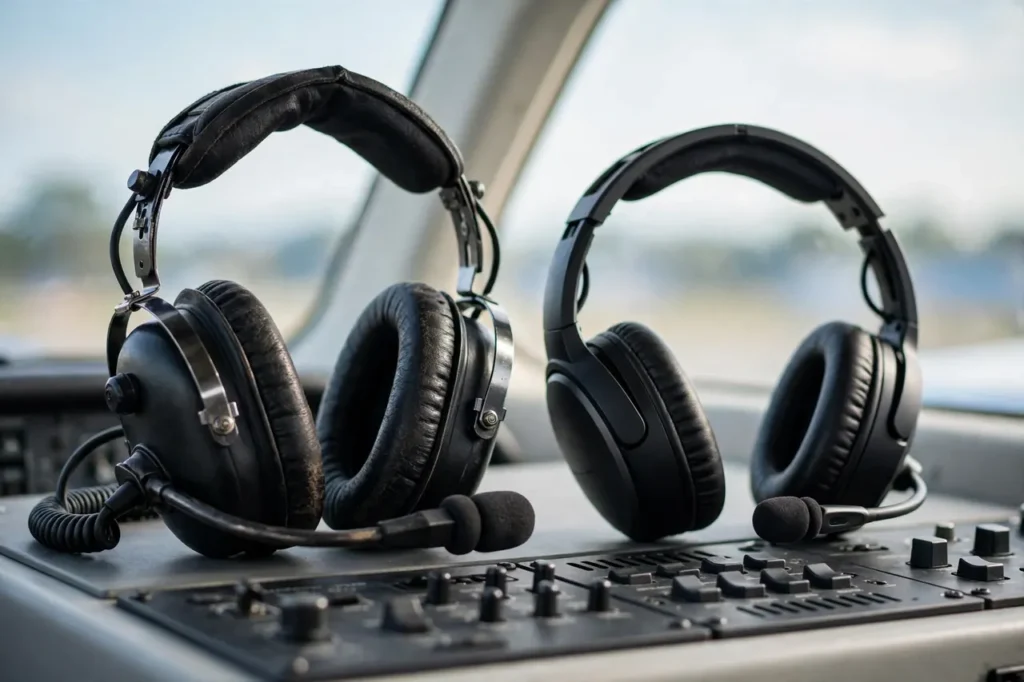
Bose A20 (Bluetooth, Dual Plug)

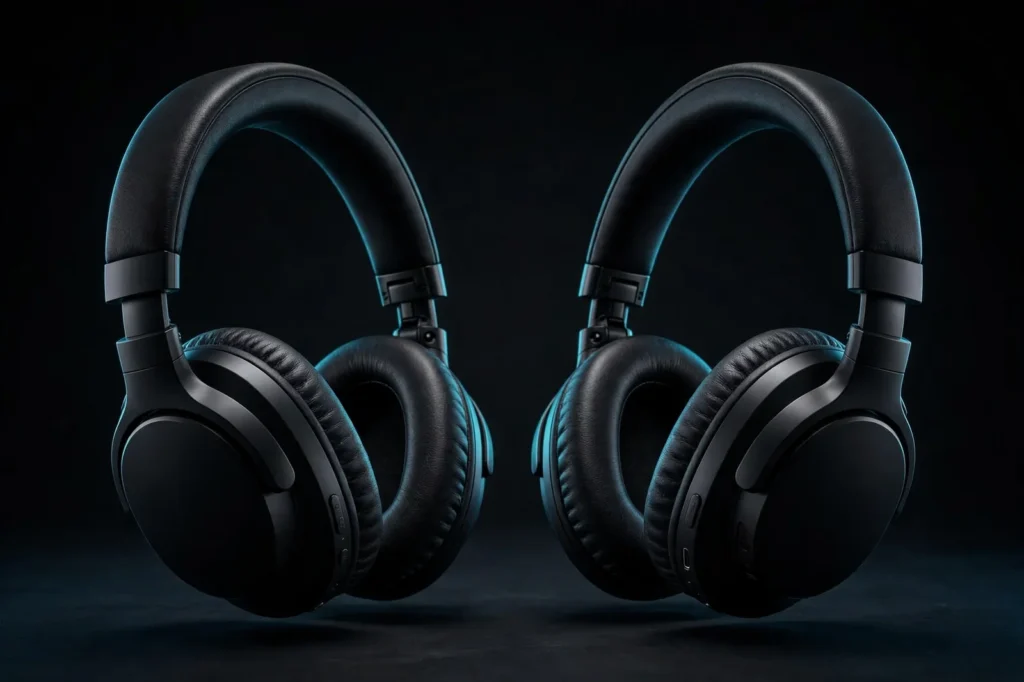
Bose A30 (Bluetooth, Dual Plug)
Bose A20 vs A30: Specs Side by Side
| Spec | Bose A20 | Bose A30 |
|---|---|---|
| Status | Discontinued (2023); used / remaining stock | Current model, sold new |
| Noise cancelling system | Active noise reduction, single fixed level | Digital active noise cancellation |
| ANR modes | 1 (always the same tune) | 3 selectable: Low, Medium, High |
| Talk-through | No | Yes — double-tap an earcup to drop that side to Low |
| On-head weight | 12 oz (340 g) | 14.2 oz (404 g) |
| Clamping force | 30% less than conventional aviation headsets | 20% less than the A20 |
| Bluetooth | Optional (Bluetooth and non-Bluetooth versions) | Optional; Bluetooth versions add multipoint pairing |
| Audio prioritization | Mute or Mix | Mute, Mix, or Off |
| Microphone | Noise-cancelling electret (dynamic options); side-swappable with tools | Noise-cancelling electret (5-ohm and 150-ohm dynamic options); toolless side swap |
| Plug options | Dual GA, 6-pin LEMO, U-174 helicopter | Dual GA, 6-pin LEMO, 5-pin XLR, U-174 helicopter |
| Cord options | Straight or coiled | Straight or coiled; thinner, lighter cable |
| Power | 2 x AA batteries; aircraft power on panel-powered versions | 2 x AA batteries, aircraft power, or USB via the control module |
| Battery life | At least 45 hours on 2 AA batteries | 45+ hours on 2 AA batteries; 25+ hours with continuous Bluetooth |
| Certification | FAA TSO / EASA E/TSO-C139 | FAA TSO / EASA E/TSO-C139a |
| Warranty | 5 years | 5 years |
One line in that table surprises people: on Bose’s published figures, the A30 is actually the heavier headset on the scale — 14.2 oz against the A20’s 12 oz. Yet pilots consistently describe the A30 as the one that feels lighter over a long day. The reason is fit, not mass: Bose cut clamping force by a further 20% and redistributed the weight, so the A30 presses less even though it weighs slightly more. It is a useful reminder that headset comfort is about pressure and balance, not just grams.
What Is the Difference Between the Bose A20 and A30?
The short answer: the A30 is a refinement in almost every direction rather than a reinvention. Both headsets share the same job — around-ear active noise reduction, a noise-cancelling boom microphone, active equalization for clear radio audio, and a control module with auxiliary input and audio prioritization. What the A30 adds is control: control over how much cancellation you get, control over which side the microphone sits on without reaching for a screwdriver, and control over power, with USB joining batteries and aircraft power. The A20 gives you one excellent, fixed experience. The A30 lets you tune that experience to the airplane you are sitting in.
Noise Cancelling: One Fixed Tune vs Three Selectable Modes
This is the headline difference. The A20’s active noise reduction runs at a single, fixed level — the level Bose judged best for a typical piston cockpit. It made its reputation honestly: Bose rated it at 30% greater noise reduction than conventional aviation headsets, and generations of pilots found radio calls clearer and fatigue lower because of it.
The A30 moves to a fully digital system with three selectable modes — Low, Medium, and High. That matters because cockpits are not all equally loud. High suits a loud piston single on climb-out. Medium fits cruise in a quieter airframe. Low keeps more awareness in a multi-crew environment or a quiet jet, where maximum isolation can actually get in the way. On top of that, the A30 adds tap-through communication: double-tap an earcup in Medium or High and that side drops to Low, so you can hear a passenger, instructor, or line crew member without breaking an ear seal or reaching for the control module. The A20 has no equivalent — your options are lifting a cup or turning your head.
SoundMavericks’ take: the A20’s fixed tune is still genuinely good, and in a loud piston cockpit at full power the practical gap narrows. But flexibility is a real upgrade, not a gimmick — the A30 adapts to the airplane instead of asking you to adapt to it. Winner: Bose A30.
Bluetooth and Audio Prioritization
Both headsets were sold in Bluetooth and non-Bluetooth versions, so check the exact variant before you buy either one — a non-Bluetooth A20 cannot be upgraded later. On Bluetooth versions, both connect to a phone or electronic flight bag for music, calls, and audio alerts, and both let you choose how that secondary audio interacts with the intercom.
The A20 offers two prioritization settings: Mute, which silences secondary audio when an intercom or radio signal arrives, and Mix, which plays both together. The A30 adds a third setting, Off, and its Bluetooth versions support multipoint pairing, so a phone and a tablet can stay connected at the same time — the setup most pilots actually want, with the EFB handling alerts and the phone handling everything else. Connection stability and the control module’s tactile buttons are also improved on the A30, which matters with gloves on and eyes outside.
SoundMavericks’ take: if Bluetooth matters to you, the A30’s multipoint support and extra prioritization mode make it the cleaner cockpit tool. The A20’s Bluetooth does the basics well, but it is a one-device-at-a-time world. Winner: Bose A30.
Microphone: Same Job, Friendlier Design
Both headsets use a noise-cancelling electret boom microphone as standard — engineered to reject cockpit noise and keep transmissions intelligible on both push-to-talk radio and hot-mic intercom systems — with 5-ohm and 150-ohm dynamic microphone options for aircraft that need them. Both also support Bose’s side-swappable layout, so the boom and down cable can sit on the left or right earcup to suit your seat position.
The difference is how you swap. On the A20, moving the microphone means tools — screws out, swap, screws back in. On the A30, the boom and cable clip in and out without any tools. That sounds minor until you share a cockpit, instruct from both seats, or fly rental aircraft with different layouts; then it becomes the feature you use every week. The A30’s microphone was also retuned for speech clarity, with active equalization shaping incoming audio so calls stay crisp at lower volumes.
SoundMavericks’ take: transmission quality is close — both are clear, proven cockpit microphones. The A30 wins on the toolless swap and day-to-day flexibility. Winner: Bose A30, narrowly.
Cable and Plug Options: Match the Headset to Your Aircraft
Whichever headset you choose, the plug has to match your panel — this is the decision that actually grounds you if you get it wrong. The A20 was offered with dual GA plugs (the general aviation standard), a 6-pin LEMO connector for panel-powered installations, and a U-174 plug for helicopters, in straight or coiled cords. The A30 covers all of those and adds a 5-pin XLR version common in Airbus and other jet cockpits.
Two practical notes. First, LEMO versions can draw power from the aircraft panel, which frees you from battery anxiety on long trips; dual-plug versions run on the headset’s own AA batteries. Second, the A30’s cable itself is thinner and lighter than the A20’s, with a redesigned, more compact control module — a small thing that adds up over a four-leg day. Because the A20 is discontinued, its remaining new stock and used listings skew toward dual-plug GA versions; if you need a specific A20 plug for a panel installation, expect to hunt.
SoundMavericks’ take: a draw on the common GA dual-plug setup most private pilots fly; the A30 wins if you need 5-pin XLR or simply want the guarantee of finding your exact configuration new. Winner: Bose A30 for range, tie for typical GA use.
Comfort: Why the Heavier Headset Feels Lighter
The A20 was already a comfort benchmark — 12 oz on the head and 30% less clamping force than conventional aviation headsets, with plush ear seals that hold up over long cross-countries. Plenty of pilots fly six-hour days in one without complaint, and that has not changed.
The A30 attacks the remaining pressure points. Clamping force drops a further 20% compared with the A20, the weight is spread more evenly, and redesigned earcups are molded specifically for the left and right ears. The honest caveat is the scale: at 14.2 oz, the A30 is the heavier headset on paper. In practice, pressure — not outright weight — is what produces the familiar temple ache two hours in, and that is precisely what Bose reduced. Reviewers who flew both, including KITPLANES’ evaluation of the A30 at launch, singled out comfort as the most noticeable improvement.
SoundMavericks’ take: short flights, either headset is comfortable. On long legs, in heat, or over glasses, the A30’s lower clamp is the difference you will actually feel. Winner: Bose A30.
Battery Life and Power
Both headsets run on two AA batteries, and both are rated at at least 45 hours of use — genuinely fit-and-forget endurance. The A30 adds smarter power management with auto shut-off and one honest asterisk: keep Bluetooth streaming continuously and the rating drops to 25+ hours, still more than a week of typical flying days. The A30 also accepts power three ways — batteries, aircraft power on panel-powered versions, and USB through the control module — where the A20 tops out at batteries plus aircraft power on LEMO installations. Both headsets continue to work in a passive bypass mode if power runs out mid-flight, so a dead battery never means a silent cockpit.
SoundMavericks’ take: effectively a tie on endurance; the A30’s USB option is a small but real quality-of-life win. Winner: Tie.
Should You Upgrade From the A20 to the A30?
If your A20 works and fits you well, our honest answer is: not urgently. The A20’s noise reduction and audio clarity remain excellent, Bose continues to support it, and the A30’s upgrades are refinements rather than a revolution. Upgrade when one of these is true: headset pressure bothers you on long flights, you regularly fly more than one type of aircraft and would use the selectable ANR modes, you share cockpits and want the toolless microphone swap, or your A20 is simply worn out and due for replacement anyway. If you are buying your first premium headset, skip the dilemma — the A30 is the current model, fully warrantied, and available in every plug configuration.
New to aviation headsets entirely? It is worth knowing that our best aviation headset roundup compares the A30 against Lightspeed and David Clark alternatives for different budgets and cockpit types before you commit.
Who Should Buy Which
Buy the Bose A30 if you:
- Are buying a premium aviation headset new and want the current, fully supported model
- Fly long legs and want the lowest clamping force Bose offers
- Fly different aircraft types and would use Low / Medium / High ANR modes
- Want tap-through communication without breaking an ear seal
- Need multipoint Bluetooth for a phone plus an electronic flight bag
- Need a 5-pin XLR plug for a jet cockpit, or USB power flexibility
- Instruct or share cockpits and want a toolless microphone swap
Buy the Bose A20 (used) if you:
- Found a well-kept used example in the exact plug configuration you need
- Fly one aircraft type, mostly in a consistently loud cockpit where a fixed ANR tune is fine
- Prefer the lighter on-paper weight of 12 oz
- Do not need selectable ANR modes, tap-through, or multipoint Bluetooth
- Want proven Bose noise reduction and audio clarity for less than a new flagship
Final Verdict
The Bose A30 wins this comparison the way good successors should: it keeps everything that made the A20 the benchmark — clear audio, serious noise reduction, 45-hour battery life, a five-year warranty — and removes its friction points. Three ANR modes, tap-through, a toolless microphone, multipoint Bluetooth, USB power, and 20% less clamping force add up to the headset we recommend buying new. The Bose A20 remains the smart used buy: discontinued, yes, but not obsolete, and still one of the best-sounding, best-built headsets a pilot can put on. Choose by how you buy — new money goes to the A30; a good used deal still belongs on an A20.
Frequently Asked Questions
Is the Bose A30 better than the A20?
Yes, for most pilots buying today. The A30 adds digital noise cancelling with three selectable modes, tap-through communication, a toolless swappable microphone, multipoint Bluetooth, USB power, and 20% less clamping force. The A20 is still an excellent headset, but it was discontinued in 2023, so it is now a used-market purchase.
Is the Bose A20 discontinued?
Yes. Bose discontinued the A20 in 2023 when the A30 replaced it as the flagship aviation headset. Bose continues to support the A20, and well-maintained used examples remain widely available — just verify the plug type and whether the version you are looking at includes Bluetooth.
How many noise cancelling modes does the Bose A30 have?
Three: Low, Medium, and High. You select the mode to match your cockpit — High for loud piston aircraft, lower settings when you want more situational awareness. The A20, by contrast, runs a single fixed level of active noise reduction. The A30 also adds double-tap talk-through, which drops one earcup to Low so you can hear someone beside you.
What is the weight difference between the Bose A20 and A30?
On Bose’s published figures, the A20 weighs 12 oz (340 g) on the head and the A30 weighs 14.2 oz (404 g), so the A30 is heavier on the scale. In practice the A30 usually feels lighter over long flights because it applies 20% less clamping force than the A20 and distributes its weight more evenly.
Does the Bose A20 have Bluetooth?
Some versions do. The A20 was sold in Bluetooth and non-Bluetooth variants, and Bluetooth cannot be added later, so check the exact listing before buying used. Bluetooth A30 versions go further, adding multipoint pairing so a phone and an electronic flight bag can stay connected at once.
Can you swap the microphone side on the Bose A20 and A30?
Yes on both — the boom microphone and down cable can be mounted on either earcup. The difference is the method: the A20 requires tools to remove and refit the screws, while the A30’s microphone and cable clip in and out with no tools at all.
Which plugs does the Bose A30 come with?
The A30 is available with dual GA plugs, a 6-pin LEMO connector, a 5-pin XLR connector, and a U-174 helicopter plug, in straight or coiled cords depending on the version. The A20 covered dual GA, 6-pin LEMO, and U-174. Always match the plug to your aircraft’s panel before ordering.

I am the founder of Sound Mavericks, where I provide the polite truth about audio equipment. I started this site because consumer electronics reviews are often too technical. Instead of using a silent lab, I test headphones, earbuds, and Bluetooth speakers in the real world – like on a noisy subway or in a busy coffee shop.
To stay independent, I buy my own review units (mostly from the United States) rather than accepting free gifts from brands. Once I finish testing a product, I sell it locally to our community. My goal is to help you understand sound quality, active noise cancellation (ANC), and battery life without the marketing hype.