Updated: October 7, 2026. Picks re-checked against current 2026 lineups and availability.
TV watching is a different job than music listening, and the headphones that win at it are the ones that nail four things: latency you can’t perceive (no lip-sync drift), comfort through a two-hour movie, dialogue that stays intelligible when the action gets loud, and a connection setup that actually fits your TV. The Sennheiser RS 175 is the best dedicated TV system — RF wireless with effectively zero latency and a transmitter that doubles as a charging dock. The Sony WH-1000XM6 is the best all-around Bluetooth option, with multipoint, 30-hour battery, and excellent dialogue clarity. The Bose QuietComfort Ultra Headphones 2nd Gen wins for ANC in noisy living rooms. The Apple AirPods Max (USB-C) is the natural pick for Apple TV owners. The Avantree Ensemble is the best value plug-and-play TV system. And the Sony WF-1000XM6 is the best earbud pick, with LE Audio and Auracast support for the broadcast-audio era.
1. Sennheiser RS 175 — Best Dedicated TV System

Sennheiser RS 175
The purpose-built answer for TV: zero-perceptible-latency RF with a transmitter you just plug in and forget.
The RS 175 is not a general-purpose headphone repurposed for TV duty — it’s a TV system by design. The base station plugs into your TV’s optical (PCM/stereo) or 3.5mm output and transmits over dedicated RF, so lip sync is effectively perfect and there’s no Bluetooth codec negotiation to worry about. Sennheiser rates the range at up to 100 meters (line of sight), and RF punches through walls in a way Bluetooth simply doesn’t, so you can walk to the kitchen without losing the dialogue.
The base doubles as a charging dock: drop the headphones on it and they recharge, with Sennheiser rating 18 hours of operating time per charge. Two listening modes — bass boost and a virtual surround simulation — add weight and width to movies without any app or EQ fiddling, and the transmitter supports a second pair of RS-series headphones if two people want to watch together. The trade-off is explicit: these aren’t Bluetooth headphones, so they won’t pair with your phone. As a single-purpose TV product, though, nothing else on this list is this frictionless.
2. Sony WH-1000XM6 — Best All-Around Bluetooth Pick

Sony WH-1000XM6
Flagship multipoint Bluetooth headphones with class-leading ANC and dialogue clarity that survives loud scenes.
If you want one pair of headphones that covers TV, travel, music, and calls, the XM6 is the pick. The QN3 processor and 30mm drivers deliver a detailed, balanced sound where dialogue sits forward in the mix — voices stay intelligible even when the score swells. Bluetooth 5.3 with multipoint means the headphones stay connected to your phone while you’re paired to the TV, and the 30-hour battery (ANC on) means a full week of evening viewing between charges. At 254g with a redesigned, foldable frame, they’re genuinely comfortable for full movie sessions.
The latency caveat: the XM6 supports LDAC, AAC, and SBC — but not aptX Low Latency — so lip sync depends on your setup. If your TV supports LDAC (several Sony Bravia models do), delay is reasonable; otherwise, pair the XM6 with a low-latency Bluetooth transmitter, or use the wired 3.5mm connection for a zero-latency fallback. For a deeper look at how the XM6 stacks up against its predecessor, read our Sony WH-1000XM6 vs XM5 vs XM4C comparison.
3. Bose QuietComfort Ultra Headphones 2nd Gen — Best ANC for Noisy Rooms
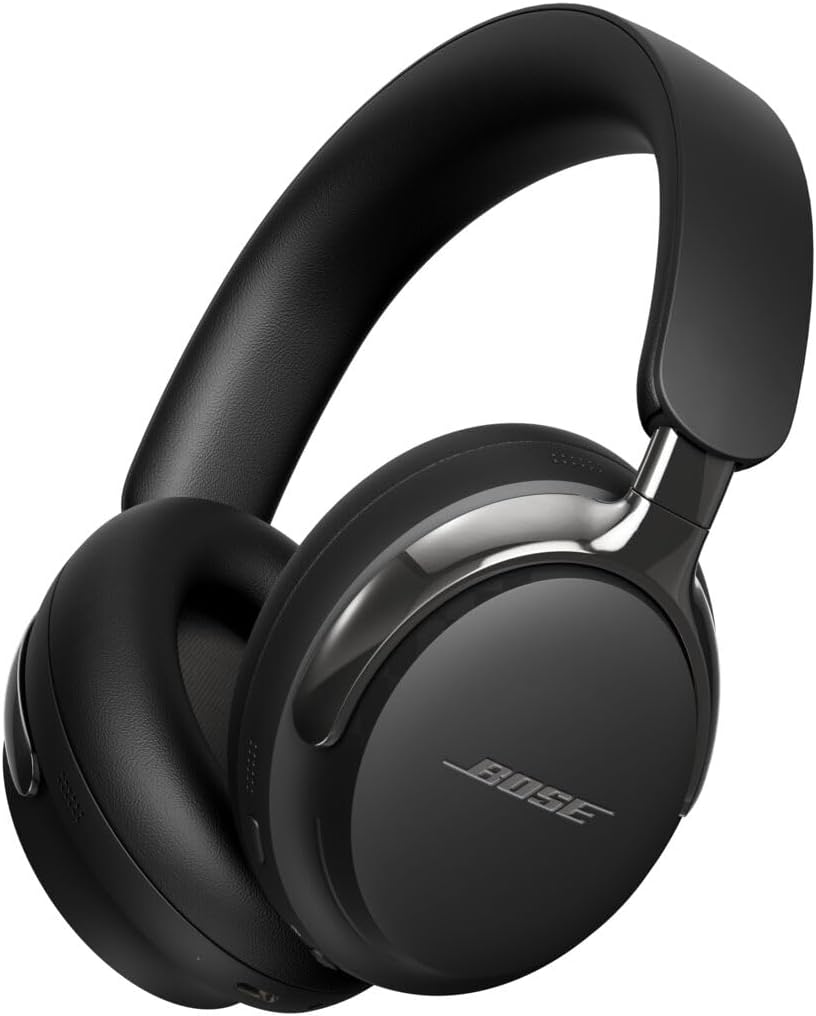
Bose QuietComfort Ultra Headphones 2nd Gen
Bose’s best noise cancelling plus a Cinema Mode that widens movie sound — ideal when the house isn’t quiet.
Bose’s ANC remains the benchmark, and that’s the whole case here: if your living room competes with a dishwasher, street noise, or other people talking, the second-gen QC Ultra’s CustomTune-calibrated cancellation deletes more of it than anything else you can buy. The result is quiet dialogue in dramas staying audible without reaching for the volume. Cinema Mode adds a spatial width to the soundstage that suits movies, and it can be switched off for conventional stereo. Bluetooth 5.4, multipoint, and a 30-hour battery round out a flagship spec sheet, and the included 2.5mm-to-3.5mm cable gives you a zero-latency wired option straight to the TV’s headphone jack with ANC still running.
Codec support is SBC and AAC only, so for wireless lip sync you’d lean on the TV’s own delay handling or a transmitter — the wired cable remains the bulletproof path. We compare it head-to-head with Sony’s flagship in our Sony WH-1000XM6 vs Bose QuietComfort Ultra 2 breakdown.
4. Apple AirPods Max (USB-C) — Best for Apple TV Owners
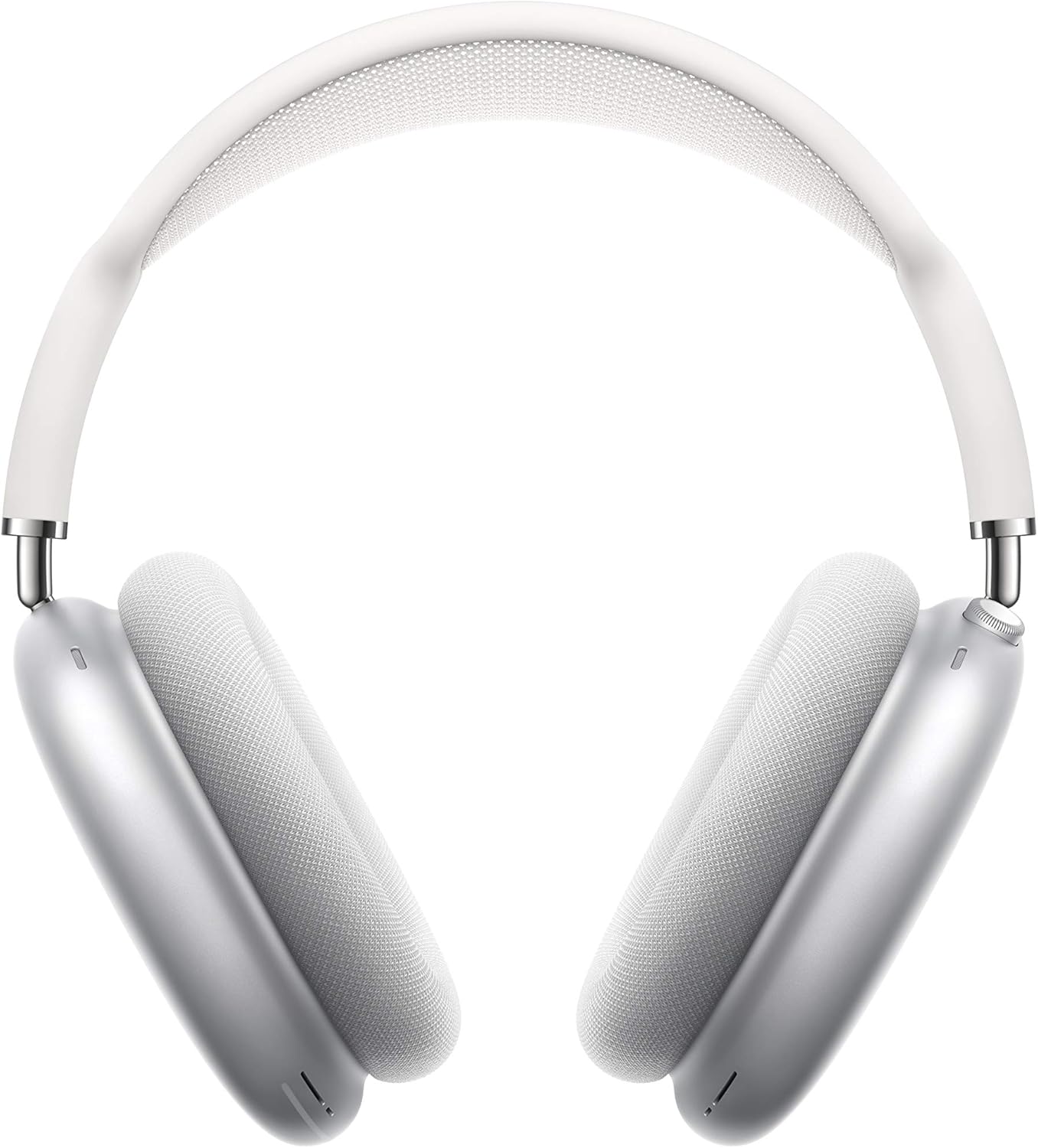
Apple AirPods Max (USB-C)
The most seamless option for Apple TV: paired with tvOS, you get spatial audio and effortless device switching.
The current AirPods Max — now with USB-C — is the obvious choice if your TV setup runs through an Apple TV 4K. Pairing is nearly instant, device switching between iPhone, iPad, Mac, and Apple TV is automatic, and personalized spatial audio with Dolby Atmos content delivers the most theatrical presentation of anything here. Apple TV also supports pairing two sets of AirPods-family headphones at once, so two viewers can watch privately on a single box.
The compromises are weight and versatility outside Apple-land. At 385g (Apple’s listed weight) these are the heaviest pick on this list, and Bluetooth 5.0 with AAC/SBC means latency on non-Apple sources is whatever the source provides — fine on Apple TV, variable elsewhere. The 20-hour battery is solid but the shortest here. If your living room is an Apple household, though, no other headphone integrates this cleanly. Note: the USB-C revision is the current model — Apple hasn’t released a true “AirPods Max 2,” so don’t overpay hunting for one.
5. Avantree Ensemble — Best Value Plug-and-Play TV System

Avantree Ensemble
A complete TV bundle — low-latency transmitter, charging dock, and 35-hour headphones — at a fraction of flagship cost.
The Ensemble bundles the same formula as the RS 175 — a transmitter that doubles as a charging dock — with a key difference: its transmitter broadcasts Bluetooth. Avantree rates the latency under 40ms (a manufacturer claim), well below the 150–250ms of typical SBC Bluetooth, so lip sync stays visually tight. Setup is genuinely simple: plug the dock into power and your TV’s optical, 3.5mm, or RCA output, and the headphones connect with no pairing step. The box includes all three cable types, so it works with TVs that have no Bluetooth at all.
At 234g with 40mm drivers and 35 hours of playtime per charge, the headphones themselves are comfortable and long-running for late-night binges. And because they’re Bluetooth, they can also pair directly with a phone or tablet when they leave the living room — a flexibility the RS 175 can’t match. Sound quality won’t rival the flagships, but for dialogue-forward TV watching it’s clear and balanced.
6. Sony WF-1000XM6 — Best Earbuds for TV Watching

Sony WF-1000XM6
Discreet, multipoint-capable earbuds with LE Audio and Auracast — the most future-proof pick for TV broadcast audio.
Not everyone wants to wear full-size headphones on the couch or in bed, and the WF-1000XM6 makes the strongest earbud case for TV. Sony’s QN3e chip drives genuinely flagship-level ANC in a 6.5g-per-earbud shell, Bluetooth 5.3 brings multipoint (phone stays connected while the TV plays), and LDAC support means quality sources don’t get throttled. Sony rates 8 hours per charge with 24 hours total in the case; SoundGuys’ lab testing measured 9 hours 41 minutes of ANC-on playback — comfortably past a movie marathon.
The differentiator is LE Audio with Auracast support at launch. Auracast lets one broadcast stream feed unlimited receivers — as TVs and set-top boxes adopt it (see our Auracast headphones guide), these earbuds are already on the right side of that transition. Head-tracked 360 Reality Audio is there for immersive content on supported platforms. For earbud comfort, the redesigned pill-shaped fit is a clear step up from the XM5 generation. We compare them against Apple’s best in AirPods Pro 3 vs Sony WF-1000XM6.
How to Choose: Latency, Comfort, Dialogue, and Connectivity
Latency is the deciding spec. Standard Bluetooth (SBC) typically runs 150–250ms end-to-end — enough that lips visibly drift out of sync with dialogue. Under about 40ms, the mismatch becomes imperceptible to most viewers. That’s why the dedicated picks here lead: RF systems like the Sennheiser RS 175 have effectively zero perceptible delay, and Avantree’s Ensemble transmitter keeps its Bluetooth link under 40ms (manufacturer claim). If you go the plain-Bluetooth route with a flagship like the XM6 or QC Ultra, check whether your TV supports a low-latency codec (aptX Low Latency or Adaptive on Samsung, LG, and Sony sets) — and if it only does SBC, budget for an external low-latency transmitter, or use the wired cable the Bose includes.
Comfort is about weight distribution, not just weight. A two-hour movie is a long time with something on your head. Over-ears under ~300g with deep, soft earcups (the XM6 at 254g, the QC Ultra) disappear; the 385g AirPods Max will remind you they’re there during longer sessions. If over-ears aren’t your thing at all, earbuds like the WF-1000XM6 are the answer for couch or in-bed viewing — nothing presses against the pillow.
Dialogue clarity comes from tuning, not bass. Look for headphones that keep the midrange forward rather than burying voices under low end. The XM6’s dialogue-forward tuning is the standout among the flagships, and both dedicated TV systems (RS 175’s surround mode, Ensemble’s balanced tuning) prioritize speech. If dialogue is consistently your problem, a headphone with speech-enhancement modes beats raw volume every time.
Match the connection to your TV. Start by checking your TV’s actual outputs: optical (TOSLINK), 3.5mm, HDMI ARC, or built-in Bluetooth. No Bluetooth? A transmitter system (RS 175, Ensemble) is the simple path — the base handles the connection so the TV doesn’t need to. One listener needs headphones while another uses the TV speakers? That depends on the TV: some models support dual audio output, so verify before buying. And keep an eye on Auracast: broadcast audio lets multiple headphones receive the same TV stream with low latency, and it’s the direction the whole category is moving — our Auracast guide tracks which headphones support it.
FAQ
Can I use any Bluetooth headphones with my TV?
Only if your TV supports Bluetooth audio output — check your TV’s settings or manual first. Even then, compatibility, volume control, and lip sync vary by model. If your TV lacks Bluetooth, a transmitter system like the Sennheiser RS 175 or Avantree Ensemble adds wireless audio through the TV’s optical or 3.5mm output.
What is the lowest-latency wireless option for TV?
Dedicated RF systems like the Sennheiser RS 175, which use their own transmitter rather than Bluetooth — the delay is effectively imperceptible. Short of that, a Bluetooth transmitter/headphone pair keeping end-to-end latency under about 40ms (like the Avantree Ensemble’s claimed under-40ms link) stays visually in sync for most viewers.
Do I need noise cancelling for TV watching?
Not in a quiet room — the dedicated RF systems don’t have ANC at all and do the job fine. ANC earns its place when the room is noisy: household appliances, traffic, or other people talking. The Bose QuietComfort Ultra 2nd Gen and Sony WH-1000XM6 are the strongest ANC options on this list.
Can two people use wireless headphones with the same TV?
It depends. The Sennheiser RS 175 transmitter supports a second compatible headset (sold separately). Apple TV lets you pair two sets of AirPods-family headphones simultaneously. Auracast-equipped sources can broadcast to unlimited receivers, including the Sony WF-1000XM6. Standard single-point Bluetooth pairing is one headset at a time.
What is Auracast and why does it matter for TV?
Auracast is Bluetooth LE Audio’s broadcast mode: one audio source can stream to any number of receivers simultaneously with low latency. For TV, that means multiple viewers can each use their own Auracast headphones from one TV with no splitter hacks. The Sony WF-1000XM6 already supports it, making it the most future-proof pick here.
Will Bluetooth headphones have lip-sync delay with my TV?
It depends on the codec both ends negotiate. Standard SBC Bluetooth typically introduces 150–250ms of delay — visibly out of sync. If your TV and headphones agree on a low-latency codec (aptX Low Latency, aptX Adaptive, or LE Audio’s LC3), delay drops to levels most viewers can’t perceive. Dedicated RF systems and low-latency transmitters sidestep the problem entirely.
Changelog
- October 7, 2026: Initial publication. Six picks selected after reviewing current 2026 lineups and competitor coverage; Sennheiser RS 195 excluded as End of Life on Sennheiser’s site (replaced by RS 175 as the dedicated-system pick).

I am the founder of Sound Mavericks, where I provide the polite truth about audio equipment. I started this site because consumer electronics reviews are often too technical. Instead of using a silent lab, I test headphones, earbuds, and Bluetooth speakers in the real world – like on a noisy subway or in a busy coffee shop.
To stay independent, I buy my own review units (mostly from the United States) rather than accepting free gifts from brands. Once I finish testing a product, I sell it locally to our community. My goal is to help you understand sound quality, active noise cancellation (ANC), and battery life without the marketing hype.