Search for noise cancelling headphone reviews and you will drown in verdicts: lab measurements from one outlet, star ratings from another, “best overall” crowns that seem to change with every publication date. Shoppers who type a query like “noise cancelling headphones reviews consumer reports” are usually asking a simpler question underneath all of it — what do the experts collectively agree on? This guide answers that question. SoundMavericks has aggregated the published verdicts of the major review outlets, looked for where they converge and where they genuinely split, and then applied our own synthesis on top. Our ranking leads, our reasoning runs throughout, and where a specific verdict belongs to a specific outlet, we credit it by name. No outlet’s scores are presented as ours, and we do not impersonate any publication — this is a consensus map, drawn honestly.
The expert consensus #1 is the Sony WH-1000XM6 — the model that appears at or near the top of more major-outlet rankings than any rival. The Bose QuietComfort Ultra Headphones (2nd Gen) is the consensus pick for pure silence and comfort. The Sennheiser Momentum 4 is the consensus value flagship, and the Sony WH-CH720N is the budget pick reviewers keep agreeing on.
How This Consensus Was Built
A consensus ranking is not an average of star ratings, because outlets do not measure the same things the same way. Measurement-led reviewers such as RTINGS and SoundGuys publish instrumented noise-attenuation and frequency-response data. Listening-led publications such as What Hi-Fi? weight tonal balance and musical engagement. Consumer-testing organisations — Consumer Reports being the best known — run standardised lab panels and survey owner reliability. Wirecutter-style guides weight everyday usability, controls, and long-term wear. When six headphones appear across nearly all of those methodologies and still cluster in the same order, that cluster is meaningful: it means the conclusion survives different definitions of “best.”
SoundMavericks’ method for this guide was threefold. First, gather the current flagship rankings and review verdicts from the major outlets covering this category. Second, mark each model as consensus (recommended by most outlets), contested (loved by some, qualified by others), or niche (recommended mainly for a specific ecosystem or taste). Third, rank by the strength and breadth of agreement, then break ties with our own analysis of specifications, battery life, weight, codec support, and long-term ownership factors. Where outlets split — and they do, particularly on sound signature — we say so rather than smoothing it over. For a deeper grounding in how cancellation itself works before you spend flagship money, our explainer on how noise cancelling headphones work is worth five minutes.
The Consensus Rankings at a Glance
| Product | Consensus Role | Battery (ANC on) | Weight | Top Codecs | Buy |
|---|---|---|---|---|---|
| Sony WH-1000XM6 | Best overall — broadest expert agreement | Up to 30 hrs | 254g | LDAC, AAC, SBC | Check Price |
| Bose QuietComfort Ultra Headphones (2nd Gen) | Best pure ANC and comfort | Up to 30 hrs | 250g | aptX Adaptive, AAC, SBC | Check Price |
| Sony WH-1000XM5 | Best previous-gen value flagship | Up to 30 hrs | 250g | LDAC, AAC, SBC | Check Price |
| Sennheiser Momentum 4 | Best battery and sound-per-dollar flagship | Up to 60 hrs | 293g | aptX Adaptive, AAC, SBC | Check Price |
| Apple AirPods Max | Best for Apple ecosystem users | Up to 20 hrs | 385g | AAC, SBC | Check Price |
| Sony WH-CH720N | Best budget consensus pick | Up to 35 hrs | 192g | AAC, SBC | Check Price |
1. Sony WH-1000XM6 — The Consensus Best Overall

No current headphone collects top-tier verdicts from more directions than Sony’s WH-1000XM6. What Hi-Fi? names the XM6 its best noise cancelling headphone overall, praising it as a great all-rounder, and consensus roundups across the category repeatedly land in the same place: twelve microphones feeding adaptive ANC, LDAC hi-res support, a folding design that travellers asked Sony to bring back, and up to 30 hours of battery with ANC on — all at 254 grams. Measurement-led outlets credit the microphone array and processing with cancellation that adapts unusually well to changing environments, from cabin drone to street noise, while listening-led reviewers consistently rate its sound as the most complete in the class: detailed, dynamically engaging, and customisable through a thorough app.
SoundMavericks’ synthesis agrees with the consensus, and our head-to-head of the Sony WH-1000XM6 vs Bose QuietComfort Ultra 2 reaches the same conclusion for most buyers. The honest qualifications: call quality, while improved, is where Bose fights back hardest; the XM6 has no USB-C audio; and if your ears prefer a warmer, more relaxed tuning, the Sennheiser below will suit you better. None of those caveats displaces it. When outlets that measure, outlets that listen, and outlets that survey owners all put the same headphone first, “best overall” stops being marketing and becomes the evidence-based default. If you want one recommendation with the least chance of regret, this is it.
2. Bose QuietComfort Ultra Headphones (2nd Gen) — The Consensus for Silence and Comfort

Ask reviewers a narrower question — which headphone makes the world quietest, and stays comfortable while doing it — and the consensus answer changes to Bose. The second-generation QuietComfort Ultra pairs Bose’s most advanced adaptive cancellation with CustomTune calibration that tailors both sound and ANC to your ear shape, adds Immersive Audio spatial processing and a Cinema Mode for video dialogue, and supports aptX Adaptive plus USB-C wired lossless listening. Battery is rated at up to 30 hours in standard mode, and at 250 grams with plush, evenly distributed clamping, long-session comfort is the trait owner reports and reviewers mention most consistently. Our dedicated Bose QuietComfort Ultra Headphones review covers the platform in depth.
Where the expert field splits is on value and versatility rather than performance. Some outlets argue Sony’s broader codec and feature set makes the XM6 the better buy at similar money; others hold that Bose’s cancellation depth and comfort justify the Bose on their own terms. SoundMavericks’ position: both camps are describing the same reality from different priorities. If your listening is dominated by flights, open-plan offices, and long wear sessions — and especially if you found Sony’s fit or tuning not quite right — the Bose is not the runner-up, it is your #1. Consensus does not always mean a single winner; here it means two winners for two different briefs.
3. Sony WH-1000XM5 — The Consensus Previous-Gen Value

Every generation change creates the same expert footnote: the outgoing flagship, discounted, becomes the value recommendation. The WH-1000XM5 is that headphone now, and the agreement is near-universal. You keep LDAC, multipoint, up to 30 hours of ANC battery, excellent cancellation that was class-leading in its own launch window, and a 250-gram frame — and you give up the XM6’s folding hinges, its larger microphone array, and some refinement in adaptive processing. Our three-way Sony XM4C vs XM5 vs XM6 comparison breaks down exactly what each generation step buys you.
The consensus caveat, repeated across outlets, is the non-folding design: the XM5’s earcups rotate flat but the headband does not collapse, so the case is bigger in a bag than the XM6’s. For desk and home use that barely matters; for frequent flyers it might. Judge the XM5 on the street price you actually see on the listing — the closer it sits to the Momentum 4’s territory, the more the choice becomes about tuning preference rather than money.
4. Sennheiser Momentum 4 — The Consensus Battery and Sound-Value Pick

The Momentum 4 is the headphone listening-led reviewers reach for when the brief is sound quality per dollar, and the specification that anchors its consensus status is battery life: up to 60 hours with ANC on, roughly double the Sony and Bose flagships. RTINGS-style instrumented testing has upheld that marathon figure, and it changes ownership in practice — this is the headphone you charge a handful of times a month. The 42mm drivers and aptX Adaptive support serve a tuning that outlets consistently describe as natural and spacious, and the model anchors our best Sennheiser headphones guide for good reason.
The split in the expert field is about cancellation and controls. Most reviewers rate the Momentum 4’s ANC as very good rather than class-leading — engine drone is handled well, sharper midrange sounds less completely than through the Bose or Sony. Touch controls also divide opinion. SoundMavericks’ synthesis: if your priority order is sound, battery, then cancellation, the Momentum 4 is the consensus pick and frequently the smartest flagship money in this entire guide. If cancellation outranks sound for you, stay with the top two.
5. Apple AirPods Max — The Consensus Pick for Apple Users Only
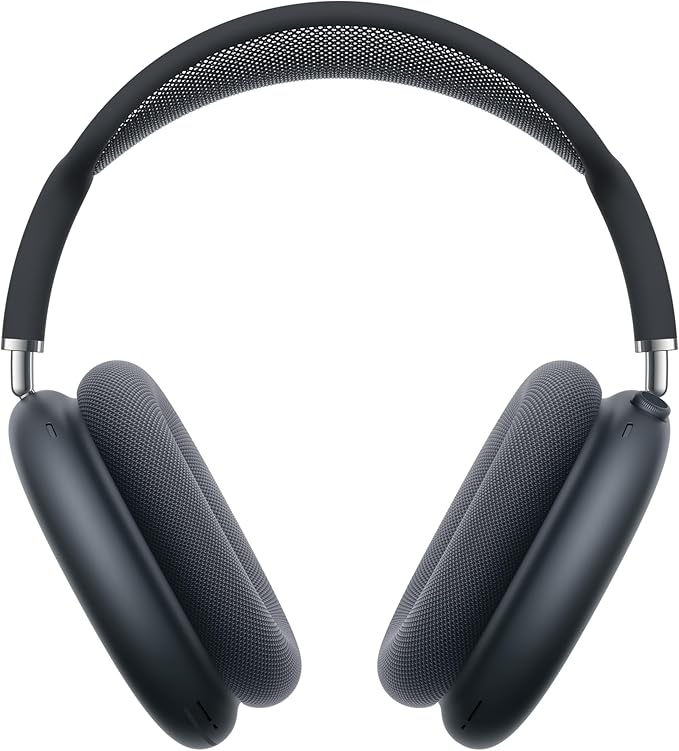
AirPods Max produces the most polarised expert field in the category, and the pattern of the disagreement is itself the consensus: reviewers who live in Apple’s ecosystem rate it near the top for its seamless device switching, Personalized Spatial Audio, excellent Transparency mode, and aluminium build; reviewers who weight value, weight, and battery place it lower. The hardware numbers explain both camps. Cancellation and transparency are genuinely excellent, the Digital Crown control is the best physical control on any headphone here — but 385 grams is heavy, 20 hours is the shortest battery in this guide, codecs top out at AAC, and the case remains widely criticised.
The current USB-C version (the listing linked here is the Midnight USB-C model) fixes the old Lightning inconvenience and is the one to buy. SoundMavericks’ position mirrors the field: for iPhone, iPad, and Mac owners who will use the ecosystem features daily, AirPods Max is a defensible consensus pick despite its compromises. For Android and Windows listeners, the value compresses to design and decent ANC that rivals here deliver with longer battery and lower weight. Consensus, honestly reported, sometimes means “it depends” — and no headphone in this guide depends more.
6. Sony WH-CH720N — The Budget Pick Reviewers Keep Agreeing On

Budget ANC is where expert rankings usually scatter — every outlet has a different cheap favourite. The WH-CH720N is the exception that keeps recurring across budget roundups, frequently noted as delivering genuinely useful cancellation at sale prices in the under-$100 territory. The formula is Sony’s trickle-down done right: the V1 processor from the flagship line, up to 35 hours of battery with ANC on (50 with it off), multipoint connection, DSEE upscaling, and a 192-gram frame that is the lightest in this guide by a wide margin — a comfort advantage owners mention constantly.
The trade-offs are the expected ones, and outlets are consistent about them too: the cancellation is a clear tier below the flagships on voices and higher frequencies, the build is plasticky, and there is no LDAC or carrying case. None of that breaks the consensus, because the consensus claim was never “as good as an XM6” — it is “the budget headphone least likely to disappoint,” which is exactly the claim the evidence supports. Browse our best noise cancelling headphones under $100 guide for the wider field it leads, and our main best noise cancelling headphones roundup for the full category view.
Where the Experts Actually Disagree
Consensus is only trustworthy if the disagreements are reported too, and three splits run through the published field. First, sound signature: Sony’s engaging, slightly bass-forward tuning, Bose’s smoother presentation, and Sennheiser’s more neutral balance each have committed reviewers, and no measurement settles taste — our advice in how to choose the best noise cancelling headphones is to treat tuning as a preference decision, not a quality ranking. Second, how to weight ANC depth against everything else: measurement-led outlets reward the deepest attenuation curves, while usability-led guides will trade a decibel or two for better controls, fit, or app design. Third, spatial audio: some reviewers treat immersive processing as a headline feature, others as a battery-draining extra you will try twice. Knowing which camp a review sits in tells you how to read its verdict — and why this guide ranks by breadth of agreement instead of any single score.
Frequently Asked Questions
What do experts say are the best noise cancelling headphones?
The broadest expert agreement currently sits with the Sony WH-1000XM6 as best overall, the Bose QuietComfort Ultra (2nd Gen) for pure cancellation and comfort, the Sennheiser Momentum 4 for battery life and sound value, and the Sony WH-CH720N as the recurring budget recommendation. That clustering appears across measurement-led, listening-led, and consumer-testing outlets.
Do expert reviewers agree on the best noise cancelling headphones?
More than shoppers expect. The same five or six models anchor nearly every major ranking in this category; the disagreement is mostly about order, not membership. Outlets split on sound signature preferences, how heavily to weight ANC depth against usability, and whether spatial audio matters — which is why a consensus view is more reliable than any single verdict.
Why do headphone reviews differ from each other?
Because they measure different things. Lab-based reviewers publish instrumented attenuation and response data; listening-led publications judge tonal balance by ear; consumer-testing organisations add standardised panels and owner reliability surveys; usability-led guides weight controls, fit, and apps. A headphone can honestly win under one method and place third under another.
What does consensus mean in headphone reviews?
It means a conclusion survives multiple independent methods. When measurement-led, listening-led, and consumer-testing outlets all recommend the same model, the recommendation no longer depends on one reviewer’s ears, one lab’s rig, or one scoring system. Consensus is about breadth of agreement, not a single averaged score.
Are expensive noise cancelling headphones worth it?
The expert field generally says yes for daily users: flagship models deliver measurably deeper cancellation, better sound, and stronger call quality than budget models, and the gap is largest on flights and in open-plan offices. For occasional use, the consensus budget picks deliver most of the practical benefit — which is precisely why both tiers appear in this guide.
Which noise cancelling headphones do reviewers recommend for travel?
The Bose QuietComfort Ultra (2nd Gen) is the most common travel-first recommendation for its cancellation depth and comfort, with the Sony WH-1000XM6 close behind thanks to its folding design and adaptive ANC. The Sennheiser Momentum 4 is the pick reviewers cite when battery life across a long trip matters most.
The Bottom Line
Read enough expert reviews and a stable picture emerges from the noise: Sony’s WH-1000XM6 is the consensus best overall noise cancelling headphone, Bose’s QuietComfort Ultra (2nd Gen) owns silence and comfort, Sony’s XM5 is the value flagship, Sennheiser’s Momentum 4 owns battery and sound-per-dollar, AirPods Max serves Apple loyalists, and the WH-CH720N proves the experts can agree on a budget pick too. SoundMavericks’ ranking stands behind that consensus because it survives every methodology we can check it against. Pick your priority from the table, follow the consensus for that priority, and you will land on a headphone the expert field — and the evidence — supports.

I am the founder of Sound Mavericks, where I provide the polite truth about audio equipment. I started this site because consumer electronics reviews are often too technical. Instead of using a silent lab, I test headphones, earbuds, and Bluetooth speakers in the real world – like on a noisy subway or in a busy coffee shop.
To stay independent, I buy my own review units (mostly from the United States) rather than accepting free gifts from brands. Once I finish testing a product, I sell it locally to our community. My goal is to help you understand sound quality, active noise cancellation (ANC), and battery life without the marketing hype.