The best headphones for ASMR are not the ones with the biggest bass or the strongest noise cancelling. ASMR recordings are made on binaural microphones that place whispers, taps and crinkles at specific points around the head, so the headphone’s job is to keep those positions believable, render tiny details at low volume, and stay comfortable for sessions that run an hour or more. That is why open-back wired models dominate this list.
Three traits decide every pick: soundstage width, because triggers need room to sit apart from each other; clamping force, because a tight headphone turns a relaxing session into a countdown; and treble detail, because the content lives in whispers and fingertip sounds. One closed-back pick covers listeners who share a room. For the wider wired field, our best wired headphones guide ranks the same models for general listening.
Wide-stage reference pick: AKG K712 Pro: the wide AKG stage with comfort at 9.2, for long low-pressure sessions. Check Price on Amazon
Comfort-first pick: Sennheiser HD 599SE: comfort at 9.2 and just 250g, the easiest wear here for falling asleep to a session. Check Price on Amazon
Widest stage pick: HiFiMan Arya: the widest stage here, with sound at 9.4 for the most spacious binaural effect. Check Price on Amazon
Lightweight long-session pick: Sennheiser HD 490 Pro: 260g, comfort at 9.0 and a neutral tuning that keeps room tone natural. Check Price on Amazon
Planar value pick: HiFiMan Sundara: planar stage and sound at 9.2, most of the Arya’s space for much less. Check Price on Amazon
Budget wide-stage pick: HiFiMan Edition XS: the budget entry to a wide planar stage, with value at 9.2. Check Price on Amazon
Closed-back pick (shared rooms): Meze 99 Classics: the closed-back option, with comfort at 9.0 for listeners who share a room. Check Price on Amazon
What makes a headphone good for ASMR
Binaural ASMR works because the recording already contains the spatial cues; the headphone just has to avoid collapsing them. Open-back designs stage widest because the earcups vent to the room instead of trapping pressure, and they avoid the sealed, in-your-head feeling that closed backs produce at low volume. The cost is leakage in both directions, which is fine in a quiet room at night and useless on a train. Every open-back pick here carries a low ANC bar in our records for exactly that reason; the bar measures isolation, not quality.
Scores below come from our published Finder records. Two bars follow the wired convention: battery sits at a neutral 5.0 because these headphones have no battery, and calls sit at 3.0 because none of them has a microphone. Judge these picks on sound and comfort, where the real differences are: comfort in this list runs from 7.8 to 9.2, and that gap is the one you will feel at minute forty.
The best headphones for ASMR, pick by pick

Why you: An open-back AKG stage with a comfort score of 9.2 in our records, the joint highest here: built for long, low-pressure listening sessions.
Trade-off: Bass impact is polite rather than powerful, and open-back leakage means it is a quiet-room headphone.
The K712 Pro is the reference point for this list because its stage is the trait ASMR asks for most. Triggers recorded at the left microphone stay at the left ear and slightly behind it, instead of crowding into the centre of the head, and the 9.2 comfort score comes from a suspension headband and soft pads that spread the weight instead of gripping. Sound scores 9.0, with the detail to keep fingernail taps and page turns distinct at low volume.
The limits are the usual open-back ones, plus one of its own: the bass is polite, so the occasional deep trigger or a video with music underneath will sound lean. It also leaks everything to the room. In a quiet room on your own, neither matters much. This is the pick we would buy first for a dedicated ASMR setup at a desk or bedside.
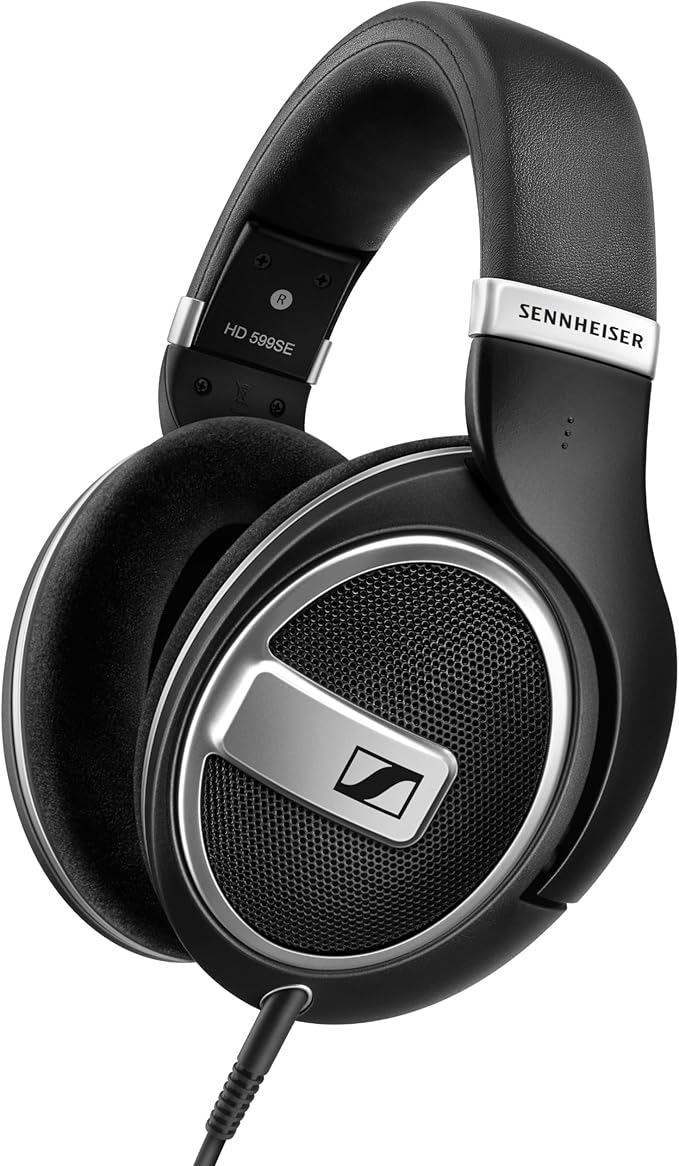
Why you: A comfort score of 9.2 at 250g with an open-back stage: the easiest long-session wear in this list.
Trade-off: Open-back leaks sound both ways and there is no microphone. Its sound score (8.6) sits a step below the detail picks.
The HD 599SE is the pick for listeners whose sessions run until they fall asleep. At 250g with plush pads and a gentle clamp, it scores 9.2 for comfort, and nothing about its shape digs in when your head is on a pillow at an angle. The open-back stage is wide enough to keep binaural placement convincing, and the tuning is warm enough that sibilant whispers never turn sharp.
Sound at 8.6 concedes a step of fine detail to the K712 Pro and the planars below, which you will notice most on dense, layered trigger videos. Value at 8.6 is strong, though, and the whole package asks nothing of you: no amp demands, no fit ritual. If comfort outranks resolution in your sessions, this is the one.

Why you: A large planar open-back with a sound score of 9.4 and comfort at 9.0 in our records: the most spacious presentation here for binaural recordings.
Trade-off: It leaks sound in both directions by design, has no microphone, and the stock cable ends in a full-size 6.35mm plug.
The Arya is the maximum version of what this list is about. Its large planar drivers produce the widest stage here, and on binaural recordings the effect is the closest any pick gets to sounds happening in the room rather than in the head. Sound scores 9.4, the highest in the list, and comfort holds at 9.0 despite the size because the weight is spread across a wide headband. Our HiFiMan Arya review covers the driver and the fit in full.
Practical notes: it leaks in both directions, the stock cable ends in a full-size 6.35mm plug, so many listeners will want an adapter or an aftermarket cable for phone or dongle use, and its price tier is the highest here alongside the stage it buys. For a listener who treats ASMR as their main headphone use and listens in a dedicated space, the Arya is the end point of this list.

Why you: 260g with a comfort score of 9.0 in our records and a neutral, accurate tuning that keeps whispers and room tone natural.
Trade-off: No folding design and no isolation: accuracy over excitement, per our records.
The HD 490 Pro comes from Sennheiser’s studio line, and its ASMR case rests on neutrality. Whispers, breath sounds and the room tone underneath a recording are reproduced without emphasis, so nothing artificial gets added to material that is already intimate. At 260g with comfort at 9.0, it stays out of the way for long evening sessions, and sound scores 9.1.
It is a working tool in shape as much as sound: no folding, no isolation and a plainly functional finish. Listeners who like a warmer, softer presentation may find it matter-of-fact. Listeners who record or edit ASMR themselves will value exactly that honesty, because what they hear is what their audience will hear. As a listening pick, it suits people who want the recording, not the headphone, to set the mood.

Why you: A planar open-back stage and a 9.2 sound score in our records at a mid-tier band: most of the Arya’s spaciousness for much less.
Trade-off: Open-back leakage, no microphone, and low sensitivity means a phone dongle may struggle for volume.
The Sundara is the value route into planar staging. Sound scores 9.2 and value 9.0 in our records, and the stage, while narrower than the Arya’s, keeps binaural cues separated far better than a closed back can. Comfort at 8.4 is a step behind the leaders here but still fine for an hour at a time. Our HiFiMan Sundara review goes deeper on the tuning.
One practical warning from our records: sensitivity is low, so a basic phone dongle may run out of volume, and a modest desktop amp or a stronger dongle DAC is a sensible partner. It also leaks like every open-back here. If you want the planar effect without the Arya’s tier, this is where the money goes furthest in this list.

Why you: A value score of 9.2 in our records, the best here, buys a genuinely wide planar stage: the entry point for ASMR listeners on a budget.
Trade-off: A large, loose fit (comfort 7.8) and a bright top end. It leaks sound in both directions and has no microphone.
The Edition XS is the cheapest way into the wide-stage effect this list is built on. Its value score of 9.2 leads the list, sound sits at 9.0, and the big planar drivers place sounds around the head with a scale that smaller headphones cannot fake. For a first ASMR headphone bought on a budget, the case is straightforward.
The fit is the compromise, and for ASMR it matters more than usual: comfort scores 7.8, the lowest here, because the large cups sit loose on smaller heads and can shift when you lean back. The top end is also bright, which a minority of listeners find tiring on close-miked whispers. Bigger heads and brighter tastes will get on with it well. Smaller heads should look at the HD 599SE first. Our HiFiMan Edition XS review covers the fit question in detail.

Why you: The one closed-back in the list: comfort at 9.0 and a warm tuning, for listeners who cannot leak sound to a partner or roommate.
Trade-off: Closed-back staging is narrower than the open-back picks, and it is wired only with no microphone.
Every other pick here leaks your session to the room. The 99 Classics is the exception: a closed-back with comfort at 9.0 and a warm, soft-edged tuning that suits late-night listening next to a sleeping partner. Its passive isolation earns a 3.5 ANC bar, modest but real, and the wooden cups and self-adjusting headband make it the easiest pick here to wear in bed.
The trade is space. A closed back cannot stage like the open-backs, so binaural placement feels closer and more intimate, which some listeners actually prefer for whisper-led content. Sound scores 8.8, value 8.6, and the overall of 6.3 is the highest in this list because the isolation bar is real rather than nominal. Choose it when your listening circumstances, not the recording, set the limits.
ASMR headphones compared
Judge this table on sound and comfort, the two bars that decide ASMR sessions. The battery bar is a neutral placeholder on every wired pick and the ANC bar measures isolation only.
| Pick | Best for | Stage and comfort | Our score | |
|---|---|---|---|---|
| AKG K712 Pro | Wide-stage reference pick | Comfort 9.2, wide stage | 6.0 | Check Price on Amazon |
| Sennheiser HD 599SE | Comfort-first pick | Comfort 9.2 at 250g | 6.0 | Check Price on Amazon |
| HiFiMan Arya | Widest stage pick | Sound 9.4, widest stage | 6.2 | Check Price on Amazon |
| Sennheiser HD 490 Pro | Lightweight long-session pick | Comfort 9.0 at 260g | 6.0 | Check Price on Amazon |
| HiFiMan Sundara | Planar value pick | Sound 9.2, value 9.0 | 6.1 | Check Price on Amazon |
| HiFiMan Edition XS | Budget wide-stage pick | Value 9.2, wide stage | 5.9 | Check Price on Amazon |
| Meze 99 Classics | Closed-back pick (shared rooms) | Closed-back, comfort 9.0 | 6.3 | Check Price on Amazon |
Start with the room, not the recording. Listening alone in a quiet space, the K712 Pro and HD 599SE cover most people, with the Arya as the step up and the Sundara and Edition XS as the planar value routes. Listening beside someone, the Meze 99 Classics is the only pick that keeps the session private. Whichever you choose, keep the volume low: ASMR is recorded close and quiet, and these headphones are at their best at the levels the material was made for.
Frequently asked questions
Are open-back headphones better for ASMR?
Usually, yes. Binaural ASMR relies on spatial cues, and open-back designs stage wider and avoid the sealed, pressurised feeling that can build up over a long session. The cost is leakage in both directions, so open-backs suit quiet rooms. If you share the room, the closed-back Meze 99 Classics in this list is the practical pick.
Do I need noise cancelling for ASMR?
No. ASMR is normally heard in quiet rooms, and the low ANC bars in this list measure passive isolation, not quality. What matters is that the headphone adds no hiss or pressure sensation of its own. A wired open-back has no electronics to hiss, which is one reason the format dominates here.
Which headphone here is most comfortable for long sessions?
The AKG K712 Pro and Sennheiser HD 599SE tie at 9.2 in our records. The HD 599SE is lighter at 250g and the easier wear for listening in bed; the K712 Pro spreads its weight through a suspension headband and suits desk and armchair sessions.
Do these headphones need an amplifier?
Most do not. The Sennheisers and the AKG run well from a dongle or laptop. The HiFiMan planars are the exception to plan around: the Sundara’s low sensitivity can leave a basic phone dongle short on volume, so a stronger dongle DAC or small desktop amp is a sensible partner.
Why do the overall scores look low?
Our wired convention sets battery to a neutral 5.0 and calls to 3.0 where there is no microphone, and the ANC bar for an open-back honestly reflects near-zero isolation. Those placeholders drag the overall down. Compare the sound and comfort bars, which carry the real differences for ASMR.

I am the founder of Sound Mavericks, where I provide the polite truth about audio equipment. I started this site because consumer electronics reviews are often too technical. Instead of using a silent lab, I test headphones, earbuds, and Bluetooth speakers in the real world – like on a noisy subway or in a busy coffee shop.
To stay independent, I buy my own review units (mostly from the United States) rather than accepting free gifts from brands. Once I finish testing a product, I sell it locally to our community. My goal is to help you understand sound quality, active noise cancellation (ANC), and battery life without the marketing hype.