SoundMavericks Verdict
The Raycon Bone Conduction Headphones are a genuinely strong value play in open-ear audio: marathon-grade battery life, a full IP68 rating, multipoint pairing, and three tunable sound profiles — all in a featherweight headband that runners love. The trade-off is exactly what you’d expect from bone conduction at this tier: sound quality that won’t thrill anyone coming from sealed earbuds. For workouts, cycling, and all-day situational awareness, our research says this is one of the smartest buys in its class.

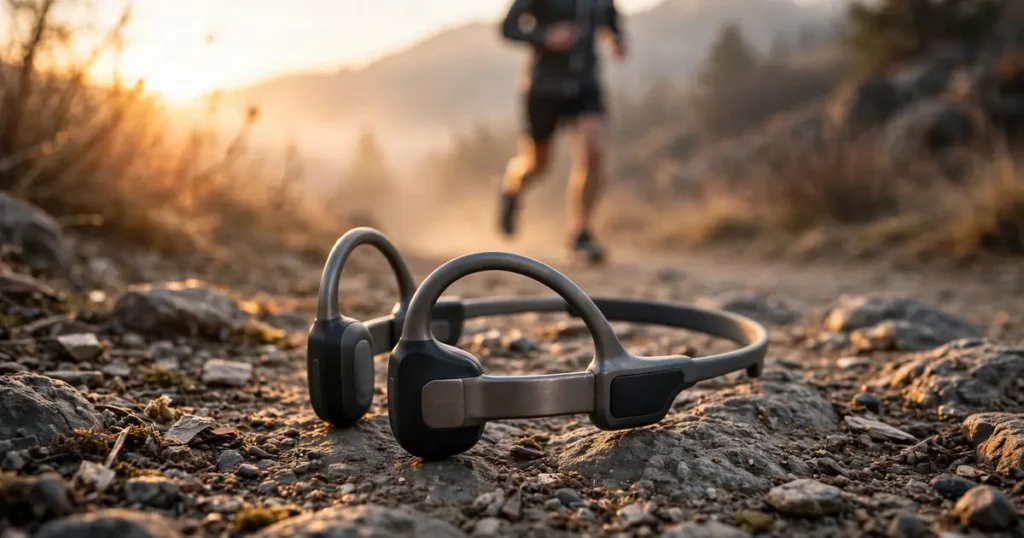
Raycon Bone Conduction Headphones (Gray) — image via Amazon
| Sound Quality | 7.4 |
| Comfort | 8.8 |
| Features | 8.2 |
| Value | 8.0 |
Based on published specifications, independent hands-on reviews, and SoundMavericks’ own analysis of how this model stacks up against the bone-conduction competition.
Who These Are For (And Who Should Skip Them)
Raycon’s bone conduction headphones were built with a very specific user in mind, and knowing whether you’re that user is the fastest way to a confident decision. If you run, cycle, lift, or commute and want to hear your surroundings while you listen — or you’re just uncomfortable with anything sealing your ear canal — this design category exists for you.
Buy them if: you need all-day battery for long workouts or long workdays, you train outdoors in rain or sweat, you take calls mid-run, or you want open-ear awareness without the flagship price tag of the category leaders.
Skip them if: you want rich bass and detail above all else (bone conduction can’t match sealed drivers), you swim (these are not pool-rated despite the IP68 badge), or you want a charging case in the box.
Specs Table
| Spec | Detail |
|---|---|
| Model | Raycon Bone Conduction Headphones (RBB842-24E) |
| Driver | 16 mm bone conduction driver |
| Bluetooth | 5.3, up to 33 ft range, multipoint (two devices) |
| Latency | 60 ms ultra-low latency mode |
| Battery life | 14 hours at 50% volume (Raycon rating); Amazon listing states 13 hours |
| Charging | Magnetic cable, 2-hour full charge; 10-minute quick charge adds 1 hour |
| Water resistance | IP68 — sweat, dust, and rain safe; not rated for swimming |
| Sound profiles | Bass, Balanced, Pure Sound |
| Microphones | Dual mics with environmental noise cancellation |
| Controls | Button + touch; voice-assistant support (Siri, Alexa) |
| Build | Steel and rubber headband with silicone finish; adjustable fit |
| Colors | Gray, Purple, Mint |
Sound Quality: Good Enough for the Use Case
Let’s be honest about the physics first: bone conduction transmits vibration through your cheekbones, so it will never deliver the deep bass or isolation of sealed earbuds. That’s a category truth, not a Raycon flaw. What matters is how well Raycon executes within those limits, and our read of the available evidence — published specs plus independent hands-on coverage — is that these land solidly in the middle of the pack.
The standout feature here is the trio of sound profiles. Bass mode pushes low-end as far as bone conduction allows and is the clear pick for workouts; Balanced is the everyday default; Pure Sound tilts toward vocal clarity for podcasts and calls. Few rivals at this tier offer any tuning at all, so this is a genuine differentiator.
The honest caveat, echoed in independent reviews (including How-To Geek’s hands-on verdict of “strong battery, weaker sound”), is that maximum fidelity sits behind category leaders like the Shokz OpenRun Pro. If critical listening is the job, sealed earbuds win. If awareness while you move is the job, these do exactly what they’re meant to do — and do it with more control than most alternatives.
Comfort and Fit: Where They Shine
Comfort is the category’s whole point — nothing enters your ear canal — and Raycon’s execution earns its 8.8 from us. The steel-and-rubber headband is flexible enough to conform without clamping, and hands-on reviewers report the classic bone-conduction learning curve: the vibration sensation feels odd on day one and fades into the background by day three.
Two fit details stand out. First, the earbud modules slide along the frame: push them closer for louder sound, pull them back for more ambient awareness — a practical, uncommon tuning option. Second, the design stays planted during movement; reviewers note the headset holds its position through intense cardio without bouncing, which is precisely what matters for runners.
The minor gripe: the wraparound shape is a little awkward to toss into a gym bag, and there’s no travel case in the box. Plan a dedicated pocket.
Features: Flagship Touches Without the Flagship Tax
This is where our analysis says Raycon punched above its weight. IP68 dust-and-water resistance covers rain, sweat, and accidental spills — genuinely rare at this price point. Multipoint Bluetooth lets the headphones hold two connections at once, so you can jump between a phone and a laptop without re-pairing. And the 60 ms low-latency mode keeps video and gaming audio in sync, something budget wireless pairs often botch.
Battery life is the headline number: 14 hours at half volume per Raycon’s rating (Amazon’s own listing states 13 hours — a small conflict worth knowing, with real-world independent use landing right around 12 hours). Either way, that’s multiple long runs or a full workweek of commutes on one charge, plus a 10-minute quick charge that buys an hour of playtime. The 2-hour full recharge uses a proprietary magnetic cable — convenient on the go, but lose the cable and you’re hunting for a replacement.
Calls run through dual microphones with environmental noise cancellation, and Siri/Alexa integration is baked in. Controls are physical buttons (three of them) paired with touch input — easy to operate with sweaty hands mid-run.
Tips: Getting the Most Out of Them
A few setup habits make a noticeable difference. First, experiment with the slide-adjustable earbuds on your first run — small shifts in placement change loudness and bass presence more than you’d expect, so find the sweet spot before judging the sound. Second, start in Balanced mode and switch to Bass mode only for music-heavy sessions; Bass mode at maximum volume increases the vibration sensation and drains the battery faster. Third, use multipoint pairing deliberately: keep your phone as the primary and your laptop as the secondary so notifications don’t yank audio away mid-workout. Finally, rinse the silicone surfaces after sweaty sessions and dry the magnetic charging contacts before plugging in — sweat residue is the number one reason magnetic charging gets finicky over time.
Raycon vs. Shokz: The Honest Comparison
Shokz invented the modern bone-conduction category, and the Shokz OpenRun is the default recommendation for a reason: slightly more refined transducers, a huge owner base, and deep software polish. Our take: the OpenRun (and especially the OpenRun Pro) wins on pure sound refinement and ecosystem maturity.
But Raycon’s case is about the total package. Three sound profiles versus none. IP68 versus a lower water-resistance rating. A battery claim that edges the category. Multipoint and low-latency modes included rather than upsold. If your priority is the list of capabilities you get rather than the last five percent of sound polish, Raycon’s proposition is the stronger one — and the price positioning makes it the easier recommendation for first-time bone-conduction buyers who aren’t sure they’ll love the format.
Bottom line from SoundMavericks: pick Shokz for the most proven sound, pick Raycon for the most features and durability per dollar. Neither is a bad call.
Pros and Cons
Pros
- 14-hour battery rating with 10-minute quick charge
- Full IP68 dust and water resistance
- Three sound profiles (Bass, Balanced, Pure Sound)
- Multipoint pairing and 60 ms low-latency mode
- Slide-adjustable earbuds for sound vs. awareness
- Secure, comfortable fit for running
Cons
- Sound quality trails category leaders
- Not rated for swimming despite IP68
- No charging case or travel pouch included
- Proprietary magnetic charging cable
- Awkward shape to stow in a bag
Frequently Asked Questions
Can you swim with the Raycon bone conduction headphones?
No. Despite the IP68 rating for dust and water, Raycon does not rate these for pool or ocean swimming. IP68 covers sweat, rain, and splashes — plenty for running and gym use — but swimmers need a dedicated waterproof headset with internal storage.
How long does the battery last?
Raycon rates them at 14 hours of playtime at 50% volume, while the Amazon listing states 13 hours. Independent hands-on use lands around 12 hours, so expect a full week of workouts between charges. A full recharge takes 2 hours over the magnetic cable, and a 10-minute quick charge adds about an hour of playtime.
Do they come with a charging case?
No. The headphones charge via a proprietary magnetic cable, and no charging case or travel pouch is included in the box — a notable packaging gap for a product marketed to runners.
How do Raycon’s bone conduction headphones compare to Shokz?
Shokz (especially the OpenRun Pro) edges ahead on pure sound refinement and ecosystem maturity. Raycon counters with a stronger features-per-dollar story: IP68 water resistance, three sound profiles, multipoint pairing, and low-latency mode. First-time buyers who value features and durability tend to prefer Raycon; audiophile-oriented runners tend to prefer Shokz.
Do bone conduction headphones leak sound?
At moderate volumes, very little. Because sound reaches your ears through vibration rather than a sealed canal, some leakage is unavoidable at high volumes — people nearby may hear faint sound in quiet rooms. At typical workout volume outdoors, it’s a non-issue. Raycon’s slide-adjustable earbuds also let you trade loudness for awareness on the fly.
Can you take calls on them?
Yes. Dual microphones with environmental noise cancellation handle calls, and Siri/Alexa voice-assistant support is built in. Because your ears stay open, you hear your own voice naturally instead of through the occluded, boomy effect of sealed earbuds.
The Final Word
Our research-based verdict: the Raycon Bone Conduction Headphones earn a SoundMavericks Score of 8.1/10 — a feature-rich, durable, long-running open-ear option that makes real compromises only where the physics demand them. The sound won’t convert sealed-earbud loyalists, but for runners, cyclists, and anyone who wants audio plus awareness, the combination of IP68 durability, marathon battery, multipoint, and three sound profiles is genuinely hard to beat at this tier.

I am the founder of Sound Mavericks, where I provide the polite truth about audio equipment. I started this site because consumer electronics reviews are often too technical. Instead of using a silent lab, I test headphones, earbuds, and Bluetooth speakers in the real world – like on a noisy subway or in a busy coffee shop.
To stay independent, I buy my own review units (mostly from the United States) rather than accepting free gifts from brands. Once I finish testing a product, I sell it locally to our community. My goal is to help you understand sound quality, active noise cancellation (ANC), and battery life without the marketing hype.