Quick Verdict: Sony WH-1000XM6 for Sound and Silence, Beats 360 for Custom Fit, Gym Use and Everyday Fun
SoundMavericks’ verdict on beats 360 vs sony wh-1000xm6 is a split decision with a clear default. The Sony WH-1000XM6 is the stronger flagship headphone overall: its QN3 processor and 12-microphone system deliver the more complete noise cancelling, LDAC gives it a genuine hi-res wireless advantage on Android, and multipoint, wired listening and a mature app make it the safer pick for flights, focused work and critical listening. The Beats 360 is the more personal and more active headphone: tool-free swappable ear cushions and headband pads that the headphones detect and retune for, IPX4 sweat and water resistance no Sony flagship offers, up to 32 hours of battery, and equally strong Apple and Android support. Choose Sony for maximum silence and sound quality. Choose Beats if you want a headphone you can customise, sweat in, and refresh instead of replace.
Two flagship over-ear headphones, launched sixteen months apart, now sit at the top of the same shopping list. Sony’s WH-1000XM6 arrived as the latest step in the most decorated noise cancelling line in the category. Beats answered in September 2026 with the 360, announced on September 22 and on sale from September 24 — not a Studio Pro refresh, but a new idea: a premium ANC headphone whose cushions and headband pads you swap without tools, whose sound and noise cancelling retune themselves to the pads you fit, and that carries an IPX4 rating for workouts and wet commutes.
This comparison works through the rounds that actually separate them — noise cancelling, sound quality and codecs, comfort and customisation, battery, calls, ecosystem features and gym use — then closes with a linked spec table and a verdict by buyer type. A note on method: SoundMavericks has not hands-on tested either model. Our scores and verdicts here are based on manufacturer specifications, Amazon listing data and aggregated launch coverage from multiple independent publications, weighted toward the measurements and findings those sources agree on. Where launch reviewers disagree, we say so.

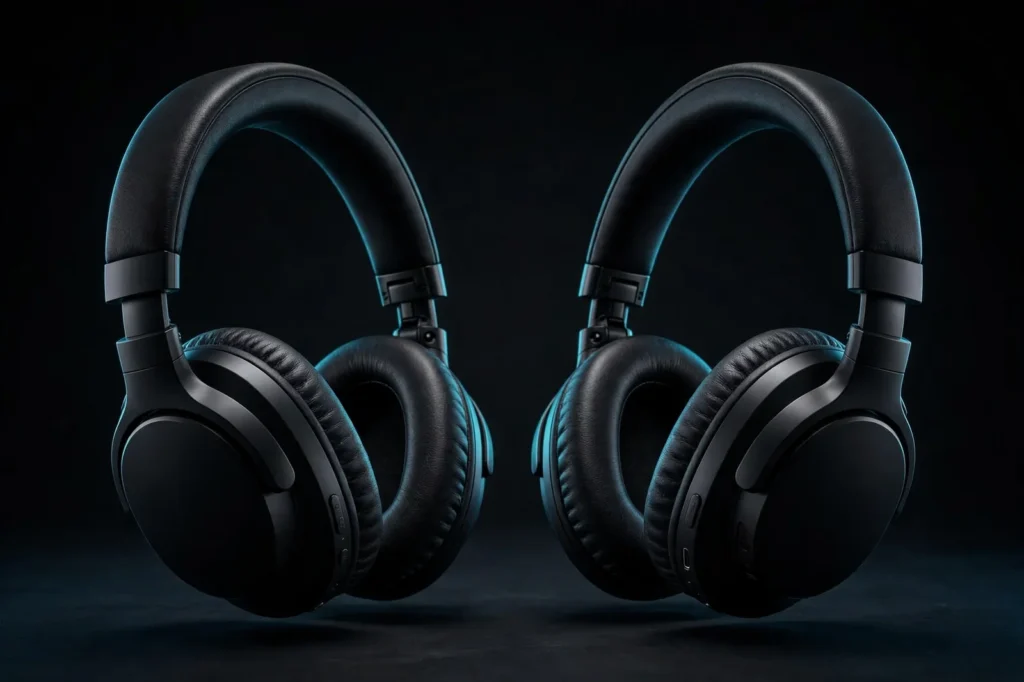
Beats 360 — Best for Customisation and the Gym
Swappable cushions and headband pads, IPX4, up to 32 hours, strong on iPhone and Android alike.

Sony WH-1000XM6 — Best for ANC and Sound Quality
QN3 processing, 12 microphones, LDAC hi-res audio, multipoint and up to 30 hours with ANC on.
For the wider field, our best noise cancelling headphones guide ranks both against the rest of the flagship class, and our Sony WH-1000XM6 vs Bose QuietComfort Ultra 2 comparison covers Sony’s other big fight. If workouts are your main use, see the best noise cancelling headphones for gym workouts roundup as well.
Beats 360 vs Sony WH-1000XM6: Noise Cancelling
Winner: Sony WH-1000XM6. Sony’s system is built around the HD Noise Cancelling Processor QN3 and a 12-microphone array that samples and counters ambient sound continuously, with adaptive behaviour that adjusts to your environment and wearing conditions. It is the more complete implementation: launch coverage consistently credits the XM6 with the stronger cancellation overall, particularly against the voices and midrange clutter of offices and cafes, where cancellation is hardest to achieve.
The Beats 360 is a genuine step forward for Beats rather than a weak effort. Its 8-microphone system delivers ANC that Beats rates at up to 1.75x the Studio Pro, and independent launch coverage found it handles low-frequency gym noise and aircraft cabin hum well. The honest gap is in the mids and treble — voices in a busy office cut through more on the Beats than on the Sony. Both headphones offer a Transparency mode for hearing announcements and traffic; Sony adds more granular ambient control through its app. If silence is the reason you are buying, this round goes to Sony, and it is the round that matters most to frequent flyers. Our explainer on active noise cancellation vs passive isolation covers how much of the difference you will actually hear.
Sound Quality and Codecs: LDAC vs Adaptive EQ
Winner: Sony WH-1000XM6. The codec sheet tells much of the story. The WH-1000XM6 supports LDAC alongside AAC and SBC, so Android listeners with hi-res files or streaming tiers can push substantially more data over Bluetooth than standard codecs allow — the only genuine hi-res wireless path in this matchup. Beats builds the 360 around AAC and SBC with its Adaptive EQ, which tunes the output in real time to the seal and fit of the cushions on your ears. On an iPhone, where AAC is the ceiling for both headphones, that codec gap largely disappears; on Android with good source material, Sony pulls ahead. Our Bluetooth codecs explained guide breaks down what each codec can and cannot deliver.
On tuning, launch listening tests describe a consistent pattern: the XM6 sounds richer and more detailed, with fuller bass that holds together at high volume, while the 360 sounds clear and balanced — in SoundMavericks’ reading, the most even-handed Beats flagship tuning yet, helped by the fact that the headphones detect which cushion type is fitted and retune sound and ANC to match. Both support spatial audio with head tracking — Personalized Spatial Audio on the Beats, Sony’s 360 Reality Audio ecosystem on the XM6 — so films and spatial mixes feel wide and anchored on either. Audiophiles and Android hi-res listeners should buy the Sony. Listeners who mostly stream from an iPhone will find the practical sound gap much smaller than the spec gap suggests.
Comfort and Customisation: The Swappable Cushion Story
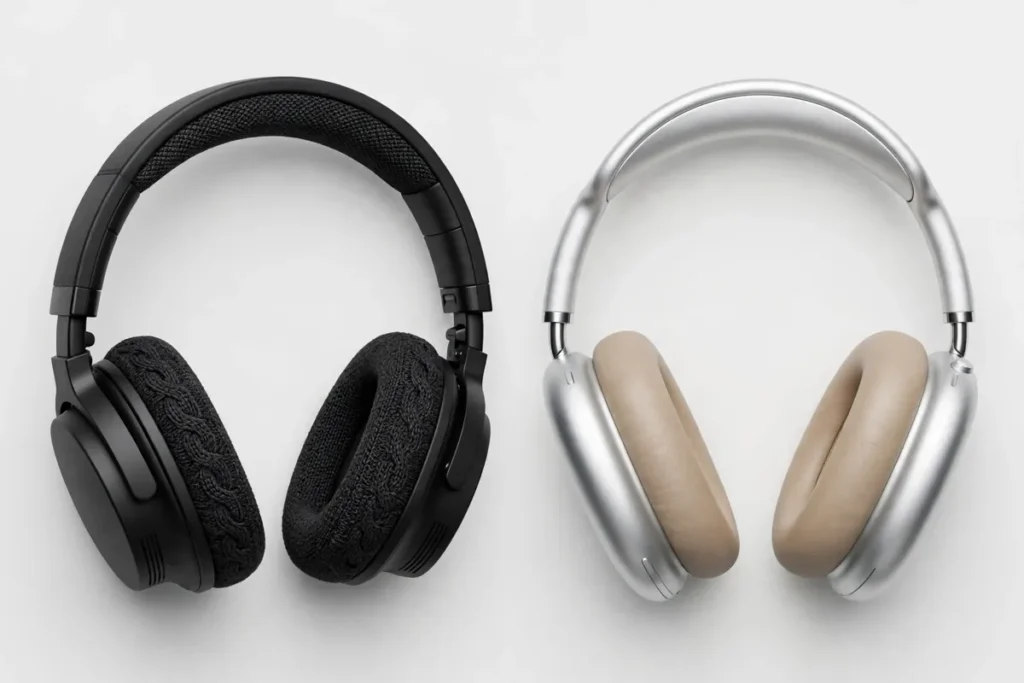
Winner: Beats 360. This is the round Beats designed the whole headphone around. The 360’s ear cushions and headband pads swap without tools: Performance Knit cushions are included in the box, UltraPlush kits are available separately, and sensors in the headphones auto-detect which cushion type you have fitted and retune the sound and ANC accordingly. In practice that means three things no rival flagship offers in one package — a fresh-feeling headphone when the original pads wear, a choice of pad feel for different uses, and a colour story across Black, Cloud, Pink and Sky that extends to the pads themselves.
Sony’s comfort case is quieter but real: the XM6 is a refined, relatively light flagship fit with user-replaceable earpads in the conventional sense, and a fold-flat design that travels well. For long desk sessions and flights, its proven shape is hard to fault. But on personalisation, refreshability and sheer novelty that serves a purpose, the 360 wins this round outright — and for buyers who keep headphones for years, replaceable wear parts are a longevity feature, not a gimmick.
Battery Life and Charging
Winner: Beats 360, narrowly. Beats rates the 360 at up to 32 hours of listening, against up to 30 hours for the WH-1000XM6 with ANC on. Two hours will not change anyone’s week, but the Beats also needs no codec caveat: Sony’s figure drops when LDAC is running at its highest quality settings, while the 360’s number is the number. Both headphones comfortably cover a long-haul return trip or a full working week of commutes on a single charge.
Fast charging favours the desperate in slightly different ways. Beats’ Fast Fuel returns roughly an hour of playback from a 5-minute charge over USB-C — enough to rescue a commute. Sony’s quick charge is similarly aggressive at the top end. SoundMavericks’ take: battery is effectively a tie for real-world use, scored for Beats only because its headline figure is higher and unconditional.
Calls and Microphones
Winner: Sony WH-1000XM6, narrowly. Both headphones invest heavily here — 8 microphones on the Beats, 12 on the Sony — and both use beamforming and AI processing to isolate your voice. Launch call tests put them close: the XM6’s larger array and mature voice-pickup processing give it the edge in wind and in very loud streets, while the 360 performs well beyond older Beats models and handles office and platform noise cleanly. For desk calls and quiet streets, either is more than sufficient; for regular calls taken outdoors in traffic, Sony is the safer pair.
Ecosystem and Features: Apple, Android and Multipoint
Winner: tie, with different strengths. The Beats 360 is unusually even-handed for an Apple-owned brand: one-touch pairing, Find My and automatic switching on Apple devices, balanced by Google Fast Pair and Find My Device support on Android, all over a custom Beats chip with Class 1 Bluetooth 5.3. The WH-1000XM6 counters with true multipoint — stay connected to a laptop and a phone at once — plus Sony’s deep Headphones app with its full EQ and listening controls, and wired listening for planes and lossless sources.
The decision rule is simple. If you live across a laptop and a phone all day, Sony’s multipoint is a daily quality-of-life win. If you switch between Apple and Android households, or want the fastest pairing experience on both platforms without an app-first setup, the Beats is the friendlier headphone. Neither leaves its owner’s platform feeling like a second-class citizen, which was not always true of this rivalry.
Gym and Outdoor Use: IPX4 Changes the Answer
Winner: Beats 360, clearly. The 360 is the first Beats over-ear headphone with an IPX4 rating, built to shrug off sweat and splashes in training sessions and wet-weather commutes. The WH-1000XM6 carries no advertised water resistance rating, and Sony does not market it as a workout headphone. An over-ear will never be a runner’s first choice — heat and clamp matter over distance — but for lifting, indoor training, walking commutes in the rain and general active use, only one of these two is built for it. If your headphones split time between the desk and the gym, this round alone can decide the purchase.
Beats 360 vs Sony WH-1000XM6: Specs Side by Side
| Spec | Beats 360 | Sony WH-1000XM6 |
|---|---|---|
| Form factor | Over-ear ANC | Over-ear ANC |
| Noise cancelling | ANC, 8-mic system, up to 1.75x Studio Pro (Beats claim) | ANC, HD Noise Cancelling Processor QN3, 12 microphones |
| Bluetooth codecs | AAC, SBC | LDAC, AAC, SBC |
| Battery life (ANC on) | Up to 32 hours | Up to 30 hours |
| Fast charge | Fast Fuel: 5 min ≈ 1 hour | Quick charge via USB-C |
| Water resistance | IPX4 | No advertised IP rating |
| Customisation | Tool-free swappable ear cushions and headband pads; auto-detect retunes sound and ANC | User-replaceable earpads |
| Spatial audio | Personalized Spatial Audio with head tracking | 360 Reality Audio with head tracking |
| Bluetooth | Class 1 Bluetooth 5.3, custom Beats chip | Bluetooth with multipoint connection |
| Platform features | One-touch pairing, Find My (Apple), Fast Pair (Android) | Sony Headphones app, multipoint, Fast Pair |
| Colours | Black, Cloud, Pink, Sky | Black and further colourways by region |
| Check Price | Check Price — Beats 360 | Check Price — Sony WH-1000XM6 |
Verdict by Buyer Type
Frequent flyers and focused workers: buy the Sony WH-1000XM6. The stronger ANC, the better voice handling on calls, multipoint for the laptop-and-phone shuffle and LDAC for hi-res listening make it the complete travel and desk flagship.
Gym-goers, commuters and customisers: buy the Beats 360. IPX4 protection, swappable pads you can refresh or restyle, up to 32 hours of battery and first-class treatment on both iPhone and Android make it the more versatile everyday headphone — and the one that still feels new a year in, because its wear parts are replaceable by design.
iPhone listeners who stream: the codec gap mostly vanishes on Apple hardware, so decide on fit, features and the cushion system. Android listeners with hi-res libraries: the XM6’s LDAC support is a real, audible-format advantage that the Beats cannot match. Either way, both belong on the shortlist in our best noise cancelling headphones guide — this is a choice between two flagships with different priorities, not between a flagship and a compromise.
Beats 360 vs Sony WH-1000XM6: FAQ
Is the Beats 360 better than the Sony WH-1000XM6?
Not overall. The Sony WH-1000XM6 is better for noise cancelling, sound quality and features such as LDAC and multipoint. The Beats 360 is better for customisation with its swappable cushions, for gym and outdoor use with its IPX4 rating, and for battery life at up to 32 hours. The better headphone depends on which of those lists sounds like your day.
Which has better noise cancelling, Beats 360 or Sony WH-1000XM6?
The Sony WH-1000XM6. Its QN3 processor and 12-microphone system cancel more overall, particularly voices and midrange noise. The Beats 360, with an 8-microphone system Beats rates at up to 1.75x the Studio Pro, handles engine drone, gym noise and cabin hum well, but does not match Sony against voices in offices and cafes.
Does the Beats 360 support LDAC?
No. The Beats 360 uses AAC and SBC with Adaptive EQ. LDAC hi-res wireless audio is a Sony WH-1000XM6 advantage, alongside AAC and SBC. On iPhone, both headphones top out at AAC, so the practical gap is mainly an Android consideration.
Can you work out in the Beats 360 or Sony WH-1000XM6?
The Beats 360 is the workout pick: it is IPX4 rated against sweat and splashes, a first for a Beats over-ear headphone. The Sony WH-1000XM6 has no advertised water resistance rating and is not marketed for workouts, so keep it for travel, desks and commutes.
What are the Beats 360 swappable cushions?
The Beats 360’s ear cushions and headband pads swap without tools. Performance Knit cushions are included, UltraPlush kits are sold separately, and sensors in the headphones auto-detect the fitted cushion type and retune the sound and noise cancelling to match.
Which lasts longer, Beats 360 or Sony WH-1000XM6?
The Beats 360, at up to 32 hours of listening, against up to 30 hours for the Sony WH-1000XM6 with ANC on. Both cover a long-haul return trip or a week of commutes per charge, and both fast-charge over USB-C — Beats Fast Fuel adds about an hour of playback from 5 minutes.

I am the founder of Sound Mavericks, where I provide the polite truth about audio equipment. I started this site because consumer electronics reviews are often too technical. Instead of using a silent lab, I test headphones, earbuds, and Bluetooth speakers in the real world – like on a noisy subway or in a busy coffee shop.
To stay independent, I buy my own review units (mostly from the United States) rather than accepting free gifts from brands. Once I finish testing a product, I sell it locally to our community. My goal is to help you understand sound quality, active noise cancellation (ANC), and battery life without the marketing hype.