The practical answer to why you should buy noise cancelling headphones is not that they sound better. It is that they change the conditions you listen in. Active noise cancelling, or ANC, uses microphones to sample the noise around you and plays an opposing signal that cancels much of it before it reaches your ears. What that buys you is a quieter background on planes, trains and shared desks, which means clearer audio at lower volume and a day that feels less draining. This article makes that case honestly, including the limits, because ANC oversold is ANC returned.
What ANC actually removes, and what it does not
Start with the physics, because every honest claim follows from it. Cancellation works when a sound is steady and predictable, so the system can generate its mirror image in time. Sony’s own guidance, quoted in a recent worth-it guide, says ANC works best on consistent, low- to medium-pitched noise such as aircraft and train sound. Jet engines, air conditioning, road rumble and the hum of an office HVAC system are exactly that kind of noise, and a good pair cuts them dramatically. Our explainer on how noise cancelling headphones work covers the mechanism in detail.
Voices are the opposite case. Speech starts and stops, jumps in pitch, and comes from a point close to you. The system reduces it, and the sealed earcups block some of it passively, so a conversation nearby becomes softer and harder to follow. It does not vanish. Sudden sounds, a dropped pan, a car horn, a barking dog, mostly get through as well, dulled rather than deleted. Anyone who sells you silence is selling you something else. What ANC delivers is a lower floor: the constant layer of noise that tires you out is the layer it removes.
The real benefits, in order of importance
Calmer travel
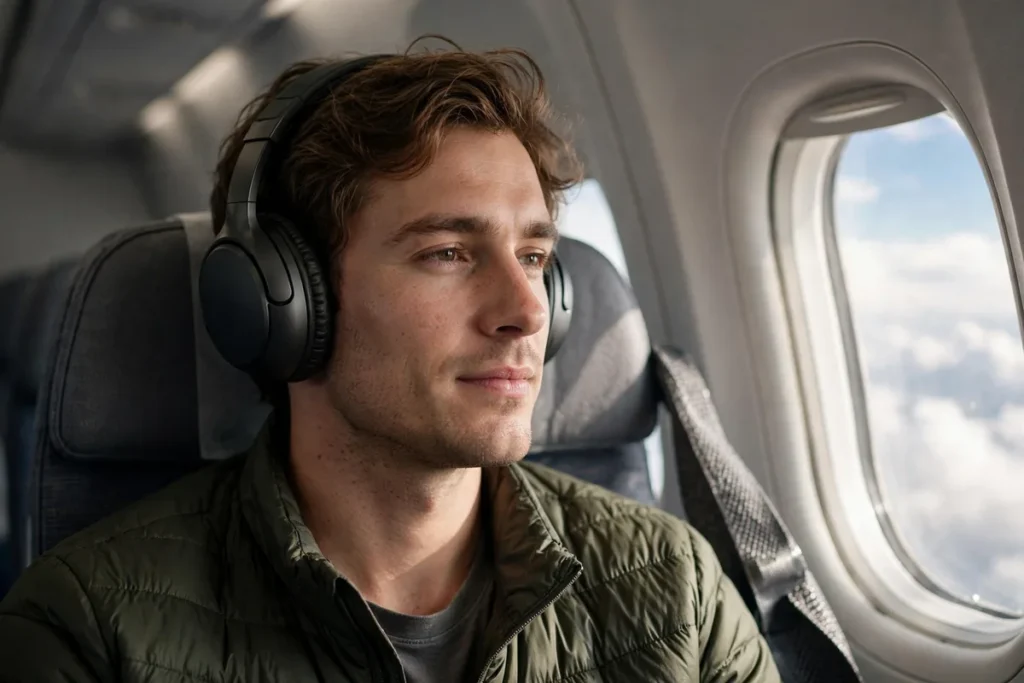
The flight case is the strongest one. Cabin noise is loud, continuous and low, the exact profile ANC handles best, and it lasts for hours. Independent testing summarised by RTINGS found leading models cut engine rumble and air conditioning noise substantially, and travellers feel the difference as arriving less wrung out. Even with nothing playing, good ANC turns a cabin into a place you can think, read or sleep in.
Lower listening volumes
Without cancelling, you compete with the background: the train gets louder, your thumb turns the volume up. With the background cut, the same clarity arrives several notches lower, and that lower level, kept up over years of commuting, is the hearing-friendly habit. ANC does not protect your ears by itself. It makes the safer volume the satisfying one, which is how protection actually happens.
Focus you can switch on
In a shared office or a busy house, the steady distractions, the HVAC drone, the dishwasher, traffic through a window, are the ones that grind through a workday. Removing that layer makes concentration cheaper to hold. Voices still leak through, so ANC is not a do-not-disturb sign, but paired with music or even silence it turns a chaotic desk into a workable one. For the situations where passive blocking alone might do, our comparison of noise cancelling vs noise isolating shows where each approach wins.
Calls that stay intelligible
The benefit runs in both directions. The same microphones that feed the cancelling system also work on your voice during calls, separating it from the noise around you, so the person at the other end hears you instead of the platform announcement behind you. And because you can hear yourself at a natural level through the reduced background, you stop raising your voice to compete with a train carriage. Anyone who takes calls from stations, kitchens or building sites feels this one within the first week.
Control, not just cancellation
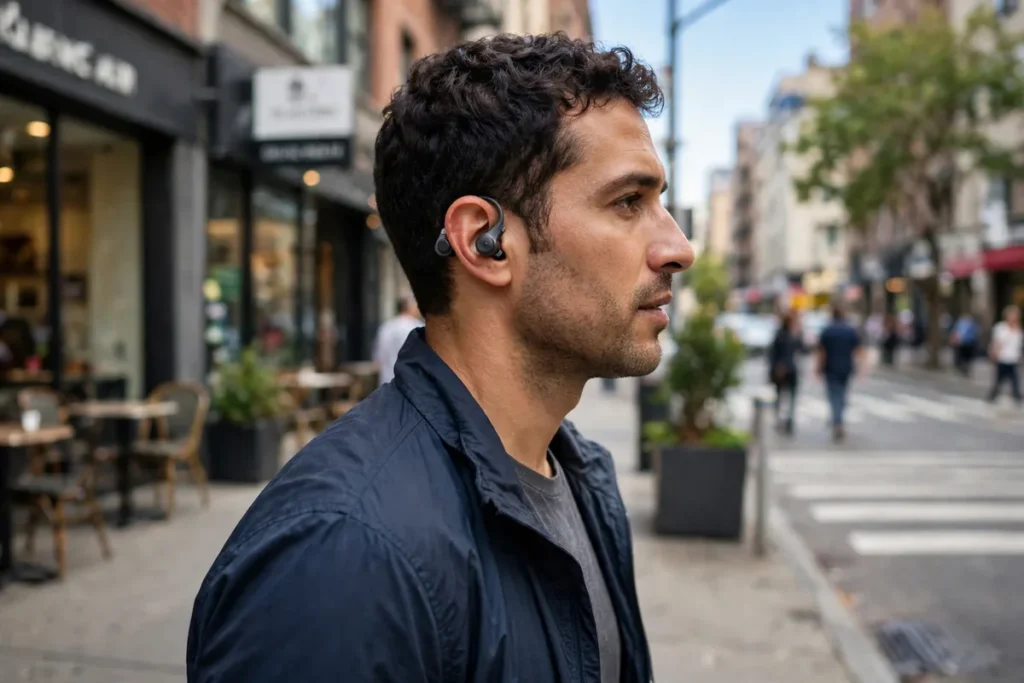
Modern models add a transparency mode that reverses the trick, passing the outside world in deliberately so you can hear an announcement, a gate change or a colleague’s question without taking anything off. Adjustable levels matter more than the headline strength: the ability to run cancelling at half strength on a quiet street, full on a plane, and off at your own desk is what turns a travel gadget into an all-day tool. Judge a pair on how gracefully it moves between those states, not only on how deep the silence goes at maximum.
The honest limits before you spend
Three limits deserve plain words. First, the one above: irregular sound, above all voices, is only reduced. Second, ANC costs battery and money, and it does nothing in a quiet room, where a sealed ordinary headphone already isolates well. Third, some listeners feel a pressure-like sensation or mild fatigue from the cancelling signal; adjustable ANC levels soften it, and our article on why noise cancelling headphones cause pressure explains what is going on. If your week holds few noisy hours, the honest recommendation is to skip ANC and spend the money on a better ordinary headphone.
Three models that make the case
If your noisy hours are real, these are the three we point people to first. They sit at the top of our database for cancelling strength, and each suits a different shape of noisy life.

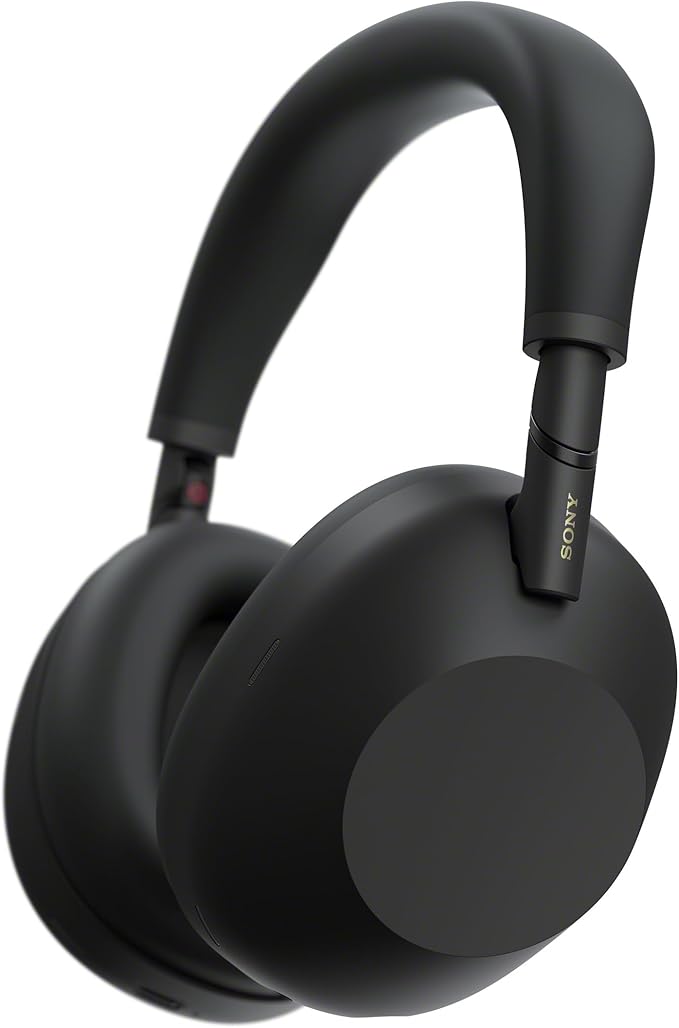
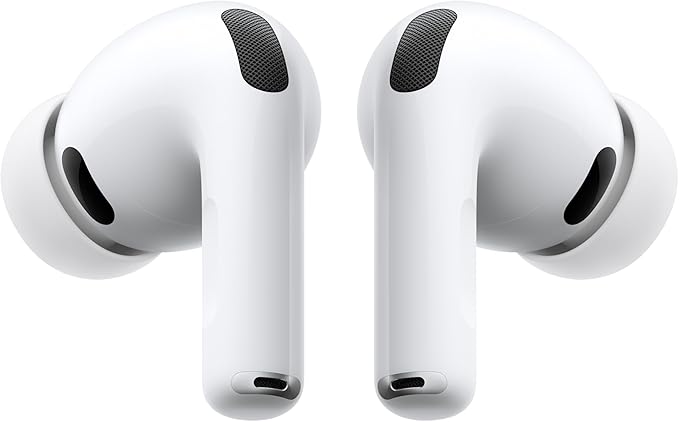
The full field, at every budget, is compared in our guide to the best noise cancelling headphones, and the two over-ears above are covered in depth in our Bose QC Ultra Headphones review and our AirPods Pro 3 review.
The verdict
Buy noise cancelling headphones if steady noise is a regular part of your week: flights, commutes, shared workspaces, a loud house. In those hours the benefit compounds daily, in calmer travel, lower volumes and easier focus. Do not buy them expecting silence, or as a sound-quality upgrade for a quiet room, because that is not what the technology does. Judged on what it actually does, for most people who travel or share their space, it earns its price, week after week, year after year.
Frequently asked questions
Do noise cancelling headphones block voices?
Only partly. Voices are irregular, sit in the midrange, and change faster than the cancelling system can track, so nearby conversation gets quieter and less distinct rather than disappearing. Expect a loud colleague to become a murmur, not silence. Engine drone, air conditioning and road rumble are the sounds ANC removes properly.
Are noise cancelling headphones better for your hearing?
They can be, used sensibly. By cutting the background roar, they let you hear music and calls clearly at a lower volume instead of turning up to compete with the noise. The protection comes from that lower listening level, not from the technology itself, so the habit still matters: keep the volume moderate and take breaks on long sessions.
Are noise cancelling headphones worth it if I rarely fly?
Often, yes, if the rest of your life is noisy: a shared office, a bus commute, a house with thin walls and other people’s televisions. If most of your listening happens in a quiet room, ordinary closed-back headphones isolate enough on their own and the ANC premium buys you little. Count your noisy hours per week and decide from that, not from the flight you take twice a year.
Why do noise cancelling headphones feel like pressure?
The cancelling signal removes the low-frequency sound your ears use as a pressure reference, and some listeners read that absence as a stuffed, pressurised feeling. It is perception, not actual pressure on the eardrum. Most people adapt within a few sessions. If it persists, a model with adjustable ANC levels lets you run the effect gentler.
Should I buy over-ear headphones or earbuds for noise cancelling?
Over-ears cancel a little more and stay comfortable longer, which suits flights and full workdays. Earbuds fit in a pocket, run cooler in summer, and the best current models cancel nearly as well. Choose by where the noisy hours happen: a seat you sit in for hours favours over-ears, a commute on foot favours earbuds.

I am the founder of Sound Mavericks, where I provide the polite truth about audio equipment. I started this site because consumer electronics reviews are often too technical. Instead of using a silent lab, I test headphones, earbuds, and Bluetooth speakers in the real world – like on a noisy subway or in a busy coffee shop.
To stay independent, I buy my own review units (mostly from the United States) rather than accepting free gifts from brands. Once I finish testing a product, I sell it locally to our community. My goal is to help you understand sound quality, active noise cancellation (ANC), and battery life without the marketing hype.